The Bounce is a Illusion? The Bond Market Has Answered

 Prefer us on Google


Original Title: The Bond Market Isn't Buying This Rally. Neither Am I.
Original Author: KURT S. ALTRICHTER, CRPS
Translation: Peggy, BlockBeats
Editor's Note: As the stock market swiftly recovers from the recent sell-off, approaching historical highs, a narrative of "all risks cleared" is once again taking the lead. However, this article reminds us that by only looking at the equity market, it is easy to misjudge the current true environment.
The signals from the bond and oil markets are not consistent: rising interest rates and high oil prices indicate that inflation remains sticky, the Fed's policy space is limited, and geopolitical conflicts have not yet materialized. In contrast, the stock market is pricing in low inflation, rate cuts resuming, manageable costs, and conflict resolution, which are highly idealistic premises.
The author believes that this rebound is more driven by momentum than fundamentals. Fueled by the trading behavior of "fear of missing out on the rally," prices can deviate from reality in the short term, but ultimately, they still need to return to the range determined by macro variables.
When there is a divergence between different asset classes, the real risk often lies not in who is right or wrong, but in how this discrepancy is resolved. The current issue is not whether the market is optimistic, but whether this optimism has already outpaced the data.
The following is the original text:
"Rule 2: Excess in one direction causes an opposite excess in the other direction." — Bob Farrell
The S&P 500 Index has fully recovered all its losses during the US-Iran conflict. As of yesterday, the index was up 1% from February 27 (the day before the first strike on Iran), just a stone's throw away from a new all-time high (less than 1%).
In just 10 trading days, the market has completed a full round trip.
I'll be blunt; if you're only looking at the stock market now, everything seems to be "back to normal." War broke out, the market fell, then quickly rebounded, everything is back on track, and everyone moves forward.
But if you widen your view, this is not the true picture of what's happening.
The bond market has not confirmed this rally.
The oil market has also not confirmed this rally.
When the world's two most important markets are telling a different story from the stock market, this is by no means a signal to be ignored.
So, what is the current stock market pricing in?
For the S&P 500 to be above its pre-war level, the market actually needs to simultaneously believe in the following:
The current oil price is not enough to substantially curb consumption
The Fed will ignore overheating inflation data and still choose to cut rates
Higher raw material and transportation costs will not erode corporate profit margins
The Middle East conflict will be close enough to resolution within six months to no longer pose a risk
Maybe things will really unfold this way. I'm not saying it's impossible. But this is a rather radical set of assumptions, and the data released by the bond and oil markets at present do not support these assumptions.
From a fundamental perspective, the stock market's pricing is already close to "perfect expectations."
Let's look at some more specific data
On February 27, the day before the war broke out, the closing figures for key indicators were as follows:
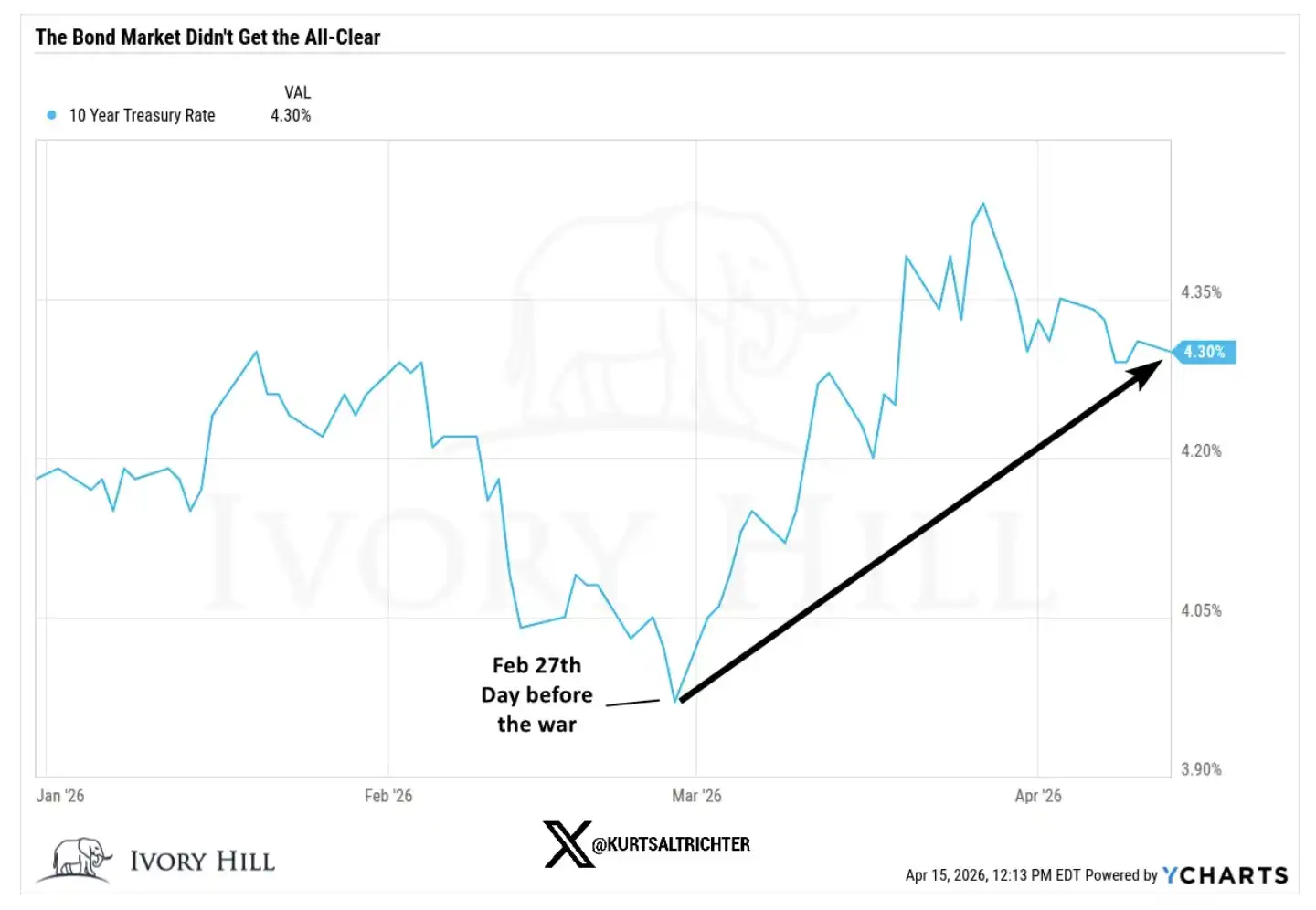
10-Year U.S. Treasury Yield: 3.95%, closing at 4.25% yesterday, up 30 basis points from pre-war levels
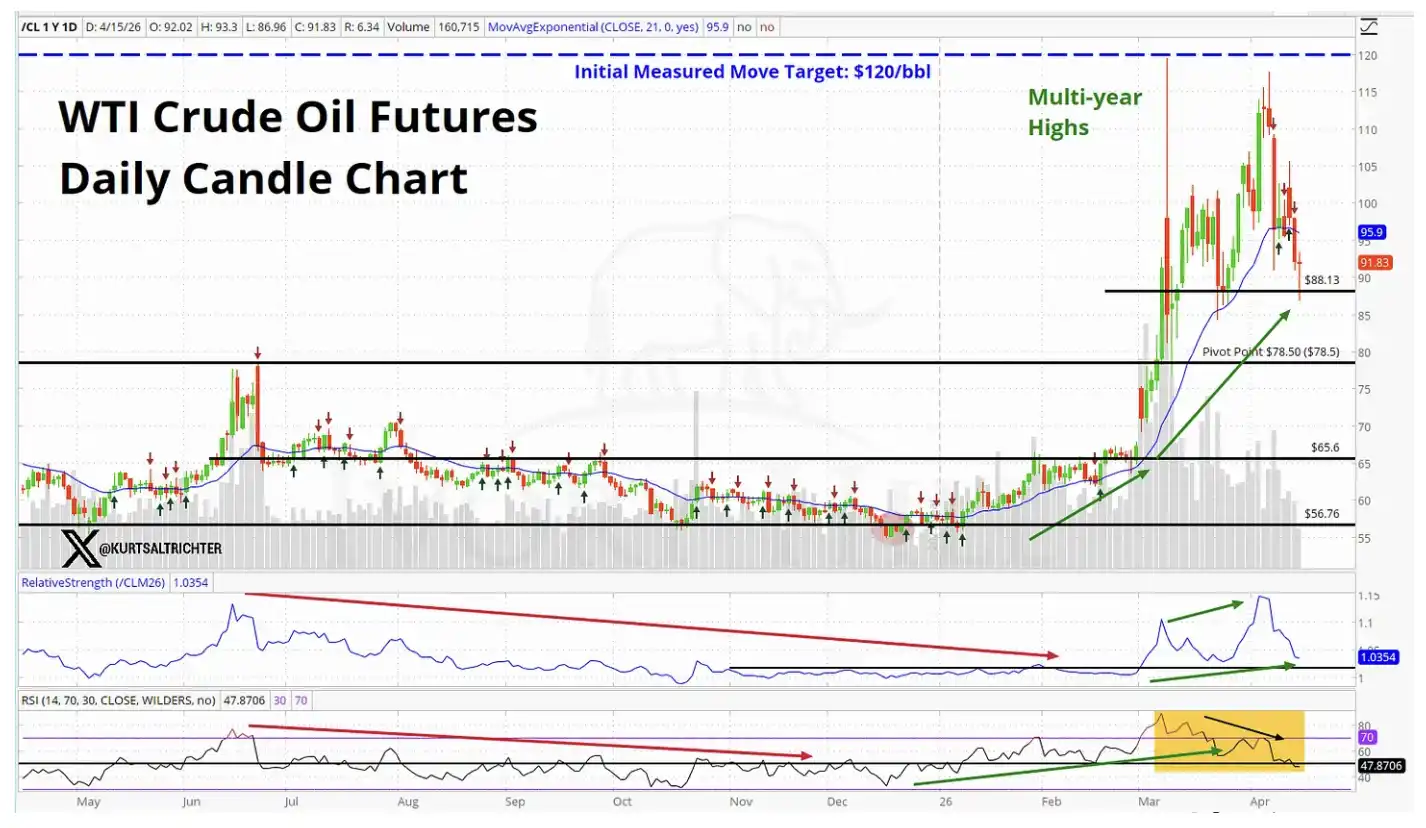
WTI Crude Oil: $67.02, currently about 37% higher than at that time
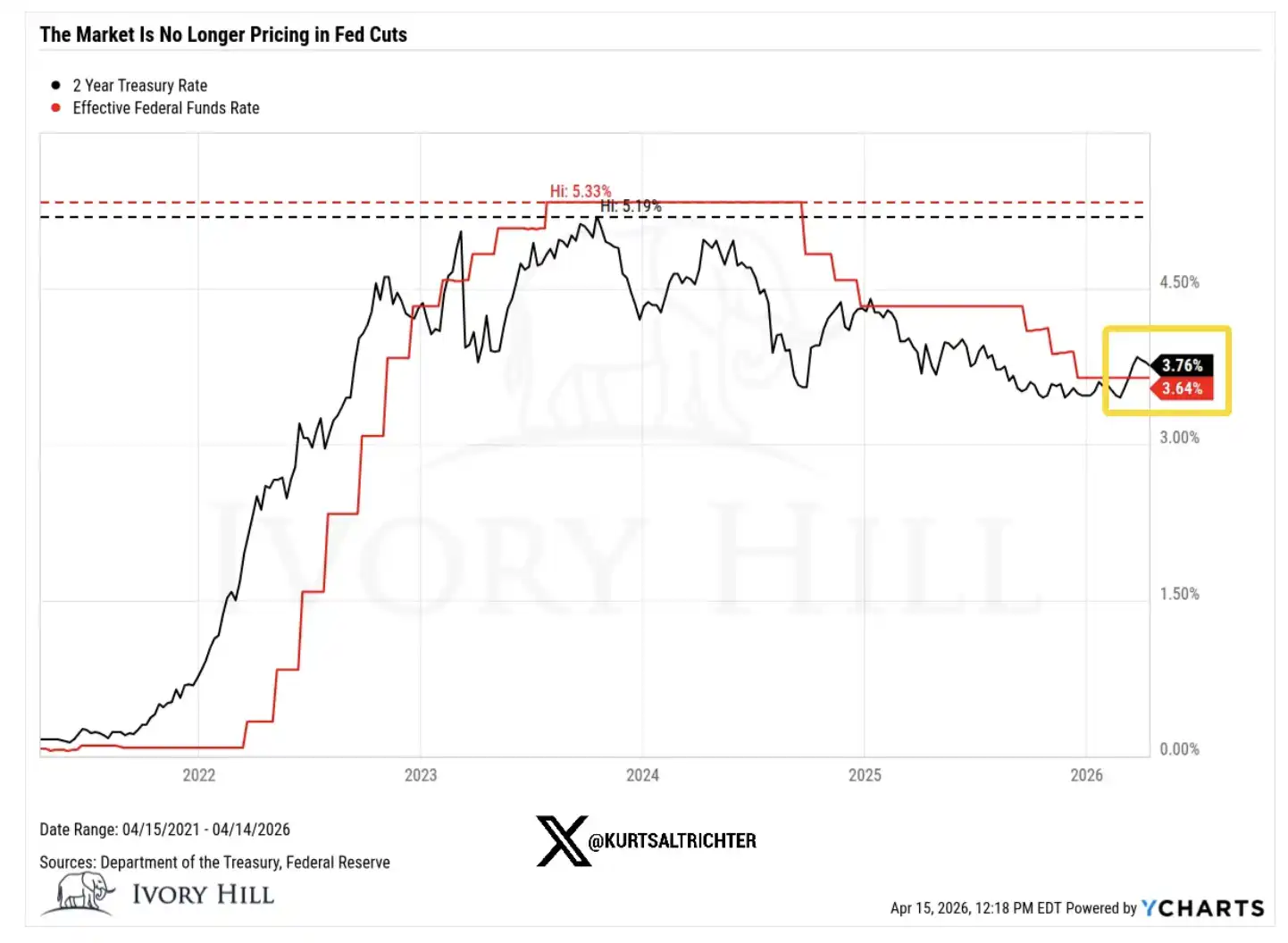
2-Year U.S. Treasury Yield: 3.38%, closing at 3.75% yesterday, up nearly 40 basis points from the pre-war level
Now, let's break down the implications behind these changes one by one.
The 10-year yield rising 30 basis points after the war broke out is not because the bond market is more optimistic about economic growth. Current consumer sentiment is weakening, and confidence remains fragile. This upward rate movement is essentially the bond market quietly pricing in inflation.
The signal it conveys is clear: higher oil prices are transmitting to the overall price system, and the Fed's future policy space may not be as accommodative as the stock market assumes.
Oil prices have risen by 37% in 6 weeks, which is not a reflection of what the market should exhibit when believing that a real, lasting agreement is about to be reached between the U.S. and Iran.
If traders were truly confident in a sustainable ceasefire agreement, oil prices would have already dropped to the $70 range and continued downwards. However, reality tells a different story. Oil prices are still holding at high levels, indicating that the crude oil market has not priced in the same "conflict resolution on the horizon" expectations as the stock market.
Meanwhile, the 2-year U.S. Treasury yield remains 40 basis points higher than pre-war levels, posing a direct challenge to the narrative of "Fed rate cuts incoming."
The 2-year yield is the most sensitive indicator in our interest rate outlook observation, reflecting the Fed's policy path more directly than any other asset. Currently, the signal it is sending is that the Fed's maneuvering room is smaller than the market imagines, which will impact almost all valuation logics supporting this stock market rally.
So, who is making the right call?
The stock market may be right, and I am willing to acknowledge that. If a substantive ceasefire agreement does materialize, bond yields could quickly retreat, and once the supply issue sees a credible resolution, oil prices could also see a significant drop. This wouldn't be the first time the stock market led the way, with other markets playing catch-up or "filling the gap" later on.
But there is another explanation that I believe is currently underestimated.
A significant portion of this rally is not fundamentally driven but rather momentum-driven. Traders are reluctant to short-sell in an uptrend, a behavior that continuously boosts the market. Such buying pressure can indeed prolong the trend more than necessary.
However, it does not alter the underlying logic.
The underlying reality is that oil prices remain high, interest rates are still increasing, and the Fed's room for rate cuts is even more limited than what the bulls require.
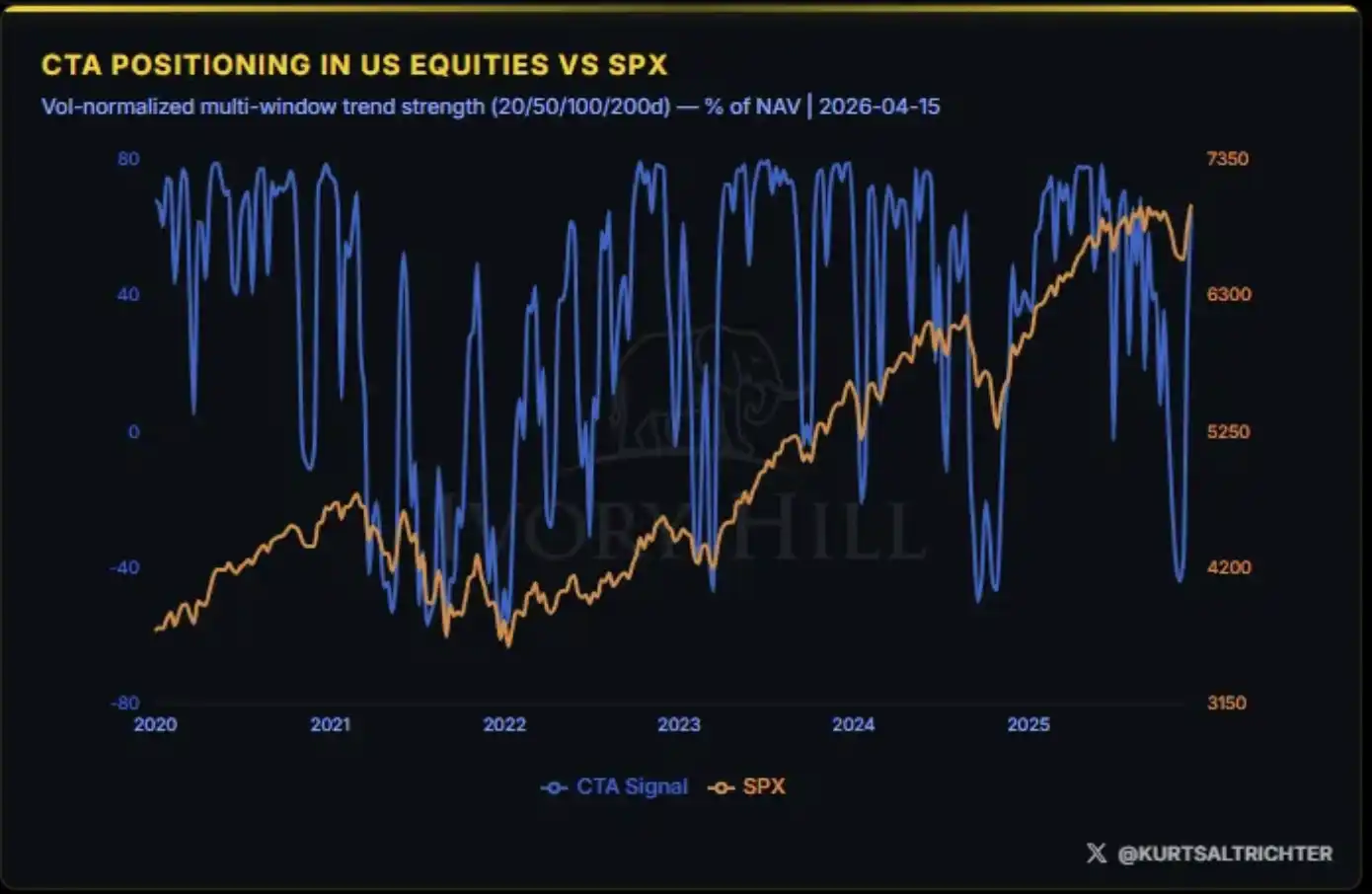
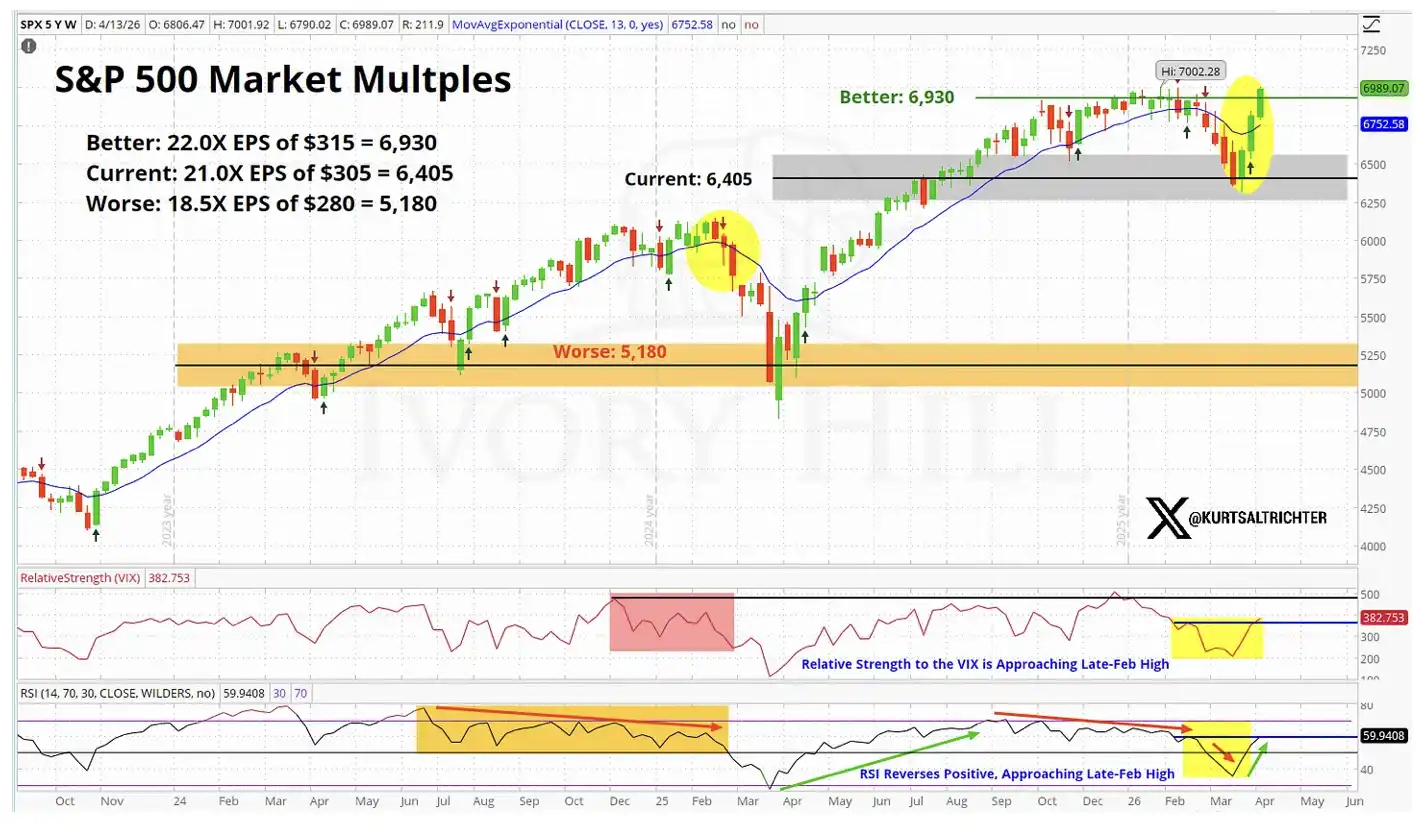
Rallies driven by fundamentals are often more sustainable, while those driven by momentum are typically more fragile and short-lived. When considering whether to add positions near historical highs, this difference is especially crucial. As depicted in the market valuation chart above, the current stock market has already priced in a "perfect scenario."
My Actual Assessment
Over the past 10 days, there has indeed been some improvement, and I will not deny that. I am not someone who arbitrarily takes a bearish stance.
However, there is still a significant gap between the pricing of the stock market and the reality reflected in bonds and oil, and this gap has not narrowed. I am closely monitoring this point.
Currently, the stock market is at the most optimistic end of the spectrum; while bonds and crude oil are closer to the middle, reflecting a world where inflation still exists, the Fed has limited policy space, and conflicts are not yet truly resolved.
This divergence will ultimately be resolved, and there are only two paths:
Either a true ceasefire agreement is reached, oil prices fall back to around $70, the Fed gains clear room for rate cuts, ultimately proving the stock market right;
Or none of this materializes, the stock market declines, moving closer to the levels reflected by bonds and oil.
Currently, there is no sign that bonds and oil are converging with the stock market; rather, it seems like the stock market needs to move lower to "align" with them.
The next inflation data will be released on May 12. If my assessment is correct, with CPI above 3.5%, the rate-cut narrative for 2026 will basically come to an end.
If you continue to add leverage at this point, you are essentially betting that everything will develop in the most ideal direction: the war will end smoothly, without any "Trumpian sudden remarks" interference; inflation will remain under control; the Fed will cut rates as planned; and corporate profits will stabilize. All four of these things must happen simultaneously. If any one of them deviates significantly, the market's downward adjustment process is likely to be swift and severe.
On the other hand, I prefer to remain patient rather than chase an uptrend that is being "quietly denied" by the two major asset classes. If the long-term signals point to buying, we will naturally incrementally increase our positions according to the strategy.
And don't forget—the only thing that's certain is that everything will eventually change.
-- Price
This content is provided for general informational purposes only and doesn't constitute financial, investment, legal, or tax advice. Any events, rewards, online promotions, or related information mentioned herein should not be considered a recommendation, solicitation, or invitation to purchase, sell, trade, or otherwise deal in any crypto assets. Crypto assets are highly volatile and may result in loss. The availability of WEEX services, products, and related events may vary by region. You are responsible for ensuring that your participation is in accordance with applicable local laws and regulations.
You may also like

Violations at Ukrainian Customs Increased by 20%

NVIDIA Seeks Chinese AI Base Station Suppliers to Develop 6G AI-RAN Base Stations
EU Extends Temporary Protection for Ukrainians Until 2028 with Restrictions

The White House has initiated a review of the rule-making process for the CFTC prediction market in the U.S

DeFi has reached its most dangerous moment: the real vulnerabilities are not in the code

South Korea's FIU meets with the five major exchanges to discuss new regulations for cryptocurrency transactions exceeding 10 million won
The U.S. SEC has revoked a settlement rule that has been in place for 50 years

"JUST 6th Anniversary x GasFree Super Carnival Month" is here: Enjoy "0" Gas transfer freedom and share a prize pool of 10,000 USDT

SBF withdraws the motion for a retrial, stating that it cannot obtain a fair hearing from the judge

NYSE submits a proposal to amend rules to allow the listing and trading of tokenized securities

The US SEC has accepted the NYSE's new regulations, proposing to introduce a tokenized securities trading mechanism to support on-chain settlement

The U.S. SEC cancels the "pattern day trader" rule and withdraws the minimum balance requirement
Market Prediction Fallacy: Is Trading Based on Fact or Rule?
The Blockchain Association opposes Citadel's regulatory claims on DeFi and supports the SEC's innovation exemption framework
US Labor Department Proposes Opening 401(k) Plans to Crypto
Key Takeaways: The U.S. Department of Labor’s proposal aims to introduce cryptocurrencies into 401(k) retirement accounts through a…

Nasdaq will eliminate the 10% minimum public float requirement starting May 1 and introduce a "fast track" rule

Polymarket rules have changed, how should airdrop participants respond?

South Korea to Enhance Cryptocurrency Anti-Money Laundering Regulation, Covering Small Transactions of Less Than 1 Million KRW

Department of Commerce: China and the United States to Simultaneously Suspend Some Tariffs and Control Measures for One Year
The US SEC submitted rules for digital asset and fund disclosure to the White House, proposing to introduce an innovative exemption mechanism

The Paraguayan Anti-Drug Agency held a seminar to strengthen law enforcement against organizations that use cryptocurrency for crime

The U.S. SEC plans to amend broker-dealer rule 15c2-11 to exclude crypto assets from its scope

Sentient Reveals Tokenomics, How Will the Market Price It?

Thai Prime Minister Orders Tightening of Gold Trading and Digital Asset-Related Regulations
KindlyMD's Board of Directors has approved a Share Repurchase Plan

JusticiaNet: Establishing a Multi-Jurisdictional Legal Process for Criminal Cases Involving Virtual Currency, Exploring Three Disposal Measures: "Liquidation, Destruction, Return"
How is a WeChat Account Stolen and How to Prevent It?
HKEX Halts Trading as Cryptocurrency-Related Stock Primas Falls 70%

The U.S. Accounting Standards Board is considering adding the "Cryptocurrency Transfer" accounting project

China and the United States Begin Implementation of Kuala Lumpur Economic and Trade Consultations Consensus
Violations at Ukrainian Customs Increased by 20%
NVIDIA Seeks Chinese AI Base Station Suppliers to Develop 6G AI-RAN Base Stations
EU Extends Temporary Protection for Ukrainians Until 2028 with Restrictions
The White House has initiated a review of the rule-making process for the CFTC prediction market in the U.S
DeFi has reached its most dangerous moment: the real vulnerabilities are not in the code
South Korea's FIU meets with the five major exchanges to discuss new regulations for cryptocurrency transactions exceeding 10 million won