
Bitcoin ETF Outflows Hit $398.6M on November 2 as BlackRock Leads Redemptions

 Prefer us on Google



TL;DR: US-listed spot Bitcoin exchange-traded funds recorded a combined $398.6 million net outflow on November 2, according to Farside Investors' daily fund table. These figures are dated November 2.
The November 2 figure also followed a larger $643.2 million net outflow on October 30 in Farside's table. Back-to-back negative sessions invite closer scrutiny of allocation decisions, but they do not reveal the identities or intentions of the underlying investors. That is why the per-issuer breakdown deserves at least as much attention as the headline total.
What the primary source establishes
US-listed spot Bitcoin exchange-traded funds recorded a combined $398.6 million net outflow on November 2, according to Farside Investors' daily fund table. BlackRock's IBIT accounted for about $405.3 million of redemptions, while Fidelity's FBTC received roughly $6.7 million. The net result therefore masks a small positive contribution outside the largest fund, rather than a perfectly uniform exit from every issuer. The dated original disclosure is the starting point for the figures and product scope discussed here.
An ETF flow number measures creations minus redemptions in a fund, not the amount of Bitcoin traded on every exchange during a session. It also does not establish whether a holder moved into cash, shifted to another wrapper or rebalanced a portfolio. The transactions are economically connected to underlying Bitcoin exposure, but the relationship between a reported flow and intraday spot prices is not a simple one-for-one equation.
Why this matters beyond the headline
The concentration is the important detail here. When one large product accounts for more than the market-wide outflow, investors should be cautious about turning the aggregate number into a claim about all institutional accounts. A multi-day pattern across issuers would say more about appetite than one concentrated day. Flows can still influence sentiment because ETFs have become a visible channel for regulated Bitcoin exposure.
Fund flows and corporate Bitcoin holdings share one characteristic: they are easy to count and harder to interpret. A securities wrapper reports its own creations and redemptions; a public company reports transactions inside a particular capital structure. Neither dataset captures every spot-market participant. A useful analysis establishes the reporting date, identifies what was measured and asks how much the disclosed activity represents relative to the wider market.
This development also connects to two subjects our newsroom has been following: the previous Bitcoin and Ether ETF flow review and BlackRock's October Bitcoin ETF inflow against peer withdrawals. Those background reports help separate established facts from a new, still-developing announcement.
What the announcement does not prove
These figures are dated November 2. They are not a live reading of November 3 subscriptions, nor are they a forecast of the next trading session. A net redemption does not by itself prove forced liquidation or financial stress at the fund. Market makers and authorised participants manage inventory, and fund-level flows are just one part of the wider liquidity picture.
The critical operational issue is access to liquid Bitcoin exposure. A fund shareholder may own a listed security, while a corporate treasury holder owns shares in a company with liabilities and management decisions. Those two instruments can behave differently even when Bitcoin is the most visible asset behind both. Treating the wrapper as identical to the coin erases meaningful risks.
-- Price
What to watch next
Watch whether IBIT redemptions persist across subsequent sessions, whether other large issuers follow and whether the move coincides with a material change in spot liquidity. The more convincing signal would be several days of broad participation. Until then, it is better to describe this as a sharp, concentrated withdrawal from US-listed Bitcoin funds rather than a verdict on the entire asset class.
This article was written by the News Desk and edited by Samuel Rae.
This content is provided for general informational purposes only and doesn't constitute financial, investment, legal, or tax advice. Any events, rewards, online promotions, or related information mentioned herein should not be considered a recommendation, solicitation, or invitation to purchase, sell, trade, or otherwise deal in any crypto assets. Crypto assets are highly volatile and may result in loss. The availability of WEEX services, products, and related events may vary by region. You are responsible for ensuring that your participation is in accordance with applicable local laws and regulations.
You may also like
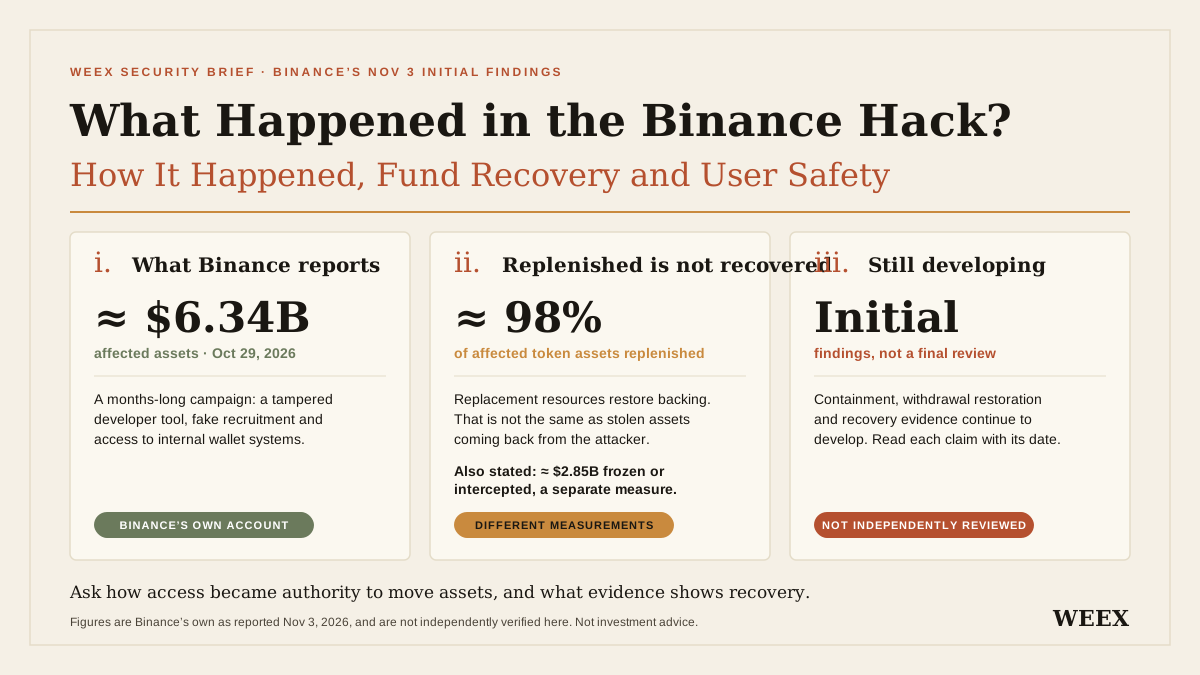
What Happened in the Binance Hack? How It Happened, Fund Recovery and User Safety
What happened in the Binance hack? Review the attack timeline, latest fund replenishment, recovery limits and practical steps to protect your account.

Waiting for the Last Dip? Morgan Stanley's Wilson: Regardless of Election Results, It May Be a Good Opportunity to Buy U.S. Stocks

Standard Chartered Launches Continuous Tokenized Deposits in Hong Kong

Judy Shelton and Monetary Policy Point to a Less Dominant Future for the Fed

Bitcoin’s year-end liquidity hopes face a projected $150 billion Treasury cash rebuild

ICE Partners with Hyperliquid, Traditional Exchanges' Moat is Shifting

Dollar stablecoin use stayed elevated after capital controls ended, new research suggests

The "Election Effect" of Bitcoin: Political Catalyst or Coinciding with the Halving Cycle?

CoreWeave's Capital Flywheel Comes to a Halt

Solana study finds wider spreads outside aggregators at five of six sampled pools

Thai Police Obtain Fund Flow Data from Three Exchanges Related to Shuffle, Form 80 Task Forces

唐华斑竹: GOAT Network Addresses Business Security Pain Points

Who Benefits More After Aero's Merger Upgrade: Holders, LPs, or the Platform?
Airtm and BVNK Plan Wallet Payments for Merchants in Emerging Markets

Hashdex Adds Jane Street to Crypto Index ETF Authorized Participants

Tech Stocks Fall 7% on Wall Street Amid AI Concerns

When Software Starts Spending Money: Pantera Partner Explains How AI Agents Are Restructuring SaaS Business Models and Crypto Payments

BlackRock’s Ethereum fund sheds 580K ETH as monthly exits mount

Ethereum added 361,000 ETH to active stake while its total staking balance shrank

Franklin Templeton: The Next Generation of Agents Has Arrived

Goldman Sachs Bans Most Employees from Using AI Programming Tools

Akash’s Solana plan would end current staking rewards while allowing new AKT issuance

EU Entity Loses Over $106 Million to Theft, Attackers Transfer Funds via Privacy Coins

Ownership of Bitcoin in the Qian Zhimin Case and Victim Compensation

Is Issuing Tokens Still Necessary for Crypto Projects Focused on Revenue?

ForeDex Signs MOU with Hansung University for On-Chain Data Technology

Monthly Column Report|Foresight News Outstanding Content Creators List for October 2026

TRON Industry Weekly Report: Crypto Security Incident Weakens BTC, Detailed Explanation of Building Economic Agent Capability Infrastructure Neosoul
November Starts Busy with Key Developments from November 2-6! US Elections, Employment Report, and Fed Messages

Apple Regains Market-Cap Lead, Silver Back Near $50 | WEEX Daily Market(November 2, 2026)
At the October 31 close, Apple’s market cap once again surpassed Nvidia during the tech pullback. Alphabet fell more than 10% last week. Silver returned near $50. TRUMP token rose more than 10% over 24 hours. OP turned higher after stabilizing. November 2 focus is Marriott before the open and after-hours earnings from Apple, Palantir and others.
What Happened in the Binance Hack? How It Happened, Fund Recovery and User Safety
What happened in the Binance hack? Review the attack timeline, latest fund replenishment, recovery limits and practical steps to protect your account.
Waiting for the Last Dip? Morgan Stanley's Wilson: Regardless of Election Results, It May Be a Good Opportunity to Buy U.S. Stocks
Standard Chartered Launches Continuous Tokenized Deposits in Hong Kong
Judy Shelton and Monetary Policy Point to a Less Dominant Future for the Fed
Bitcoin’s year-end liquidity hopes face a projected $150 billion Treasury cash rebuild
ICE Partners with Hyperliquid, Traditional Exchanges' Moat is Shifting
Contents
Latest articles


Latest coin listings on WEEX


