
SPCX Stock Price and the $116 Billion Lockup Expiry Tomorrow: What Actually Happens on August 6

 Prefer us on Google

SPCX stock price heading into August 6 with $116 billion in shares becoming eligible for trading is the event that has defined the investment psychology of every SPCX holder since the IPO.
SPCX stock price's extraordinary volatility from the $225.64 all time high to the current $110 range has been driven as much by the August 6 anticipation as by any fundamental assessment of SpaceX's business. SPCX stock price at current levels is pricing a specific set of assumptions about how much of the $116 billion in newly eligible shares will actually be sold on August 6 and in the days immediately following, and those assumptions are almost certainly wrong in ways that matter for investors making decisions today.
The Most Important Distinction That the $116 Billion Headline Obscures
Before examining what actually happens on August 6, establishing the most critical distinction that the $116 billion headline consistently fails to communicate prevents the most consequential error investors make about lockup expirations.
Shares becoming eligible for trading is not the same as shares being sold.
Approximately 911.5 million shares worth around $116 billion are scheduled to become eligible for trading on August 6.
Eligible for trading means the legal restriction preventing insiders from selling has been lifted for those shares. It does not mean those insiders have decided to sell, will sell immediately, or will sell the full amount they are now permitted to sell.
The distinction matters enormously because every media headline describing the August 6 event uses the word unlocking in ways that imply supply hitting the market rather than supply becoming theoretically available. An investor who reads that $116 billion in SPCX shares unlock tomorrow and concludes that $116 billion in selling pressure arrives tomorrow has made a category error that leads to either panicking out of a position or refusing to buy a potential opportunity based on a mischaracterization of what the event actually is.
Who Holds the 911.5 Million Shares and What Their Incentives Are
The most practically important analysis of August 6 is not the total share count but the composition of who holds those shares and what their individual selling incentives are.
SpaceX took a staggered approach, allowing insiders to sell portions of their stock at earlier intervals to prevent massive selling and price volatility.
The 911.5 million shares that become eligible on August 6 are held by three distinct categories of shareholders whose selling incentives are fundamentally different from each other.
Early institutional investors who received pre-IPO allocations at prices substantially below the $135 IPO price represent the category with the most straightforward selling incentive. These investors hold unrealized gains even at the current $110 price if their entry price was below $110, which is possible for early-stage SpaceX investors who participated in funding rounds before the company's valuation reached its current level. However early institutional investors in SpaceX have also demonstrated patience and conviction across a decade or more of illiquid holding, which suggests their decision to sell at the first available opportunity rather than continuing to hold through the company's public market development is not guaranteed simply because the legal restriction has lifted.
Employee shareholders who received equity compensation represent the category with the most heterogeneous selling incentives. Some employees with large unvested equity balances and long tenures will want to diversify after years of illiquid holding. Others who believe deeply in SpaceX's mission will hold. The aggregate selling behavior of this category is the most difficult to predict because it depends on individual financial circumstances, personal conviction, and the practical mechanics of how quickly employees can execute transactions through their broker accounts.
Rank-and-file employees who received smaller equity grants represent the category most likely to sell quickly because their positions are small enough that diversification concerns outweigh the optionality of holding for further appreciation and because the practical mechanics of selling small equity positions are simpler than the decision calculus for large institutional holders.
The Price Contingent Tranche That Did Not Unlock
One specific and underreported detail about August 6 is the price contingent tranche that was not triggered and what its continued lockup means for the supply dynamics beyond tomorrow.
Because SPCX traded below the price contingent milestone, that extra tranche stays locked.
An additional 10% can release early if SPCX is trading at least 30% above its $135 IPO price, which would require SPCX to hold above $175.50 for 5 out of 10 consecutive trading days leading into the report.
SPCX trading at approximately $110 rather than above $175.50 means the price-contingent tranche of approximately 455.8 million additional shares remains locked. This is actually a positive supply dynamic for August 6 relative to the scenario where the stock had held above $175.50, because the conditional tranche represents supply that would have been available tomorrow but is not.
The specific implication is that the August 6 supply event is smaller than it would have been if the stock had performed better before the lockup trigger date. A SPCX that had maintained its all-time high levels would have unlocked more shares on August 6 than the SPCX at $110 unlocks. The decline that has frustrated existing holders has paradoxically reduced the supply pressure on the unlock date.
-- Price
The Rolling Lockup Schedule That Makes August 6 One Event Among Many
One of the most analytically useful reframings of August 6 is placing it within the complete rolling lockup schedule rather than treating it as a single binary event after which the supply overhang disappears.
The SpaceX lockup schedule: 20% after Q2 2026 earnings in late July or early August, then 7% tranches every two to four weeks from August through October, then the Q3 earnings-triggered release of approximately 28%, with all remaining 180 day shares releasing December 8, 2026.
August 6 is the first unlock event but not the last. The rolling schedule means that SPCX investors face a series of supply events through December 8, 2026 rather than a single large event after which the supply overhang is fully resolved. Each tranche release is smaller than August 6's 20% tranche, which means the supply pressure diminishes with each successive event rather than arriving in equal installments.
The practical investment implication is that August 6 is more significant than subsequent unlock dates because it is the first event and because the 20% tranche is the largest of the rolling releases. But it is less significant than the maximum fear scenario implies because subsequent tranches will continue adding supply for months regardless of how August 6 resolves.
What Musk's Continued Lockup Until June 2027 Changes
The most supply-positive feature of August 6 that most SPCX coverage has not adequately emphasized is what remains locked rather than what unlocks.
Elon Musk's roughly 6.4 billion shares are locked for 366 days until June 12, 2027 with no early release provisions.
Musk's 6.4 billion shares represent the largest single block of SPCX shares in existence. At the current price of approximately $110, those shares represent roughly $700 billion in market value that cannot be sold regardless of what happens to the stock price or how attractive the selling opportunity becomes.
The strategic significance of Musk's continued lockup is that the investor whose decision to sell or hold would be most consequential for price discovery is precisely the investor who cannot participate in August 6's supply dynamics. Any selling that occurs on August 6 comes from shareholders whose combined holdings are a fraction of Musk's locked stake.
For investors evaluating SPCX stock price around August 6, the Musk lockup until June 2027 is the most durable supply constraint available. No matter how much of the 911.5 million eligible shares are sold on August 6, the 6.4 billion Musk shares cannot follow until mid-2027, which means the largest potential supply event in SPCX's history is more than 10 months away rather than arriving tomorrow.
What SPCX Stock Price History With Similar Lockup Events Shows
The historical pattern of large lockup expirations in high profile technology stocks provides the most directly relevant context for evaluating what August 6 is likely to produce rather than what the maximum fear scenario implies.
The most common pattern for large lockup expirations in high profile technology stocks is a price decline in the weeks leading into the expiration as investors anticipate selling, followed by stabilization or partial recovery after the expiration date as actual selling proves less severe than anticipated selling.
SPCX has already followed the first part of this pattern precisely. The stock declined from $225.64 to approximately $110 in the weeks between the IPO and August 6, incorporating a substantial portion of the anticipated lockup supply into the price before a single share has been sold under the August 6 unlock. The question for investors making decisions today is whether the anticipated selling has been fully priced at $110 or whether actual selling on August 6 produces a price below what the anticipation already incorporated.
The answer depends on the composition of the 911.5 million eligible shares and the individual selling decisions of each holder category described above, which is genuinely uncertain rather than predictable from the aggregate share count.
The Three Scenarios That August 6 Could Produce
In a light selling scenario, institutional holders choose to continue holding given their conviction in SpaceX's long-term trajectory while employee selling is distributed across multiple trading sessions rather than concentrated in a single day. SPCX stock price stabilizes around current levels or recovers modestly as the market discovers that actual selling volume is substantially below the 911.5 million shares theoretically eligible. The anticipated supply overhang that drove the decline from $225 to $110 proves to have been priced more aggressively than the actual supply event justified, and the stock begins a gradual recovery as subsequent smaller tranche releases produce diminishing selling pressure.
In a moderate selling scenario, significant but not overwhelming institutional and employee selling occurs on August 6 and in the subsequent trading sessions, absorbing the buyers who had been waiting for the lockup to resolve before establishing positions. SPCX stock price tests levels below $100 before finding support as value-focused buyers who had been deterred by the lockup uncertainty enter at prices that represent sufficient discount from both the IPO price and the analyst consensus targets to justify the remaining lockup schedule risk.
In a heavy selling scenario, institutional holders who had been holding illiquid SpaceX equity for years take the first available exit opportunity aggressively, producing selling volumes that exceed the demand from value-focused buyers entering on the lockup resolution. SPCX stock price declines significantly below $100 as the supply absorption takes multiple trading sessions rather than a single day, and the recovery timeline extends to Q3 earnings in November rather than resolving within days of August 6.
For those looking to participate in global financial markets, having access to the right trading platform matters. WEEX offers crypto and stock trading products, covering major global markets including stocks and digital assets.
Conclusion
SPCX stock price on August 6 faces the most discussed and most anticipated supply event in the stock's brief public history. The $116 billion headline that describes 911.5 million shares becoming eligible for trading is the right number to know and the wrong number to fear as a direct measure of selling pressure.
What actually happens on August 6 is determined by the individual selling decisions of the heterogeneous group of shareholders whose shares unlock, not by the aggregate eligible share count. The price-contingent tranche's failure to trigger has reduced the supply available tomorrow. Musk's 6.4 billion shares remaining locked until June 2027 has removed the largest potential seller from the event. And the stock's decline from $225 to $110 has already incorporated a substantial anticipated supply discount before any August 6 selling has occurred.
The light, moderate, and heavy selling scenarios each produce different short-term SPCX stock price outcomes. What they share is the observation that August 6 is one supply event in a rolling schedule through December 2026 rather than the single binary event that resolves the supply overhang permanently in either direction. Investors who treat tomorrow as the final lockup event are misreading the schedule. Those who treat it as the largest and therefore most significant event in a graduated supply release are reading it correctly.
FAQ
1. What actually happens to SPCX stock price on August 6?
Approximately 911.5 million shares become legally eligible for trading, which means the restriction preventing insiders from selling is lifted for those shares. Eligibility does not mean all or any of those shares will be sold. Actual selling depends on individual holder decisions across institutional investors who received pre-IPO allocations, employees with equity compensation, and rank-and-file shareholders, each with different financial circumstances and selling incentives. The stock's response depends on whether actual selling volume exceeds the demand from value focused buyers who have been waiting for the lockup to resolve.
2. Why did the price contingent tranche not unlock on August 6?
The price contingent tranche of approximately 455.8 million additional shares required SPCX to hold above $175.50 for five out of ten consecutive trading days leading into the report. With SPCX trading near $110, the threshold was not reached and the conditional tranche remains locked. This is paradoxically supply-positive for August 6 because the eligible shares are smaller than they would have been if the stock had maintained higher prices before the trigger date.
3. Why does Elon Musk's lockup until June 2027 matter for the August 6 event?
Musk's 6.4 billion shares represent the largest single block of SPCX shares and at current prices approximately $700 billion in market value that cannot be sold regardless of August 6 dynamics. The investor whose selling decision would be most consequential for SPCX's price discovery cannot participate in August 6's supply event. This means even the heaviest selling scenario on August 6 does not include the largest potential seller, limiting the maximum realistic supply pressure relative to the maximum theoretical supply.
4. Is August 6 the last major lockup event for SPCX stock?
No. August 6 is the first and largest tranche at approximately 20% of the 180-day lockup block. Subsequent tranches of approximately 7% unlock every two to four weeks from August through October. A Q3 earnings-triggered release of approximately 28% follows later in 2026. All remaining 180-day lockup shares release on December 8, 2026. The rolling schedule means investors face a series of supply events through December rather than a single event after which the overhang permanently resolves.
5. Has the August 6 lockup supply already been priced into SPCX stock?
Partially. SPCX's decline from $225.64 to approximately $110 in the weeks between the IPO and August 6 reflects substantial anticipated supply being priced before any shares have been sold. Whether the anticipation has been fully priced at $110 or whether actual selling produces prices below the anticipated discount depends on which selling scenario materializes. The historical pattern of large lockup expirations is price decline before the event followed by stabilization or partial recovery after, but SPCX's unique characteristics including the Musk lockup, the rolling schedule, and the failed price contingent trigger make direct historical comparisons imprecise.
This content is provided for general informational purposes only and doesn't constitute financial, investment, legal, or tax advice. Any events, rewards, online promotions, or related information mentioned herein should not be considered a recommendation, solicitation, or invitation to purchase, sell, trade, or otherwise deal in any crypto assets. Crypto assets are highly volatile and may result in loss. The availability of WEEX services, products, and related events may vary by region. You are responsible for ensuring that your participation is in accordance with applicable local laws and regulations.
You may also like
Ethereum 2030 Roadmap: Vitalik's Cryptographic World Computer
WEEX Strategy Trading: 4 Ways to Automate Your Crypto Trades
What Is Pons Crypto (PONS), and How to Trade PONS on WEEX?

Pi Network vs Other Mobile Mining Projects: What's the Difference
Donald Trump Oil Stock Investments: 9 Names, 6 Tradable Now
Stealth XST Coin: The $1,806 Daily Volume Behind a $2.3M Cap

What Happened to Raini Studios Token? RST After the Game Shutdown

Why Is Raini Studios Token (RST) Up Today Despite Low Trading Volume?

Before You Buy CyberLeek: You Should Know CYBERLEEK Token Risks First
Crude Oil Price Holds Its Iran Premium as Hormuz Stays Shut

犇犇 Coin Explained: How Unitree Robot Dog Meme Is Going Viral

Eiffage Stock (FGR): The Two Engines, the Motorway Concession End Dates and the 26 August 2026 Half-Year Results

South Korea Apologizes for SK Hynix Leveraged ETFs: What It Means for SKHA SKHN Holders
GOOG Stock After Q2 Earnings: Why a Record EPS Sank 7%

STABLE Crypto Airdrop Guide: How to Claim 50,000 USDT Rewards on WEEX
USDC Use Cases Explained: Payments, DeFi, Cross-Border Transfers, and Key Risks
What Is a Bagholder?
How to Buy Crypto with PayPal: The Custody Catch Most Beginners Miss
ENA Token Price Up 76% in a Month: The October 5 Unlock Test
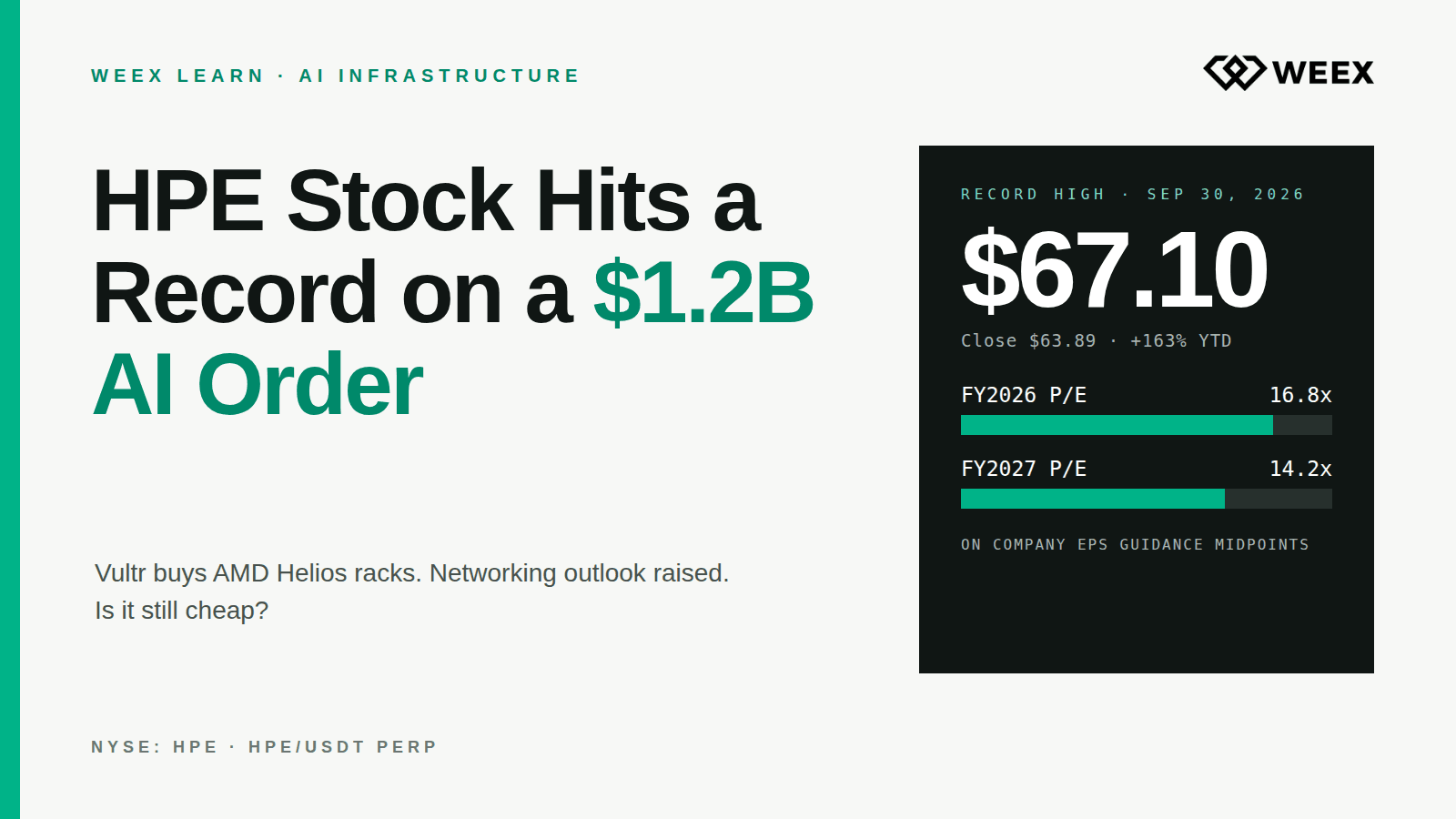
HPE Stock Hits a Record on $1.2B AI Order: Is It Still Cheap?
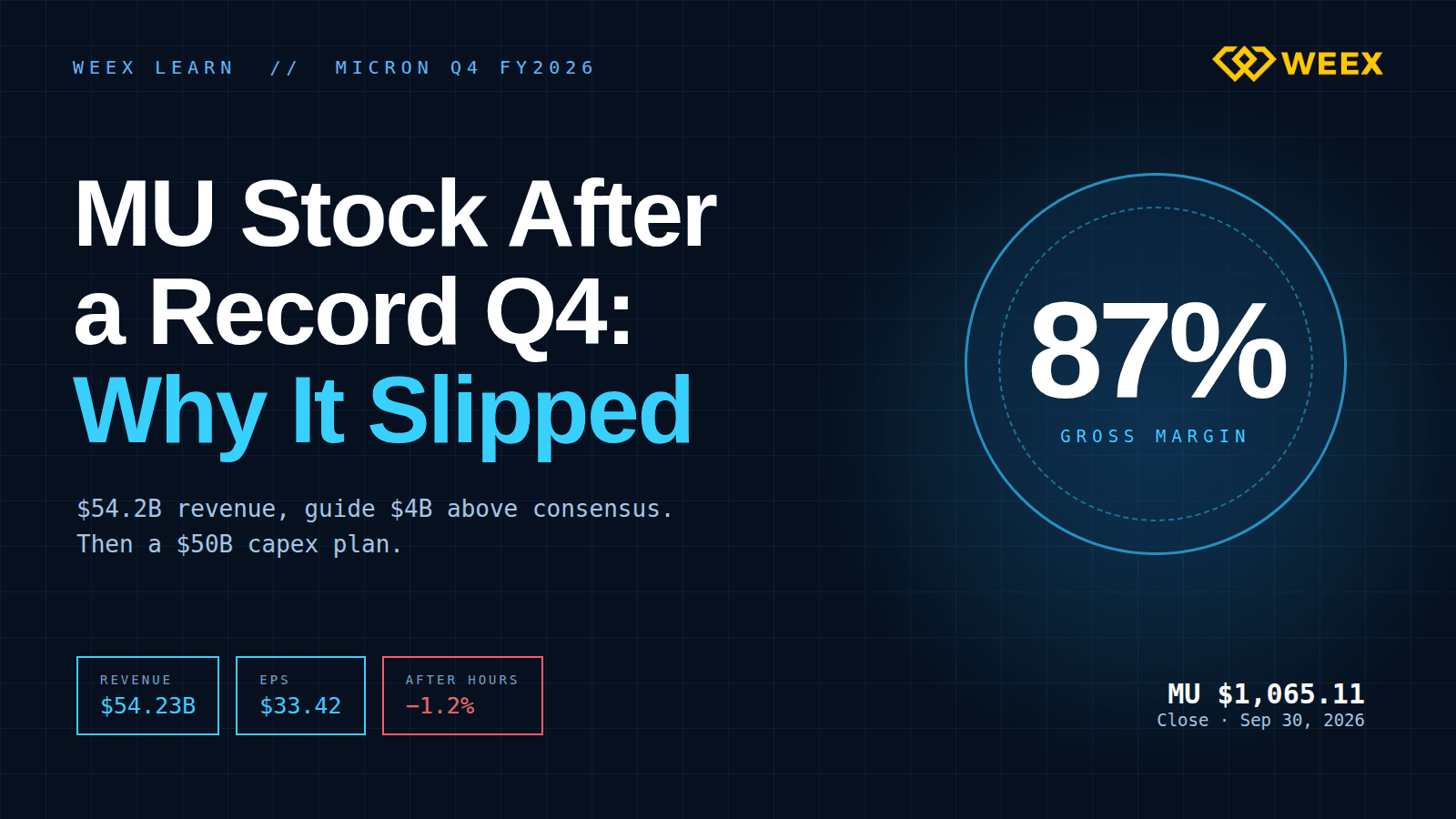
MU Stock After a Record Q4: Why Micron Slipped on a Huge Beat
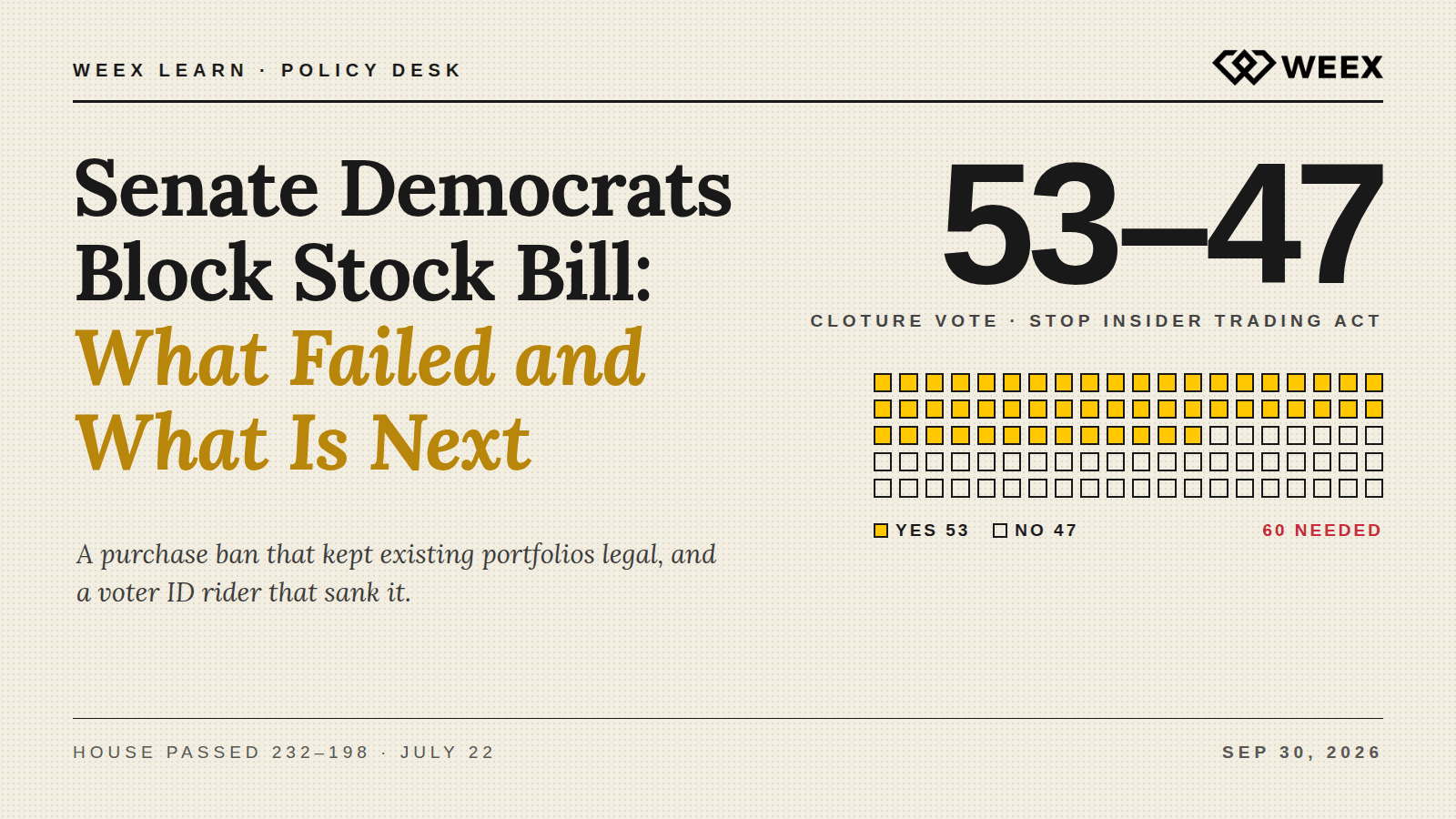
Senate Democrats Block Stock Bill: What Failed and What Is Next
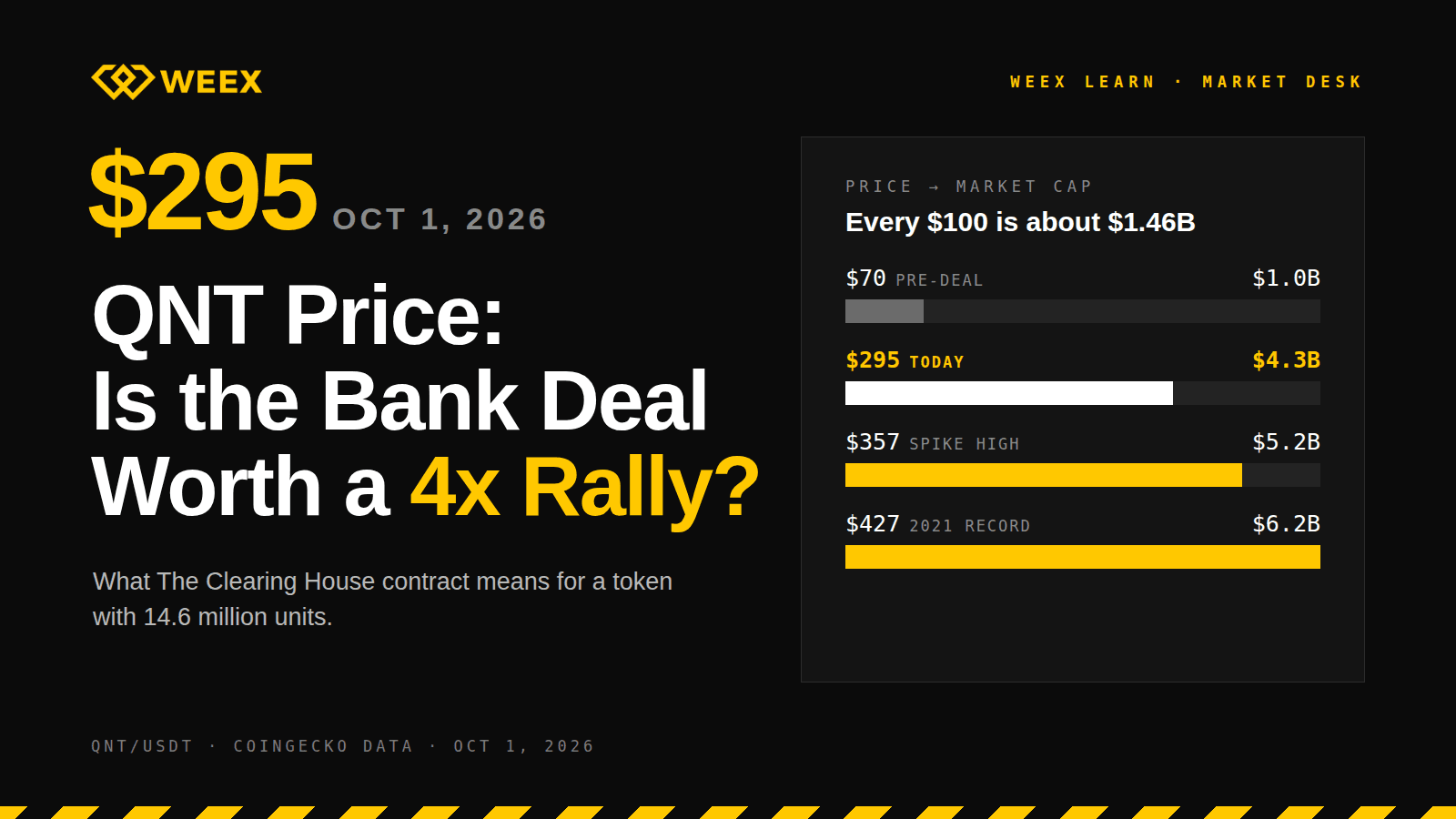
QNT Price Near $295: Does the Bank Deal Justify a 4x Rally?
FICO vs VantageScore: What the New Fannie Mae and Freddie Mac Rule Actually Means for Your Mortgage
How Tether Freezes USDT: Address Blacklists and Holder Checks

Best Crypto Exchange for Beginners 2026: What Your First $100 Actually Goes Through
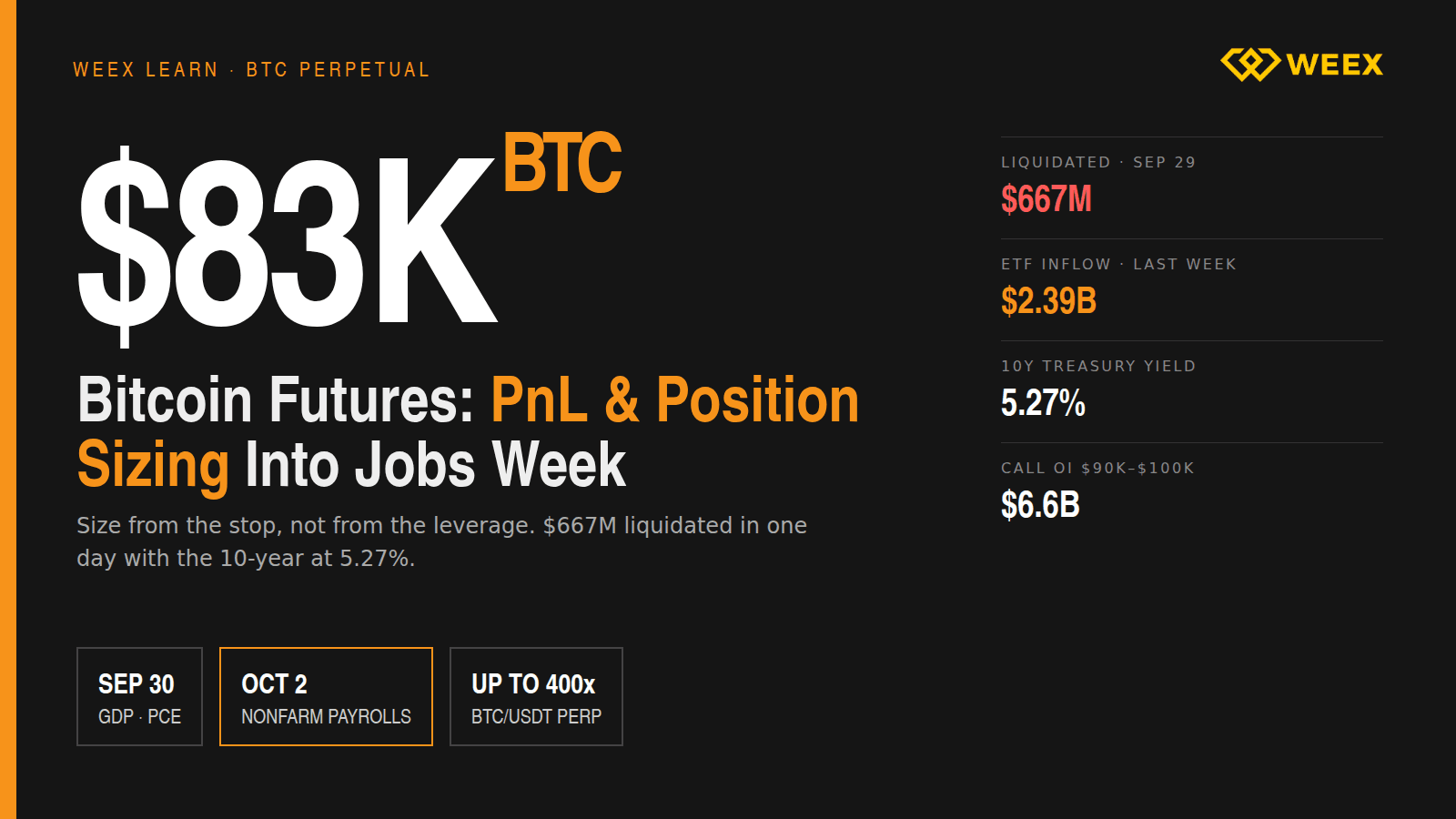
Bitcoin Futures at $83K: PnL and Position Sizing Into Jobs Week
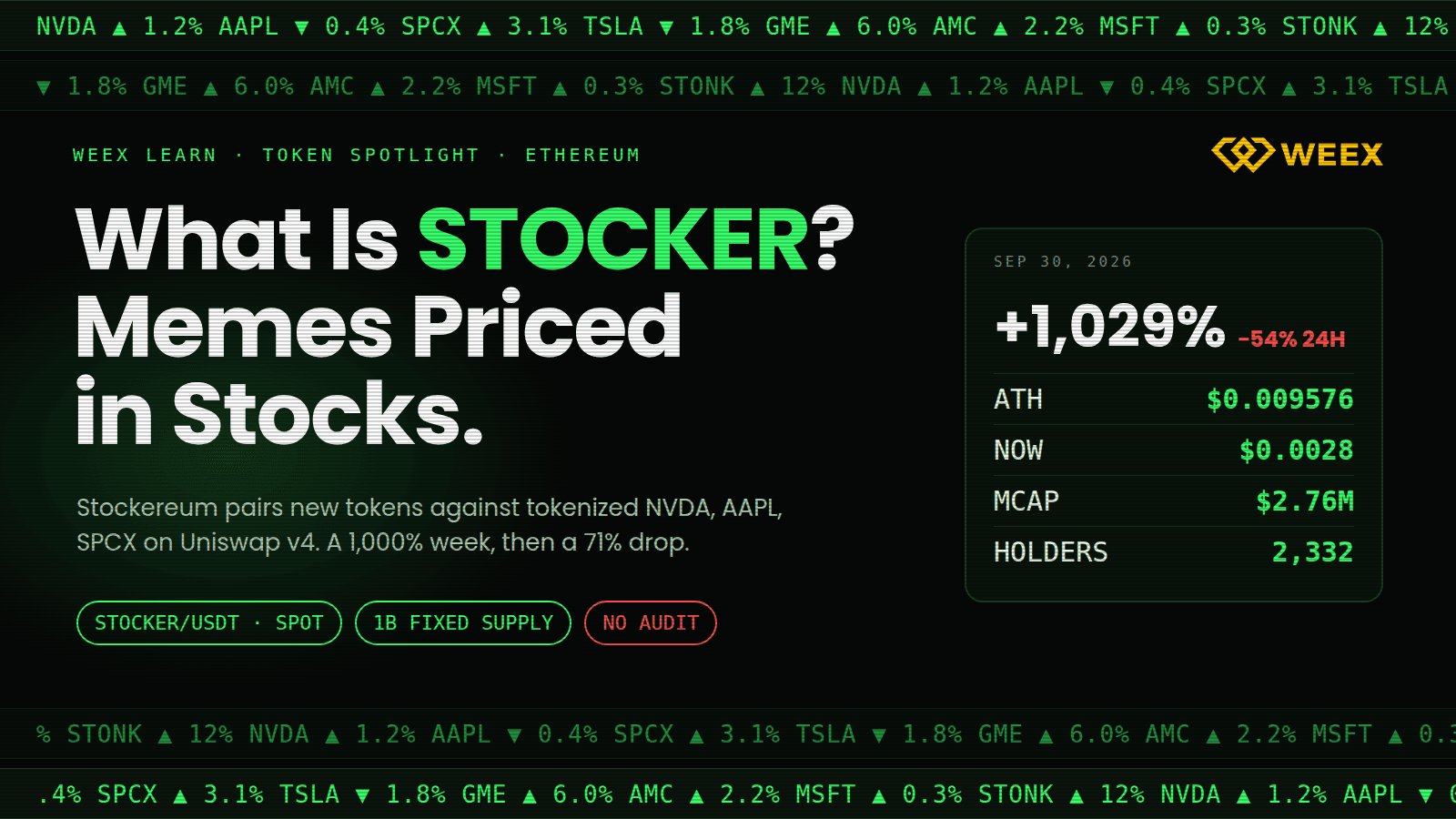
What Is STOCKER? Stockereum, Stock-Paired Meme Tokens, and Risks
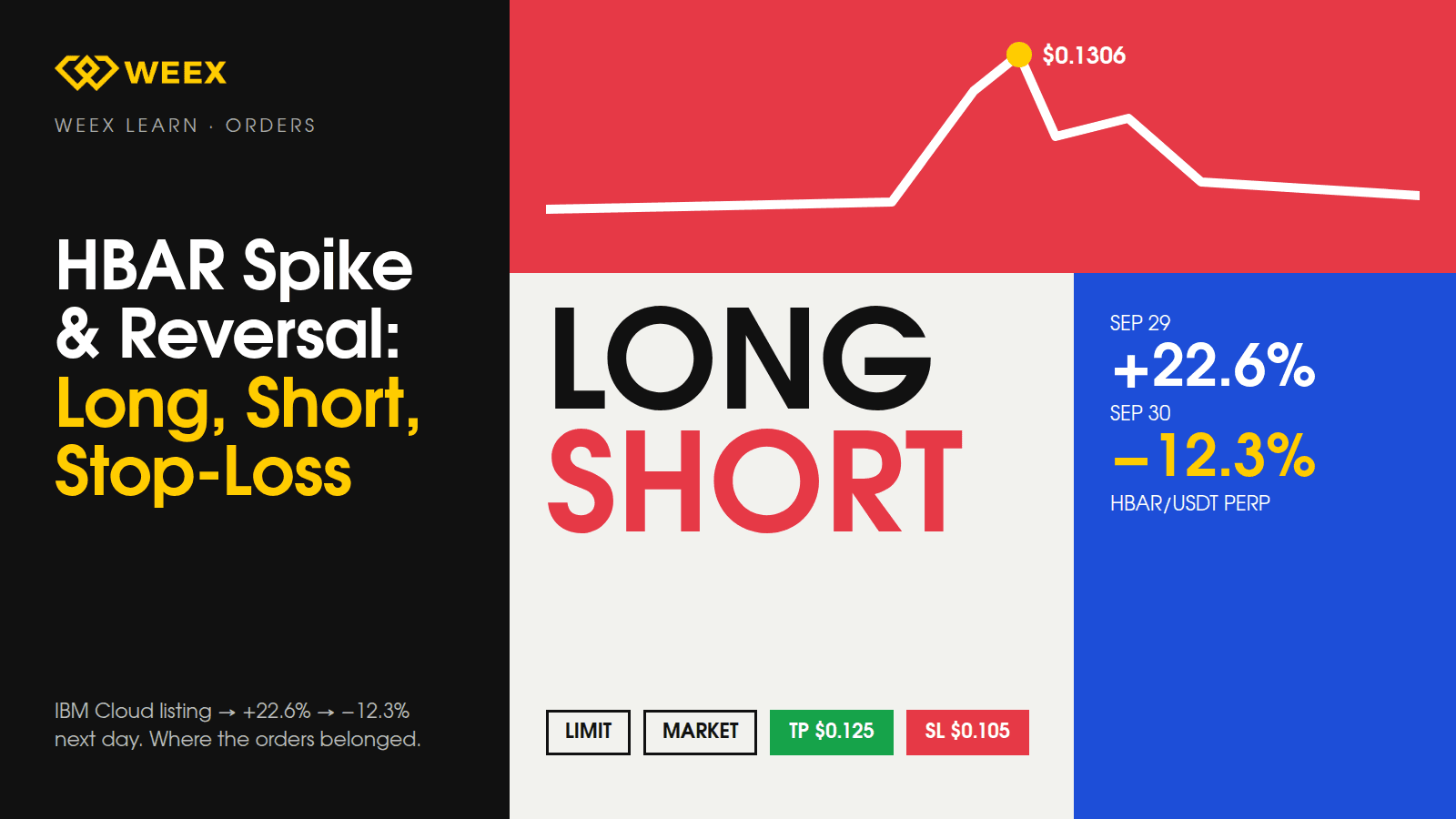
HBAR Price Spike and Reversal: Long, Short, and Stop-Loss Orders
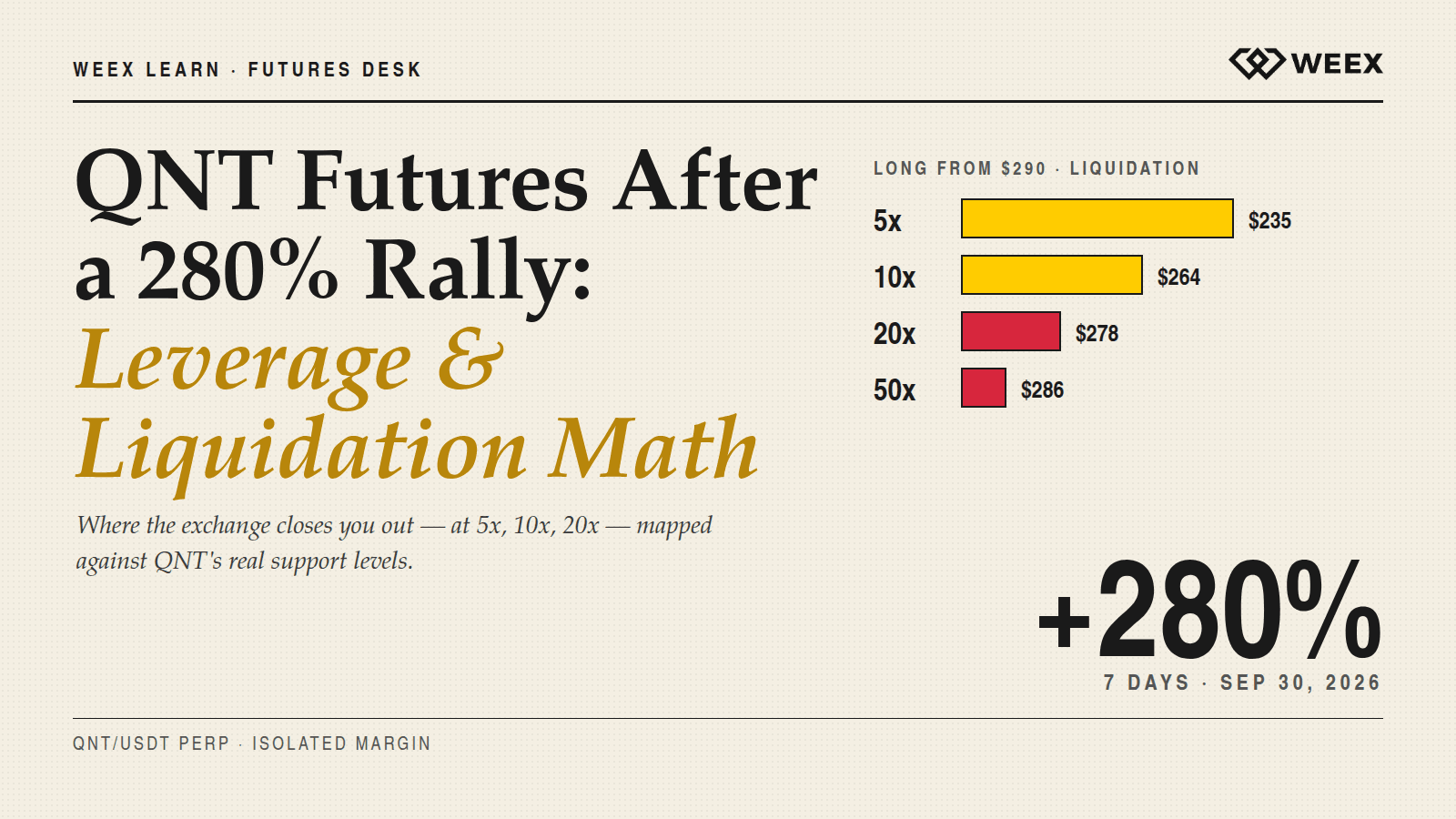
QNT Futures After a 280% Rally: Leverage and Liquidation Math
Ethereum 2030 Roadmap: Vitalik's Cryptographic World Computer
WEEX Strategy Trading: 4 Ways to Automate Your Crypto Trades
What Is Pons Crypto (PONS), and How to Trade PONS on WEEX?
Pi Network vs Other Mobile Mining Projects: What's the Difference
Donald Trump Oil Stock Investments: 9 Names, 6 Tradable Now
Stealth XST Coin: The $1,806 Daily Volume Behind a $2.3M Cap
Contents
Popular coins
Latest articles




