Bitcoin Futures at $83K: PnL and Position Sizing Into Jobs Week

 Prefer us on Google


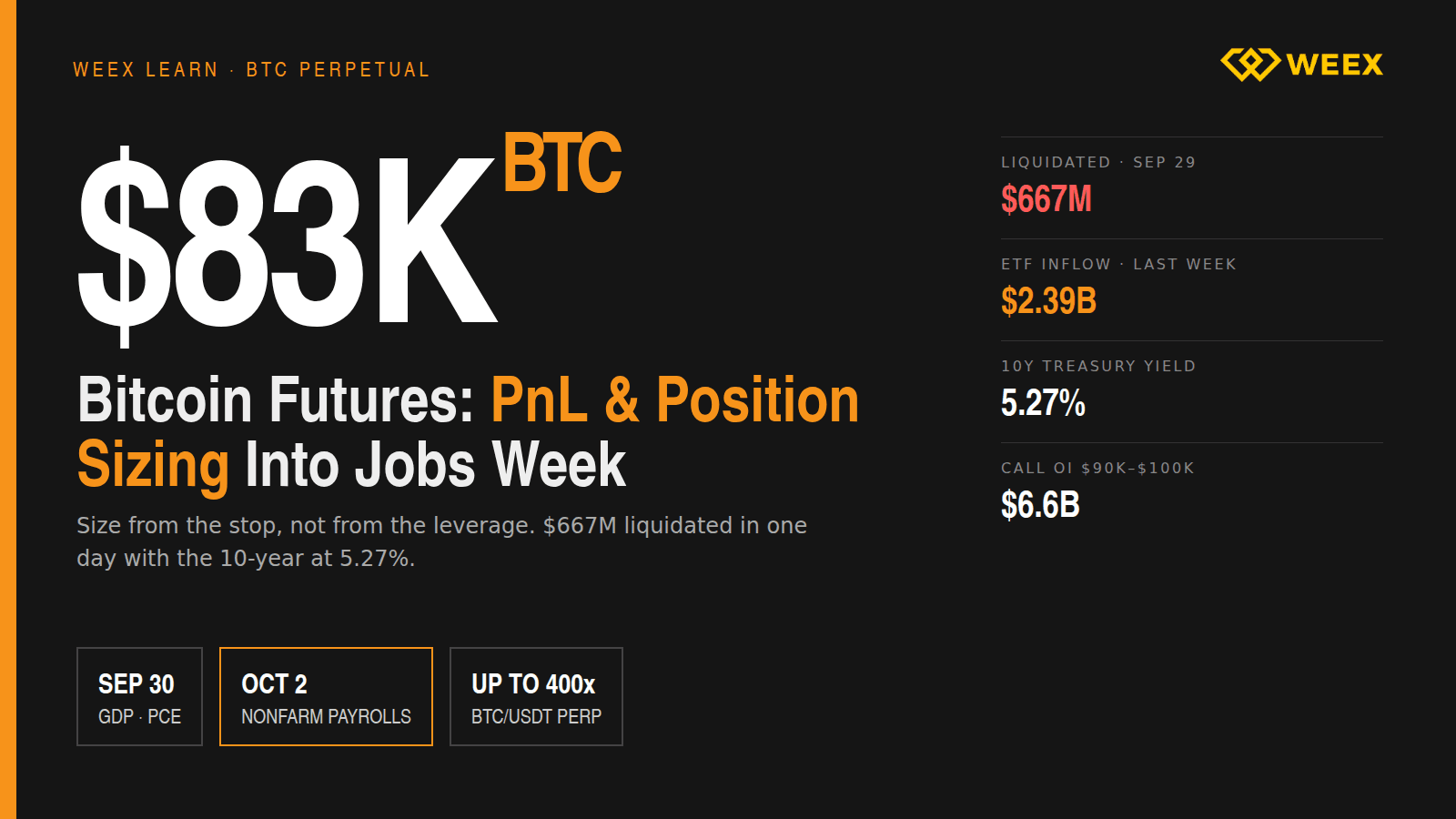
Bitcoin futures traders are heading into the most crowded macro week of the quarter with the market already showing how it punishes size. BTC trades near $83,400 on September 30, 2026, down 3.5% over seven days from a $87,000 peak but up 7.1% over 30 days and more than 40% for the quarter, and on September 29 alone $667 million of crypto futures positions were liquidated, $160 million of them in Bitcoin. US GDP, employment and inflation data land on September 30 and nonfarm payrolls on October 2, with the 10-year Treasury yield at 5.27%, its highest since 2007. This article works through how profit and loss is actually computed on a BTC perpetual, why position size and not leverage is the variable that decides whether a trader survives a data print, and what the derivatives data says about where the crowd is standing.
Where Bitcoin Stands Into the Data Week
The facts as of September 30, 2026, dated from CoinGecko, CoinDesk, and exchange data:
- BTC price $83,432, 24-hour range $82,864 to $84,486, 24-hour volume $28.5 billion, market cap $1.68 trillion. The all-time high of $126,080 is 34% above.
- Spot Bitcoin ETFs took in $2.386 billion last week, the largest weekly inflow since October 2025. Ethereum ETFs added $86.95 million on September 25.
- Liquidations: $330 million across 107,000 traders on September 28 ($230.65 million longs, $99.53 million shorts), then $667 million on September 29 ($160 million BTC, $126 million ETH, $24 million SOL, $22 million XRP).
- Macro: 10-year Treasury yield at 5.27%, the dollar index up 2.7% since September 9 to about 101.50, gold down nearly 4% on September 29 while Bitcoin slipped 1%. S&P 500 fell 0.77% and Nasdaq 0.92% on September 29.
- Options: Deribit open interest of $2.45 billion at the $90,000 call strike, $2.33 billion at $95,000, and $1.79 billion at $100,000. Fidelity's Jurrien Timmer has described a double-bottom breakout above $80,000 targeting $100,000.
The two things in tension here are the ETF bid and the yield backdrop. Institutions bought $2.4 billion of spot Bitcoin in a week while the rest of the risk complex sold off on a 5.27% ten-year. Bitcoin outperforming gold by roughly three points on a day when yields spiked is unusual, and it is why the $100,000 narrative is alive. It is also why the leveraged long is crowded: the September 28 liquidation split was more than two to one against longs, and the September 29 flush was larger still.
How PnL Works on a BTC Perpetual
Profit and loss on a perpetual has two states, and confusing them is how traders end up liquidated while "in profit."
Unrealized PnL is the mark-to-market value of an open position. For a linear USDT-margined BTC perp, it is position size in BTC multiplied by the difference between the current mark price and the entry price. A 0.5 BTC long from $83,000 with BTC at $85,000 shows $1,000 of unrealized PnL. That number changes every tick, is computed on the mark price rather than the last trade, and is what the exchange uses to decide whether your margin is still sufficient.
Realized PnL is what has actually been booked: closed positions, plus or minus funding payments, minus trading fees. Funding on a BTC perp is exchanged every eight hours between longs and shorts; when funding is positive, longs pay shorts. Over a week of holding, funding and fees on a leveraged position are often larger than traders expect, and they come out of realized PnL whether or not the position is closed.
The trap is that unrealized PnL feels like money. A trader up $1,000 on a 10x position who adds to it is not adding from profit; the margin backing the addition is still the original collateral, and the unrealized gain vanishes on a 2.4% pullback. That is the arithmetic behind most of the $230 million of long liquidations on September 28: positions that were comfortably green at $87,000 and gone at $83,000.
Position Size Is the Variable, Not Leverage
Leverage is a display setting. Position size is the risk.
A 10x position with $1,000 of margin and a 1x position with $10,000 of margin both control $10,000 of Bitcoin, and both lose $500 on a 5% drop. The difference is where liquidation sits: the 10x position is liquidated around 9% below entry; the 1x position is not liquidated at all. Leverage decides how much of a move you can survive; position size decides how much a move costs. Traders who choose leverage first and let size follow have it backwards.
The method that works around a scheduled event:
- Decide the invalidation price. For a BTC long from $83,400, a daily close below the $82,000–$83,000 support that held on September 29 is a reasonable line. Call the stop $81,500, a 2.3% distance.
- Decide the account risk. One percent of a $50,000 account is $500.
- Size from those two numbers. $500 of risk divided by a 2.3% stop distance means a position of about $21,700, or 0.26 BTC at $83,400.
- Set leverage last, and only to determine how much margin is posted. At 5x, the $21,700 position needs about $4,350 of margin and is liquidated near $67,000, far beyond the stop. At 20x, it needs $1,085 and is liquidated near $79,800, which is uncomfortably close to where a payrolls print could take BTC before the stop fills.
The position is the same size at 5x and 20x. The 5x version survives a bad print; the 20x version may be liquidated before the stop triggers, at a worse price, plus a fee. On a data week, the margin saved by higher leverage buys nothing and costs the exit.
-- Price
What a Payrolls Print Does to BTC Futures
Nonfarm payrolls on October 2 is the release with the widest expected reaction. The mechanism is not the number itself but its effect on yields: a hot print raises the odds of Fed hikes, pushes the 10-year toward the 6% some analysts are warning about, and hits every long-duration risk asset. A soft print does the reverse.
For BTC perps specifically, three things happen in the minutes after the print:
- The bid-ask spread widens and order-book depth within 0.5% of mid drops sharply. Market orders and triggered stops fill with several times their normal slippage.
- Funding is repriced at the next eight-hour window. If BTC rallies, longs crowd in and funding turns positive, which is a cost to hold and a signal that the move is leveraged.
- Liquidation cascades run in the direction of the crowded side. On September 28–29, that side was long. Deribit's $6.6 billion of call open interest between $90,000 and $100,000 says the options market is positioned for upside; the perps liquidation data says the perps market already is, and has been paying for it.
The trader who is sized so a 5% adverse move costs 1% of the account does not need to predict the print. The trader who is sized so a 5% move is a liquidation has turned a macro release into a coin flip with negative expected value, because the exchange takes a fee on the way out.
BTC Perpetual on WEEX: Contract Details as of September 30
The BTC/USDT perpetual on WEEX quoted $84,362 at fetch on September 30, 2026, with leverage available up to 400x. BTC/USDT spot on WEEX is the venue for unleveraged exposure. The spot ETF flow above, $2.4 billion in a week, is the reason spot Bitcoin has held up better than the rest of the risk complex; leveraged perps are where the drawdowns have concentrated.
On the 400x figure: at that leverage, liquidation sits about 0.2% from entry, inside the September 30 intraday range of roughly 2%. It exists as a maximum, not a recommendation, and the sizing method above will rarely produce a number above 5x for a position held through a data release.
Market View: A Real Bid Meeting a Crowded Long
The better reading of this week is that both bulls and bears have real evidence. The ETF bid is the largest in nearly a year and Bitcoin is decoupling from gold on yield spikes, which supports the $100,000 case over months. The perps data says the fast money is already long, has been liquidated twice in two days, and is about to face two macro prints in three days with the 10-year at 5.27%. Both can be true. The trade that respects both is a smaller position than feels natural, a stop below the $82,000 shelf, leverage low enough that the stop rather than the liquidation engine is the exit, and no additions funded by unrealized PnL until the October 2 print is behind.
FAQ
1. What is the difference between unrealized and realized PnL on Bitcoin futures?
Unrealized PnL is the mark-to-market value of an open position and changes every tick; it is what the exchange checks against your margin. Realized PnL is booked profit or loss from closed positions, minus fees and plus or minus funding payments. Unrealized gains are not collateral you can safely add to.
2. How do I size a BTC futures position before nonfarm payrolls?
Set the stop first (for example $81,500 on a long from $83,400, a 2.3% distance), decide account risk (1% of $50,000 is $500), then size so the stop costs that amount: about $21,700, or 0.26 BTC. Choose leverage last, low enough that liquidation is far beyond the stop.
3. How much Bitcoin was liquidated this week?
$330 million across all crypto on September 28, 2026 ($230.65 million longs, $99.53 million shorts), and $667 million on September 29, of which $160 million was Bitcoin and $126 million Ethereum.
4. Why is Bitcoin holding up while yields rise?
Spot Bitcoin ETFs took in $2.386 billion last week, the largest weekly inflow since October 2025, and on September 29 BTC fell only 1% while gold dropped nearly 4% with the 10-year at 5.27%. Institutional spot demand is absorbing what leveraged perps are selling.
5. What is the Bitcoin $100K double bottom?
Fidelity's Jurrien Timmer has pointed to a double-bottom pattern with a breakout above $80,000 that targets $100,000. Deribit call open interest of $2.45 billion at $90,000, $2.33 billion at $95,000 and $1.79 billion at $100,000 shows the options market positioned for that path. It is a pattern, not a guarantee.
Risk Warning
Bitcoin is volatile and can fall sharply on macroeconomic data, including the September 30 GDP and inflation releases and the October 2 nonfarm payrolls report; positions can result in partial or total loss. Perpetual futures magnify moves through leverage; at 20x a 5% move is a liquidation, and liquidations execute at worse prices than a stop-loss plus a fee. Liquidity thins and slippage rises sharply in the minutes around data prints, so stops may fill far from their trigger. Funding payments and fees reduce realized PnL every eight hours on leveraged positions. The 10-year Treasury yield at 5.27% and a strengthening dollar are active headwinds for risk assets, and ETF inflows can reverse. Nothing here is investment advice.
This content is provided for general informational purposes only and doesn't constitute financial, investment, legal, or tax advice. Any events, rewards, online promotions, or related information mentioned herein should not be considered a recommendation, solicitation, or invitation to purchase, sell, trade, or otherwise deal in any crypto assets. Crypto assets are highly volatile and may result in loss. The availability of WEEX services, products, and related events may vary by region. You are responsible for ensuring that your participation is in accordance with applicable local laws and regulations.
You may also like
HPE Stock Hits a Record on $1.2B AI Order: Is It Still Cheap?
MU Stock After a Record Q4: Why Micron Slipped on a Huge Beat
What Is STOCKER? Stockereum, Stock-Paired Meme Tokens, and Risks
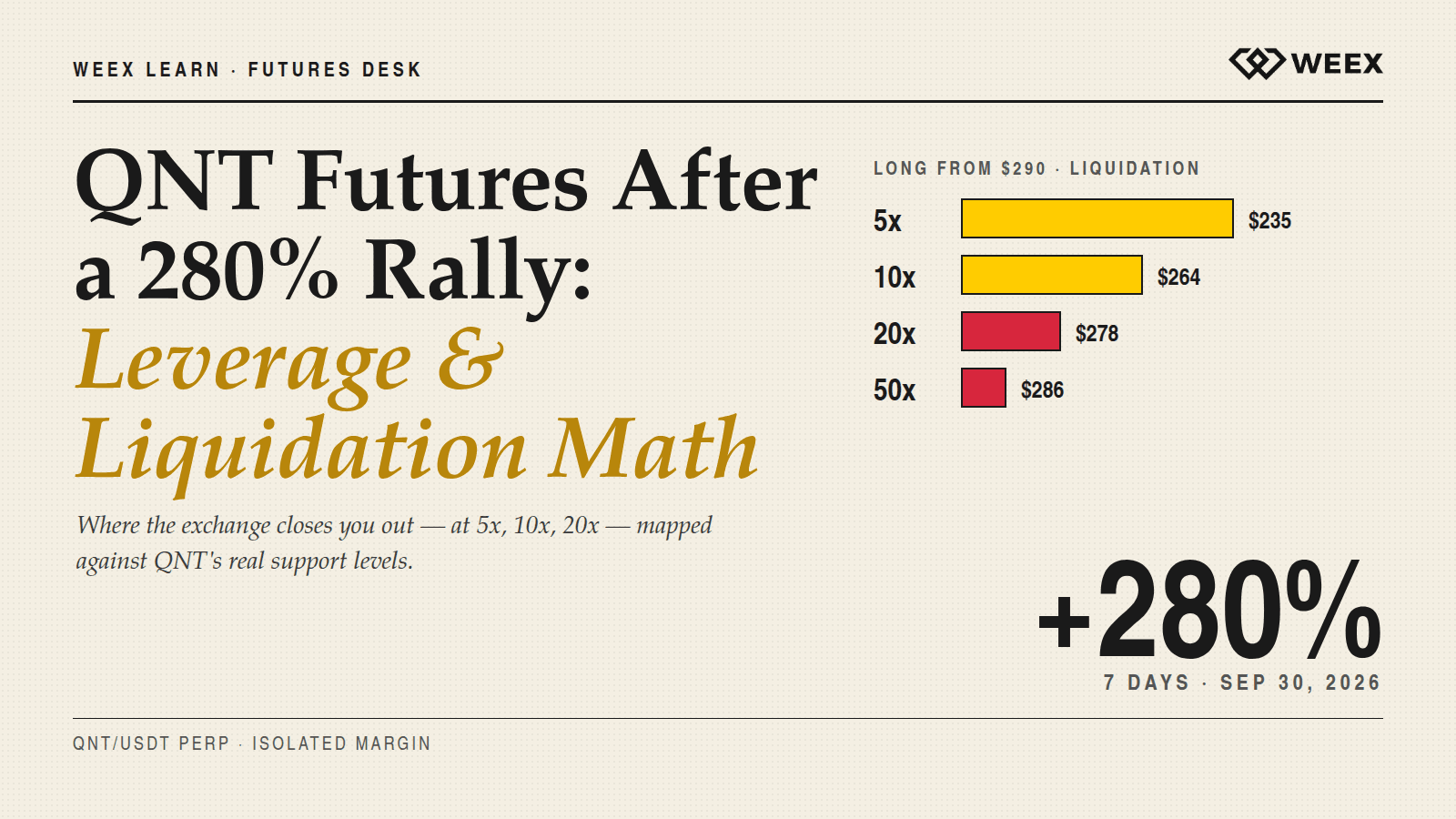
QNT Futures After a 280% Rally: Leverage and Liquidation Math
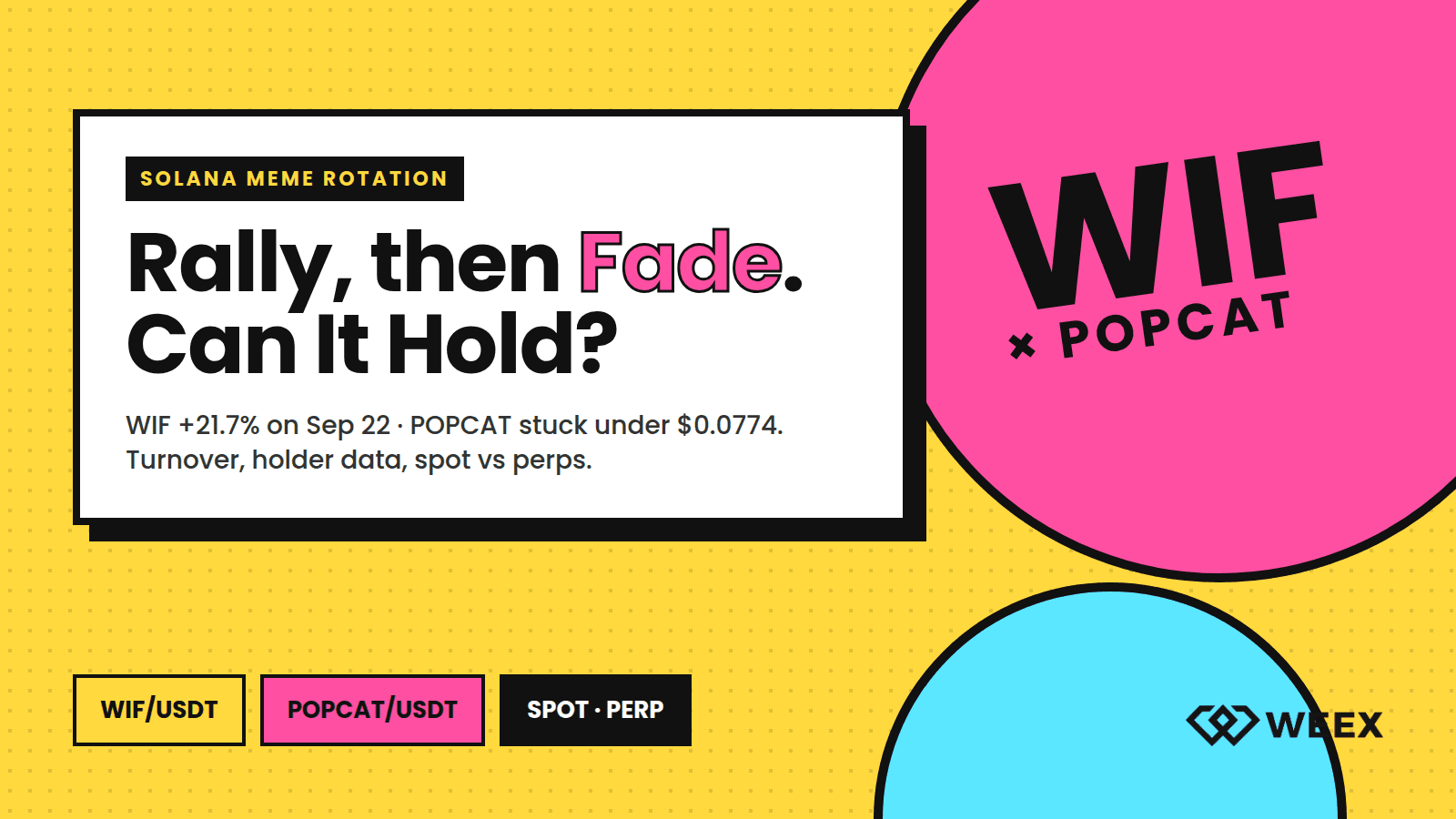
WIF and POPCAT Price Rally: Can the Solana Meme Rotation Hold?

Is QNT a Stock or Crypto? Quant (QNT) and Quantinuum Stock Are Not the Same Asset

What Is Quant (QNT) Crypto? How Overledger Works, QNT Utility, and Token Supply Explained

Taiwan's Travel Rule Starts in October: What Domestic Crypto Transfers Will Require

Italian Crypto Tax Return 2026: Filing Deadline, Forms and Gains Rate
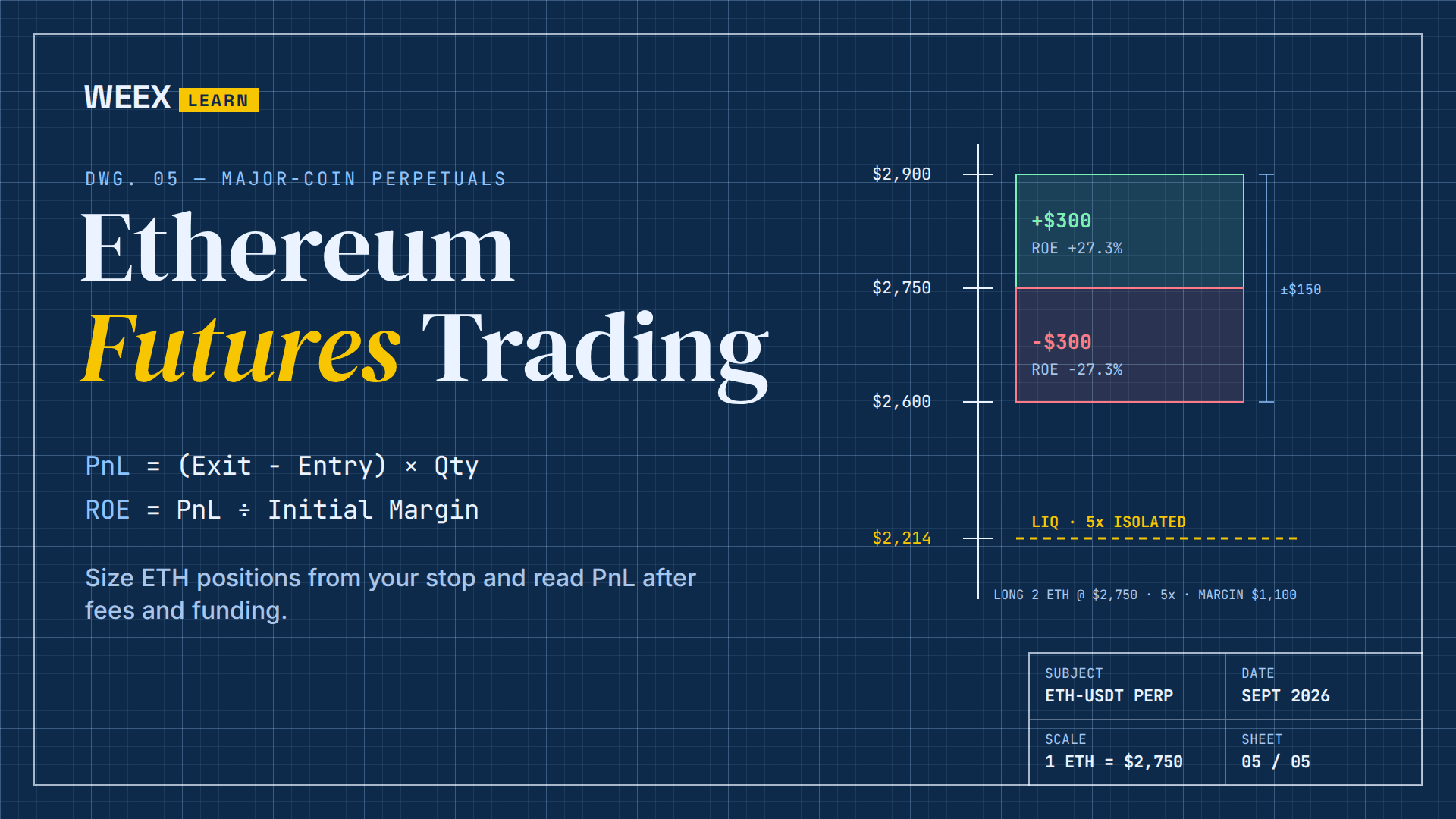
Ethereum Futures Trading: How to Size ETH Positions and Read PnL
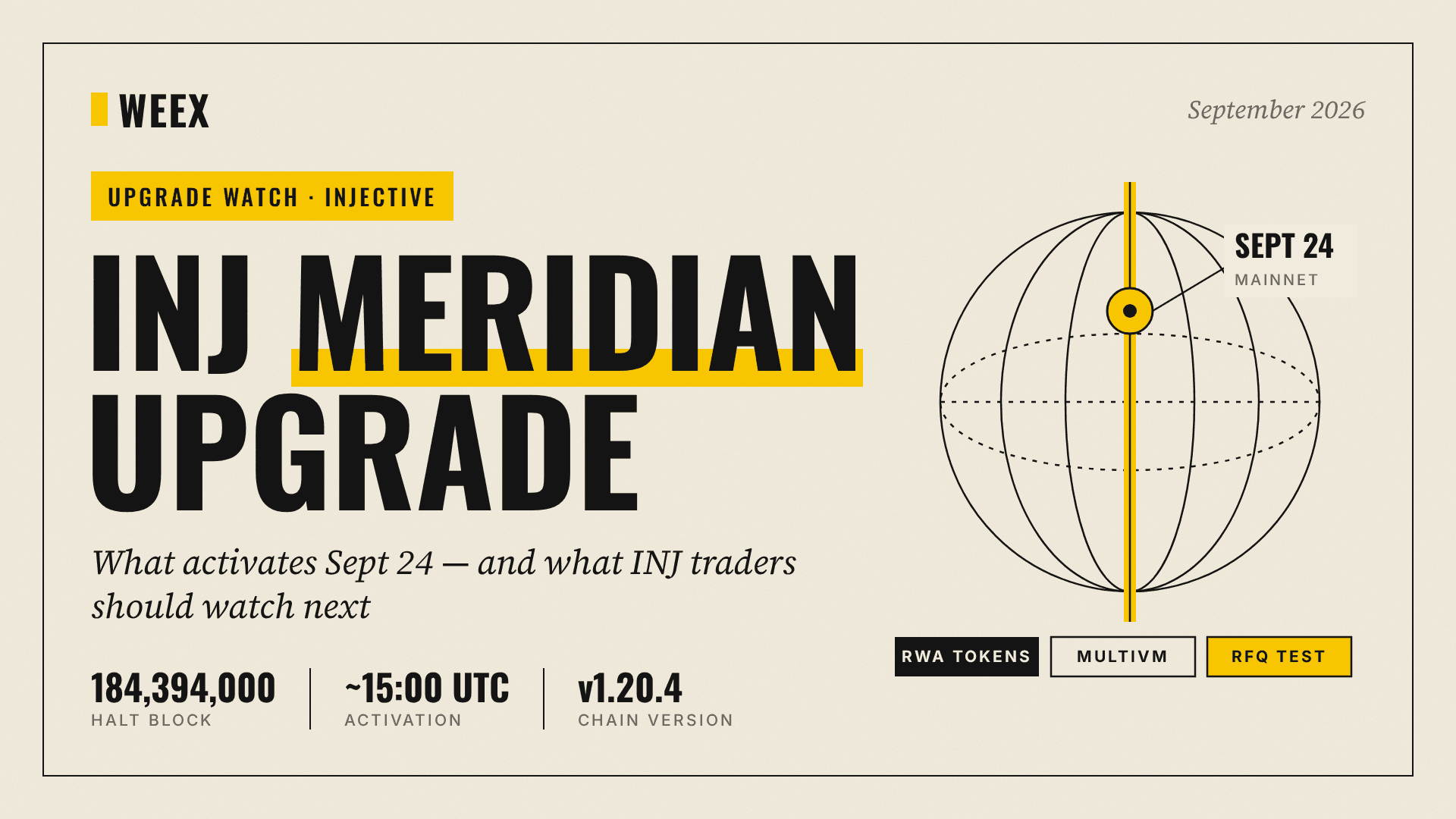
INJ Meridian Upgrade: What Activates Sept 24 and What to Watch

How to Connect Phantom Wallet to a Solana DApp
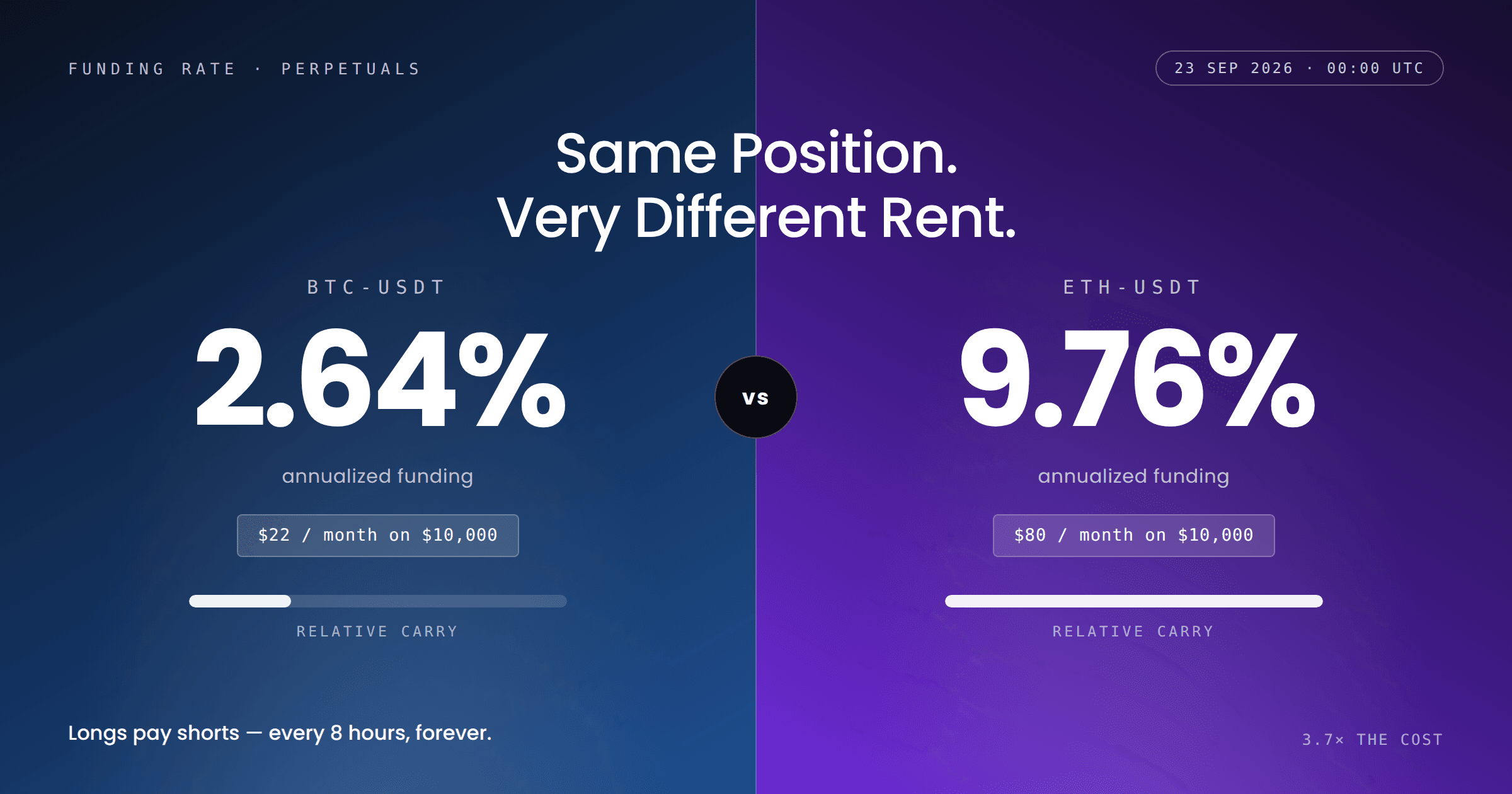
Funding Rate Crypto: What BTC and ETH Are Paying Right Now
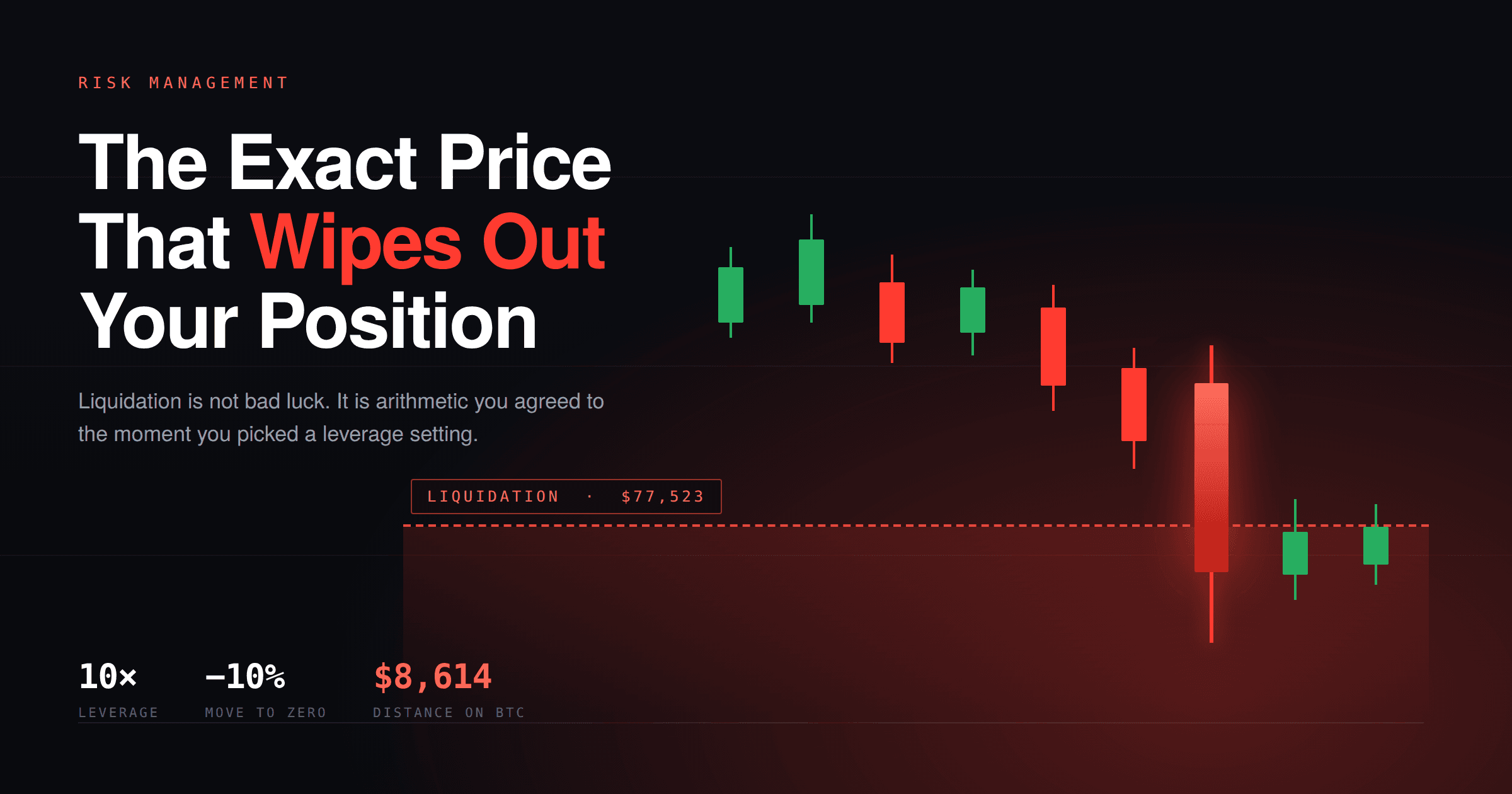
Crypto Liquidation: The Exact Price That Wipes Out Your Position

How to Trade on Hyperliquid: A Step-by-Step Guide
WEEX and MiCA: What the RDWW-1194 Entry in Poland's Register Says
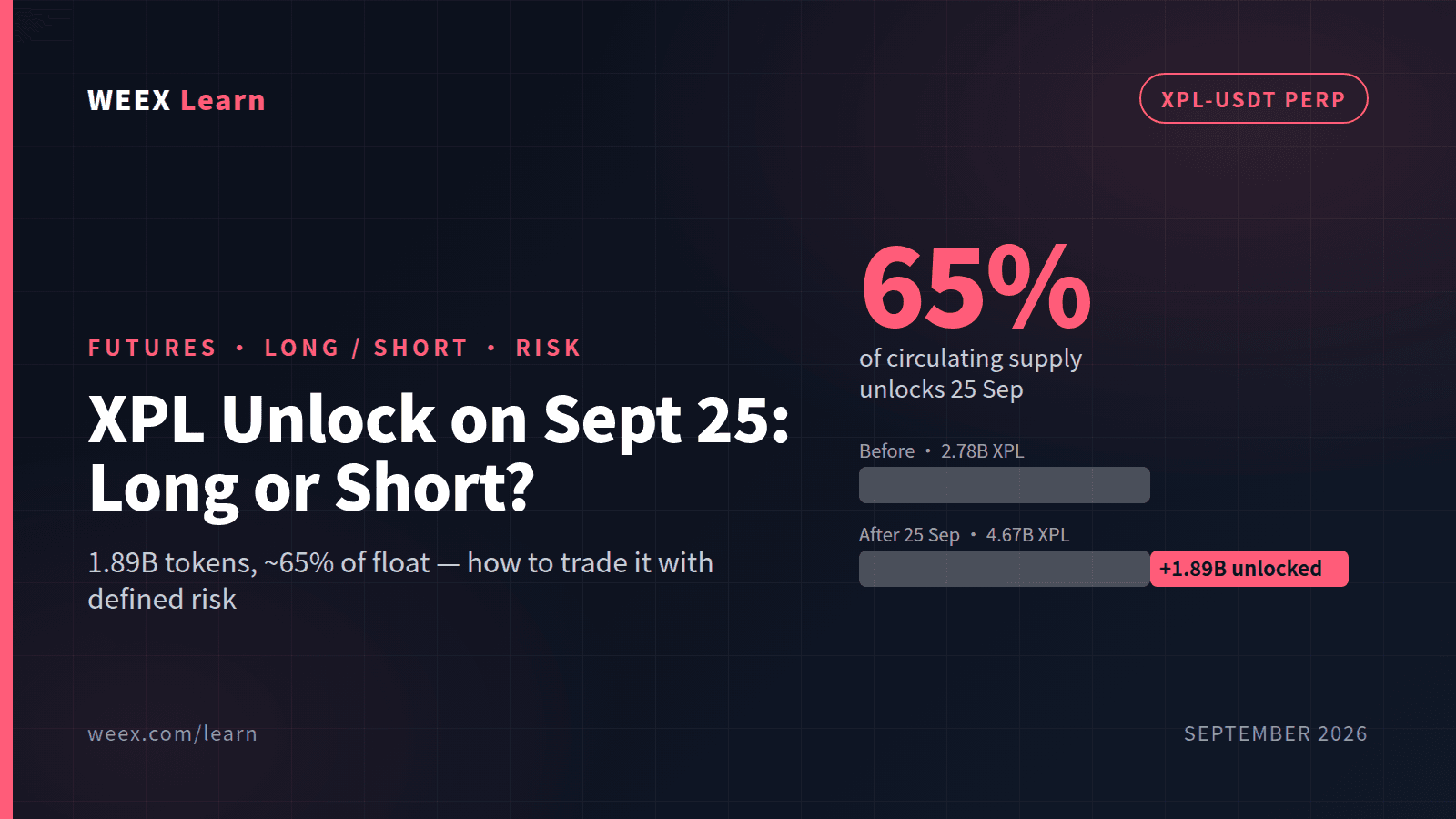
XPL Unlock on Sept 25: How to Long or Short Plasma Futures Safely

Circle's Arc Mainnet Is Live: Can It Actually Close the Gap With Tether's USDT?
Stonkfly Fruit-Fly Brain Bitcoin Experiment: What It Shows and Does Not Prove
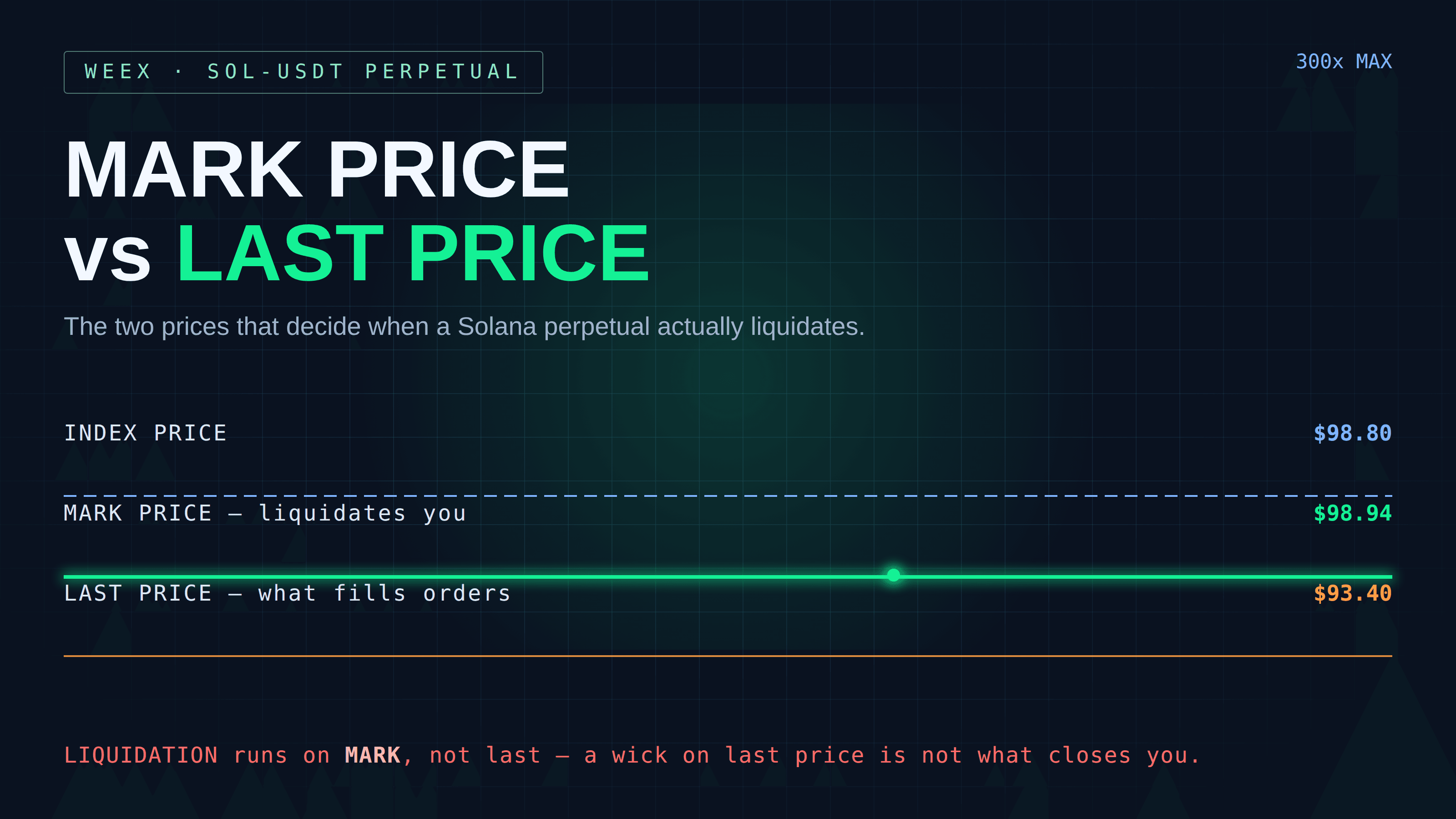
SOL Perpetual Contracts: Mark Price, Index Price and Liquidation
XRP Futures: How to Long or Short XRP After the Clarity Act Vote
WEEX API Key Security: What a Leaked Key Can Still Do to You
WEEX API Key Setup: Permissions, IP Binding and Key Limits

Lost Your 2FA Device? Here's What to Do Next
Trust Wallet vs MetaMask: Which One Is Better for Beginners?

Trust Wallet Seed Phrase: How to Store It Safely and What Never to Do

AVAX Futures: Trading the Avalanche RWA Catalyst With Leverage
SpaceX Stock Futures: Where to Put Stops on a 115% Range
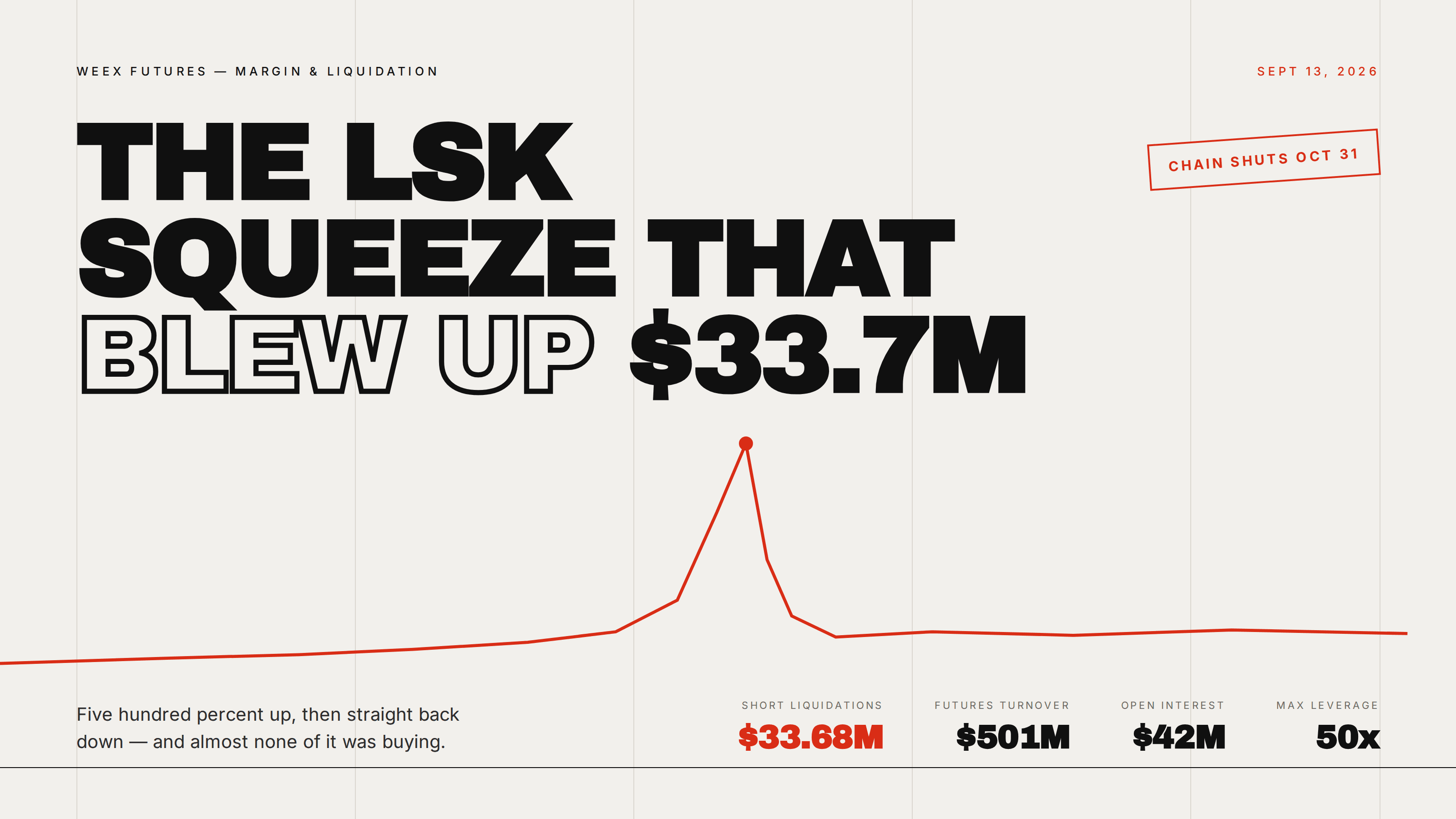
LSK Short Squeeze: How $33.7M of Bears Blew Up in a Day
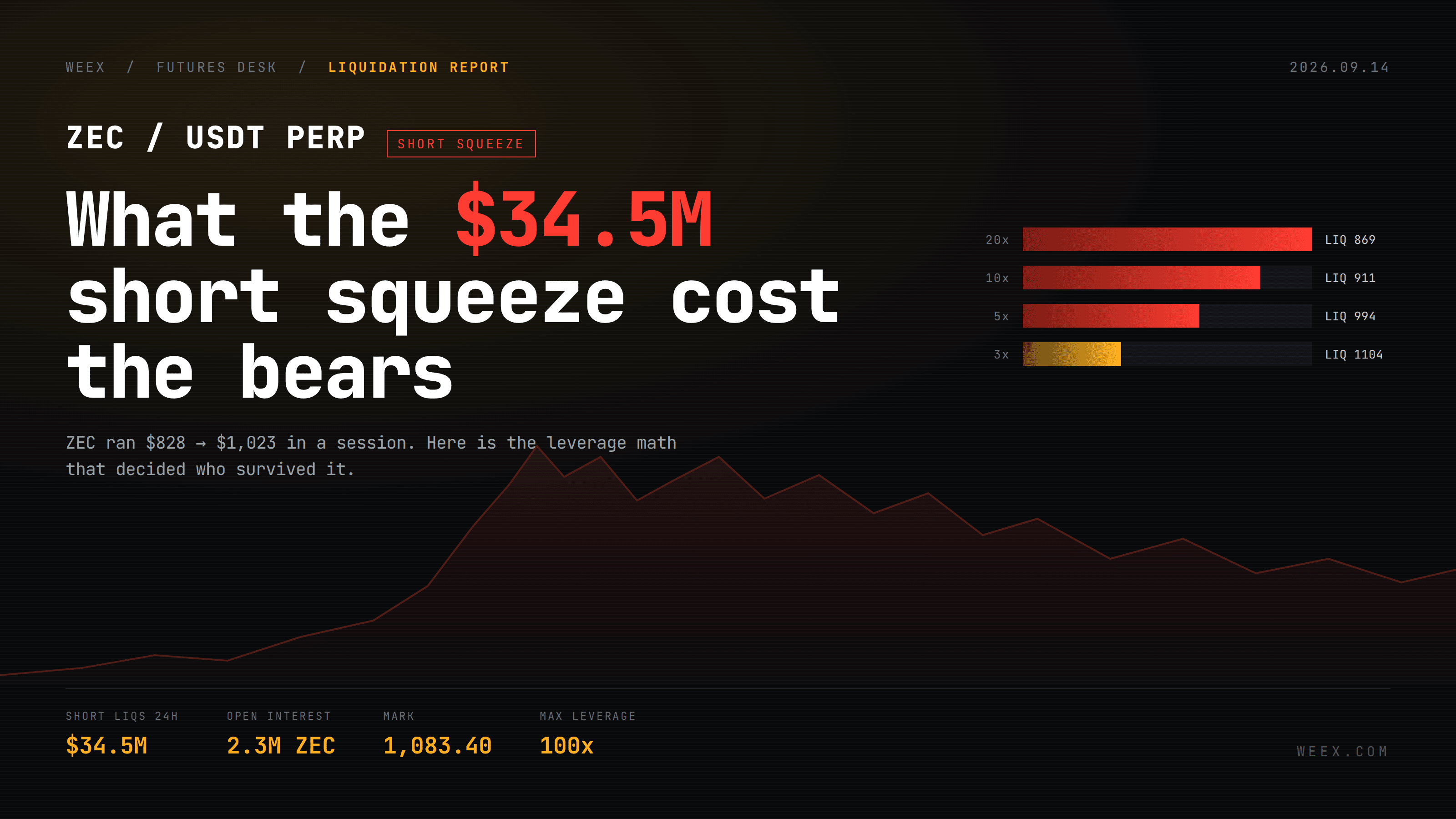
Zcash Futures: What the $34.5M Short Squeeze Cost the Bears
HPE Stock Hits a Record on $1.2B AI Order: Is It Still Cheap?
MU Stock After a Record Q4: Why Micron Slipped on a Huge Beat
What Is STOCKER? Stockereum, Stock-Paired Meme Tokens, and Risks
QNT Futures After a 280% Rally: Leverage and Liquidation Math
WIF and POPCAT Price Rally: Can the Solana Meme Rotation Hold?
Is QNT a Stock or Crypto? Quant (QNT) and Quantinuum Stock Are Not the Same Asset