
QNT Futures After a 280% Rally: Leverage and Liquidation Math

 Prefer us on Google


QNT futures are the most dangerous contract on the board this week, in both directions. Quant's token rose about 280% in seven days after The Clearing House named it the interoperability layer for a tokenized-deposit network spanning 25 major US banks, and by September 30, 2026, QNT trades near $291 with a 24-hour range that would liquidate most leveraged positions on its own. This article explains what actually drove the move, how leverage and liquidation price are calculated on a QNT perpetual, why isolated margin is the only sane mode for a coin like this, and what the futures data says about who is positioned where.
Why QNT Rallied 280% in a Week
The catalyst is real, which is part of what makes the trade hard. On September 24, 2026, The Clearing House, the bank-owned operator whose payment rails move more than $2 trillion a day, selected Quant for its On-Chain Money initiative. Quant's Overledger will serve as the interoperability framework letting tokenized deposits settle across the 25 major US banks that own the network. Institutional access is targeted for the first half of 2027.
The price path since then, dated from CoinGecko and news reports:
- September 25: QNT gained about 27% in a session to a yearly high near $95. Derivatives volume rose 21% to $39 million and open interest to $19 million, small numbers that matter because they show how thin the market was at the start.
- September 27: QNT rose 54.9% to $187 on $710 million of reported volume. One analytics report flagged 77% of that volume as likely wash trading, and noted net inflows to centralized exchanges, which usually means holders positioning to sell.
- September 28–29: a wallet with an average cost of $22.57 moved 9,000 QNT, about $2 million, to Coinbase and Kraken, an 884% unrealized gain. The daily RSI was reported near 100.
- September 30: QNT trades at $291.61, up 37% in 24 hours and 280% over seven days, on $978 million of volume. Market cap is $4.24 billion at rank #32. The all-time high of $427 from September 2021 is 32% away.
Two structural facts explain why a piece of news produced a near-vertical chart. QNT has a circulating supply of 14.54 million tokens against a maximum of 14.61 million, so there is almost no float and no unlock overhang; a few hundred million dollars of buying moves it more than a billion moves a large cap. And the token had spent years as a low-attention enterprise-blockchain name, so open interest was tiny when the news hit. Shorts entering at $95 and $187 on the assumption that a 27% or 55% day must reverse became the fuel for the next leg.
QNT Perpetual Contract on WEEX: The Numbers That Matter
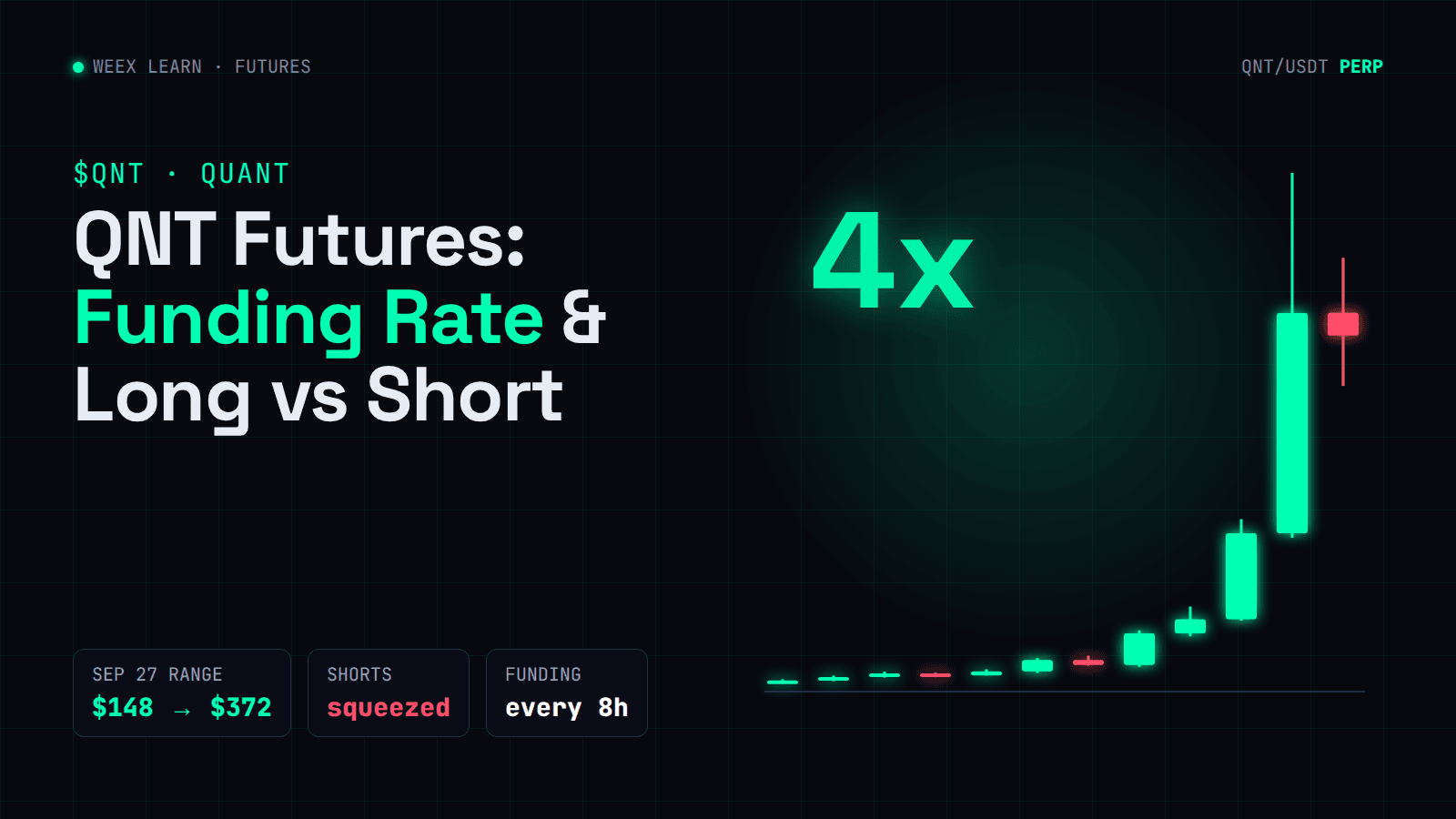
As of September 30, 2026, the QNT/USDT perpetual on WEEX quotes around $290.57, with leverage available up to 200x. The QNT/USDT spot pair trades at $293.71 on the same date. Across the market, QNT futures open interest hit a record $158.8 million in the last week of September, up from $19 million on September 25, while the funding rate was slightly negative at about −0.0136%.
That combination is unusual and worth reading carefully. Open interest rising eight-fold while price rises 280% says leverage is piling in. A negative funding rate during a rally says the leverage is net short: more traders are paying to bet against the move than to ride it. On a low-float token, that is a short squeeze waiting for a trigger. It is also why anyone considering a QNT short should assume they are standing in a crowd, and why the September 27–30 leg happened at all.
How Leverage Sets Your Liquidation Price on QNT
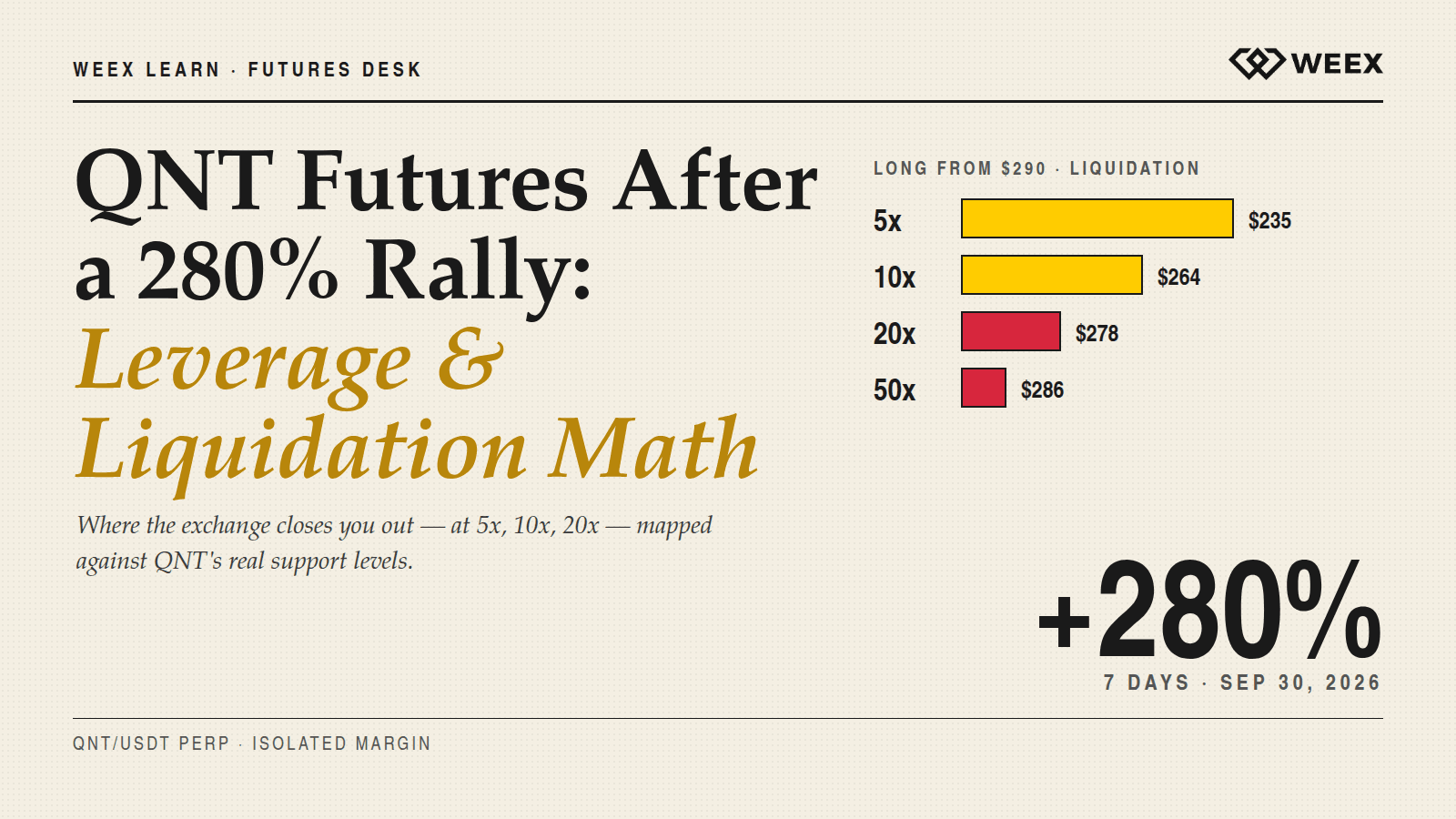
Leverage on a perpetual does not change how much QNT moves. It changes how far QNT has to move against you before your margin is gone. The distance to liquidation is, to a first approximation, 100% divided by the leverage, minus the maintenance margin rate. On most exchanges the maintenance margin on an altcoin perp is between 0.5% and 2% depending on position size, so the working numbers look like this for a long opened at $290:
- 5x leverage: liquidation roughly 19% below entry, around $235.
- 10x leverage: liquidation roughly 9% below entry, around $264.
- 20x leverage: liquidation roughly 4% below entry, around $278.
- 50x leverage: liquidation roughly 1.5% below entry, around $286.
- 100x and above: liquidation inside the normal bid-ask spread of a token this volatile.
Now put those numbers against QNT's actual behavior. On September 30 alone the token moved 37%. On September 27 it moved 55%. Support cited by analysts sits at $250, then $228 and $171.70; resistance is last week's high of $373 and the $427 record. A 10x long from $290 is liquidated at $264, which is above the first support level. It would be liquidated by a normal pullback within an intact uptrend. A 10x short from $290 is liquidated at $316, a 9% move that QNT has covered in a single hour more than once this week.
The number to compute before entering is not "how much can I make" but "at what price does the exchange close me out, and has QNT moved that far in a single candle this week?" For QNT right now, at anything above 3x the honest answer to the second question is yes.
-- Price
Isolated Margin Versus Cross Margin on a Parabolic Coin
Margin mode decides which funds the exchange can take when a position goes wrong.
In cross margin, the whole futures wallet backs every open position. A QNT long that gets hit does not just lose its own margin; it draws down the balance behind your BTC and ETH positions too, and if QNT gaps far enough, it can liquidate positions that had nothing to do with Quant. Cross margin is designed for hedged books where positions offset each other. It is the wrong tool for a single speculative bet on a coin moving 30% a day.
In isolated margin, only the collateral assigned to the QNT position is at risk. If the position is liquidated, the loss is capped at that collateral; the rest of the account is untouched. The cost is that isolated positions are liquidated sooner, because there is no shared balance to absorb a temporary drawdown. On QNT this week, that is a feature. The point of isolating is to decide in advance the most you can lose on a coin you cannot model.
A practical structure for a directional QNT trade: isolated margin, leverage of 2x to 3x, collateral sized so the full loss is one you would accept, and a stop placed above the liquidation price rather than relying on the liquidation engine as your exit. The liquidation engine charges a fee and closes at a worse price than a stop would; using it as a stop is paying extra to lose more.
What Traders Usually Get Wrong on a Move Like This
The first mistake is shorting the top because it looks like the top. QNT has printed a "top" on September 25, September 27, and September 29, and each one resolved higher. The negative funding rate shows how many traders took that trade. On a token with 14.5 million circulating supply and record open interest, the path of least resistance is whichever direction has the most stops, and this week that has been up.
The second mistake is longing the parabola with size after the move, on the logic that a real institutional deal justifies any price. The Clearing House network does not go live until 2027. Nothing about the deal generates QNT demand this quarter; the demand is speculative repricing, and the wallet with an 884% gain moving coins to exchanges shows what early holders do with speculative repricing. The wash-trading estimate on the September 27 volume is a reminder that the visible order flow is not all real.
The third mistake is picking a leverage number before picking a liquidation price. Traders who start from "10x" and then find out the liquidation is at $264 have done the process backwards. Start from the price at which the trade idea is wrong, say a daily close below $250, and set leverage so the liquidation price is comfortably beyond it. On QNT from $290 that arithmetic gives you about 4x to 5x at most, with a stop at $250 and liquidation near $235.
Market View: A Real Catalyst Priced Like a Meme
The better reading of QNT is that the catalyst is real and the price action is not about the catalyst. Selection by The Clearing House is the most significant institutional validation Quant has received, and it explains why the token rerated. It does not explain 280% in a week; float, short positioning, and momentum flows explain that. Markets like this usually resolve with a sharp flush that clears the leveraged longs, a partial recovery as the shorts that survived cover, and then a range well below the peak while the news is digested. Where that range sits is unknowable today. What is knowable is that a QNT position at more than 5x leverage, in cross margin, without a stop, is a position the market has already shown it can close for you.
FAQ
1. Why did QNT go up so much in September 2026?
The Clearing House selected Quant on September 24 for its On-Chain Money initiative, a tokenized-deposit settlement network across 25 major US banks. QNT rose about 280% over the following week, from a $95 yearly high on September 25 to around $291 by September 30, helped by a circulating supply of only 14.5 million tokens and heavy short positioning.
2. What leverage is available on QNT futures on WEEX?
The QNT/USDT perpetual on WEEX lists leverage up to 200x as of September 30, 2026. On a token moving 30–55% in a day, anything above roughly 5x puts the liquidation price inside a normal intraday range.
3. How do I calculate my liquidation price on a QNT perp?
Roughly, distance to liquidation equals 100% divided by leverage, minus the maintenance margin rate (usually 0.5–2%). A 10x long from $290 is liquidated around $264; a 10x short around $316. Check the exchange's own calculator, which includes fees and tiered margin.
4. Should I use isolated or cross margin for QNT?
Isolated. It caps the loss at the collateral assigned to the QNT position, so a 30% gap cannot liquidate unrelated positions. Cross margin shares the whole wallet and is meant for hedged books, not single speculative bets.
5. Is it safe to short QNT after a 280% rally?
Nothing about this trade is safe. Funding has been negative during the rally, meaning shorts are already crowded, and QNT has squeezed through three apparent tops in a week. A short needs a defined invalidation level, low leverage, and a stop, or it is a bet that you can outlast a crowd.
Risk Warning
QNT is an extremely volatile asset: it moved 37% in a single day on September 30, 2026, and 280% over the preceding week, and it can fall as fast as it rose, resulting in partial or total loss of capital. QNT perpetual futures amplify those moves through leverage; at 10x, a routine 9% pullback liquidates the position, and the funding rate and liquidation fee add further cost. Cross margin exposes the whole futures wallet to a single QNT position. Liquidity is concentrated and a share of reported volume has been flagged as wash trading, so real depth may be thinner than it appears, increasing slippage on exits. Early holders are moving coins to exchanges, and The Clearing House network is not scheduled to go live until 2027. Nothing here is investment advice.
This content is provided for general informational purposes only and doesn't constitute financial, investment, legal, or tax advice. Any events, rewards, online promotions, or related information mentioned herein should not be considered a recommendation, solicitation, or invitation to purchase, sell, trade, or otherwise deal in any crypto assets. Crypto assets are highly volatile and may result in loss. The availability of WEEX services, products, and related events may vary by region. You are responsible for ensuring that your participation is in accordance with applicable local laws and regulations.
You may also like

How to Buy Crypto with PayPal: The Custody Catch Most Beginners Miss
ENA Token Price Up 76% in a Month: The October 5 Unlock Test
MU Stock After a Record Q4: Why Micron Slipped on a Huge Beat
QNT Price Near $295: Does the Bank Deal Justify a 4x Rally?
HBAR Price Spike and Reversal: Long, Short, and Stop-Loss Orders
XRP Upgrade Update: XRPL Batch Slips to Oct 9 and What Changes

Safest Crypto Wallet in 2026: Matching Wallet Type to the Threat You're Actually Worried About
No KYC Crypto Wallet: 6 Picks and 5 Places Your ID Still Leaks
2Z Token Unlock on October 2: What 1.66B DoubleZero Tokens Mean

Best Decentralized Crypto Wallet for Beginners: What Self-Custody Really Asks of You
UNI Futures: How to Set Take-Profit and Stop-Loss After a 2x Run
QNT Futures: Funding Rate and Long vs Short After a 4x Rally
Which Crypto to Buy for Beginners: A Simple 3-Tier Starter Plan
How to Get a Crypto Wallet: Pick, Set Up, and Fund It Safely
WEEX Quantitative Trading: How API Strategies Run in Practice

WEEX Strategy Trading: 4 Ways to Automate Your Crypto Trades
WEEX Grid Trading: When a Grid Strategy Works and When It Fails
WEEX Close Position Guide: Flash Close, Limit Close and TP/SL
WEEX Futures Trading: What 400x Leverage Really Costs You

Best Crypto Exchange for Beginners 2026: What Actually Matters When Choosing One
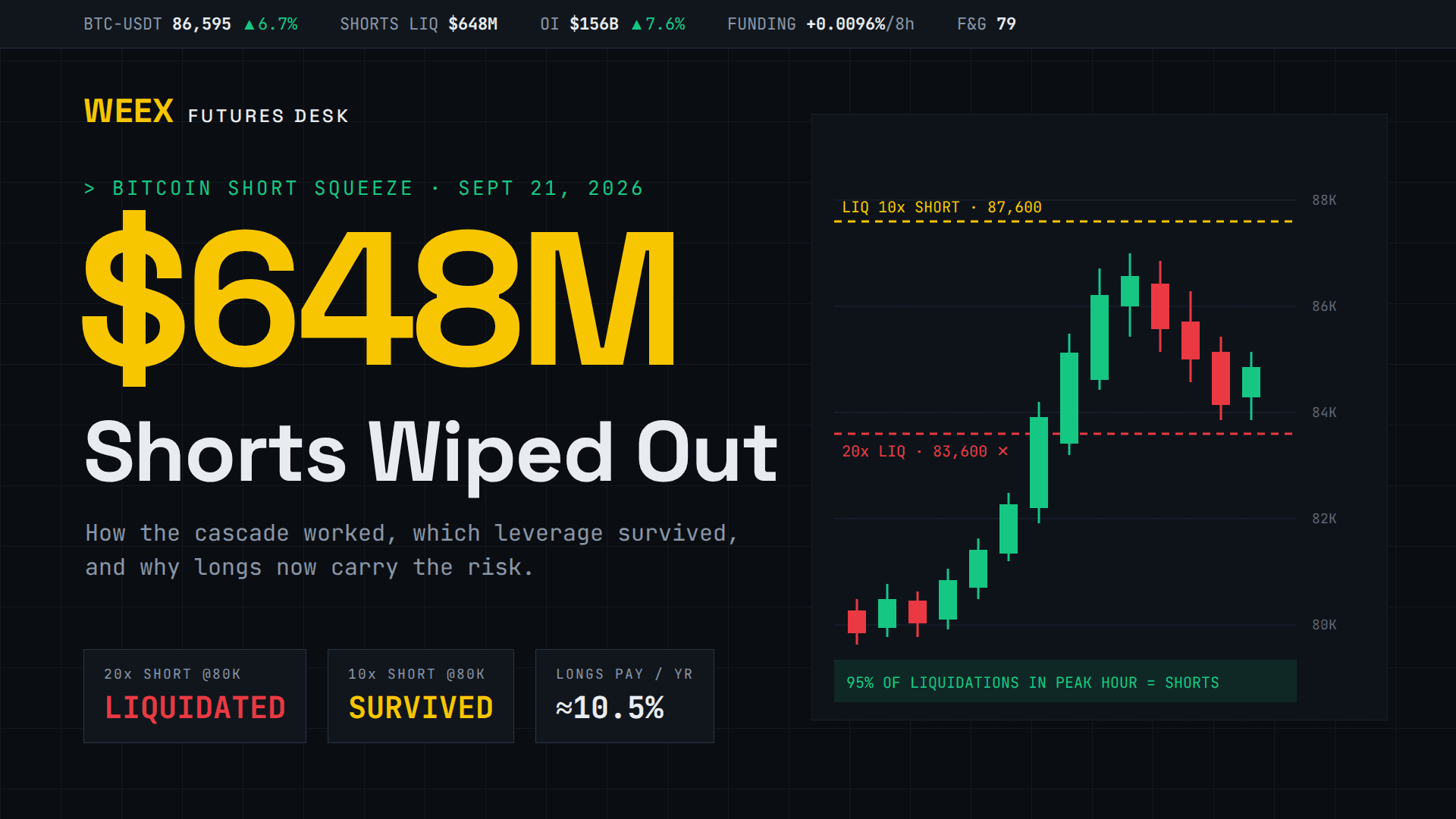
Bitcoin Short Squeeze Explained: Inside the $648M Sept 21 Wipeout

Best Crypto Cold Wallet 2026: Top Picks Matched to How You Hold
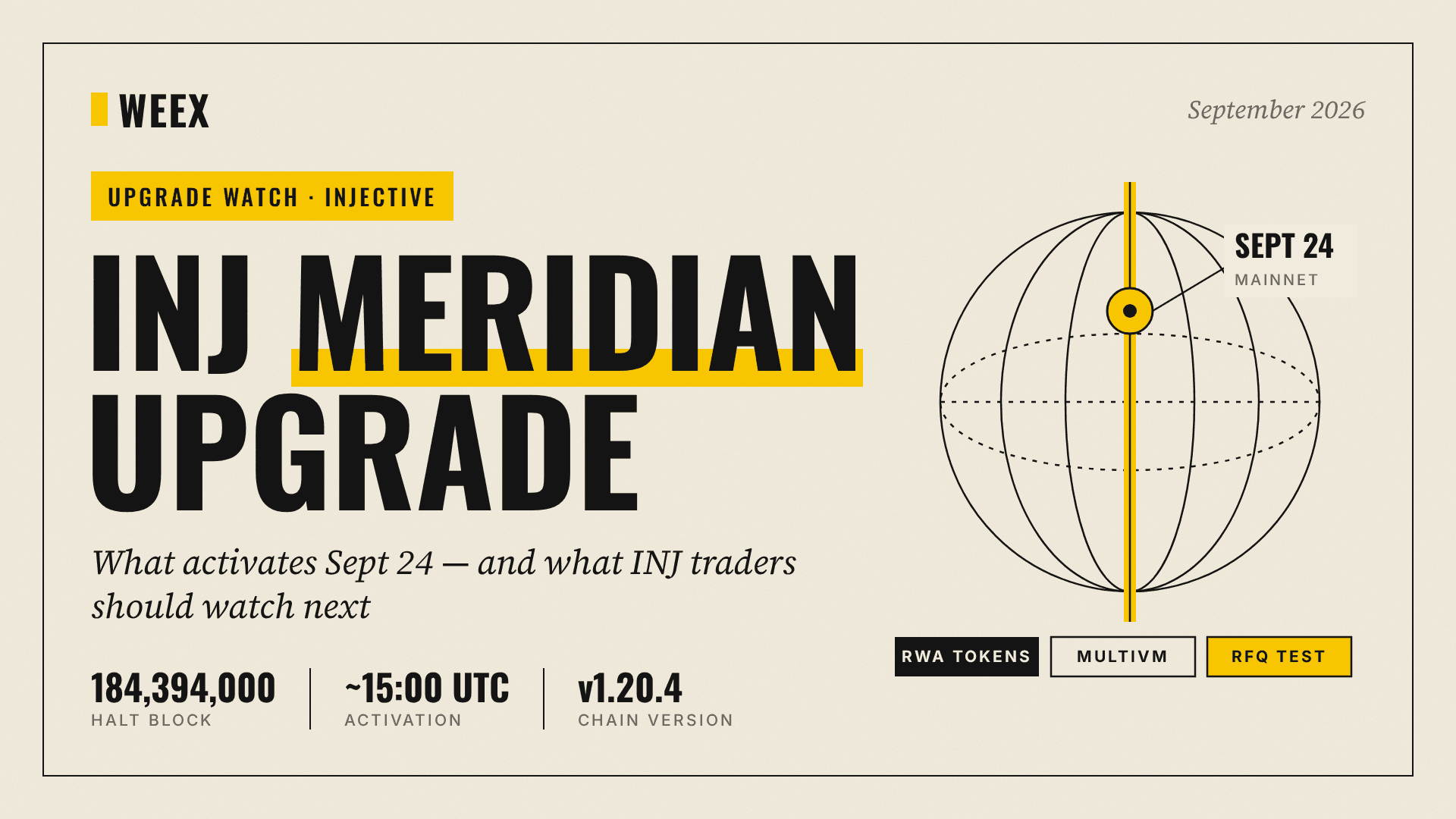
INJ Meridian Upgrade: What Activates Sept 24 and What to Watch
Phantom Wallet vs MetaMask: What's the Difference
How to Connect Phantom Wallet to a Solana DApp
How to Install and Set Up Phantom Wallet

What Is Phantom Wallet? A Complete Guide to the Solana Wallet
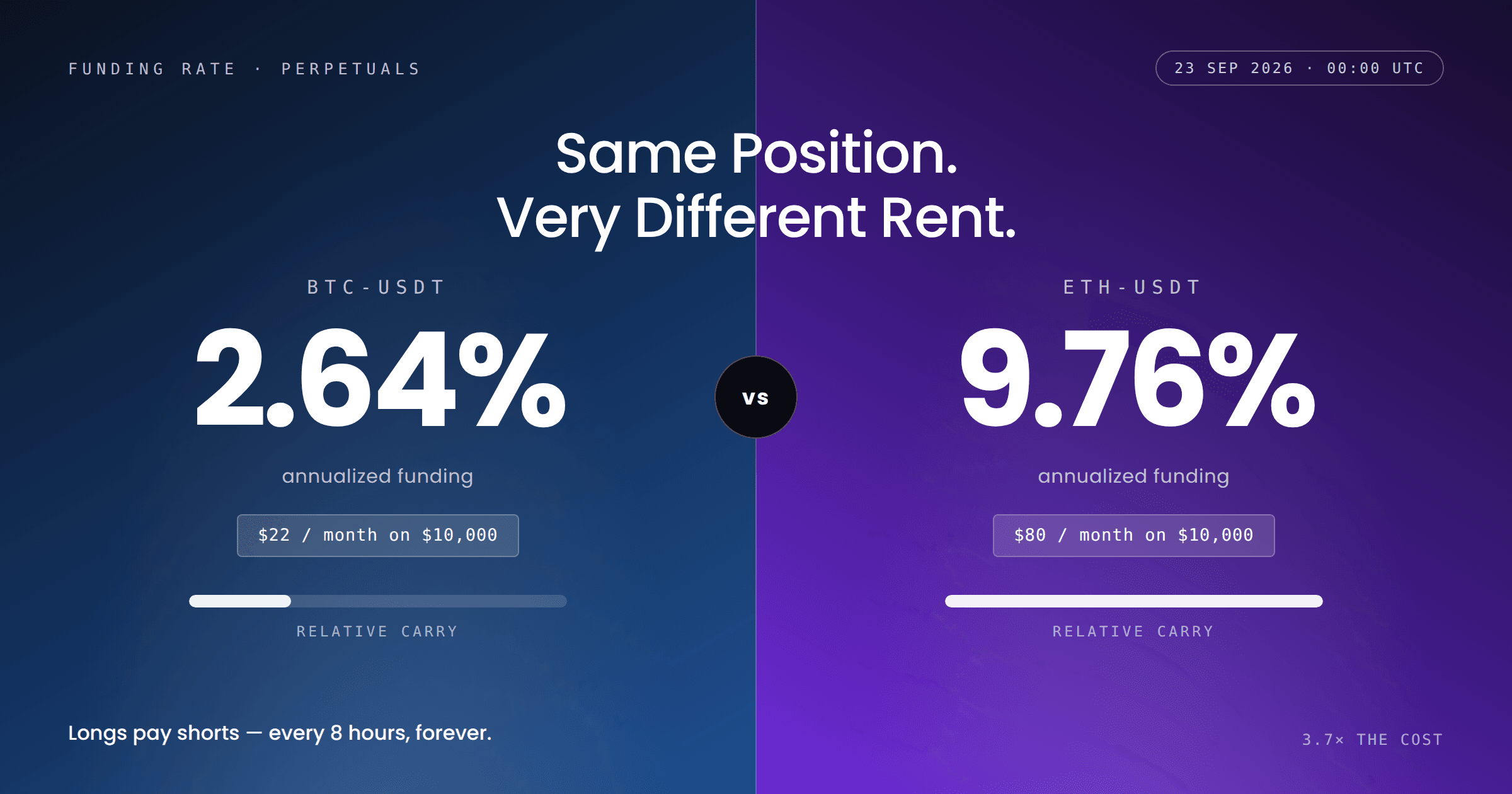
Funding Rate Crypto: What BTC and ETH Are Paying Right Now
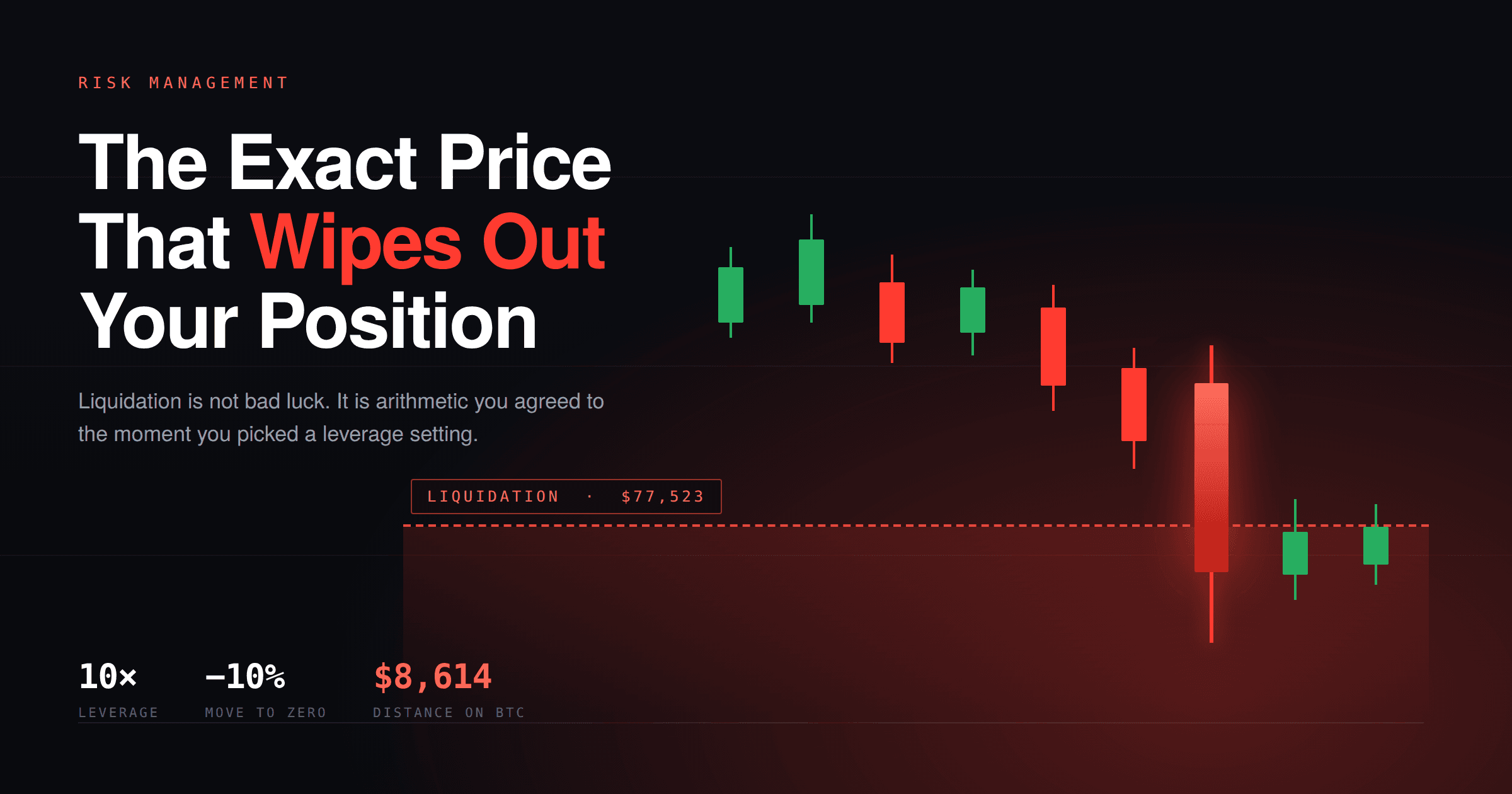
Crypto Liquidation: The Exact Price That Wipes Out Your Position
INTC Stock Surged 14%: Intel Only Has Enough Chips for Half Its Clients
How to Buy Crypto with PayPal: The Custody Catch Most Beginners Miss
ENA Token Price Up 76% in a Month: The October 5 Unlock Test
MU Stock After a Record Q4: Why Micron Slipped on a Huge Beat
QNT Price Near $295: Does the Bank Deal Justify a 4x Rally?
HBAR Price Spike and Reversal: Long, Short, and Stop-Loss Orders
XRP Upgrade Update: XRPL Batch Slips to Oct 9 and What Changes
Contents
Popular coins
Latest articles


