
Alex Karp and the Battle for AI Sovereignty in Companies

 เลือกเราขึ้น Google

Alex Karp is not exactly a household name outside the technology and defense circles. However, the CEO of Palantir is becoming the most uncomfortable voice in Silicon Valley as he directly attacks the business models of the two largest generative artificial intelligence companies in the world.
In an interview with CNBC following Palantir's quarterly earnings report, Karp accused OpenAI and Anthropic of "trying to hook us on a future they believe they control." This is not the first time he has made such criticisms, but the context is different now: Palantir's numbers give him the authority to speak.
The company reported $1.9 billion in revenue for the quarter, a 93% increase year-over-year. Profit reached $1.1 billion, surpassing the total revenue for the same period last year. The stock surged 29% in a single trading session on Nasdaq. The company is now valued at $390 billion.
Karp's thesis is relatively simple, but its implications are profound. According to him, companies that hire the language models (LLMs) from OpenAI or Anthropic are, in practice, transferring the intrinsic value of their businesses to these platforms.
The central argument: by feeding the LLMs with proprietary data, client companies lose control over their intellectual property. The models "keep the data" and "take the alpha," in Karp's words. What remains for the client is, according to him, "a residual share" of the generated value.
Referring directly to Dario Amodei, CEO of Anthropic, Karp stated that the company's philosophy can be summarized as follows: "I own the future. Therefore, you must transfer the value of your business to me and be satisfied." For Karp, the only way Amodei can justify this is by genuinely believing he is building "a better future," even though this future, according to Palantir's CEO, is only better for Anthropic itself.
Both OpenAI and Anthropic claim that customer data is not used to train their models. However, distrust in the corporate market exists and is growing, as we have covered in our technology reporting on the portal.
Palantir does not develop its own LLMs. Instead, it integrates models from different vendors with clients' data and legacy systems, using an application layer called Ontology. This semantic and operational architecture acts as a barrier: the data remains under the client's control, and the value generated by AI stays within the organization.
This is a radically different approach from the "tokenized" model of OpenAI and Anthropic, where the client pays for token usage and, in practice, depends on the vendor's infrastructure and terms. Karp summarizes the question he hears from large corporate and government clients: "Why would we spend money on something that is not useful and then not control the means that allow us to expand our business?"
In the letter to shareholders, Karp was even more emphatic. He used a Marxist analogy to describe the power dynamics: "Many of those who develop LLMs intend, consciously or unconsciously, to appropriate the means of production of their supposed partners." It is a deliberate irony. A CEO of a company worth nearly $400 billion using Marx to criticize the AI industrial complex.
This discussion about how AI is transforming entire sectors is not new, but it has gained a layer of urgency with Palantir's results showing that there is a viable alternative model.
For Karp, the relevant debate is not between closed-source AI (like OpenAI and Anthropic) and open-source AI (like the models from Meta and Chinese companies). The central question is sovereignty. Who controls the data, the models, and the generated value?
He even downplayed the issue of model distillation by China, a practice in which Chinese companies copy American models. "How do you think these models acquired their value? They distilled all the value of intellectual property from everywhere, including the corporate sector," he said. In Karp's view, American frontier models did something similar by training on open internet data and commercial partners.
"All organizations in the world are waking up to the risks of handing over the keys to their institutions to the creators of LLMs," Karp wrote in the letter. The statement may sound alarmist, but the numbers tell a consistent story. Palantir's revenue in the United States grew 115% in the quarter, signaling that large American organizations, including the government, are buying into the thesis of sovereignty in AI.
Year-to-date, Palantir's stock is still down 9%, reflecting a multiple correction that has affected much of the tech sector. But the 29% jump in a single day shows that the market recognized the delivery. The question now is whether Palantir's model scales globally in the same way it has been growing in the U.S., a topic that connects with the market dynamics we follow in finance.
Karp's criticism is not a philosophical eccentricity. It points to a structural tension in the AI market that will define winners and losers in the next decade. If the "AI as a service" model concentrates value in the hands of a few platforms, the result is a dangerous dependency for companies and governments.
Palantir is betting that large organizations will prefer to pay more for sovereignty than to save with convenience. Quarterly results suggest that this bet is paying off. With $1.1 billion in profit in a single quarter and revenue growth above 90%, the company has numbers to support the discourse.
The lingering question is whether OpenAI and Anthropic will need to adapt their business models to meet this demand for control, or if the convenience and technical superiority of their LLMs will continue to be sufficient arguments. In any scenario, Karp has placed the debate at the center of the conversation. And Palantir's results ensure that it will not be ignored.
ราคา --
เนื้อหานี้จัดทำขึ้นเพื่อวัตถุประสงค์ด้านการให้ข้อมูลทั่วไปเท่านั้น และไม่ถือเป็นคำแนะนำด้านการเงิน การลงทุน กฎหมาย หรือภาษี อีเวนต์ รีวอร์ด โปรโมชันออนไลน์ หรือข้อมูลที่เกี่ยวข้องใดๆ ที่กล่าวถึงในที่นี้ ไม่ควรถือเป็นคำแนะนำ การชักชวน หรือคำเชิญชวนให้ซื้อ ขาย เทรด หรือดำเนินการอื่นใดเกี่ยวกับสินทรัพย์คริปโต สินทรัพย์คริปโตมีความผันผวนสูงและอาจส่งผลให้เกิดการขาดทุน ความพร้อมให้บริการของบริการ ผลิตภัณฑ์ และอีเวนต์ที่เกี่ยวข้องของ WEEX อาจแตกต่างกันไปตามภูมิภาค คุณมีหน้าที่ตรวจสอบให้แน่ใจว่าการเข้าร่วมของคุณเป็นไปตามกฎหมายและข้อบังคับท้องถิ่นที่ใช้บังคับ
คุณอาจสนใจ

Ontology หยุดการผลิตบล็อกเพื่อตอบสนองต่อความเสี่ยงด้านความปลอดภัยที่อาจเกิดขึ้น

สามสายโซ่สาธารณะหยุดทำงานในสี่วัน ใครมีอำนาจในการกดปุ่มหยุด?

Ontology Mainnet กลับมาใช้งานได้แล้ว อัปเกรด Sync Node เป็น v3.1.5

การย้อนกลับบนบล็อกเชนไม่สามารถช่วยกู้คืนสินทรัพย์ที่ถูกขโมยได้หรือ?

Ontology หยุดการผลิตบล็อกบนเครือข่ายหลักเนื่องจากความกังวลด้านความปลอดภัยที่อาจเกิดขึ้น
CFTC ส่งเสริมการลงทะเบียนการแลกเปลี่ยนสกุลเงินดิจิทัลโดยสมัครใจในขณะที่สภาคองเกรสหยุดชะงัก

Crypto: มากกว่า 10,000 คำร้องต่อการจำกัดของธนาคารอังกฤษ

เอเจนต์ AI กำลังเปิดตัวเหรียญมีม เอเจนต์ของ MemeToro ตอบสนองต่อโค้ดเปิด
Crypto: การทำโทเค็นสินทรัพย์จริงทำให้เกิดความกังวลในหมู่ผู้อนุรักษ์นิยมชาวอเมริกัน

Pump.fun « ถูกปรับให้เหมาะกับการติดยา »: สิ่งที่ข้อความภายในที่ถูกอ้างถึงในศาลพูดจริงๆ

Anthony Pompliano: รัฐจะไม่มีวันหยุดพิมพ์เงิน! Bitcoin, ทองคำ และที่ดินจะได้รับประโยชน์ในอีก 20 ปีข้างหน้า

Stablecoin ถูกบล็อก: กุญแจส่วนตัวของคุณไม่เพียงพอ

สกุลเงินดิจิทัลพยายามเข้าร่วมกับการเงิน

แนะนำมีมโทเค็นที่ดีที่สุดในเครือข่าย Ripple; การตรวจสอบ 5 โทเค็นยอดนิยม XRPL

การทดสอบครั้งต่อไปของ Bitcoin กับ Fed มาพร้อมกับปัญหาที่ซ่อนอยู่ในข้อมูลเงินเฟ้อของอเมริกา
ตลาดคริปโตสูญเสียความสูง ความอดทนกลายเป็นนิสัย – Steady Lads

การชำระเงินด้วย Stablecoin ในยุโรป: CASP, PI และ EMI ทำงานร่วมกันอย่างไร?

ทำไมยักษ์ใหญ่ 22 ล้านล้านดอลลาร์ถึงปฏิเสธที่จะ 'ถูกทำโทเค็น'?

เรลส์ เชื่อมโยงการเงินแบบดั้งเดิมกับการเงินแบบกระจายศูนย์

การซื้อขายตลอด 24 ชั่วโมงเป็นความต้องการที่แท้จริงหรือไม่? วิเคราะห์จังหวะการซื้อขายจริงของสัญญา RWA แบบถาวร

การโจมตีทางไซเบอร์ต่อ GMO ในญี่ปุ่น: บัญชีการซื้อขายถูกบุกรุก, GMO Coin ยืนยันว่าไม่ได้รับผลกระทบ

การคาดการณ์ที่ไม่ดีต่อผู้ให้บริการคลาวด์ใหม่ แผนการใหญ่ของมาร์กซ
ผลประกอบการ Google วันที่ 28/10: การตัดสินใจของ Fed จะส่งผลต่อหุ้น GOOGL หรือไม่?

เหตุการณ์ลดเลเวอเรจในตลาดคริปโตคืออะไร? Liquidation กับ ADL ต่างกันอย่างไร
ทำความเข้าใจเหตุการณ์ลดเลเวอเรจในตลาด crypto: liquidation กับ ADL, การลดลงของ open interest ที่อาจทำให้เข้าใจผิด, ความเสี่ยงจากการ hedge และสิ่งที่ควรตรวจสอบก่อนเทรด

สัปดาห์ข้างหน้า: 4 ช่วงเวลาสำคัญสำหรับตลาดคริปโต
ตลาดการคาดการณ์นำมาซึ่งประโยชน์จริงหรือไม่? – Tiger Research

ใครถือหุ้นที่ถูกโทเคน? นักลงทุนรายย่อยจำนวนมากที่มีสินทรัพย์กระจุกตัวสูง
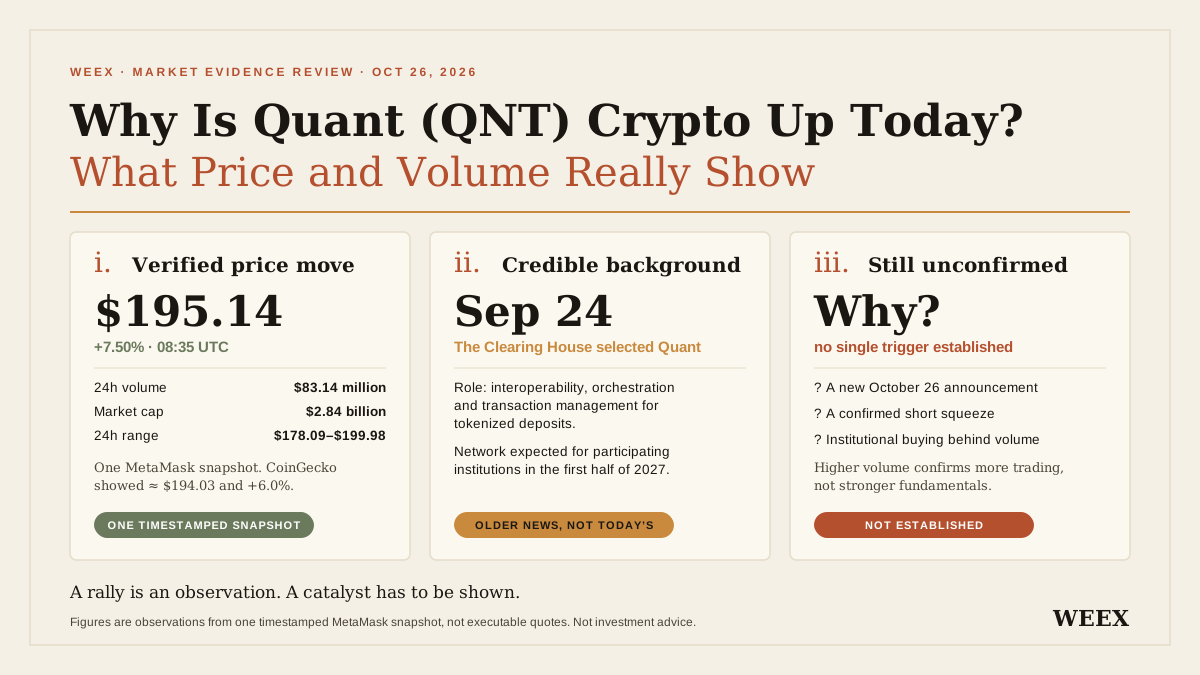
ทำไมคริปโต Quant (QNT) ถึงขึ้นวันนี้? ราคาและปริมาณซื้อขายบอกอะไรได้บ้าง
ทำไม Quant (QNT) ถึงขึ้นวันนี้? ตรวจสอบหลักฐานด้านราคาและปริมาณซื้อขาย ไทม์ไลน์ความร่วมมือกับธนาคาร สมมติฐานเรื่องอุปสงค์โทเคน และความเสี่ยงก่อนเทรด

Trenching ในคริปโตคืออะไร? ศัพท์สแลงการเทรด ความเสี่ยงของโทเค็น และต้นทุนการออกจากสถานะ
Trenching ในคริปโตคืออะไร? เรียนรู้ศัพท์สแลง วิธีตรวจสอบโทเค็น ความเสี่ยงด้านสภาพคล่อง และเหตุใดโทเค็นที่ราคาสูงขึ้นจึงยังทำให้ขาดทุนได้หลังหักต้นทุนการเทรด

การโจมตีการปกครองด้วยการกู้ยืมเงินด่วน สะท้อนอะไรต่ออุตสาหกรรมจากการขโมย X100?
Ontology หยุดการผลิตบล็อกเพื่อตอบสนองต่อความเสี่ยงด้านความปลอดภัยที่อาจเกิดขึ้น
สามสายโซ่สาธารณะหยุดทำงานในสี่วัน ใครมีอำนาจในการกดปุ่มหยุด?
Ontology Mainnet กลับมาใช้งานได้แล้ว อัปเกรด Sync Node เป็น v3.1.5
การย้อนกลับบนบล็อกเชนไม่สามารถช่วยกู้คืนสินทรัพย์ที่ถูกขโมยได้หรือ?
Ontology หยุดการผลิตบล็อกบนเครือข่ายหลักเนื่องจากความกังวลด้านความปลอดภัยที่อาจเกิดขึ้น
CFTC ส่งเสริมการลงทะเบียนการแลกเปลี่ยนสกุลเงินดิจิทัลโดยสมัครใจในขณะที่สภาคองเกรสหยุดชะงัก


