
Wall Street Morning Brief: Hawkish Waller Interrupts Computing Frenzy, Cloud Giants Thrive on 'AI Rent', Price Hikes Hit Upstream

 Prefer us on Google


Every Monday to Friday morning, we focus on macroeconomics, US stocks, AI, precious metals, and crude oil, using data to review the market and trends to seize opportunities, produced by PANews.
"Hawk King" Returns, Market Reprices September Rate Hike
US stocks closed under pressure last Friday, with all three major indices weakening. The Dow Jones fell slightly by 0.02%, nearly flat; the S&P 500 dropped by 0.25%, and the Nasdaq fell by 0.52%.
Last Friday at Jackson Hole, Federal Reserve Chairman Waller delivered his first keynote speech since taking office. He emphasized that while recent PCE and CPI data have improved, core inflation has not shown "meaningful improvement." If inflation does not clearly and quickly return to the 2% target, "the Fed still has work to do." The market immediately interpreted this as a potential rate hike in September. The probability of a September rate hike surged from about 40% to 62.6%, and the two-year US Treasury yield jumped approximately 12 basis points to around 4.36%, reaching a recent high.
CICC believes that Waller's core message was not to directly announce a September rate hike but to attempt to re-establish the Fed's anti-inflation credibility. Their judgment is that the fundamentals are currently in a "dovish or hawkish" state, but if subsequent employment and inflation data do not show significant changes, Waller may consider a September rate hike to maintain policy credibility. Morgan Stanley reminded that Waller has long prioritized balance sheet issues, and the Fed may initiate a balance sheet reduction of over $1.5 trillion next year, using "more balance sheet reduction and fewer rate hikes" to curb inflation.
The dollar regained buying interest, nearing 99.7. Gold plummeted over 3%, falling below the $4,400 mark and breaking the 200-day moving average, hitting a low of $4,396; silver also dropped over 4%. Non-yielding assets faced rapid deleveraging amid rising real rates and heightened rate hike expectations. Crude oil, however, strengthened against the backdrop of escalating geopolitical tensions over the weekend: WTI opened over 2% higher, and Brent briefly broke the $90 mark before retreating.
The US military confirmed strikes on two rocket launchers on Iran's Larak Island near the Strait of Hormuz, stating they were preparing to lay mines. This is the first public acknowledgment of US military action against Iran since late July. The Iranian Revolutionary Guard vowed retaliation and claimed to have launched missiles at US bases. Trump previously emphasized a "zero tolerance" policy towards mine deployment, while Bensent pushed for an "economic orphan action," planning to impose more secondary sanctions on Iran weekly, starting with banks, and warning of "financial violence" if necessary.
Trump also claimed he would fill the US strategic reserves with Venezuelan oil, stating he has gained "major control" over reserves of more than 6.5 billion barrels, aiming to lower long-term oil price expectations. The yen fell below 160 again, with Bensent stating that the trend is "under control," and expecting the Bank of Japan to "do the right thing," as Abenomics nears its end.
The biggest variable this week is the US August non-farm payroll report on September 4. The market expects an increase of about 55,000 to 58,000 jobs, with an unemployment rate of about 4.1%. If employment is strong, Fed rate hike expectations will continue to rise; if employment is weak, tech stocks and gold may see a rebound.
AI Computing Power Retreats, Cloud and Software Break Through
Last Friday, Waller's hawkish stance interrupted the computing frenzy following Nvidia's earnings report, leading to a broad profit-taking in semiconductors, while cloud services and software strengthened against the trend thanks to AI narratives. The Philadelphia Semiconductor Index fell over 3%, Nvidia closed down 4.57%, AMD fell about 2.3%, ARM dropped over 6%, with high-valuation hardware being the first to suffer under rate hike expectations.
However, cloud service and platform giants performed well. Barclays reported that AI model companies generate about $35-45 in inference computing costs for every $100 in revenue, flowing to Amazon AWS, Microsoft Azure, and Google Cloud, with cloud service providers earning about $10-20 in operating profit, corresponding to a 35%-45% operating profit margin. This means that the deeper AI commercialization goes, the more likely cloud giants will become "rent collectors" for infrastructure. Amazon rose nearly 4%, Microsoft and Google A rose nearly 2%, and Meta rose over 1%. On the software side, Elastic surged over 19%, Workday rose nearly 6%, and ServiceNow rose over 4%.
This week marks the end of the earnings season, but AI validations are particularly dense. Companies like Broadcom, Dell, HPE, Snowflake, Credo, Ciena, MongoDB, Palo Alto, and Zscaler will report earnings in succession. Investors are no longer satisfied with "AI is big"; they want to see orders, gross margins, capital expenditure returns, customer concentration, and guidance that can support valuations.
Specific Project Actions and Stock Price Fluctuations:
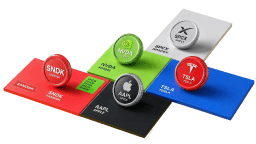
Nvidia closed down 4.57%: mainly affected by rising rate hike expectations, leading to selling of high-valuation chip stocks. Although Wall Street remains optimistic about its AI computing demand, Citigroup, Goldman Sachs, and Morgan Stanley have raised or maintained high target prices, short-term valuation pressure is evident.
The semiconductor sector is under overall pressure: the Philadelphia Semiconductor Index fell about 3.5%, AMD fell about 2.3%, ARM dropped over 6%, Applied Materials fell over 4%, and Marvell Technology fell over 10% after its earnings report.
Cloud services strengthened, with Amazon rising nearly 4%: Cloud business and AI computing synergy received positive reaffirmation from Barclays and other institutions, with funds flowing back to cloud infrastructure. Microsoft rose 1.68% (Azure and OpenAI ecosystem continue to support AI cloud revenue), Google rose about 1.74% (GCP cloud business and Gemini ecosystem received attention), Meta rose over 1%, and Apple rose about 1.63% (the market is focused on the pace of AI and foldable product development under the new CEO).
Elastic's earnings exploded, surging over 19%: becoming one of the strongest targets in AI application software, with earnings showing revenue and net profit exceeding expectations, RBC Capital and TD Cowen raised target prices. Related sectors: Workday rose nearly 6%, ServiceNow rose over 4%, Salesforce rose over 1%, Veeva fell nearly 2%, with performance and narrative differentiation still present in the software sector.
Tesla fell nearly 2%: The company announced it would hold a press conference on September 3 in Austin, Texas, for its driverless model Cybercab, which has no steering wheel or pedals, planning to gradually join the Robotaxi fleet. Although the mass production timeline affects the overall vehicle valuation, it was dragged down by the broader tech stock sell-off in the short term.
SpaceX rose 0.45%: The company plans to launch its first batch of AI data center satellites equipped with Nvidia's Vera Rubin architecture GPUs in the fourth quarter of 2027, with Evercore giving it an "outperform" rating and a target price of $230. However, institutions also warned that actual revenue contributions may not come until the 2029 fiscal year, with orbital heat dissipation, radiation damage, collision risks, and regulatory approvals remaining hard constraints on commercialization. Additionally, OpenAI announced it would stop providing AI model services to SpaceX's code tool Cursor starting November 12, directly pointing to Musk's repeated defaults, escalating the feud between the two tech giants.
NIO rose 0.23%: NIO will announce its second-quarter earnings before the US market opens on September 1. The market is focused on second-quarter delivery volumes, gross margin recovery, and the advancement of its multi-brand strategy, especially whether Lido and Firefly can increase sales without eroding profit margins. Related sectors: Chinese electric vehicle stocks, XPeng, Li Auto, BYD supply chain, and power battery chain will be influenced by its gross margin guidance.
Dell fell 3.39%: Dell will release its earnings report after the US market closes on September 1, with traders focusing on AI server orders, profit margins, and delivery pace.
Broadcom fell 0.74%: Broadcom will release its earnings report after the US market closes on September 2, which is the most important event for the AI hardware sector this week. The market is focused on AI semiconductor revenue, custom chip orders, and AI network demand. Related sectors: Credo, Ciena, HPE, Snowflake, NetApp, Dell, etc., will jointly test the implementation of AI capital expenditures.
This Week's Focus:
August 31 (Monday)
9:20 33 Chinese stocks, including Zhizhu, officially included in the MSCI index: The index adjustment will bring passive fund allocation and short-term rebalancing. Zhizhu, as a high-profile new component stock in emerging markets, may drive fluctuations in AI, semiconductors, pharmaceuticals, and new materials.
G20 Finance Ministers and Central Bank Governors Meeting held until September 1: The meeting focuses on global inflation, exchange rate fluctuations, debt risks, financial stability, and sanctions against Iran. US Treasury Secretary Bensent may push countries to cooperate on secondary sanctions against Iran, and related wording will affect crude oil, the dollar, US Treasury bonds, and emerging market currencies; if the meeting releases signals of exchange rate coordination, the yen, dollar/yen, and long-term US Treasury bonds may also experience fluctuations.
Zhizhu, Hezhima Intelligent, Minglue Technology, and Horizon Robotics announce earnings: Hong Kong stocks in the AI and intelligent driving chain enter a concentrated inspection period. Zhizhu's first interim report after listing will focus on testing ARR, API call volume, Token price, and commercialization capabilities; Horizon is related to smart driving chip shipments, high-level assisted driving solution penetration, and automotive AI chain valuation.
September 1 (Tuesday)
Tim Cook officially steps down as Apple CEO, John Ternus takes over: Apple enters a new round of management transition window. After stepping down, Cook will serve as executive chairman, with current Senior Vice President of Hardware Engineering John Ternus taking over as CEO. The market is focused on whether Apple will accelerate hardware innovation and AI terminal layout under the new management, especially the rhythm of foldable iPhones, edge AI, new Siri, and smart display products.
Price hike wave for electronic components and materials takes effect: Qualcomm adjusts prices for some products, Zhaoshengwei RF products adjust prices, Sunlord raises MLCC prices, Mitsubishi tool prices adjust, and Nanya Plastics CCL and semi-cured sheets increase by 20%-25%. This round of price hikes reflects rising pressures from upstream raw materials, capacity, and supply chain costs. Price hikes by Qualcomm and Zhaoshengwei will affect communication chips and RF front-end chains; Sunlord's MLCC price increase is beneficial for the passive component sector; Mitsubishi tool price adjustments reflect rising costs of industrial consumables; Nanya Plastics' CCL price increase will transmit to PCB and AI server board chains. If downstream companies successfully accept the price hikes, related companies' profit expectations will improve; if transmission is unsuccessful, it may compress the gross margins of terminal hardware manufacturers.
G20 Ministerial Meeting on Technology held until September 2: Tech giants like Musk, Jensen Huang, and Altman will attend, focusing on global AI governance, digital economy rules, and the US-promoted AI light regulation "Carolina Principles." If the regulatory tone is lenient, it will benefit AI platforms, model companies, cloud computing, chips, and computing power chains; if regulation tightens, AI applications and large model company valuations may be under pressure.
Japan 10-year and 30-year bond auctions (September 1 and September 3): Japan will issue 10-year and 30-year government bonds. Currently, the yen has fallen below 160, and long-term U.S. Treasury yields are high, raising market concerns about whether domestic bond demand in Japan will divert overseas funds. If auction demand is weak, Japanese bond yields may rise, impacting U.S. Treasuries and global growth stock valuations; if demand is strong, it could help ease global long-term interest rate pressures.
NIO's U.S. pre-market earnings report: The market is focused on second-quarter deliveries, overall vehicle gross margins, narrowing losses, contributions from Lido and Firefly, and third-quarter delivery guidance. If vehicle gross margins remain around 17%-18% and strong delivery outlooks are provided, sentiment in the Chinese electric vehicle sector may recover; if margins are eroded by multi-brand expansion, NIO and the new force chain may come under pressure.
Baidu's dual primary listing in Hong Kong and the U.S. becomes effective: The dual primary listing enhances liquidity and financing flexibility in both markets and continues to serve as a benchmark for Chinese concept stocks returning to Hong Kong. The Hong Kong tech sector may benefit from index allocation, southbound funds, and international capital rebalancing.
Shein and Mech-Mind Robotics officially listed on the Hong Kong Stock Exchange: Shein's first-day performance will impact valuations in Hong Kong's consumer tech and cross-border e-commerce sectors; Mech-Mind Robotics will influence sentiment in the robotics and machine vision sectors.
September 2 (Wednesday)
Earnings reports from Dell, Credo Technology, MongoDB, and Palo Alto Networks: Dell will assess AI server order visibility and margin quality; Credo will validate demand for AI data center active cables; MongoDB will observe enterprise database cloud migration; Palo Alto will validate cybersecurity spending under AI-driven security threats. If orders and guidance are strong, AI infrastructure, networking equipment, data cloud, and cybersecurity sectors are expected to gain traction.
22:30 U.S. EIA crude oil inventory and Strategic Petroleum Reserve inventory: In the context of escalating U.S.-Iran conflict and heightened risks in the Strait of Hormuz, the importance of inventory data is magnified. If commercial inventories decline and SPR replenishment expectations increase, WTI and Brent may continue to find support; if inventories unexpectedly accumulate, the risk premium in oil prices may retract.
Reserve Bank of New Zealand interest rate decision and monetary policy statement: The market is focused on whether it will raise rates by 25 basis points to 2.75%. If the Reserve Bank of New Zealand signals a more hawkish stance, it will strengthen upward pressure on rates in the Asia-Pacific region, affecting the New Zealand dollar, Australian dollar, and regional bond market risk appetite.
Bank of Canada interest rate decision and press conference: The market generally expects the policy rate to remain unchanged at 2.25%. The focus will be on how the Bank of Canada assesses U.S. tariff countermeasures, persistent inflation, and slowing employment; if the language is hawkish, the Canadian dollar may strengthen, and North American rate trading volatility may increase.
SEMICON Taiwan International Semiconductor Exhibition held until September 4: The conference focuses on advanced packaging, HBM, semiconductor equipment, and materials. If the industry chain releases signals of expansion or technological breakthroughs, it will benefit advanced packaging, storage, equipment, materials, and TSMC's supply chain.
September 3 (Thursday)
02:00 Federal Reserve releases Beige Book: The Beige Book will provide frontline observations on employment, consumption, credit, real estate, and inflation. If the report shows that wage and service inflation remain sticky, it will strengthen expectations for a rate hike in September; if employment and consumption cool significantly, the market may reassess the Fed's stance.
Broadcom's post-market earnings report, along with reports from HPE, Snowflake, NetApp, FuelCell Energy, C3.ai, and ChargePoint: Broadcom is a key event in the AI hardware sector this week, with the market focusing on AI semiconductor revenue guidance, custom AI accelerator orders, AI network chip demand, and customer concentration; HPE is looking at AI server and enterprise hardware demand; Snowflake is observing data cloud and AI application consumption; NetApp is focused on storage; C3.ai is looking at enterprise AI software; ChargePoint is focused on electric vehicle charging infrastructure.
20:30 Federal Reserve Governor Waller interview: This is an important speech before the FOMC's quiet period. If Waller echoes Waller's hawkish stance, the probability of a rate hike in September may continue to rise; if he emphasizes employment risks, the market may lower rate hike pricing.
Tesla Cybercab launch event: Tesla will unveil the Cybercab without a steering wheel or pedals in Austin. The market is focused on whether it will officially join the Robotaxi fleet, progress on commercialization permits, production timelines, and unit economic models; if the launch exceeds expectations, Tesla, autonomous driving, sensors, onboard computing, and the Robotaxi concept will receive a catalyst.
2026 World Power Battery Conference held until September 4: Industry leaders such as Tesla, CATL, and BYD will attend and release the power battery industry development index. If significant progress is made in solid-state batteries, fast charging, battery safety, and energy storage technologies, it will impact new energy vehicles, battery materials, equipment, and energy storage sectors.
September 4 (Friday)
Earnings reports from DocuSign, Lululemon, Zscaler, Ciena, UiPath, Planet Labs, and Ambarella: Zscaler is looking at cloud security demand, Ciena is observing optical communication prosperity, DocuSign is focused on enterprise software spending, Lululemon is assessing consumer resilience, and Ambarella is looking at edge AI and in-vehicle vision chips.
20:30 U.S. August non-farm payrolls, unemployment rate, average hourly earnings: This week's top global data, with the market expecting non-farm payrolls to increase by about 55,000 to 58,000, and the unemployment rate to remain at 4.1%; if employment and wages are stronger than expected, it will strengthen September rate hike trades, leading to an increase in the dollar and short-term bond yields, while the Nasdaq, gold, and long-duration growth stocks may come under pressure; if non-farm payrolls weaken significantly, it will weaken Waller's hawkish pricing, and U.S. Treasuries, gold, and tech stocks may rebound.
September 6 (Sunday)
- OPEC+ seven-nation monthly meeting: The meeting will assess the implementation of the September production increase of 188,000 barrels per day and global crude oil supply and demand. If the U.S.-Iran conflict does not de-escalate, OPEC+ statements will directly impact Brent and WTI risk premiums; if signals of maintaining production discipline or cautious production increases are released, oil prices may find support, while the opposite may suppress energy stock gains.
-- Price
This content is provided for general informational purposes only and doesn't constitute financial, investment, legal, or tax advice. Any events, rewards, online promotions, or related information mentioned herein should not be considered a recommendation, solicitation, or invitation to purchase, sell, trade, or otherwise deal in any crypto assets. Crypto assets are highly volatile and may result in loss. The availability of WEEX services, products, and related events may vary by region. You are responsible for ensuring that your participation is in accordance with applicable local laws and regulations.
You may also like

Israel to Build Air Defense System for Greece for 3 Billion Euros

AI Scam Hits $3.2 Million Per Incident, Crypto Security Battlefield Shifts from 'Code' to 'Scams'

Bitcoin Hard Fork Scheduled for September 1, OCEAN Pool Faces Leadership Changes

Japanese Opposition Alliance on the Brink of Collapse After Failed Merger

US Debt: Grayscale Identifies 3 Cryptos That Could Benefit

Core Lightning Releases Update 26.06.7 After Detecting Vulnerabilities
Lawmakers accuse RFK Jr. of misleading the Senate and call for an investigation
![[Energy Analysis] The Next Bottleneck for AI Is Not GPUs... It's the Power Grid](/public-static/16_c530d6305c.png?format=avif)
[Energy Analysis] The Next Bottleneck for AI Is Not GPUs... It's the Power Grid

Investment Options for FAL: Only 8 ONs, Green Light for Sovereign Bonds, and Currently Excluded Provincial Bonds
Bitcoin Mining Uses 30% of Paraguay's Electric Energy: Crisis Warned for 2029

Cloud 9, the galaxy candidate with no stars

Federal Reserve Holds Rates Steady at 9-3 Vote, Stock and Long-Term Bond Markets Shaken

The SEC Sends Its Overhaul of Crypto Custody Rules to the White House Without Revealing the Content

Discovering a Hot Water World That Will Be Devoured by Its Star
Pedestrian Traffic Changes Near Bessarabsky Square in Kyiv

ABAPPRA Requests BCRA to Ease Refinancing Due to Increased Delinquency
September Brings Increases in Transportation, Rent, Health Insurance, and More: All the Details
GrapheneOS User Charged with Obstruction Defends Privacy Rights
Cells Discover an Unexpected Defense Against Iron Overload

The dollar strengthens above $1,500: why the government raised the ceiling and what the market is watching now
Is the Biggest Investor in WLFI Actually a 'Deadbeat'?
Japan's Interest Rates Return to 1996: Can Bitcoin's 'Decoupling Narrative' Withstand September's Rate Hike?
Important News from Last Night and This Morning (August 25 - August 26)

Lighter Average Block Proof Time Reduced to 1 Minute

Upgrade of the "Kelmentsy - Larga" Border Crossing with Moldova

Zaporizhzhia Energy Workers Restore Power Networks Under Military Protection

What is the cost of cheap borrowing?

Thailand advances spot Bitcoin and Ether ETF rules with 80% exposure floor

Can US Treasury Buybacks Save the Market? Hayes Predicts BTC Trends in Three Scenarios

Ethereum proposal would cut 33,800 ETH issuance and break every deployed Altair light client
Israel to Build Air Defense System for Greece for 3 Billion Euros
AI Scam Hits $3.2 Million Per Incident, Crypto Security Battlefield Shifts from 'Code' to 'Scams'
Bitcoin Hard Fork Scheduled for September 1, OCEAN Pool Faces Leadership Changes
Japanese Opposition Alliance on the Brink of Collapse After Failed Merger
US Debt: Grayscale Identifies 3 Cryptos That Could Benefit
Core Lightning Releases Update 26.06.7 After Detecting Vulnerabilities
Contents
Latest articles




Latest coin listings on WEEX


