
The Xiaomi electric vehicle factory in Beijing's Daxing district has become the new Jerusalem for the American elite

Article | Sleepy.md
Starting from 2025, visiting the Xiaomi car factory in Beijing's Daxing district has become one of the top activities for American elite families to bring their children to China. Every Saturday afternoon, at the factory gate, you can always see American parents speaking English with their children, waiting in line to enter the production line of this Chinese car.
The spots for visits here are in high demand. The number of sign-ups for a single event can easily reach 4600 people, but only 20 groups of visitors can go in, with a success rate of 0.4%, comparable to Ivy League admission.
According to publicly available data from the Beijing municipal government, in just the first 6 months of 2025, the factory had received a total of 93,000 visits; by the end of 2025, this number had soared to 130,000. Visitors come from more than 70 countries and regions, including dignitaries, diplomats, multinational corporate executives, Silicon Valley investors, European venture capitalists, as well as groups of American elite families.
What exactly has turned a car production line into a popular attraction?
Paradigm Shift
For the past few decades, the Western world's perception of China has always been built on a traditional cognitive infrastructure.
This infrastructure includes the media's reporting framework (CNN or The New York Times's filter), think tank research reports (deductions on overcapacity), the division of labor theory in economics textbooks (assemblers at the bottom of the smile curve), and the cheap consumer goods labeled "Made in China" on supermarket shelves.
They all share a common core: they are all indirect.
Whether it's the stereotypical image of the "world's factory" or the grand narrative of the "Thucydides Trap," they have all been filtered through layers, packaged into specific frameworks, and then fed to the public as conclusions. For a long time, this system has firmly locked Western impressions of China into stereotypes.
However, in this factory in Daxing, it failed.
Stepping into the workshop, what greets you is an incredibly unreal silence. In the body shop where key processes are 100% automated, with a comprehensive automation rate of up to 91%, more than 400 robots and over 400 high-precision cameras work seamlessly together, achieving true lights-out production. In the press shop, a steel behemoth with a locking force of up to 9100 tons can mold 72 parts into one in just 120 seconds, with an error margin of less than a single strand of hair.
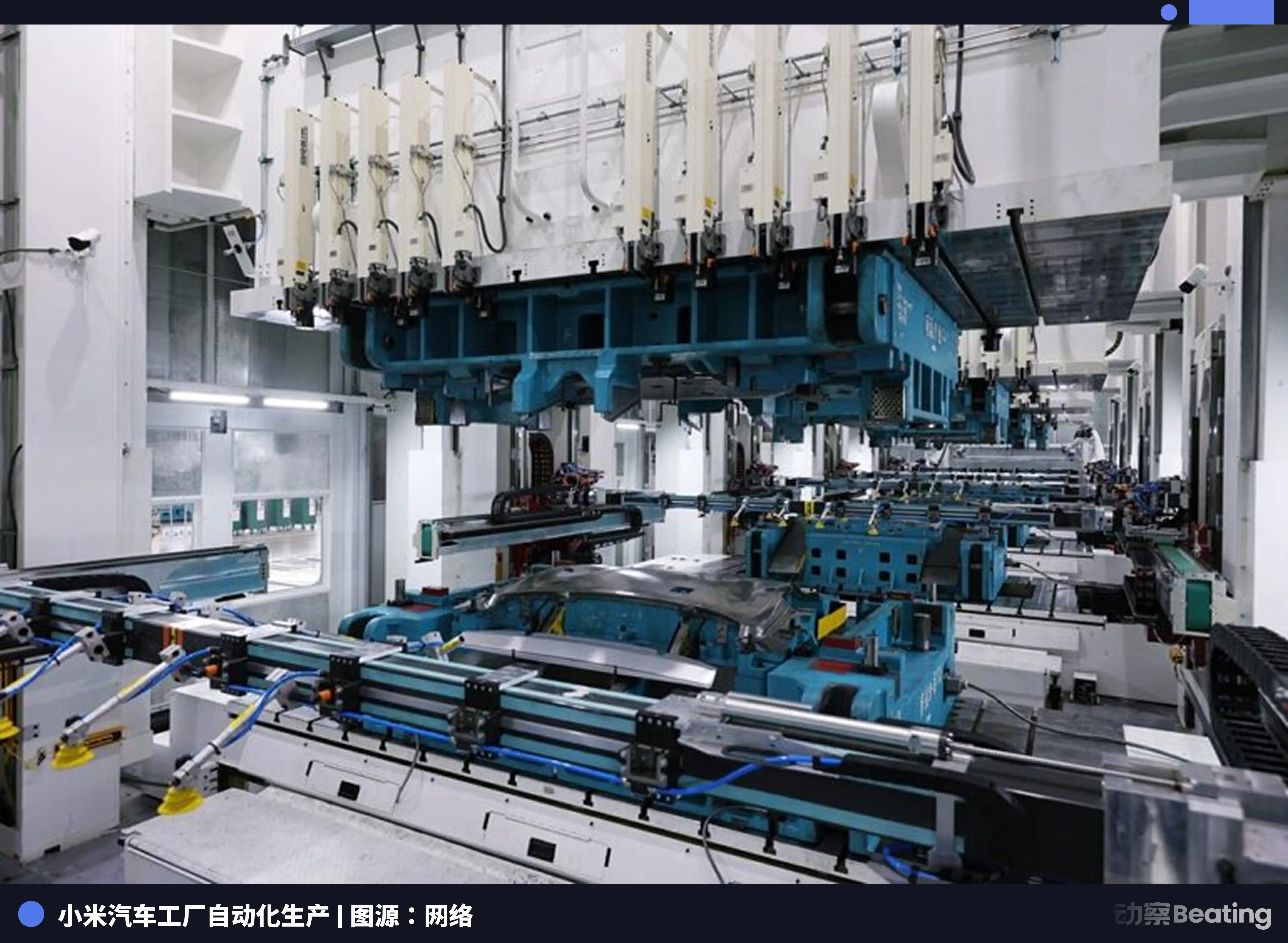
Here, on average, every 76 seconds, a new car drives off the production line.
When a Silicon Valley venture capitalist, or a Washington policymaker, stands on a glass walkway and witnesses all of this with their own eyes, they no longer need any think tank report to prove to them that "China's manufacturing is upgrading." The dry and withered numbers in the report have all turned into the robotic arms waving before them.
Refreshing the news on Twitter and standing on the walkway to see a car roll off the line every 76 seconds will lead to a significant gap in perceptions of China's manufacturing. This disparity is the largest cognitive arbitrage opportunity between China and the United States today. The smart individuals with top resources are leveraging this information asymmetry to secretly adjust their asset allocations.
Taxing During the Day, Pilgrimage at Night
In the spring of 1950, young Japanese engineer Eiji Toyoda boarded a flight to the United States, heading straight to the Ford Rouge Factory in Detroit. At that time, the Ford factory had a daily production capacity of up to 8,000 vehicles, while Toyota's annual output was a meager 40 vehicles.
It was this trip to Detroit that directly gave birth to Toyota's future production methods. Subsequently, even larger-scale actions followed. In 1955, the governments of the United States and Japan jointly launched the "Productivity Program," sending nearly 4,000 Japanese engineers to the United States to visit factories. It was an organized pilgrimage. The Japanese traveled across the ocean because they knew well of their lagging behind and the urgent need to learn.
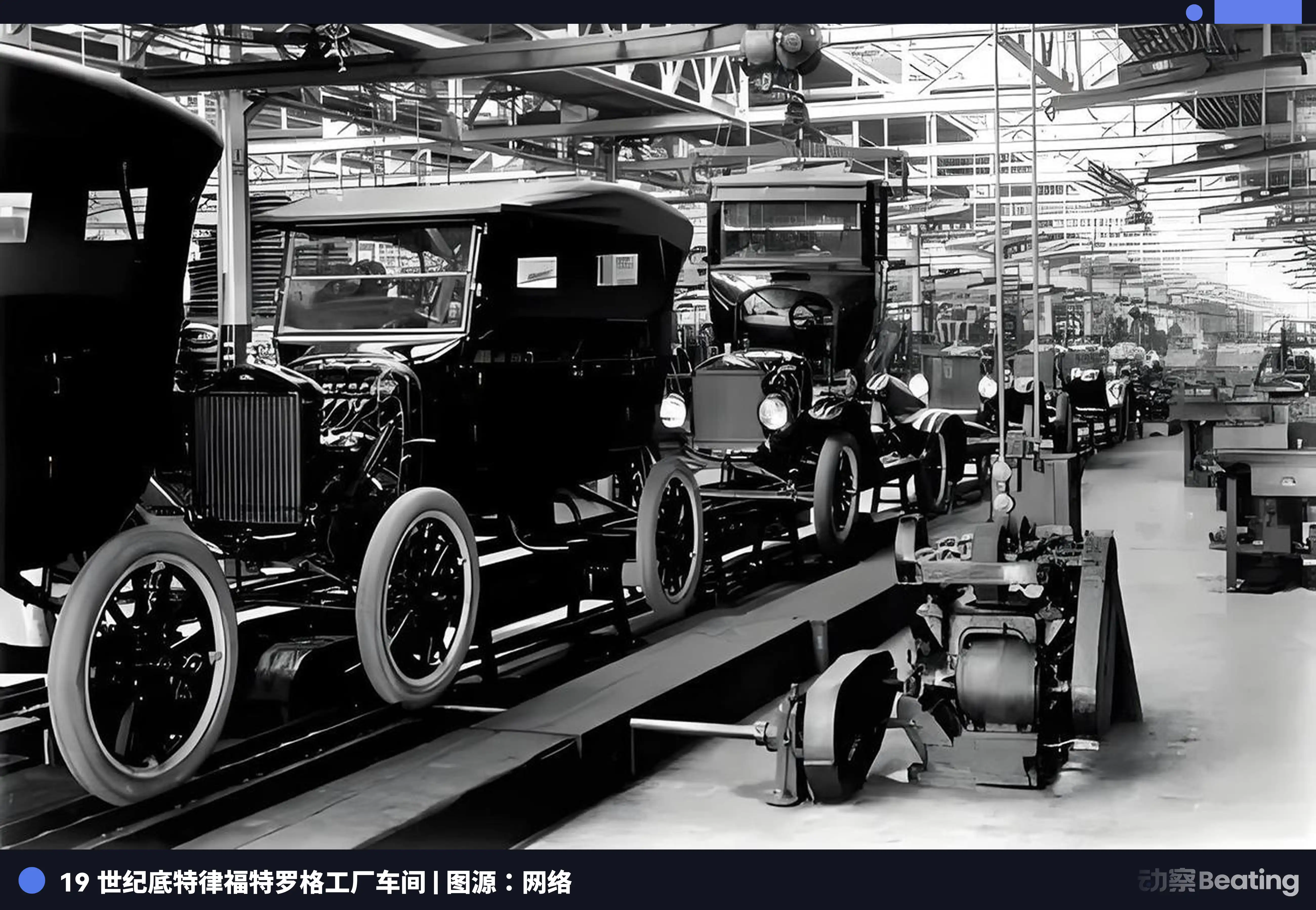
But now, the direction has reversed.
Western elites, harboring complex emotions, fly to Beijing Daxing. There is no government organization, no national endorsement, and against the backdrop of a tariff war, this trip even seems quite politically incorrect. But they still come here spontaneously, privately, and stealthily.
As early as 2010, the value added by China's manufacturing industry surpassed that of the United States for the first time, ranking first globally. By 2024, the proportion of China's manufacturing value added in the world had approached 30%, equivalent to the sum of the United States, Japan, and Germany. In the field of new energy vehicles, China has shown a crushing dominance, with China's share of global new energy passenger vehicles reaching 68.4% in 2025.
On the other hand, the once pilgrimage site of Detroit has now become a desolate industrial relic. The decline of the U.S. manufacturing industry is by no means accidental but rather the bitter fruit of a forty-year period of financialization.
Since Milton Friedman put forward the theory of "shareholder value maximization" in the 1970s, U.S. companies have shifted resources from long-term manufacturing investments to aggressively pursuing short-term financial returns.
The Boeing Company is a bloody lesson. Since merging with McDonnell in 1997, Boeing's corporate culture has completely transitioned from being engineer-led to Wall Street-led. Executives were obsessed with cost-cutting through outsourcing, boosting stock prices through buybacks, which not only resulted in the tragedy of the 737 MAX but also led to the complete hollowing out of the entire manufacturing system.
Supporting tariff hikes on China during the day in Washington, then queuing up to visit a factory in Beijing's Daxing district at night. The U.S.' China strategy is based on the premise that China is a threat that must be contained, but the private actions of American elites follow a different logic: China is a reality that must be acknowledged.
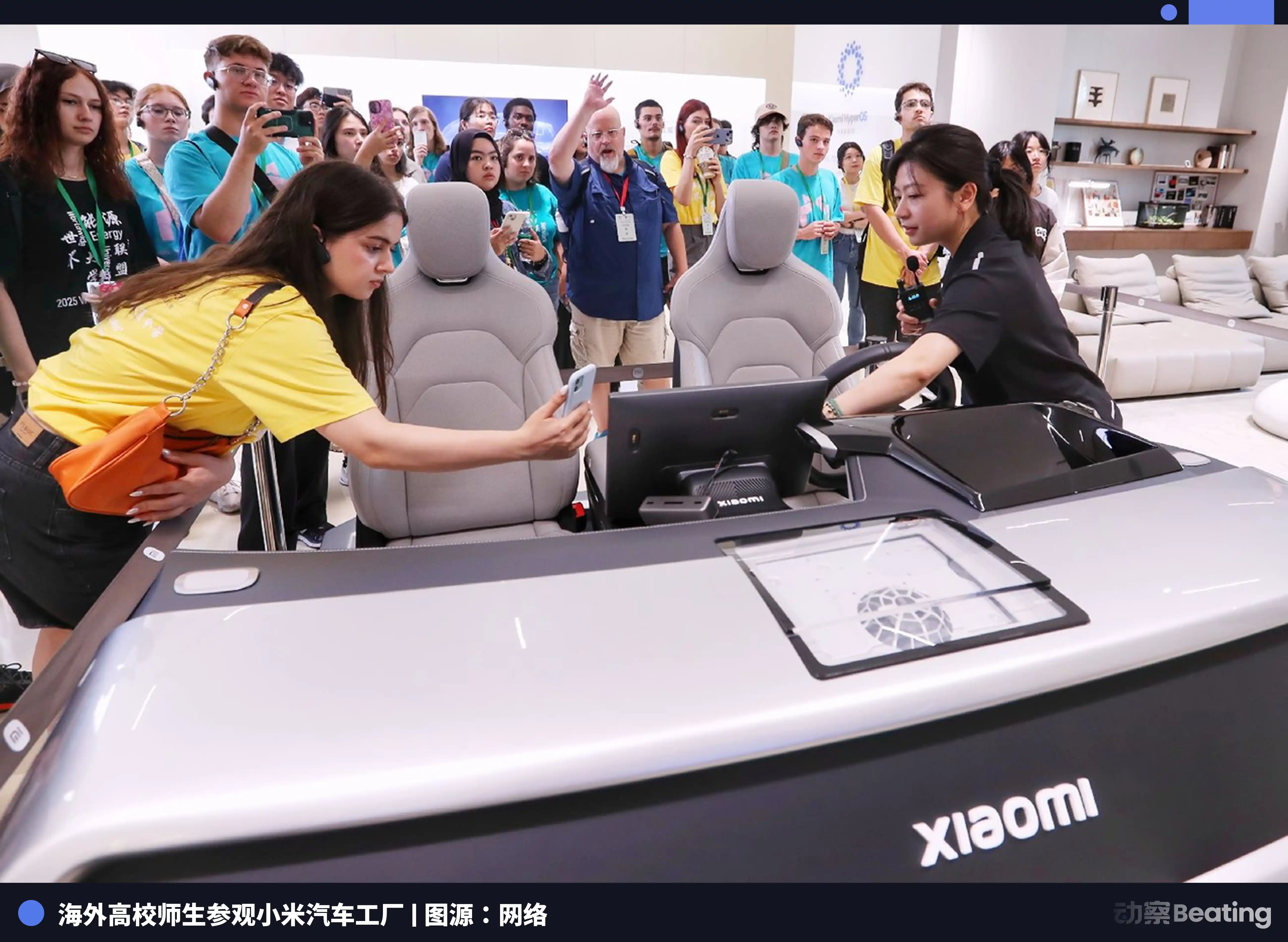
Policy may be temporarily decoupled from reality, but the senses of capital and the evolution of cognition will eventually catch up with reality.
In early 2025, Spencer Gore, the founder of the U.S. sodium-ion battery startup Bedrock Materials, flew to China and visited Contemporary Amperex Technology's (CATL) factory. He saw that the Chinese battery giant was using the same production line and equipment used to make lithium-ion batteries to effortlessly produce sodium-ion batteries.
Upon returning home, he promptly dissolved the company and returned the $9 million in funding to investors.
When Toyota's Eiji Toyoda went to Detroit, it was for learning; but today's American elites come to Beijing to confirm one thing. Something they have vaguely sensed but need to see with their own eyes to truly let go of.
Serendipity
In the midst of this trend of factory visits, Lei Jun's role seems somewhat subtle.
By the end of 2024, when he decided to open up the factory to the outside world, his original intention was extremely pure and purely commercial, simply to sell cars. In an industry with high barriers to entry like the automobile industry, the most difficult gap to bridge for a brand that has crossed over from mobile phones is precisely the trust gap of consumers. Lei Jun opened the factory doors only to dispel doubts and build trust.
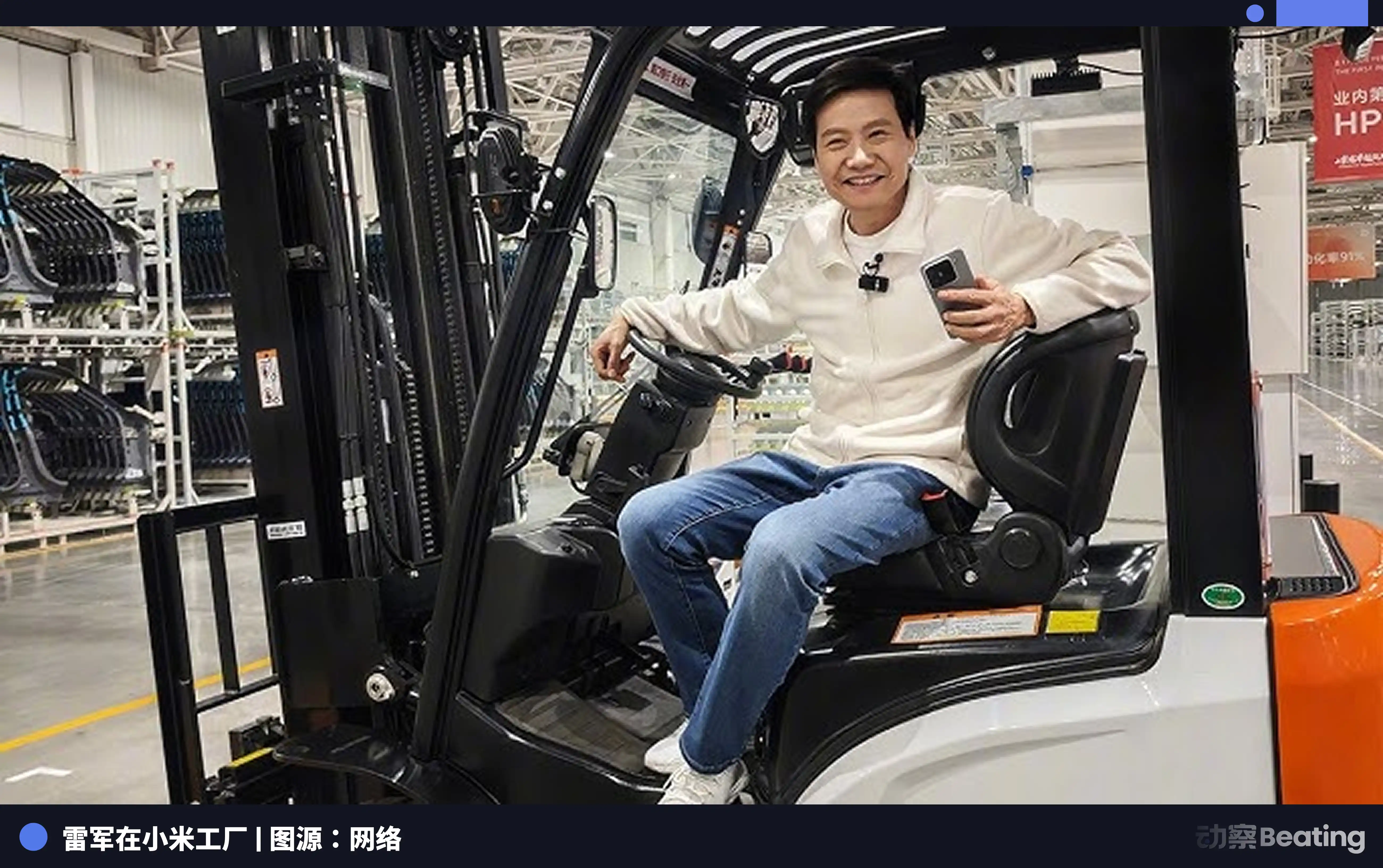
However, while he only intended to open this door, he unintentionally knocked down another invisible barrier.
Over the past decade, China has invested heavily in building Confucius Institutes overseas, disseminating national image advertisements, attempting to enhance soft power through cultural exports. However, such top-down, heavily official moves often easily trigger a defensive psychological backlash in the West and are even directly categorized as "propaganda tools."
When others perceive that you are trying to persuade them, their first reaction is always caution and skepticism.
In contrast, the Xiaomi factory said nothing. It didn't try to instill any values, nor did it sell any grand narrative. It was just there, quietly and efficiently, churning out a car every 76 seconds.
In social psychology, there is a theory called "intergroup contact theory," which essentially suggests that the best way to reduce prejudice against a group is not to preach to them about lofty principles but to create conditions for direct, equal contact.
In the era of information warfare, the prevailing narrative of the past decade has been that whoever controls the media narrative wins the battle of perception. China has consistently been at a disadvantage in this narrative war. However, the Xiaomi factory in Daxing tells us that when the gravitational pull of reality is strong enough, even the tightest narrative will automatically collapse. You don't need to go to great lengths to win a narrative war; you just need to open the doors and let the other side face reality head-on.
The most sophisticated soft power often arises at the moment when you never intended to influence anyone.
The Longest-Term Geopolitical Variable
As darkness falls over Daxing, the factory floor remains brightly lit.
Those American children brought by their parents to visit may already be fast asleep in the carriages heading back to their hotels. They may not yet understand what a tariff war is, grasp the concept of the "Thucydides Trap," or comprehend why their parents would expend such high costs and energy just to show them an industrial assembly line.
But their eyes will not lie, and they will remember it all.
Geopolitical analysts are always focused on aircraft carrier numbers, chip acts, and trade imbalances, but few pay attention to intergenerational cognitive transmission.
These American children, now only 8 to 15 years old, will grow up twenty years later to be Wall Street investors, Silicon Valley entrepreneurs, Washington decision-makers, or just ordinary voters. Their first impression of China will no longer be the biased filter on CNN news or the imaginary enemy concocted by politicians but a firsthand sensory memory etched by experience.
This kind of experiential-based cognition is often the most difficult to overturn because it does not need to rely on the endorsement of any third-party information source; it relies solely on their own eyes.
Twenty years from now, when they discuss China at the meeting table, what will be the first image that comes to their minds? Not cheap trinkets, not the bustling world's factory. They might recall that tranquil workshop, the tireless robotic arms under the lights, the car taking shape before their eyes in a seamless assembly.
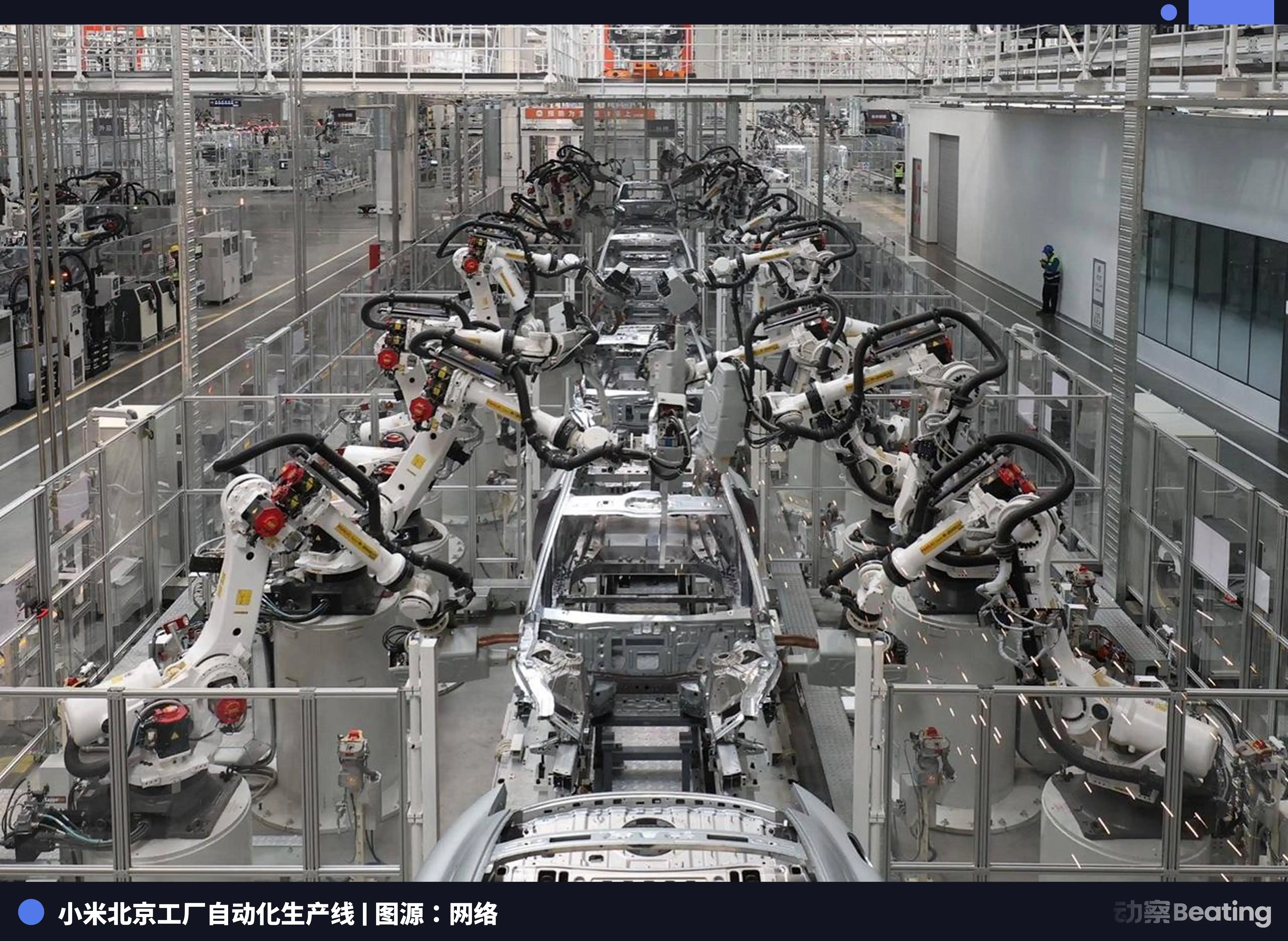
Once this seed of consciousness is planted, it can never be uprooted.
It is a cognitive reset spanning two decades, far more unshakable than any trade deal, more difficult to reverse than any diplomatic statement. The eyes of these children are the most unpredictable yet irreversible variable in America's China policy twenty years later.
The direction of pilgrimage has truly changed.
You may also like

Morning Report | BitMine increased its holdings by 126,971 ETH last week; trader Eugene announced his exit from the crypto market

Wang Chuan: How can one not feel anxious after the neighbor Old Wang made thirty times profit by investing in storage stocks? (Seven) - A quarter-century cycle

Cryptocurrency CEXs are flocking to sell US stocks, and traditional brokerages are facing an "uninvited guest."

$75 billion in foreign capital has fled, and South Korean retail investors have absorbed it all using leverage

Japan’s Three Megabanks Plan Joint Stablecoin Issuance in Fiscal 2026
MUFG, SMBC, and Mizuho reportedly plan to jointly issue fiat-pegged stablecoins in fiscal 2026, signaling Japan’s growing push into bank-led digital payment infrastructure.

Humanity Discloses H Token Dual-Chain Attack Details, With Losses on Ethereum and BSC Exceeding $36 Million
Humanity said the H token attack across Ethereum and BSC caused more than $36 million in losses after leaked ProxyAdmin keys enabled malicious contract upgrades and token minting.
White House Discusses CLARITY Act With Law Enforcement Ahead of Senate Vote
The White House discussed the CLARITY Act with law enforcement ahead of a Senate vote, focusing on illicit finance risks and developer protections.

Bitcoin Trading Guide 2026: Strategies for Experienced Traders

What Is XAUT and PAXG? Why Tokenized Gold Is Booming in 2026

Will the SpaceX IPO Hurt Bitcoin? Here's What Traders Are Watching

Foreign selling in the South Korean stock market accelerates, with cumulative net sales reportedly reaching $75 billion this year
On June 9, The Kobeissi Letter, citing Goldman Sachs data, reported that global investors are selling South Korean stocks at an unusually rapid pace. In the latest trading session, foreign investors sold about $801 million worth of Kospi constituent stocks again; total foreign outflows last week reached about $10 billion, and the market has been in net foreign selling on nearly every trading day over the past month. According to the data cited in the report, foreign investors have sold about $75 billion worth of South Korean stocks so far this year. Meanwhile, South Korean retail and institutional investors together recorded roughly $69 billion in net buying over the same period, suggesting that the market’s main buying support has come from domestic capital rather than returning overseas funds. The information currently disclosed still mainly comes from The Kobeissi Letter’s retelling and Goldman Sachs data summaries, while public details on the statistical period and the specific definition of “selling” remain relatively limited.

Fortune Warns of Strategy’s Financing Structure Risks as Bitcoin Premium Narrows
Fortune warned that Strategy’s Bitcoin treasury model faces growing financing risks as MSTR’s net asset premium narrows and preferred stock dividend pressure increases.

Ferrari Challenge Le Mans: Carl Moon to Dominate in WEEX Livery

Sahara AI Responds to SAHARA’s Sharp Drop: No Contract or Product Security Issues Found, Internal Investigation Underway
Sahara AI responded to SAHARA’s 60% price drop, saying no token contract or product security issues have been found and an internal investigation is underway.

WEEX Deposit/Withdrawal Dynamic Island: Your Asset Status, Always in Sight
Scaling Crypto Derivatives: The Digital Asset Infrastructure Behind High-Volume Trading
In the fast-moving digital asset ecosystem, derivatives platforms face an extreme architectural test. High-leverage futures markets demand more than just standard security—they require absolute operational precision, zero-latency matching engines, and ironclad structural scalability, all while navigating intense market volatility.
As global platforms scale to meet these demands, the industry is shifting away from rigid, monolithic setups toward a more agile, "decoupled" infrastructure philosophy.
The Blueprint for High-Volume Copy TradingFor elite global exchanges like WEEX (founded in 2018), this architectural choice becomes critical when scaling high-volume retail features like social copy trading. When thousands of users automatically mirror the real-time strategies of elite traders simultaneously, it triggers sudden, monumental spikes in concurrent transactional volume.
To prevent execution latency or settlement bottlenecks during these peak volatility events, a platform's primary engine must remain entirely dedicated to risk management, copy-trade synchronization, and order matching.
The Architectural Rule: New-generation platforms must separate front-end user execution engines from heavy backend infrastructural overhead to eliminate operational friction.
By separating these layers, platforms can maintain complete sovereignty over their trading environments and user experiences while strategically aligning with institutional-grade infrastructure ecosystems. This strategic framework allows modern exchanges to leverage advanced Digital Asset Custody infrastructure such as Cobo’s behind the scenes, ensuring that backend wallet management scales elastically alongside trading spikes.
Capitalizing on Market Momentum and 400× LeverageIn a derivatives arena where platforms offer up to 400× leverage on perpetual contracts, capital efficiency and market agility are core business metrics. To capture market momentum, an exchange needs the ability to rapidly expand its asset offerings, supporting everything from legacy crypto assets to sudden, trending altcoins across a massive library of trading pairs.
Adopting a flexible, scalable Wallet-as-a-Service (WaaS) solution such as Cobo’s could completely rewrite the development timeline for high-growth exchanges. Instead of spending months of engineering capital building out custom backend wallet architectures for every new blockchain network, platforms can deploy localized infrastructure in days.
This agility allows platforms to instantly scale their listings to over a thousand trading pairs without compromising security or delaying time-to-market. It mirrors the exact operational advantages seen during high-velocity market events, similar to how advanced wallet infrastructure empowers platforms during sudden asset surges; allowing exchanges to pass that speed and liquidity directly to their global user base.
A Mature Foundation for GrowthThe synergy between trusted infrastructure ecosystems and global trading platforms represents the natural evolution of a maturing crypto market. As WEEX continues to scale its global spot and derivatives offerings for over 6 million users, adopting robust backend paradigms proves that platforms no longer have to compromise between cutting-edge trading velocity and uncompromised structural security.

Get Paid to Onboard? Try WEEX’s New Homepage with Rewards for Registration, Deposit & Trade
WEEX Custom Layout: Build Your Perfect Trading Workspace in Seconds
Morning Report | BitMine increased its holdings by 126,971 ETH last week; trader Eugene announced his exit from the crypto market
Wang Chuan: How can one not feel anxious after the neighbor Old Wang made thirty times profit by investing in storage stocks? (Seven) - A quarter-century cycle
Cryptocurrency CEXs are flocking to sell US stocks, and traditional brokerages are facing an "uninvited guest."
$75 billion in foreign capital has fled, and South Korean retail investors have absorbed it all using leverage
Japan’s Three Megabanks Plan Joint Stablecoin Issuance in Fiscal 2026
MUFG, SMBC, and Mizuho reportedly plan to jointly issue fiat-pegged stablecoins in fiscal 2026, signaling Japan’s growing push into bank-led digital payment infrastructure.
Humanity Discloses H Token Dual-Chain Attack Details, With Losses on Ethereum and BSC Exceeding $36 Million
Humanity said the H token attack across Ethereum and BSC caused more than $36 million in losses after leaked ProxyAdmin keys enabled malicious contract upgrades and token minting.


