
Unitree Stock Crashed From 845 to Under 500 Yuan: But It Still Leads the Robot Market

 Prefer us on Google


Unitree stock has fallen roughly 55% from its peak since its Shanghai debut a month ago, sliding from an intraday high tied to a first day surge of more than fivefold down to trading around 499.73 yuan by midday today, September 21.
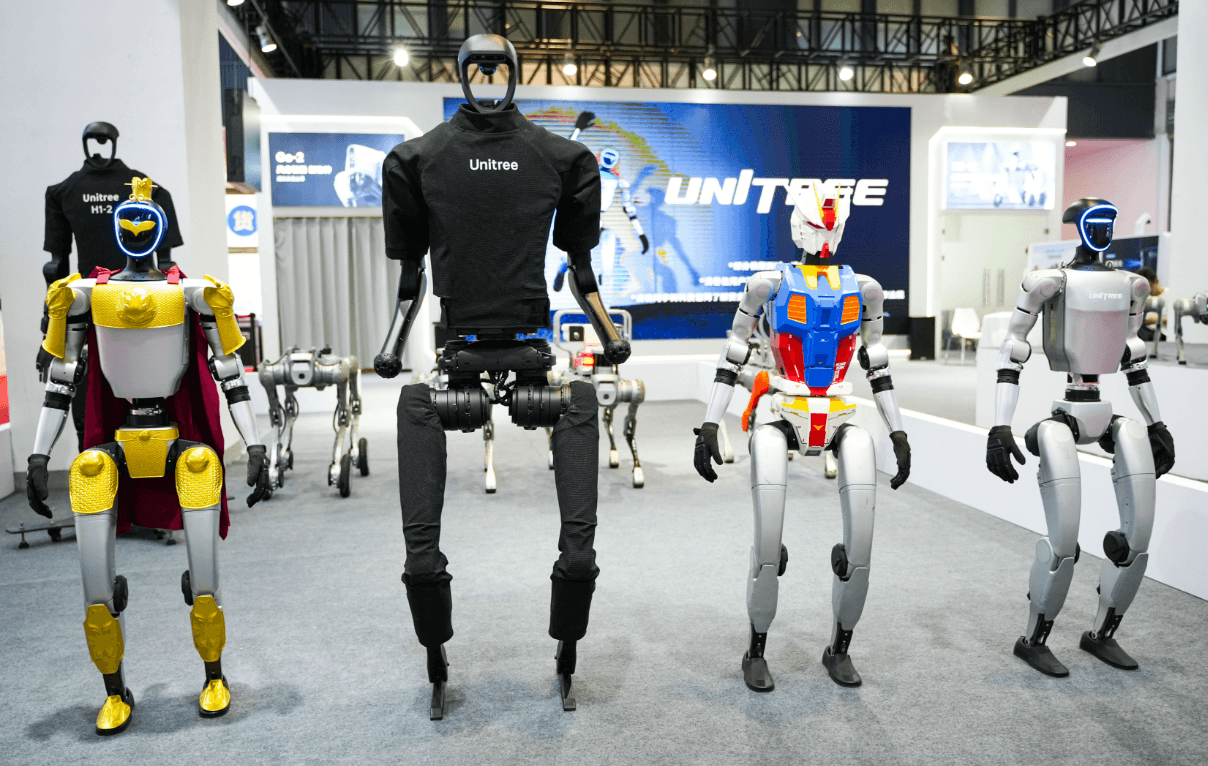
That decline has now become the specific trigger cited by Reuters for a broader regulatory slowdown affecting China's entire humanoid robotics IPO pipeline. At the same time, Unitree remains the actual market leader in the physical robots it sells today: Counterpoint data shows the company holding 37% share of global quadruped robot shipments in the first half of 2026, out of roughly 35,000 units shipped industry wide. Those two facts, a collapsing stock price and a dominant market position, are worth separating carefully rather than treated as contradictory.
What Actually Happened To The Stock
Unitree listed on Shanghai's STAR Market on August 19, 2026, at 150.80 yuan per share, raising approximately 6.1 billion yuan, or roughly $904 million, at an IPO valuation near $9 billion. Shares then quintupled on their first day of trading, according to multiple outlets including CryptoBriefing and TheNextWeb, pushing the company's market capitalization to approximately 445 billion yuan, or about $66 billion, before the decline began. By August 25, the stock was down roughly 45% from that peak. By the time regulatory caution surfaced publicly this week, the decline had deepened to approximately 55% from the high, with today's price near 499.73 yuan sitting well below the 845 yuan level the stock reportedly closed at on its first trading day.
That round trip, an explosive debut followed by a sustained, steep decline, has wiped out roughly $30 billion in paper market value, according to CryptoBriefing's analysis, with retail investors who bought near the peak absorbing the bulk of those losses.
Why Regulators Are Now Involved
Reuters reported today that Chinese regulators are putting the brakes on a broader rush of humanoid robot companies seeking public listings, citing people familiar with the matter who said the slowdown was mainly triggered by Unitree's volatile debut specifically. Regulators have been using informal "window guidance," an unpublished, behind the scenes channel the China Securities Regulatory Commission uses to steer outcomes without issuing a formal written rule, to hold back some humanoid-robot listings, according to the sourcing cited by Reuters and corroborated separately by The Information's earlier September 9 report.
It's worth being precise about what this actually is and isn't. One source described humanoid IPOs as having been "effectively frozen" for now, while another specifically noted there's no formal ban, just a sector specific slowdown, according to NewsBytes' coverage of the same reporting. At least half a dozen Chinese humanoid robotics firms are currently preparing to go public, including Deep Robotics, X Square Robot, and AGIBOT, none of which responded to Reuters' requests for comment on whether regulators have slowed their own listing plans. Unitree itself also did not respond to a request for comment.
What Regulators Are Specifically Scrutinizing
The core of the regulatory concern centers on a narrow, specific question: whether revenue tied to local-government-backed projects represents genuine, repeatable commercial demand or something closer to subsidized activity dressed up as market traction. According to a person close to humanoid robot investors cited by Reuters, regulators are focused specifically on two revenue sources: robot data collection centers, where robots are trained, and joint ventures in which local governments can provide 80% to 90% of the initial investment.
This concern isn't abstract. According to review materials filed with the Shanghai Stock Exchange and reported by TheNextWeb, in the first nine months of 2025, only about 9% of Unitree's revenue came from industrial sales, while 73.6% came from research and education customers. That's a specific, quantified version of the exact concern regulators are now scrutinizing across the sector: a robot sold to a university laboratory demonstrates that a sale occurred, not that a scalable commercial market exists. Mech Mind Robotics CEO Shao Tianlan put the broader industry pattern more bluntly, telling Reuters that some of the sector's revenue arrives through data collection arrangements that function more like subsidized demonstration projects than organic commercial demand.
-- Price
Why This Matters Beyond Unitree Specifically
The regulatory scrutiny isn't isolated to Unitree's own listing, which has already completed. Finimize's analysis laid out the mechanical consequence directly: if regulators and underwriters begin treating government-linked project revenue as lower-quality, the pool of revenue considered "sustainable" for valuation purposes shrinks, and bankers typically apply lower valuation multiples to a smaller, more genuinely repeatable revenue base. Some industry estimates cited in that reporting suggest valuations could fall 60% to 70% for companies still preparing to list, once data-center and joint-venture revenue gets stripped out of the calculation.
That's a meaningfully different story than simply "one stock crashed." It's a repricing of how the entire humanoid robotics sector's revenue quality gets evaluated by regulators and, by extension, by underwriters setting IPO valuations for the half dozen companies still in the pipeline. Mech Mind Robotics, which listed in Hong Kong on September 1, has already fallen roughly 20% from its own debut-day high, suggesting the caution extends beyond Unitree's specific STAR Market listing to how investors are pricing newly public robotics names more broadly.
Why Beijing Isn't Actually Backing Away From The Sector
It's worth being clear about what this regulatory tightening doesn't represent. Multiple outlets, including Finimize and Tribune India, specifically noted that the increased scrutiny reflects an attempt to temper investor enthusiasm and improve listing quality, not a retreat from supporting robotics as a strategic priority. China has included robotics as a priority sector in its 15th Five Year Plan covering 2026 through 2030, and the government's underlying commitment to the sector's development remains intact even as the specific mechanism for taking individual companies public gets tightened.
That distinction matters for reading today's news accurately. This is regulators trying to separate genuine commercial traction from state subsidized activity that had been inflating pre-IPO valuations, not a signal that Beijing has soured on humanoid or quadruped robotics as a technology category worth backing.
Why The Market Share Data Tells A Different Story
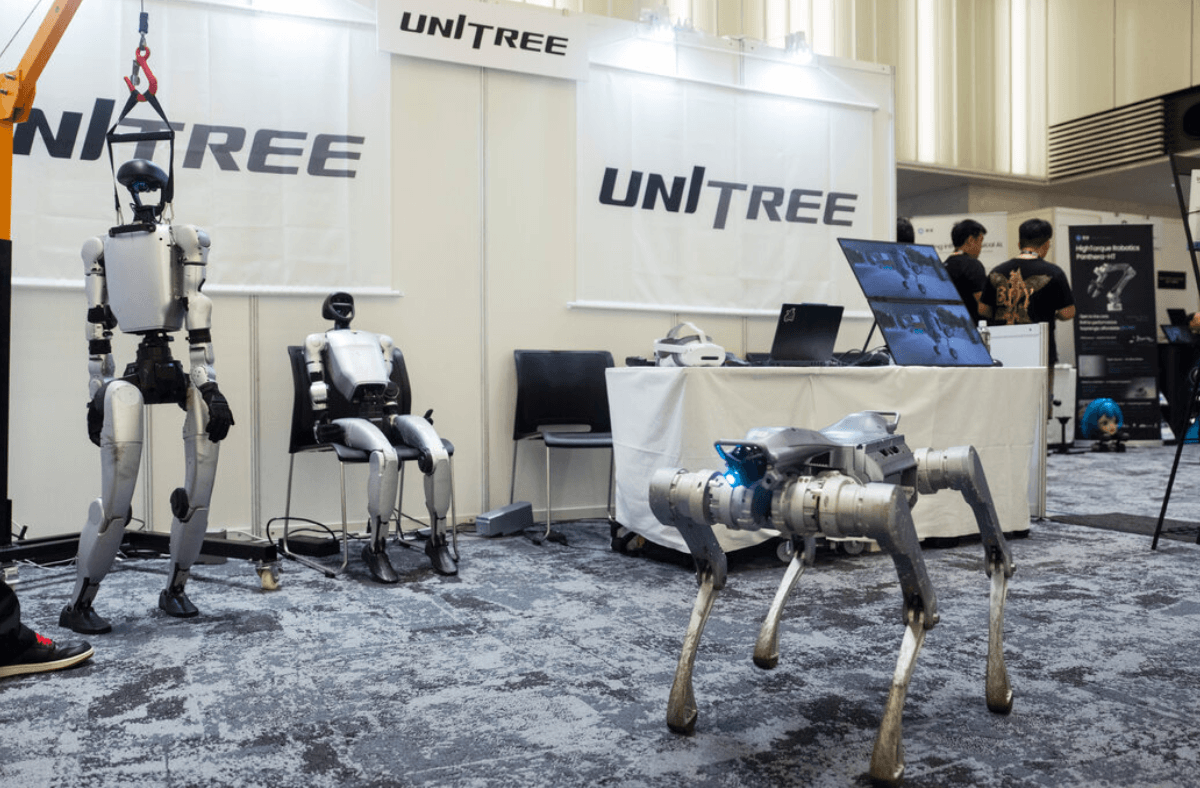
Set against this regulatory and stock-price turbulence, Unitree's actual product position looks considerably more stable. Counterpoint's data shows global quadruped robot shipments reaching close to 35,000 units in the first half of 2026, with Unitree capturing 37% of that market, the largest share of any single manufacturer. That figure describes physical units actually shipped and presumably sold, a different and arguably more concrete data point than the revenue-source questions currently under regulatory scrutiny.
This is the tension worth sitting with directly rather than resolving too quickly in either direction. A company can simultaneously lead its addressable product category by shipment volume while also facing legitimate questions about how much of its reported revenue reflects durable commercial demand versus government-subsidized pilot programs and research sales. Those aren't contradictory facts. They're two separate measurements, one of physical market position, one of revenue quality, and Unitree's current situation shows genuine strength on one axis alongside genuine unresolved questions on the other.
What Would Actually Resolve This Tension
Neither the stock's decline nor the market share leadership settles the underlying question regulators are now asking across the sector: whether Unitree, and companies like it, can convert current shipment volume and headline revenue into a genuinely diversified, industrial scale customer base rather than remaining dependent on research institutions and government backed pilot programs. Whether the 9% industrial, 73.6% research revenue split shifts meaningfully toward industrial customers in subsequent reporting periods is the most direct test available. Whether the half dozen humanoid robotics companies still waiting to list actually proceed, get repriced lower, or continue waiting indefinitely under window guidance will show how durable this specific regulatory posture actually is. And whether Unitree's 37% quadruped market share, a genuine commercial data point independent of the revenue-source debate, continues holding or expanding as competition in the category increases is worth tracking as a separate signal from the stock price itself.
Conclusion
Unitree stock's decline from an 845 yuan first-day close to under 500 yuan today reflects a genuine, roughly 55% collapse from its post-IPO peak, a move Reuters reports has now triggered a broader regulatory slowdown across China's entire humanoid robotics IPO pipeline, with at least six additional companies affected by informal window guidance. The specific concern, that only 9% of Unitree's recent revenue came from industrial sales versus 73.6% from research and education customers, points to a genuine unresolved question about commercial demand durability. Separately, and without directly resolving that question, Counterpoint data shows Unitree holding 37% of the global quadruped robot market by shipment volume in the first half of 2026, the largest share of any manufacturer, a genuine product market position that exists independently of the stock's volatile post-IPO trading history.
FAQ
1. How far has Unitree stock fallen from its peak?
Unitree shares have fallen roughly 55% from their post-IPO peak, declining from an 845 yuan first-day close to trading around 499.73 yuan by midday on September 21, according to reported figures.
2. Why are Chinese regulators scrutinizing humanoid robot IPOs?
Reuters reports regulators are examining whether revenue tied to local-government-backed projects, including data-collection centers and joint ventures where local governments can fund 80% to 90% of initial investment, represents sustainable commercial demand.
3. Has China banned humanoid robot IPOs entirely?
No. Regulators are using informal "window guidance" to slow the listing pipeline and raise scrutiny, but sources specifically note there is no formal ban, distinguishing this from a full suspension.
4. What percentage of Unitree's revenue comes from industrial customers?
According to Shanghai Stock Exchange filing materials, only about 9% of Unitree's revenue in the first nine months of 2025 came from industrial sales, while 73.6% came from research and education customers.
5. Does Unitree still lead the robotics market despite its stock decline?
Yes, in a specific category. Counterpoint data shows Unitree held 37% of global quadruped robot shipments in the first half of 2026, the largest share of any manufacturer, out of roughly 35,000 units shipped industry wide.
This content is provided for general informational purposes only and doesn't constitute financial, investment, legal, or tax advice. Any events, rewards, online promotions, or related information mentioned herein should not be considered a recommendation, solicitation, or invitation to purchase, sell, trade, or otherwise deal in any crypto assets. Crypto assets are highly volatile and may result in loss. The availability of WEEX services, products, and related events may vary by region. You are responsible for ensuring that your participation is in accordance with applicable local laws and regulations.
You may also like
Which Liquidity Pools Are Profitable on Robinhood Chain?

Should We Worry About a Reversal of Yen Carry Trades?
Mr&强 Observes Large BTC Buy Orders on Coinbase

Bitget Trader Steve: From US Stocks to On-Chain, Moving Towards 'Unity of Knowledge and Action' in a 24/7 Market

Micron Stock Price Target: Do the $1,500 to $2,000 Estimates Still Make Sense
Micron price targets range from $1,295 consensus to $1,500- lus individual calls, while options pricing implies an 11% swing on September 30 earnings, the actual results will settle which

MU Stock Retail Sentiment Just Turned Sour: The CEO Sold Shares Right Before Earnings
MU retail sentiment is souring ahead of September 30 earnings, and the CEO just sold $39 million in shares but the sale traces back to a plan set eight months ago.

WEEX AI Wars II: Round 2 Recap — Humans Just Broke the Leaderboard (Literally)
Round 2 of WEEX AI Wars II has closed, and Team Human didn't just win again — they posted returns north of 50,000%. Here's the full breakdown, how the gap to Team AI widened even further, and how to join Round 3's live $20,000 USDT prize pool.

Orbio's Market Value Surges to $90 Million in 20 Days, Is Demand Keeping Up?

Crypto Scam: Business Leader Loses 600,000 Euros on a Fake Platform

Cardano x402: the official integration that allows AI agents to pay APIs in ADA

The Youngest Users, The Most Old-Fashioned Positions

How to Make UTXO a Programmable Computing Layer Without Adding Another EVM Layer to Bitcoin

Why Did BP Suddenly Rise? Backpack is Gaining a New Valuation Logic

Phemex CEO: The Barbell Phenomenon in the Crypto Market, Why AI Will Not Fully Replace Traders, and a Bullish Outlook for Q4
![[ETH Letter] Ethereum Aims to Activate Sepolia Testnet on October 6](/public-static/26_2e1840f602.png?format=avif)
[ETH Letter] Ethereum Aims to Activate Sepolia Testnet on October 6
ECB President Moves to Block Binance's EU Expansion and License Acquisition

WEEX Attains ISO/IEC 27001:2022 Certification, Reinforcing Its Commitment to World-Class Security
This certification highlights the rigorous information security management system WEEX has built to protect its 10 million users across every market it offers.

SEC Takes Action: Who Can Handle "Compliant ICOs"?

People Power Party: "Rushing Digital Asset Taxation Burdens Investors... Tax System Needs Review"
Energy Crisis Spreads from Crude Oil to Diesel and Food, Global Inflation Faces Second Round of Pressure

TRON Weekly Industry Report: Regulatory and Interest Rate Pressures Fail to Dampen BTC Bullish Sentiment, Detailed Analysis of PayFi High-Performance Payment Infrastructure Axon Finance

CFTC Exempts Wallet and Software Developers from Broker Registration
How to Earn Crypto Futures Trading Rewards on WEEX: Daily Lucky Eggs S2
ZetaChain, Linera, Switchboard Cease Operations

King Charles of the UK Holds Safety Summit with Top AI Companies Including OpenAI and Google

Executive Shake-up: Is Polymarket Going Public?

Engineer Complains About AI Code Production Out of Control, Working 13 Hours a Day Just to Hit Enter
The Next Phase of Ethereum from the EF Protocol AMA

Jev Suddenly Goes Viral: No Chatting, No Coding, Just Judgments

Why keeping your private keys safe won’t always stop crypto theft
Which Liquidity Pools Are Profitable on Robinhood Chain?
Should We Worry About a Reversal of Yen Carry Trades?
Mr&强 Observes Large BTC Buy Orders on Coinbase
Bitget Trader Steve: From US Stocks to On-Chain, Moving Towards 'Unity of Knowledge and Action' in a 24/7 Market
Micron Stock Price Target: Do the $1,500 to $2,000 Estimates Still Make Sense
Micron price targets range from $1,295 consensus to $1,500- lus individual calls, while options pricing implies an 11% swing on September 30 earnings, the actual results will settle which
MU Stock Retail Sentiment Just Turned Sour: The CEO Sold Shares Right Before Earnings
MU retail sentiment is souring ahead of September 30 earnings, and the CEO just sold $39 million in shares but the sale traces back to a plan set eight months ago.
Contents
Latest articles



Latest coin listings on WEEX


