
The Ethereum Foundation prioritizes post-quantum migration

 Prefer us on Google
- The network aims to complete its transformation by 2028, although it maintains 2029 as a deadline.
- Wallets, validators, and smart contracts will need to adapt to new cryptographic systems.
The Ethereum Foundation announced that preparing its network for quantum computing has become its top development priority. This decision involves reallocating resources, postponing other improvements, and accelerating changes to the cryptographic mechanisms that protect transactions and the functioning of the protocol.
In a statement released on November 23, the organization explained that it has been studying how to protect Ethereum from quantum computers capable of compromising its current security systems for years. However, the advancement of artificial intelligence (AI) has added a new urgency to the project.
According to the Foundation, AI models are finding vulnerabilities in production software at a speed that makes human review difficult. Although this does not mean they can currently break Ethereum's cryptography, the organization believes it is necessary to prepare for a scenario where these systems also accelerate mathematical discoveries.
This strategy includes three fundamental transformations. First, replacing validators' signatures with keys based on hash functions, eliminating their reliance on elliptic curve cryptography. Second, facilitating users to migrate their wallets to signatures resistant to quantum attacks. Third, modifying the cryptographic commitments used in the blobs, structures that allow temporary storage of data from second-layer networks.
The Foundation acknowledges that this transformation will be more complex than The Merge, the September 2022 update that replaced Ethereum's consensus system. However, the difference is that it now considers it has less time to complete the changes.
The cost of this decision will also be considerable. Tools built around BLS signatures will need modifications, while smart contracts, multi-signature systems, and staking platforms will have to adapt.
Moreover, post-quantum signatures are considerably larger than current ones, which could increase the storage and processing requirements of nodes. To address the risks associated with these changes, the Foundation reported that it has doubled the size of its protocol security team.
This issue had already been addressed by Vitalik Buterin, co-founder of Ethereum. As reported by CriptoNoticias on November 16, Buterin supported a proposal to group signatures and cryptographic proofs, preventing the new security demands from overwhelming the network.
The challenge also has implications for Bitcoin. To understand how the advancements developed around Ethereum could assist Bitcoin's post-quantum migration, read CriptoNoticias' exclusive analysis: <
Regarding the timeline, the Foundation indicated that researcher Justin Drake proposed December 2028 as the target for the transition. However, it maintains 2029 as an internal deadline and plans to review the schedule in January.
The first technical specifications have already begun to be developed, and there is an experimental test network for the new consensus layer. There is also consideration to withdraw functionalities planned for future updates to free up engineering resources.
The Foundation warned that the success of the migration will depend on the participation of developers, wallet providers, node operators, auditors, and security teams.
For now, there is no completed migration or definitive activation date. What is confirmed is the change in priorities: Ethereum is willing to delay other innovations to strengthen its cryptography before quantum threats and AI advancements can compromise it.
This content is provided for general informational purposes only and doesn't constitute financial, investment, legal, or tax advice. Any events, rewards, online promotions, or related information mentioned herein should not be considered a recommendation, solicitation, or invitation to purchase, sell, trade, or otherwise deal in any crypto assets. Crypto assets are highly volatile and may result in loss. The availability of WEEX services, products, and related events may vary by region. You are responsible for ensuring that your participation is in accordance with applicable local laws and regulations.
You may also like

Borrowing to Buy Food: The Reality of American Life
Where can Bitcoin count toward a US exchange’s operating reserves?
Japan Tightens Cryptocurrency Tax Audits, Tokyo Tax Bureau Pursues 3.9 Billion Yen in Undeclared Income
Compass Group Plans to Relocate Main Listing to the U.S.

SBI Chairman Kitao Proposes Separate Taxation and Acceleration of Cryptocurrency ETFs
The Perpetual Futures Market Is Booming. That Might Not Be as Bullish for Hyperliquid as Some Investors Think.

Anthropic's IPO Sparks ETF Issuance Surge: 16 US ETFs Offer Leveraged Long, Inverse Short, and Options Income Strategies

Xiaomi Reports Q3 Revenue of 107.2 Billion Yuan, Adjusted Net Profit Plummets 56.8%, Automotive and AI Business Operates at a Loss of 3.4 Billion Yuan
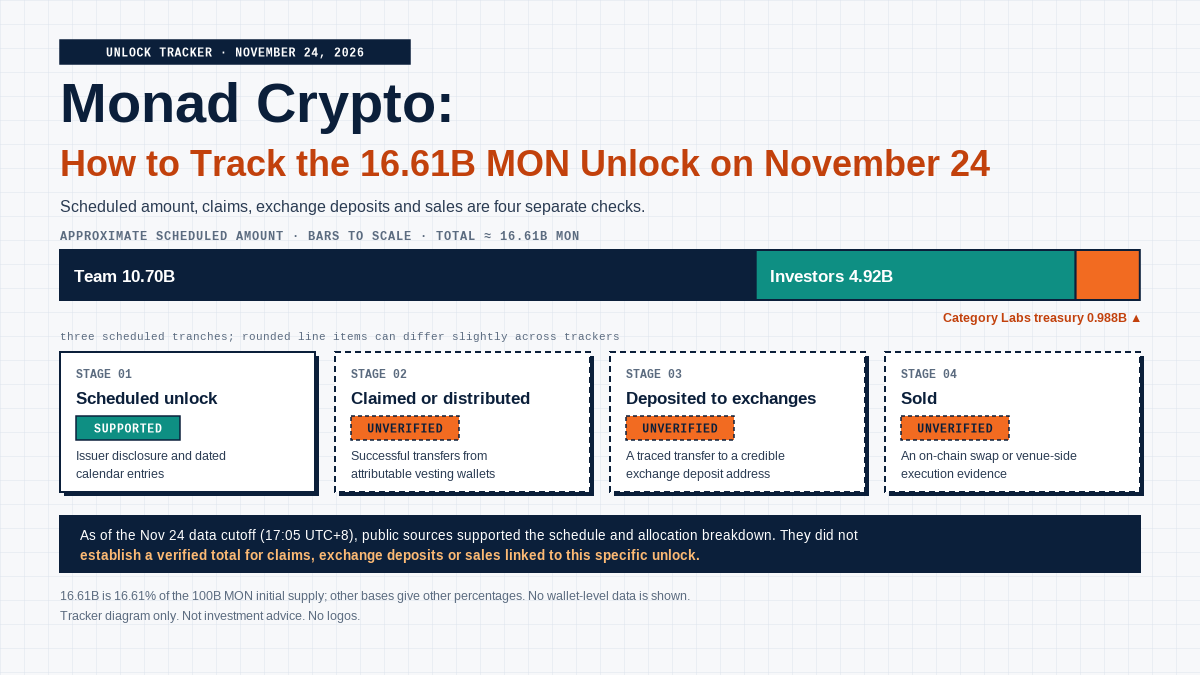
Monad Crypto: How to Track the 16.61B MON Unlock on November 24
Track Monad’s 16.61B MON unlock on November 24. See the team, investor, and treasury allocations, and learn how to verify claims and exchange deposits.

CFTC Allows Bitcoin and Ethereum as Operating Reserves: Will It Boost Crypto Markets?

Why France Faces Recession Risks and What Factors Could Help It Avoid a Downturn
Signal Partners with United Airlines and Several Banks to Limit AI Agents Due to Customer Risk Issues

Prediction: Alphabet Will Be the World's Most Valuable Company by 2031

Bitcoin’s next crash may come from holders, not leverage, as $10.7 billion gets liquidated

0G Foundation pledges disclosure review after Upbit trading warning
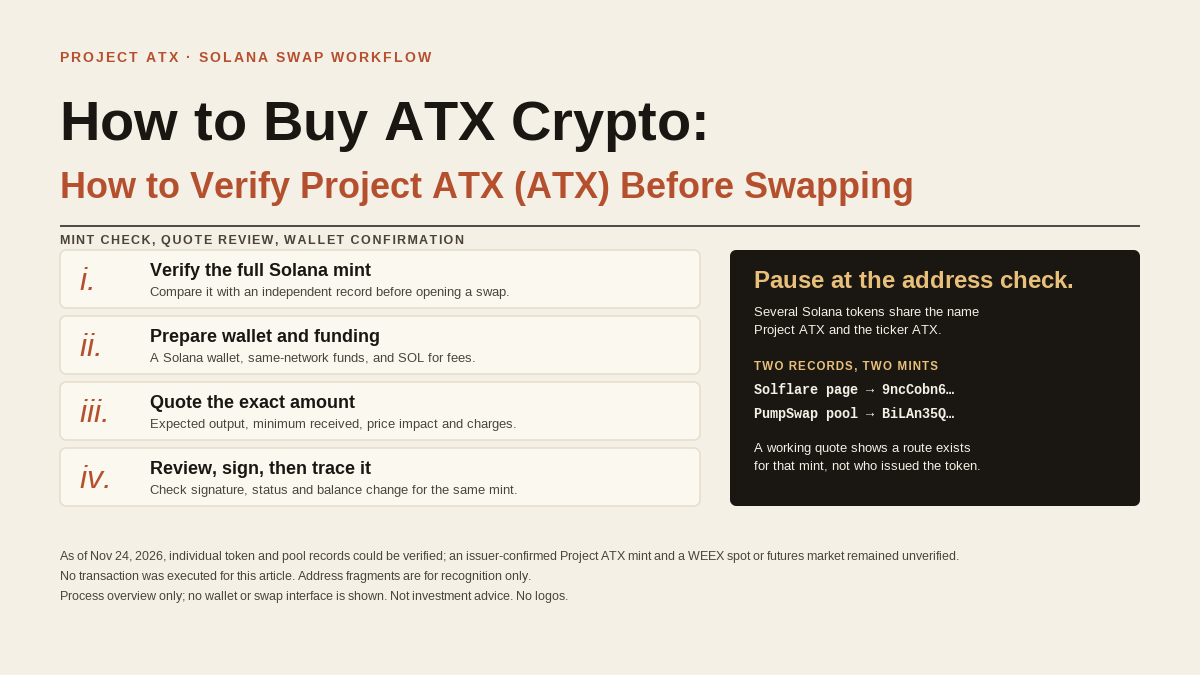
How to Buy ATX Crypto: How to Verify Project ATX (ATX) Before Swapping
Learn how to buy ATX crypto on Solana. Verify the Project ATX mint, review swap quotes and fees, and confirm the exact token you receive on-chain.

Why Is the ATX Crypto Price Different Across Platforms? Project ATX (ATX) Explained
See why the ATX crypto price varies across platforms. Compare Project ATX mint addresses, PumpSwap pools, and swap quotes for the same trade size.
Interpretation of South Korea's Digital Asset Law Proposal: ICO Ban Lifted, Banks to Lead Stablecoin
Tiger International's Q3 Customer Assets Surpass $64.8 Billion, Setting New Records in Hong Kong Market Net Inflows of Nearly $1 Billion
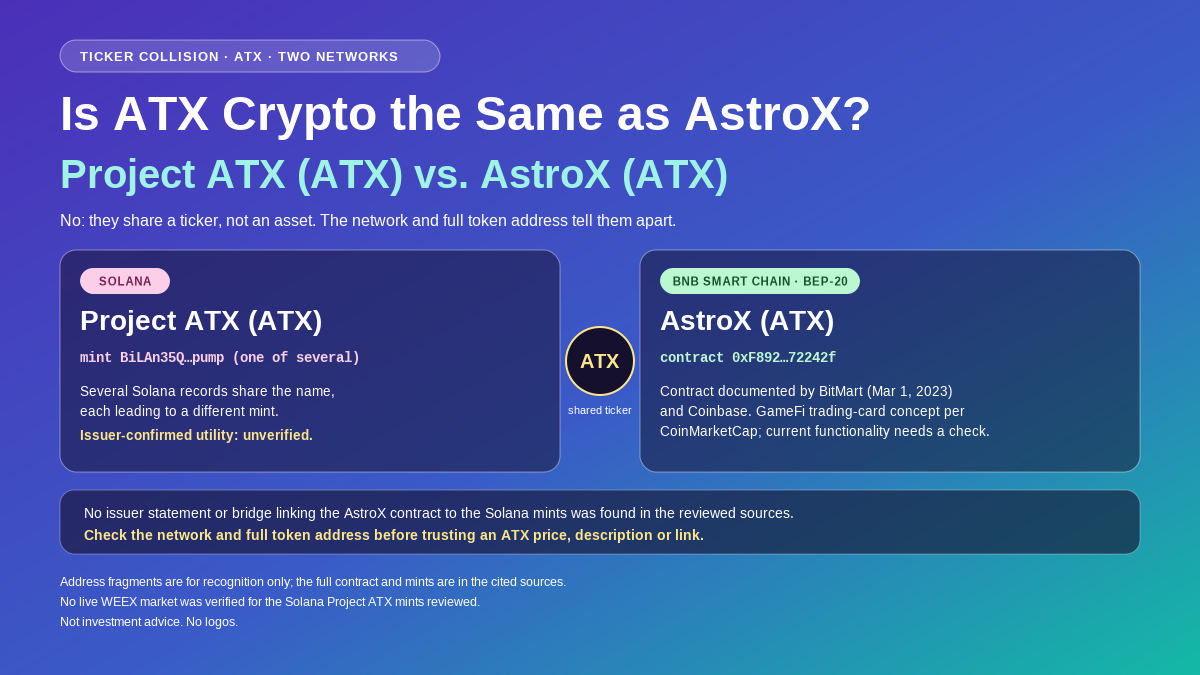
Is ATX Crypto the Same as AstroX? Project ATX (ATX) vs. AstroX (ATX)
Compare Project ATX on Solana with AstroX on BNB Smart Chain. Learn how to verify each token address before trusting an ATX price or buying guide.

Binance to suspend crypto withdrawals across all networks on Nov. 25
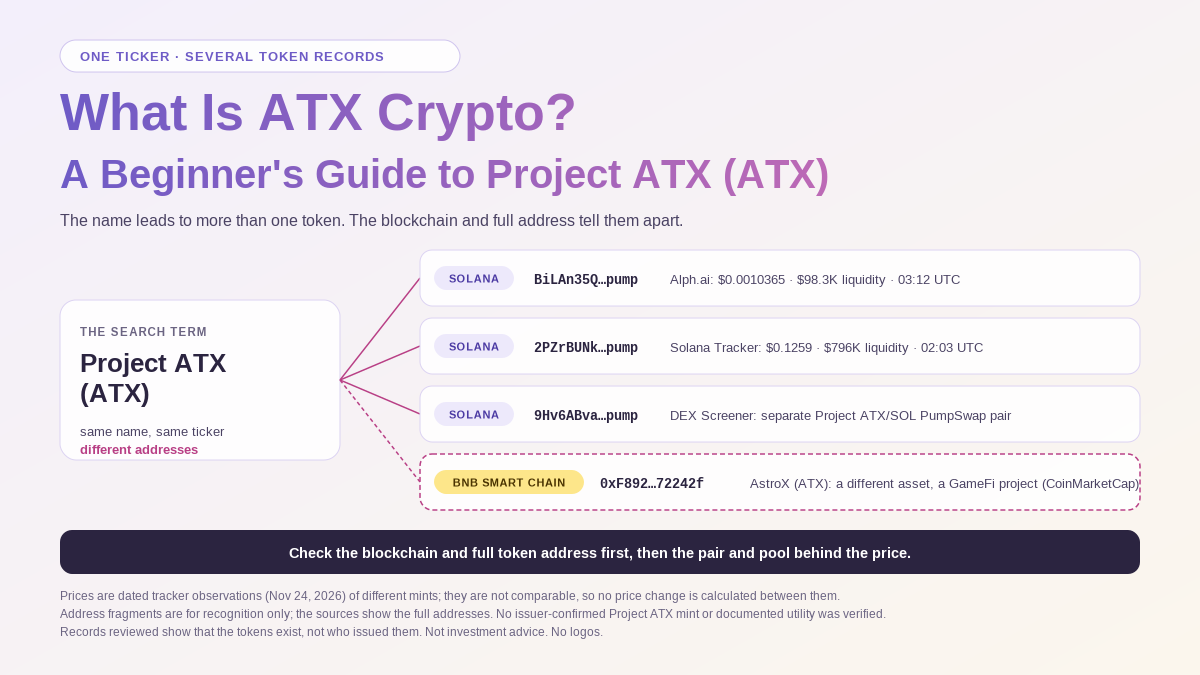
What Is ATX Crypto? A Beginner’s Guide to Project ATX (ATX)
Learn what ATX crypto means, why Project ATX appears under multiple Solana mint addresses, and how to tell those tokens apart from AstroX (ATX).
Bayer Signals Future Pharmaceutical Deals May Target Mid-Stage Clinical Assets

Arthur Hayes: Nvidia's Stock Surge is Bad News for Cryptocurrency, US Stocks Need to Decline for Fed's Liquidity Supply

Ethereum ETF: $96 million in net inflows stop the November bleeding

Stanford’s encryption breakthrough could unlock a new era for Bitcoin

These 13 Crypto Projects Are All Trying to Survive

AI Agents in Payments: Cards Dominate, Yet Stablecoins Fill the 'Gap'|a16z Frontier

European Fertilizer Suppliers Shut Down Factories Due to Soaring Energy Prices

SharkNinja to Join S&P 500 Before Market Opens on December 2, AES to Be Removed
Borrowing to Buy Food: The Reality of American Life
Where can Bitcoin count toward a US exchange’s operating reserves?
Japan Tightens Cryptocurrency Tax Audits, Tokyo Tax Bureau Pursues 3.9 Billion Yen in Undeclared Income
Compass Group Plans to Relocate Main Listing to the U.S.
SBI Chairman Kitao Proposes Separate Taxation and Acceleration of Cryptocurrency ETFs
The Perpetual Futures Market Is Booming. That Might Not Be as Bullish for Hyperliquid as Some Investors Think.
Latest articles
Latest coin listings on WEEX


