
Prediction: Alphabet Will Be the World's Most Valuable Company by 2031

 Prefer us on Google


Free ArticleExplore Premium Services
Prediction: Alphabet Will Be the World's Most Valuable Company by 2031
It's better positioned than any other to thrive through the changes that are apt to materialize over the course of the coming five years.
By James Brumley -- Nov 24, 2026 at 3:50AM EST +Fool.comon
Key Points
The names that are bigger right now deserve the growth that got them there, but the underlying growth drivers aren't necessarily built to maintain their current growth paces.
Alphabet's core businesses, on the other hand, meet needs that aren't apt to change for the foreseeable future. They're only likely to grow, in fact.
Don't dismiss the importance of building a brand and services that can be readily adapted to meet ever-changing needs and market conditions.
Investors love numbers, understandably so. Numerical data is how we measure a company's success, or gauge the value of the market, or, for that matter, decide the health of the economy.
Sometimes, though, it can be helpful to consider qualitative information at least as much as the quantitative for a particular company (Warren Buffett does!) when making a buy/sell decision.
With that as the backdrop, while bigger companies like Apple (AAPL +1.90%), Nvidia (NVDA +31.48%), and Microsoft (MSFT +1.65%) technically have the bigger, better numbers right now to justify their bigger market capitalizations, I've got a feeling that within five years, Google parent Alphabet (GOOG +5.88%) (GOOGL +6.34%) will be the world's most valuable company. Here's why.
Why not Apple, Nvidia, or Microsoft?
Don't misunderstand. All of these organizations are likely to continue growing between now and 2031, with each apt to have larger market caps by the end of this time frame. Alphabet is simply set to outpace their growth.
Take Apple as an example. Although last fiscal year's top-line growth of 15% is robust to be sure, the iPhone continues to account for half of its revenue. That's a potential problem simply because the smartphone market itself may be peaking due to sheer saturation.
While high memory prices have crimped smartphone demand this year, even before this year's cost pressures, IDC reports that smartphone unit sales improved by less than 2% last year. Although Apple technically led that growth, it did so with a year-over-year improvement of a mere 6.3%.
Indeed, according to figures from Omdia and Counterpoint Research, smartphone sales (measured in units) peaked in 2014. The bulk of the business's growth since then -- including Apple's -- just reflects higher prices, which technically drive growth but aren't a sustainable long-term growth plan. And again, the iPhone still makes up roughly half of Apple's business.
Image source: Getty Images.
As for Nvidia, the world will still need plenty of processing chips between now and 2031, artificial intelligence chips in particular. The company's revenue soared 103% year over year last quarter, driven by insatiable demand for AI accelerators.
This need will eventually be fully met; however, it will largely limit the market to replacements and upgrades rather than demand for entirely new AI platforms. In this vein, for perspective, industry research outfit SemiAnalysis recently reduced its 2028 forecast for AI chip sales from just over $1 trillion to $758 billion, while dialing back its 2030 outlook from just over $1.5 trillion to $923 billion.
And as for Microsoft, while it hasn't been a leading player in the artificial intelligence movement thus far, its woes began well before the AI revolution took hold. Although it's still a powerhouse software name to be sure (with ongoing revenue growth to prove it), the personal computer market peaked in 2011, undermining Windows as a sales tool for other, newer Microsoft products. Indeed, there are now more mobile devices running Android than desktops running Windows, according to Statcounter, and this divergence may only widen going forward.
-- Price
Why Alphabet?
Alphabet owns Android, of course, which, by the way, also dominates the mobile OS market with a 72% share. Android isn't a stand-alone profit center, however. It's free for users.
Rather, Android's domination of the mobile operating system market positions it as a de facto gatekeeper -- and tollbooth operator of sorts -- for how most consumers now prefer to navigate the worldwide web. Numbers from Manochi indicate 52.6% of the planet's web traffic now originates from smartphones.
And regardless of where it came from, Statcounter reports that Alphabet's Google still handles 91% of the world's web searches, with each one of these billions of daily search queries being worth a few cents. For many people, the Google name and platformand the name have become nearly synonymous with the internet itself.
This doesn't mean Alphabet's always done as well with Google as some investors might have hoped. It does, however, mean the company's got lots of options for monetizing its role as a gateway to the worldwide web. This flexibility is an important strategic advantage in and of itself, and the business itself clearly isn't going away anytime soon, even if some of it migrates toward AI chatbots like ChatGPT and Google's Gemini.
The 800-pound gorilla in the room is, of course, Alphabet's cloud computing operation, which includes artificial intelligence initiatives like the aforementioned Gemini and hardware such as its Tensor Processing Units (TPUs). While not Alphabet's biggest business in terms of total revenue, up 103% to $30.78 billion in the third quarter, it is the company's fastest-growing one.
And this number merits mentioning: Cloud computing rivals Amazon (AMZN +3.47%) -- via Amazon Web Services, or AWS -- and Microsoft aren't seeing nearly as much growth as Google Cloud is at this time. Both are losing market share.
Image source: Synergy Research Group. Chart by author.
What gives? It's a bit philosophical, but whereas Amazon and Microsoft sell AI services, Google Cloud offers complete turnkey AI solutions, including integration with its powerful TPUs, along with all the software and apps that make the most of their capabilities.
This is a competitive edge too. Although the entire artificial intelligence industry's growth should slow over the next five years, it's also likely to evolve in ways that funnel customers to providers like Google, which can offer complete one-stop solutions.
So it's conceivable that Alphabet ends up winning the lion's share of whatever growth the AI business has left in store between now and 2031. It's not clear that Nvidia, Amazon, or Microsoft are as well positioned.
That's the prediction anyway. Just remember that it doesn't necessarily mean the market's more valuable companies right now will perform poorly in the meantime. |
| Read Next |
|---|
| Nov 23, 2026 •By Jeremy Bowman Why Alphabet Stock Popped Today |
| Nov 23, 2026 •By David Jagielski, CPA What's Wrong With Alphabet Stock? |
| Nov 22, 2026 •By Tony Dong How to Invest in Vanguard Morningstar Total Stock Market ETF (VTI) |
| Nov 22, 2026 •By Seena Hassouna Alphabet vs. Meta Platforms: Which Media Stock Is a Better Buy for 2027? |
| Nov 22, 2026 •By Anthony Di Pizio 41.6% of Berkshire Hathaway's $358 Billion Portfolio Is Parked in 3 Artificial Intelligence (AI) Stocks |
| Nov 21, 2026 •By Geoffrey Seiler Billionaire David Tepper Just Made a Massive AI Chip Rotation --- Will It Pay Off? |
| ### About the Author |
| James Brumley is a contributing Motley Fool stock market analyst covering consumer staples and consumer discretionary stocks. James is a former licensed stockbroker with Charles Schwab, and a registered investment adviser. He holds a bachelor's degree in business management with a specialization in finance from Transylvania University. |
| TMFjbrumley |
| X @jbrumley James Brumley has positions in Alphabet. The Motley Fool has positions in and recommends Alphabet, Amazon, Apple, Microsoft, and Nvidia. The Motley Fool has a disclosure policy. |
This content is provided for general informational purposes only and doesn't constitute financial, investment, legal, or tax advice. Any events, rewards, online promotions, or related information mentioned herein should not be considered a recommendation, solicitation, or invitation to purchase, sell, trade, or otherwise deal in any crypto assets. Crypto assets are highly volatile and may result in loss. The availability of WEEX services, products, and related events may vary by region. You are responsible for ensuring that your participation is in accordance with applicable local laws and regulations.
You may also like
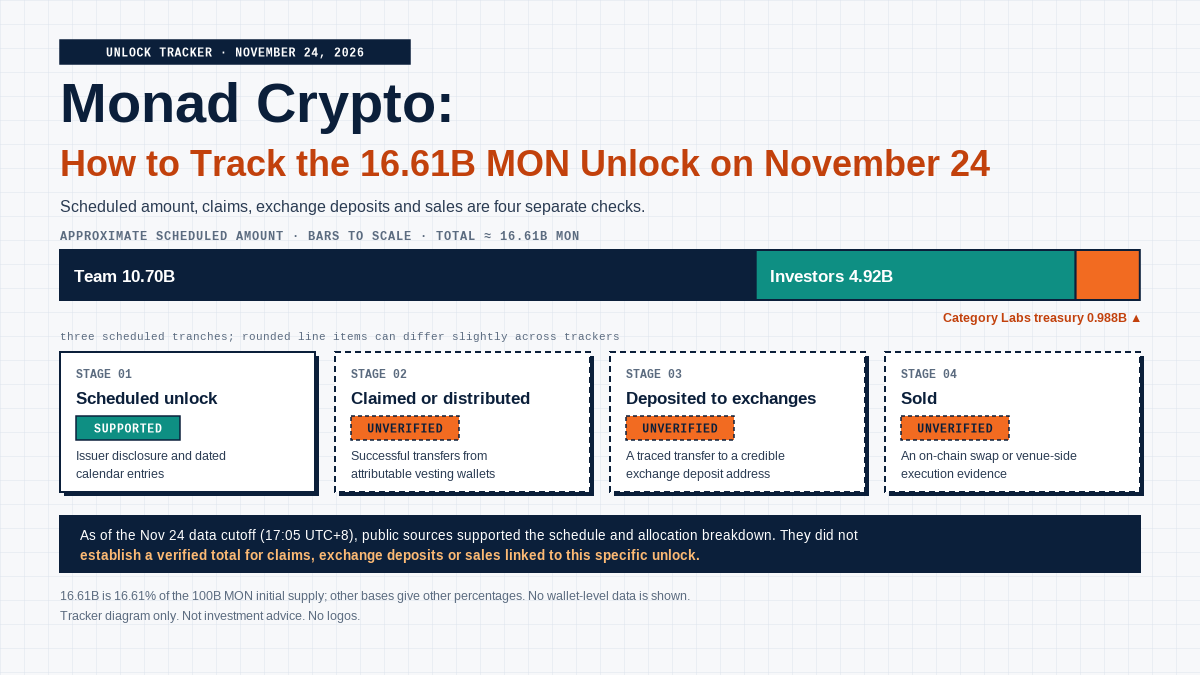
Monad Crypto: How to Track the 16.61B MON Unlock on November 24
Track Monad’s 16.61B MON unlock on November 24. See the team, investor, and treasury allocations, and learn how to verify claims and exchange deposits.
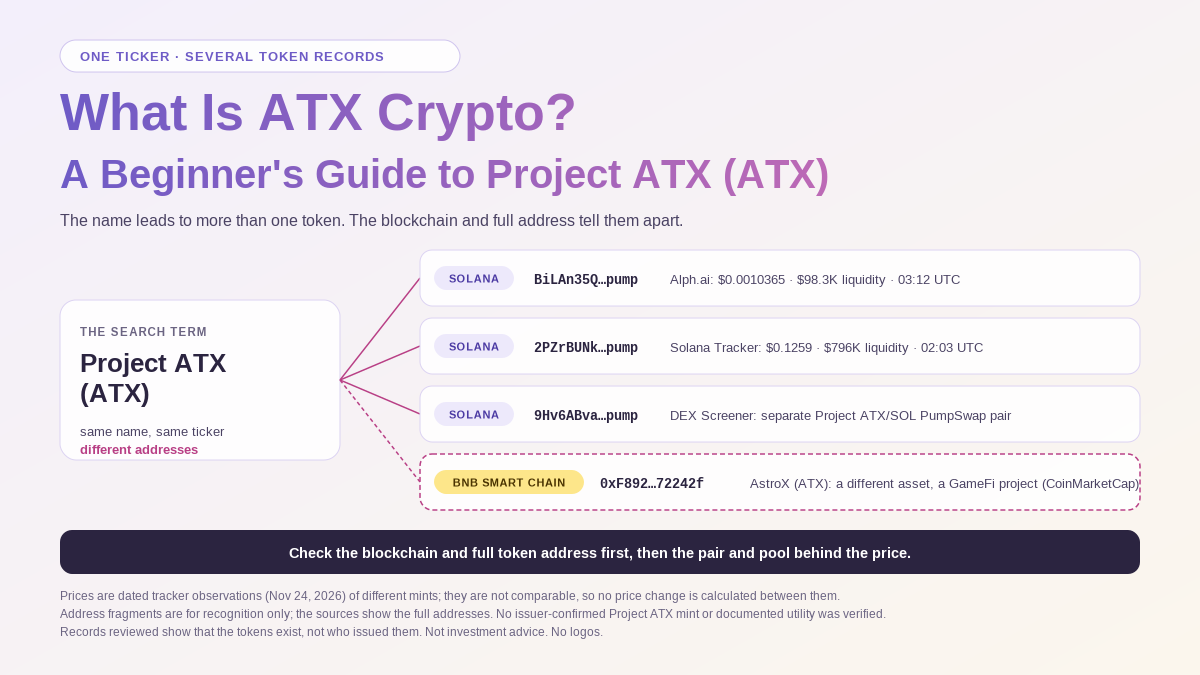
What Is ATX Crypto? A Beginner’s Guide to Project ATX (ATX)
Learn what ATX crypto means, why Project ATX appears under multiple Solana mint addresses, and how to tell those tokens apart from AstroX (ATX).

Ethereum ETF: $96 million in net inflows stop the November bleeding

Lee Chang-yong Discusses Potential Erosion of Capital Movement Regulations with Introduction of Won Stablecoin

Bitcoin’s supply squeeze narrative faces scrutiny after 11,000 BTC moves to Kraken

Korean Token Securities Need Connection to Overseas Blockchain Financial Infrastructure

ECB Seeks Partners for Tokenized Deposits and Securities Pilot

[Analysis] Reasons Why This Bitcoin Decline Is Different from the Past
SBF Expresses Regret Over Anthropic Sale: AI Has a 25% Chance of Destroying Humanity, Young People Should Master AI

VIX Soars to Highest Level Since Last Year’s Tariff Turmoil, Goldman Sachs Fear Index Nears Maximum, US Stocks May Face Over $80 Billion Sell-off Next Week
Is Arthur Hayes buying the dip after moving $5M in USDC?
Bitcoin: Major Investors Return After Nine Months of Selling

Musk Regrets Spending Over $400 Million on Republican Candidates

ZRO Unlock on November 20: Why Are Supply Estimates Different?

Options Overview | AMD Sees $37.88 Million in Forward Double Call Sell, Limited Upside Ahead; Intel Shows Large Put Buys Indicating Bearish Dominance
APEC Releases Connectivity Blueprint

Institutional Withdrawal and Retail Frenzy: Why is the Eastern European Crypto Market Exhibiting 'Abnormal' Trends?

Bitcoin income ETFs promise regular payments. What do investors give up?
USD.AI Evaluates GPU Transactions at $25 Billion

Solana tokenized equities reach $1.22 billion as stock offerings expand
IoTeX adds quantum-resistant technology to developer portal
How to Choose Precious Metal ETFs? A Comprehensive Analysis of Mainstream Gold, Silver, and Mining Stock ETFs
Shiba Inu Experiences Outflow of 300 Billion SHIB from Exchanges

Hacker moves over 34279.66 ETH from Binance after inactivity
Why Are Tokenized Stocks Seeing Strong Buying Pressure While Prices Keep Falling?

XRP holders demand Ripple burn 31.1 billion tokens by March 2027
Pump.fun Launches Prediction Market Feature in Collaboration with Polymarket

ARTEX AI tool breaches networks in under 3 hours, FBI warns

Gnosis Safe wallet reportedly drained of $6.45M in suspected exploit
Thailand Stablecoin Transfer Limit: What the SEC Draft Proposes
Monad Crypto: How to Track the 16.61B MON Unlock on November 24
Track Monad’s 16.61B MON unlock on November 24. See the team, investor, and treasury allocations, and learn how to verify claims and exchange deposits.
What Is ATX Crypto? A Beginner’s Guide to Project ATX (ATX)
Learn what ATX crypto means, why Project ATX appears under multiple Solana mint addresses, and how to tell those tokens apart from AstroX (ATX).
Ethereum ETF: $96 million in net inflows stop the November bleeding
Lee Chang-yong Discusses Potential Erosion of Capital Movement Regulations with Introduction of Won Stablecoin
Bitcoin’s supply squeeze narrative faces scrutiny after 11,000 BTC moves to Kraken
Korean Token Securities Need Connection to Overseas Blockchain Financial Infrastructure
Latest articles




Latest coin listings on WEEX


