
SPCX Stock Fell After Starship's Most Successful Flight Yet: Why an Engine Issue Made SpaceX Cut the Mission Short

 Prefer us on Google
SPCX stock fell 2.16% to close at $145.47 on the same day Starship pulled off its most technically demanding mission to date: the vehicle's first successful orbital flight after 13 straight suborbital tests.
That combination, a genuine engineering milestone paired with a falling SPCX stock price, is the puzzle worth untangling, because the two aren't actually contradicting each other the way they might look. Starship did have a real problem mid-flight, an engine that shut down early, and SpaceX's response to that problem is the part of Flight 14 that got the least attention but arguably says the most about how the company is managing risk on a vehicle everything else, including SPCX stock's underlying story, depends on.
What Actually Went Wrong Mid-Flight
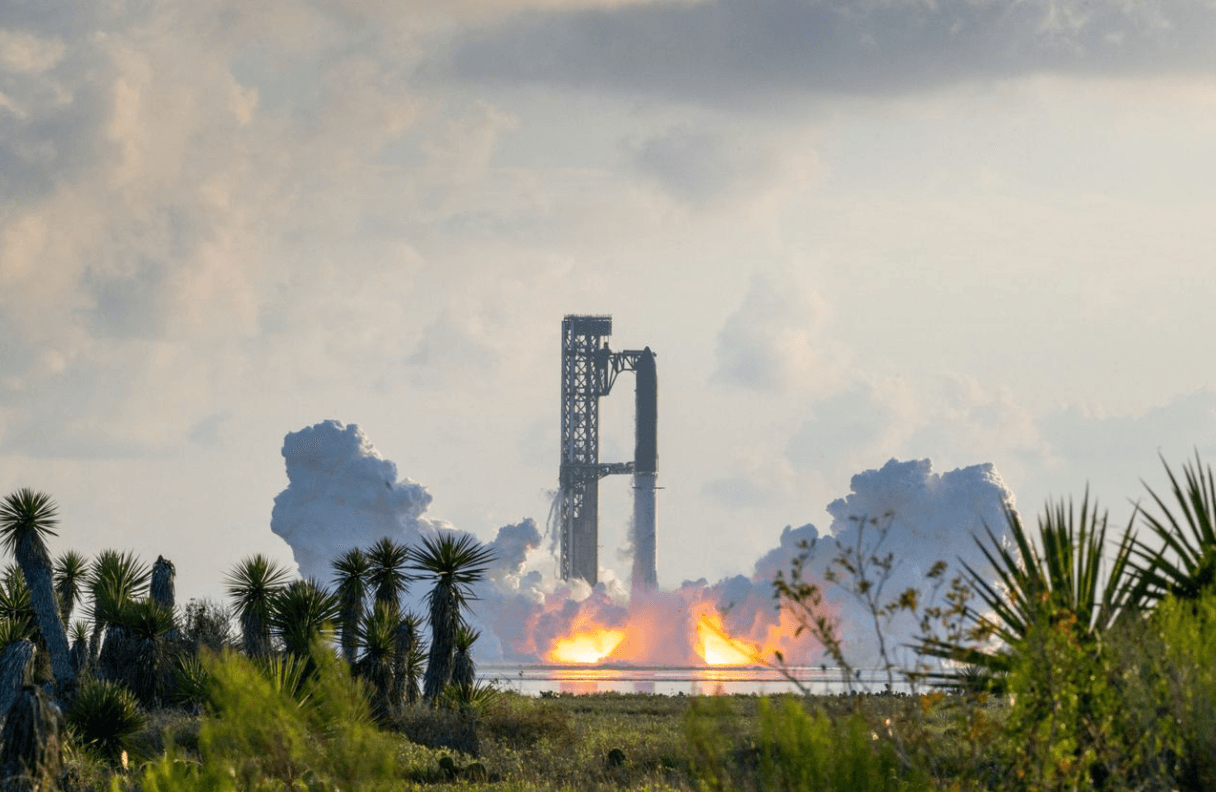
Flight 14 used Ship 41 and Super Heavy Booster 21, both Block 3 vehicles built to carry operational payloads rather than serve as pure test articles. The Super Heavy booster performed close to flawlessly, separating cleanly and completing a landing burn for a soft splashdown in the Gulf.
The problem showed up during Ship 41's second stage burn, when one of its three vacuum optimized Raptor engines shut down early. That raised a real concern at mission control: whether the two remaining engines could still complete the orbital insertion burn and, more importantly, the controlled deorbit burn needed to bring the ship back down safely. This wasn't a cosmetic issue. Starship is roughly 52 meters long and weighs around 160 metric tons, and a vehicle that size stuck in orbit without reliable control becomes a genuinely difficult problem to solve later.
Why SpaceX Cut the Mission Short Instead of Pushing Through
Despite the engine shutdown, Ship 41 reached full orbit at an altitude of about 170 miles. That's where SpaceX made the decision that actually defines this flight: rather than running the full planned mission of up to 10 hours and six orbits, the company cut it down to roughly two hours and two orbits before initiating deorbit.
The logic behind that call matters more than the shortened timeline itself. With one engine down, SpaceX wanted to avoid two specific outcomes: the ship getting stranded in orbit with insufficient propulsion margin, or being forced into an uncontrolled reentry over a populated area if things degraded further during a longer mission. Cutting the flight short was the conservative choice, and it worked. The ship carried out a controlled reentry and splashdown, which is precisely the outcome the shortened timeline was designed to protect.
What Flight 14 Actually Proved, Despite the Shortcut
It's worth being precise about what "success" means here, because the headline version, "Starship reached orbit," undersells what actually got tested. Four specific milestones needed to be cleared on this flight: orbital insertion, payload deployment, on orbit survival long enough to validate the operational profile, and a controlled reentry. All four were met, just on a shorter timeline than originally planned.
Payload deployment was a real part of that. All 26 upgraded Starlink V3 satellites deployed successfully, the first time Starship has carried an operational batch of that generation rather than test units. Three of those satellites carried cameras specifically to scan Starship's heat shield during reentry, gathering data that feeds directly into NASA's Artemis IV lunar landing timeline, which depends on Starship being flight-proven. Reaching orbit and immediately doing useful work with real hardware, even on an abbreviated flight, is a different achievement than simply proving the rocket could get off the ground.
-- Price
Why SPCX Stock Fell Anyway
The most consistent explanation for the 2.16% decline isn't that the market read the mission as a failure. Multiple accounts point to profit-taking and a broader pullback across growth and momentum stocks that day, the same pattern that hit other space and satellite names simultaneously. One comparison making the rounds captured the disconnect directly: a single Starship launch delivered roughly 18 months' worth of prior Starlink capacity gains in one mission, and the stock still fell as momentum funds sold across the sector broadly.
There's also a valuation context sitting underneath the reaction. SPCX carries a market capitalization near $2 trillion after listing on Nasdaq in June, and the stock has already been volatile since then, falling roughly 50% from its post-IPO peak by late July before recovering much of that ground into Flight 14. A stock trading at that scale, with a share lockup expiration and elevated valuation already on investors' minds, doesn't necessarily need bad news to see a pullback. It can fall simply because a lot of good news was already priced in before the engines even lit.
What This Means for the Next Flight
The engine shutdown on Flight 14 is now a specific, known issue SpaceX has to address before the next attempt, rather than an abstract risk. How the company diagnoses and fixes that failure will matter more to Flight 15 than anything about this mission's shortened timeline. At the same time, the precision SpaceX demonstrated during the ship's flip maneuver on this flight has led some observers to speculate that a full tower catch of the upper stage, something SpaceX hasn't yet attempted, could be tried as soon as the next test.
That combination, a real technical problem paired with genuine progress elsewhere in the same flight, is a fair summary of where the Starship program actually sits. It's not a story of unblemished success, and it's not a story of failure either. It's closer to what SpaceX's own flight history has consistently shown: incremental fixes to specific, identified problems, tested again on the next attempt.
Trading SPCX Through a Program That Moves Fast and Reports Slowly
What makes SPCX genuinely hard to trade around events like this is the mismatch in speed: an engine anomaly gets confirmed within minutes of the flight, but whether SpaceX's fix actually works won't be clear until the next Starship launch, whenever that's scheduled. SPCX is available on WEEX Spot, funded in USDT from the same account used for other crypto trading, which makes it possible to hold a position through that gap without needing a traditional brokerage account open specifically for launch-day trading.
That gap matters here specifically because the stock's reaction to this flight, a 2.16% decline despite four milestones being met, shows that launch-day sentiment and the underlying technical story don't always move together. Sizing a position with that mismatch in mind, rather than reacting to the first hour of headlines, fits a stock where the next real catalyst is a specific, dated event: the next Starship test, plus SpaceX's November 3 earnings report. Trading on WEEX is backed by a publicly disclosed 1,000 BTC protection fund, which you can check at weex.com/protectfund, worth confirming before holding a position in a stock this volatile around single-day events.
Conclusion
Starship's 14th flight reached orbit, deployed all 26 Starlink satellites, and completed a controlled reentry, four specific milestones that all got met despite a mid-flight engine shutdown that forced SpaceX to cut the mission from a planned 10 hours down to about two. SPCX stock fell 2.16% the same day, a reaction most coverage attributes to profit taking across growth stocks and an already elevated valuation rather than to the flight itself falling short. The engine issue is now a specific, addressable problem heading into the next test, and how SpaceX resolves it will matter more to the stock than this flight's shortened timeline did.
FAQ
1. Did Starship lose control during Flight 14?
No. An engine shut down early during the second stage burn, which led SpaceX to shorten the mission as a precaution, but the ship completed a controlled reentry and splashdown as planned.
2. Why did SpaceX cut the mission short?
With one of three vacuum engines down, SpaceX wanted to avoid the ship becoming stranded in orbit or facing an uncontrolled reentry later in a longer mission, so it reduced the flight from a planned 10 hours to roughly two.
3. Why did SPCX stock fall despite a successful flight?
Most coverage attributes the 2.16% decline to profit-taking and a broader pullback across growth and momentum stocks that day, alongside an already elevated valuation, rather than to any failure in the mission itself.
4. What did Flight 14 actually accomplish?
Four milestones: orbital insertion, deployment of all 26 Starlink V3 satellites, on-orbit survival long enough to validate the operational profile, and a controlled reentry, all completed on a shortened timeline.
5. What happens next for Starship?
SpaceX needs to diagnose and fix the engine issue before the next test flight, while the precision shown during this flight's maneuvers has raised speculation about an upper-stage tower catch attempt as soon as Flight 15.
This content is provided for general informational purposes only and doesn't constitute financial, investment, legal, or tax advice. Any events, rewards, online promotions, or related information mentioned herein should not be considered a recommendation, solicitation, or invitation to purchase, sell, trade, or otherwise deal in any crypto assets. Crypto assets are highly volatile and may result in loss. The availability of WEEX services, products, and related events may vary by region. You are responsible for ensuring that your participation is in accordance with applicable local laws and regulations.
You may also like

SpaceX Stock Price Is Stuck Between $145 and $155: Here's What Breaks the Range
SPCX has been stuck between $145 and $155 since September 3, and the options market underneath the range is split between historically calm long dated pricing and sharp short-term spikes around each scheduled event.

Four Deals, $11 Billion Each, Four Months: What SpaceX's AI Compute Streak Actually Means
SpaceX just closed its fourth AI compute deal in under a year, pushing annualized revenue toward $41 billion but nearly all of these contracts can be exited with just 90 days' notice.

Tokenized Stocks Daily: Optical Networking Rally, SpaceX Earnings Beat & SNDK Earnings Watch | WEEX TradFi
Today’s WEEX TradFi Daily Brief covers optical networking stocks, SpaceX and Palantir earnings momentum, oil market moves, and key earnings to watch.

WEEX Daily Market Highlights | 2026.08.04

Crypto: Investors Withdraw Their Bitcoin from Exchanges
Tommaso Gagliardoni: Skeptical Bitcoiners About Quantum 'Bury Their Heads in the Sand'

Hedge funds built a $1.2 trillion Treasury trade on money they have to keep borrowing

Crypto: Brazil Surpasses the United States, France Out of the Top 20

TOKEN2049 Singapore: Nasdaq, BlackRock, and Morgan Stanley in the Spotlight

Polymarket: Bets on Bank Failures Spark Reactions in London

Competition Intensifies in Payment Networks for AI Agents

ESMA proposes ending EU custody and transfer services for non-compliant stablecoins

Crypto: Hoskinson Sees a New Era of Exponential Growth

Macroeconomic Outlook for Next Week: Fed Minutes to Reveal December Rate Hike Divergence, G7 Oil Reserve Release to Focus on Lowering Oil Prices
AI is Causing the Collapse of U.S. Treasuries, and Even if Successful, It Will Face Heavy Taxes

Six US banks have failed in 2026 but the numbers look nothing like 2023

Open USD: a stablecoin backed by Visa and Mastercard
Crypto: Base Launches Cobalt to Automate Orders and Frame Tokenized Assets

Greek police arrest 17 in crypto fraud scheme exceeding $8M

SEC proposes crypto custody framework for investment advisers and funds
The pause on Stylus activation on Arbitrum mitigates the risk of AI attacks
Philippines: Central Bank Cuts Off Funding to Coins.ph, Country's Crypto Pioneer
WALL STREET SPEAKS: Investors Ready to Get Back in the Game, but Indices May Shake in October
DogeOS Launches Ethereum-Compatible Dogecoin DeFi Public Testnet Introducing Lending and Stablecoin Financial Scenarios

What are the four main reasons behind the stable period of Robinhood Chain's retreat?

Crypto: BNB Chain Takes the Lead Over Ethereum and Solana

Crypto: For Hyperliquid's Co-founder, 24/7 Trading Is Not the Advantage of Onchain Markets

Plunging GPU prices threaten AI hosts, and new hedges step in
The Era of Universal Bull Market Ends: Who is Redefining the Pricing Power of Altcoins?
Crypto VC funding: Jeeves raises $110m, World sells $49m
SpaceX Stock Price Is Stuck Between $145 and $155: Here's What Breaks the Range
SPCX has been stuck between $145 and $155 since September 3, and the options market underneath the range is split between historically calm long dated pricing and sharp short-term spikes around each scheduled event.
Four Deals, $11 Billion Each, Four Months: What SpaceX's AI Compute Streak Actually Means
SpaceX just closed its fourth AI compute deal in under a year, pushing annualized revenue toward $41 billion but nearly all of these contracts can be exited with just 90 days' notice.
Tokenized Stocks Daily: Optical Networking Rally, SpaceX Earnings Beat & SNDK Earnings Watch | WEEX TradFi
Today’s WEEX TradFi Daily Brief covers optical networking stocks, SpaceX and Palantir earnings momentum, oil market moves, and key earnings to watch.
WEEX Daily Market Highlights | 2026.08.04
Crypto: Investors Withdraw Their Bitcoin from Exchanges
Tommaso Gagliardoni: Skeptical Bitcoiners About Quantum 'Bury Their Heads in the Sand'
Contents
Latest articles


Latest coin listings on WEEX


