
Ethereum Stuck Between Record MetaMask Withdrawals and Resistance at $2,800

 Prefer us on Google
On October 5, 2026, approximately 1.5 million ETH, worth nearly $4 billion, were waiting to enter staking on Ethereum, with an estimated wait time of 25 days. Conversely, 786,000 ETH were waiting to exit, after peaking at 851,000 ETH on October 2, largely fueled by the security incident announced by MetaMask on September 30. Here’s why these two queues tell very different stories.
In Brief
- 1.5 million ETH (nearly $4 billion) queued for entry as of October 5, 2026, with an estimated wait time of about 25 days (validatorqueue.com).
- Entry queue down: nearly 2 million ETH and about 35 days of waiting at the beginning of September.
- Exit queue: about 166,000 ETH on September 29, peaking at 851,000 on October 2, 786,000 on October 5.
- Protocol cap: about 57,600 ETH per day in each direction.
Ethereum: Why Are 1.5 Million ETH Waiting to Enter Staking?
Simply because Ethereum limits the pace of entries. As of October 5, 2026, around 1.5 million ETH, worth nearly $4 billion, were waiting to be activated in staking for an estimated wait time of 25 days, according to data from validatorqueue.com. The staking mechanism on Ethereum relies on this bottleneck since it involves locking up ETH to help secure the network, in exchange for a reward. Validators, the computers that verify crypto transactions, cannot all join the network at the same time. Therefore, about 57,600 ETH can enter each day, and the same amount can exit.
Ethereum Staking Pending.
Since the Pectra update, a validator can now hold up to 2,048 ETH, and large operators are completing existing validators. Part of the queue thus concerns ETH already committed to staking. In July, when the entry queue reached about 2.5 million ETH, Thomas Brunner, head of custody and staking at Sygnum Bank, made the distinction:
The entry queue measures as much the plumbing as the demand.
Why Are 786,000 ETH Exiting Ethereum Staking After the MetaMask Incident?
Because MetaMask Staking, formerly Consensys Staking, withdrew its validators following a security incident announced on September 30, 2026. The exit queue rose from about 166,000 ETH on September 29 to a peak of 851,000 ETH on October 2, its highest level in 2026, then to 786,000 ETH on October 5. MetaMask Staking operates validators within Lido, a service that pools its users' ETH.
According to Lido, the last affected validators should have completed their exit from the validation process by October 7, without necessarily being fully withdrawn by that date. Lido expects these ETH to gradually return to the protocol after their exit, withdrawal, and potential re-entry into staking, within a timeframe of up to 45 days. MetaMask emphasizes the non-custodial nature of its staking and states that it has identified no immediate threat to MetaMask wallets.
MetaMask Updates.
What do the two queues side by side say?
They do not tell the same story. The entry queue reflects a strong demand for activation but does not alone measure the new demand for Ethereum staking. The exit queue, at about 786,000 ETH on October 5 (nearly $2.1 billion at $2,720), is largely driven by a single operator. This suggests a technical movement related to MetaMask Staking rather than a widespread wave of disengagement.
However, the figure of 1.5 million must be read with its trend: at the beginning of September, the entry queue had nearly 2 million ETH, with about 35 days of waiting. The wait time is shortening, but the queue remains long. In July 2026, the exit queue was almost empty, according to Sygnum.
|----------------------|----------------------------------------|-------------------------------| | Date | Entry Queue (ETH) | Exit Queue (ETH) | | Early September 2026 | nearly 2 million (about 35 days) | not recorded | | September 29, 2026 | not recorded | about 166,000 | | October 2, 2026 | not recorded | about 851,000 (2026 peak) | | October 5, 2026 | about 1.5 million (about 25 days) | 786,000 (about 14 days) |
Source: validatorqueue.com, records as of October 5, 2026.
The queues tell the on-chain story, while the $2,800 threshold reflects the market. ETH is trading around $2,720 on October 5, 2026, according to analyst Ted Pillows' weekly chart on X. He places resistance at $2,800, the level where sellers have halted the rise so far, about 3% from the price, and a first support at $2,547.50. According to him, a weekly close above $2,800 with sustained spot demand would change the reading.
What we know, what we don’t know
We know that an incident affected the MetaMask Staking infrastructure and that the two queues distorted within a few days. We do not know what was compromised or how: at this stage, MetaMask has not detailed the origin of the incident. Security researcher Kaden estimates on X that the exits involve about 17,000 validators and 523,000 ETH: these figures are reported by him and not confirmed by MetaMask.
On October 7, 2026, we expect the completion of the exit of the last MetaMask validators, followed by the weekly close of ether above or below $2,800. The entry queue will indicate in the coming weeks whether its decline continues. In the meantime, the toll barrier remains unchanged at 57,600 ETH per day and not one more.
This content is provided for general informational purposes only and doesn't constitute financial, investment, legal, or tax advice. Any events, rewards, online promotions, or related information mentioned herein should not be considered a recommendation, solicitation, or invitation to purchase, sell, trade, or otherwise deal in any crypto assets. Crypto assets are highly volatile and may result in loss. The availability of WEEX services, products, and related events may vary by region. You are responsible for ensuring that your participation is in accordance with applicable local laws and regulations.
You may also like

Bitcoin Holds at $86,000 as Dollar Reaches Highest Level in 18 Months

Who Will Aave Hand Its Brand Over To? The DAO Asset Ownership Dispute Behind the Foundation Proposal

Banks vs Crypto: US Banking Lobby Challenges Banking Charters in Court

U.S. Midterm Elections Just 30 Days Away: Cryptocurrency Industry Faces Dilemma

What happened to Kelsier’s $300M crypto stash?

a16z Unveils the Truth Behind AI Boom: The Top 1% Support the Entire AI Narrative

Crypto: 69% of Polymarket Traders are Losing

USP Partners with CPQD for R$ 1 Million to Develop Zero-Knowledge Proofs in Blockchain

MEXC and Payward Signal Intent to Explore Broader Collaboration Ahead of TOKEN2049

Will Bitcoin (BTC) Go Back Up in 2026? How to Tell a Real Recovery From a Short-Covering Bounce
Will Bitcoin go back up in 2026? Learn how spot demand, ETF flows, crypto liquidity, futures positioning and macro conditions shape a real BTC recovery.
PingCAP Joins WEEX Alpha Suite at TOKEN2049 Singapore 2026: What TiDB Is and Why Data Infrastructure Matters for AI
PingCAP, the company behind the open-source distributed SQL database TiDB, is backing the WEEX Alpha Suite at TOKEN2049 Singapore 2026. TiDB supports HTAP workloads, is MySQL compatible, and is built around horizontal scalability, strong consistency, and high availability. The announcement does not state that TiDB powers WEEX AI Trading, so a technical integration should not be assumed.
Can You Live Only on Stablecoins? Industry Experts Respond with Yes or No
What to Expect at WEEX Alpha Suite: AMAs, Media and Product Launches
Explore what to expect at WEEX Alpha Suite, from curated AMAs and media interviews to product launches, AI trading demos, and industry networking.

Visa and ADI Foundation team up on blockchain powered digital payments
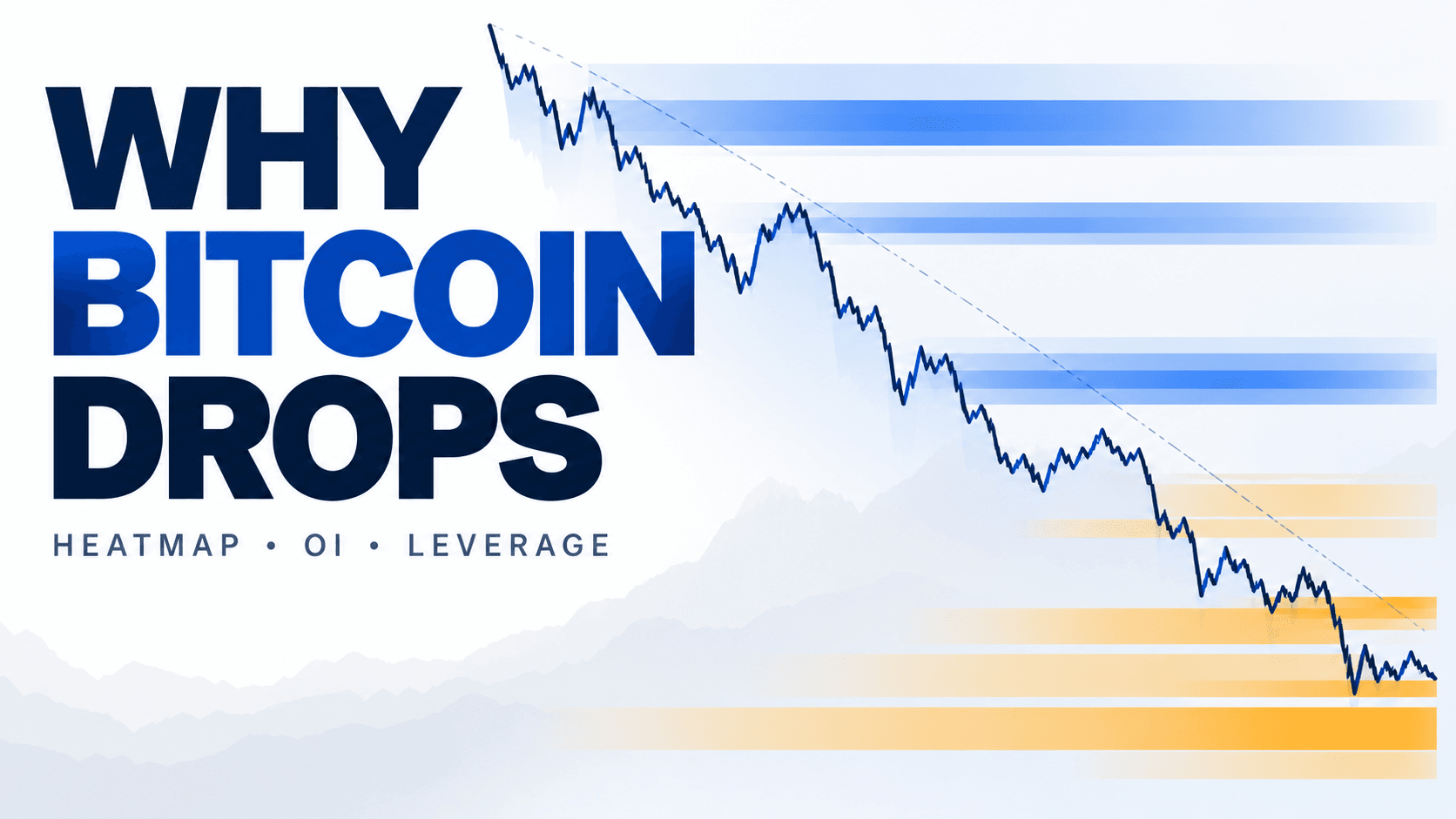
Why Is Bitcoin (BTC) Dropping? How to Read a BTC Liquidation Heatmap Without Guessing the Bottom
Why does Bitcoin drop? Learn how a BTC liquidation heatmap, crypto OI, funding, leverage and market depth can explain sell-offs and false bottoms.

Hyperliquid's Perpetual Futures Listed on Bloomberg Terminal, Increasing Institutional Investor Interest
NSE Stock Price Hits a New Low After IPO: Can National Stock Exchange Shares Recover?
National Stock Exchange of India shares traded near ₹1,741 on October 5, close to a post-listing low of about ₹1,735 and roughly 2.5% below the ₹1,785 IPO price. The stock has now spent more than a week under its issue price, and a recovery depends on retail demand, derivatives volumes and the broader Indian market.

PUMP Price Hit a New Post-October High as Pump.fun Out-Earned Hyperliquid: What the Revenue Gap Really Shows
PUMP rose to roughly $0.0064, its highest level since the October 2025 "1011" selloff, after Pump.fun edged past Hyperliquid in 30-day protocol revenue. The headline is real, but the revenue gap is only a couple of percent, and the token is still well below its record high.

Porsche to End Web3 Project in Less Than Four Years

What Is WEEX Alpha Suite at TOKEN2049 Singapore 2026? A Space for Crypto, AI and Industry Connections
Discover WEEX Alpha Suite at TOKEN2049 Singapore 2026, a dedicated space for crypto, AI, industry discussions, product experiences, and networking.

Crypto: Near Intents Recovers $3.8 Million Stolen by Hacker

From Infrastructure Security to Trust Preservation: Cyber Police Recommendations for Cryptocurrency Exchanges

STONK Community Coins Share 33% of Meme Rewards With PENGU and USELESS Holders: How the Model Works
Stonk launched Community Coins on October 3, sending 33% of holder rewards from each community-mode meme launch to eligible holders of USELESS, PENGU, ZCAT, ANSEM and NEET. The STONK token itself is not one of those community coins, so its link to the new model is indirect.

Financial Council Establishes Working Groups on Growth Funding and Insurance, Commissioner Mentions On-Chain Finance

Anchorage Digital Cuts 17% of Workforce Amid $42 Billion USDT Investment

Examining Hong Kong's RWA Tokenization from Issuance to Overseas Distribution

AI Cluster Experiment on Ethereum: How IMD's Destruction Mechanism Works?
Trump adviser calls for Powell exit, could Bitcoin benefit?

French Financial Instability Causes Euro to Hit 17-Month Low... Asian Markets Rise 2% on Diminished U.S. Rate Hike Expectations
Consumer Interest in Stablecoins at 46% in Asia, but Only 16% Use Them
Bitcoin Holds at $86,000 as Dollar Reaches Highest Level in 18 Months
Who Will Aave Hand Its Brand Over To? The DAO Asset Ownership Dispute Behind the Foundation Proposal
Banks vs Crypto: US Banking Lobby Challenges Banking Charters in Court
U.S. Midterm Elections Just 30 Days Away: Cryptocurrency Industry Faces Dilemma
What happened to Kelsier’s $300M crypto stash?
a16z Unveils the Truth Behind AI Boom: The Top 1% Support the Entire AI Narrative


