
- Buy Crypto
- Markets
 Futures
- Spot
- Copy Trade
 Earn
Earn- More
Week 15 On-Chain Data: When Safe Haven Demand Meets Whale Frenzy, the True Value of Cryptocurrency is Being Reassessed?

Original Title: "On-Chain Brightness in the Macro Fog: Is the True Value of Cryptocurrency Being Reassessed When Safe-Haven Demand Meets Whale Frenzy? | WTR4.21"
Original Source: WTR Research Institute
Weekly Recap
For the week of April 14th to April 21st, Bitcoin's price reached a high near $88,465 and a low close to $83,111, with a fluctuation range of approximately 6.44%. Observing the chip distribution chart, a significant amount of chips were traded around 80,000, providing some support or pressure.
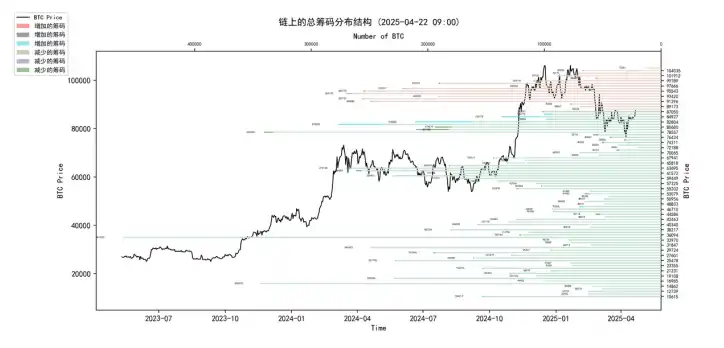
• Analysis:
1. 60000-68000: ~1.59 million coins;
2. 76000-89000: ~1.83 million coins;
3. 90000-100000: ~1.96 million coins;
• There is an 80% probability of not breaking below 70,000-75,000 in the short term;
• The probability of not breaking above 90,000-95,000 in the short term is 70%.
Key News
Economic News
1. The U.S. Dollar Index weakened, breaking through the 100, 99, 98 thresholds consecutively.
2. Gold prices surged by 3% to $3,430 per ounce, with a year-to-date cumulative increase of about 30%, hitting 55 all-time highs in nearly 12 months.
3. Trump continues to pressure Powell: Trump has publicly criticized Powell multiple times, calling him "Mr. Too Slow" and the "real loser," believing that interest rates should have been cut long ago, accusing him of being hesitant, and urging for a "preemptive rate cut." He attributes stock market declines and recession risks to Powell's failure to cut rates.
4. Market concerns about the Fed's independence: Analysts believe that the news of Trump replacing Powell is one of the triggers for recent market volatility, with the core concern being the market's worry about the Fed's independence being compromised.
5. Political pressure impact: Economics professors believe that while Trump may find it difficult to fire Powell, his public pressure will influence the Fed's decisions, making them aware that not cutting rates in the event of an economic downturn will result in public criticism.
6. Rate cut expectations rising: The market is closely watching and betting on the Fed possibly shifting to a more accommodative policy in June or the summer. The CME FedWatch shows a 75% probability of a rate cut in June. Citibank maintains the expectation of a 125 basis point rate cut by 2025 and anticipates the next cut in June.
7. Rate cuts become a core narrative: The market anticipates entering the "rate cut mainstream" in June as the narrative driving the next stage of the market.
8. European Central Bank and Digital Euro:
◦ The European Central Bank (ECB) report predicts that the digital euro will replace some banknotes, change the way money is used, and impact bank deposits.
◦ The ECB emphasizes that the introduction of the digital euro is to address the rise of the US dollar stablecoins and other cryptocurrencies, and to curb the expansion of the "debanking" solution.
Crypto Ecosystem News
1. BTC Strengthens Linkage with Gold: BTC initially displayed a safe-haven attribute similar to gold on Monday but later fell due to drag from the US stock market. Recent analysis suggests that BTC was influenced by the rise in gold, aligning the safe-haven narrative with a weak dollar, uncertainty in US bonds.
2. BTC's price once exceeded $87,000, believed to be related to the decline in the US dollar, rise in gold, and concerns about the Federal Reserve's independence.
3. CryptoQuant analysts believe that the current situation is more likely a correction rather than the start of a bear market, as the previous rise was moderate and not overheated, with manageable downside risks.
4. Altcoin Market: Coinmarketcap data shows that the altcoin season index has rebounded from a low point but is still far below the average of the past few months, indicating a slight market recovery. Matrixport believes that a significant rise in altcoins requires catalysts such as dovish signals from the Federal Reserve, stablecoin growth, or macro liquidity improvement.
5. Korea's BTC premium rate (Kimchi Premium) has risen to about 2%, seen by some analysts as an early sign of strong demand and potential price rebound.
6. Expectation of Bottoming Out and Narrative Shift: The market is watching whether BTC and altcoins have bottomed out and expects a transition to the next narrative stage centered around the "Fed rate cut in June."
7. Last week, the US BTC spot ETF saw a cumulative net inflow of only $13.7 million, while the ETH spot ETF saw a net outflow of $32.3 million, indicating a weakening inflow momentum.
8. Institutional and Whale Activity:
◦ Japanese listed company Metaplanet increased its holdings by 330 BTC, bringing its total holdings to 4855 BTC.
◦ Strategy (formerly MicroStrategy) spent approximately $556 million in a week to acquire 6556 BTC at an average price of around $84,785. Saylor stated that over 13,000 institutions and 814,000 retail investors hold MSTR.
◦ Glassnode data shows that the number of addresses holding over 1000 BTC increased from the end of February to April 15th (2037 -> 2107), approaching levels seen at the end of last year; while addresses holding less than 10 BTC continue to decrease.
9. Regulatory and Policy Updates:
◦ U.S. State-level Legislation Progress:
▪ Texas held a hearing on the "BTC Strategic Reserve and Investment Act."
▪ Arizona's "Strategic Digital Asset Reserve Act" (SB 1373) passed through a House committee and is awaiting further votes and approval.
◦ Federal Perspective: Senator Cynthia Lummis suggested that if the U.S. government were to purchase BTC with gold certificates valued at 1974 levels, it could potentially cut the national debt in half over 20 years without the need for additional tax revenue.
◦ Reduced Regulatory Risks: Analysis by Matrixport suggests that BTC's regulatory risks in the U.S. have significantly decreased, with this being one of the reasons for its better performance during this correction phase compared to previous ones.
10. Digital Euro Development: The European Central Bank is actively advancing the Digital Euro project to address challenges posed by cryptocurrencies and stablecoins.
Long-term Insights: Used to observe our long-term outlook; Bull Market / Bear Market / Structural Changes / Neutral State
Medium-term Analysis: Used to analyze the current stage we are in, how long this stage might last, and what conditions we might face
Short-term Observations: Used to analyze short-term market conditions; as well as the likelihood of certain events occurring in a particular direction and under certain premises
Long-term Insights
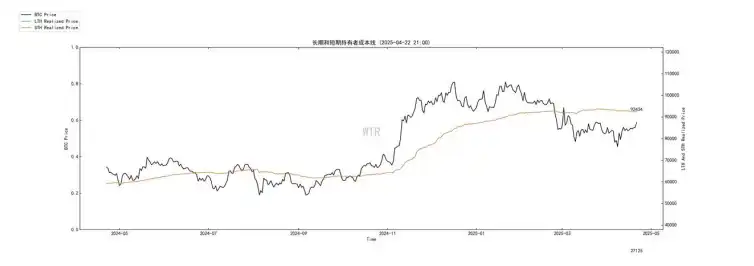
• $92.4k is a key price level. For a large number of short-term holders (STH) who bought near the recent highs, this is their average cost line.
• The anchoring effect will play a significant role here: as the price bounces back near $92.4k, these trapped STH will have a strong "break-even and sell" urge to avoid further losses. This will create a visible supply pressure wall. The short-term market direction will to a large extent depend on whether it can effectively absorb and break through this barrier created by the STHs unwinding their positions.
• If unable to break through: If the price fails to break above $92.4k after multiple attempts or faces significant selling pressure leading to a pullback, it will reinforce bearish sentiment in the market. STHs may lose patience, triggering a larger-scale sell-off (capitulation), and the price may further decline to find lower support levels. This could also prompt accumulating whales to slow down and wait for better prices.
• If successfully break through: If there is enough strong buying volume (such as sustained ETF inflows or further whale accumulation) to absorb the unwinding at $92.4k and drive the price to firmly hold above it, this will be an extremely significant bullish signal. It not only relieves the pressure from STHs but may also trigger short covering and FOMO emotions from off-chain funds, accelerating the price increase.
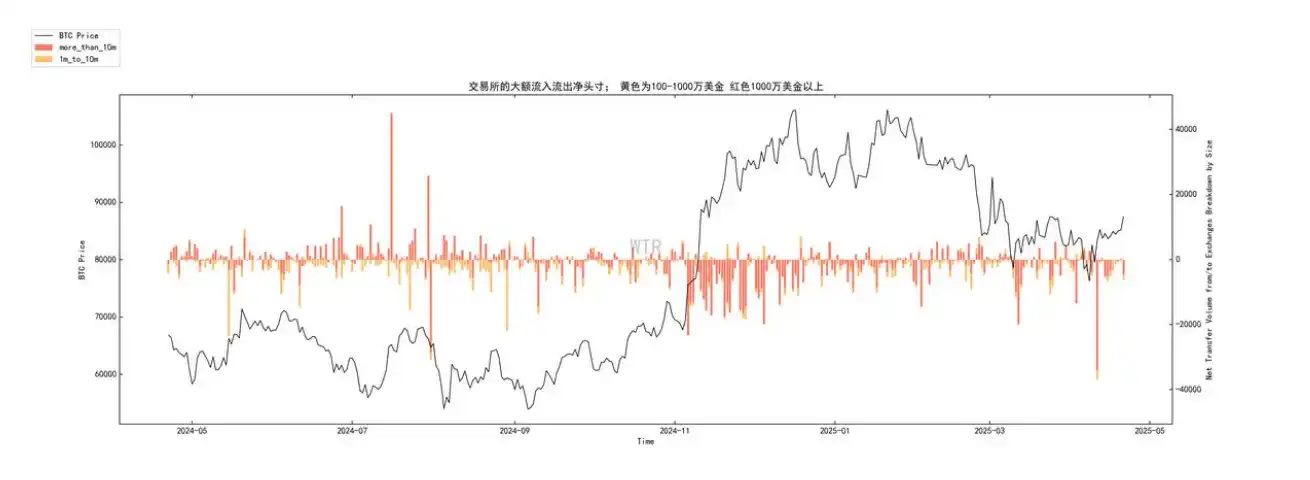
• Previously, "massive outflows" represented whales aggressively accumulating and locking up chips at low prices, regardless of cost. Now, the "relatively reduced" outflow may signify:
a. The most panicked/most valuable stage is over? Whales may believe that the easiest stage to absorb cheap chips has passed, and their initial accumulation target may have been partially achieved.
b. Tactical pause? They may be waiting for clearer market signals (such as macro news landing, price direction confirmation) to carry out the next large-scale operation.
c. Change in chip absorption method? They may be shifting from withdrawing from centralized exchanges to more discreet OTC trading or other methods. The marginal decrease in whale outflow indicates that the most potent active buying force in the market, their "firepower," may have weakened in the short term. This could make it more challenging to break through the $92.4k resistance wall or extend the market's consolidation period in the current range. This is not necessarily a bearish signal (as there is still a net outflow), but it implies that the likelihood of short-term reliance on whale "violent pumping" is decreasing.
• If the outflow continues to decrease or even turns into a net inflow: This would be a strong warning signal, indicating a reversal of whale accumulation intent, and the market may face genuine selling pressure, severely weakening the previously constructed bullish logic.
• If the outflow remains at a "relatively reduced" level: The market may enter a phase dominated by other factors (such as ETF flows, retail sentiment, news aspects), where volatility may decrease, but directional sense may be more ambiguous, requiring more time to build a base or awaiting catalysts.
• If the outflow amplifies again: It will confirm that whales have only made a temporary adjustment, and the accumulation intent remains strong, significantly bullish for the market to break through key resistance levels.
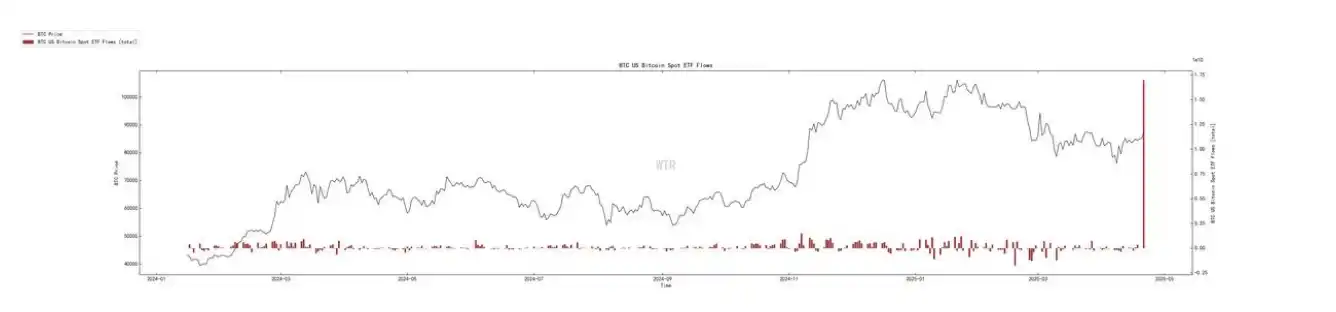
This "very large" single-day inflow occurred against a backdrop of strong macro risk aversion and price pullback, with its driving force likely being traditional capital's "hedging/bottom-fishing" allocation demand, viewing BTC as an alternative asset similar to gold. Its significance lies in proving that the ETF channel can still attract a large amount of capital under specific conditions, and this portion of capital may have a higher price sensitivity.
• The key is sustainability: Is this pulse a "one-day trip" or the beginning of a new trend? This directly relates to whether the market can receive sustained external liquidity.
• If the inflow continues: It will provide a strong incremental buy-side, significantly enhancing the ability to break through the $92.4k resistance wall and may attract more momentum funds.
• If the inflow rapidly dries up: It indicates that this was just a short-term stimulus response, and the market still needs to rely on internal forces (whales, LTH belief) to digest selling pressure, making it more challenging to break through $92.4k.
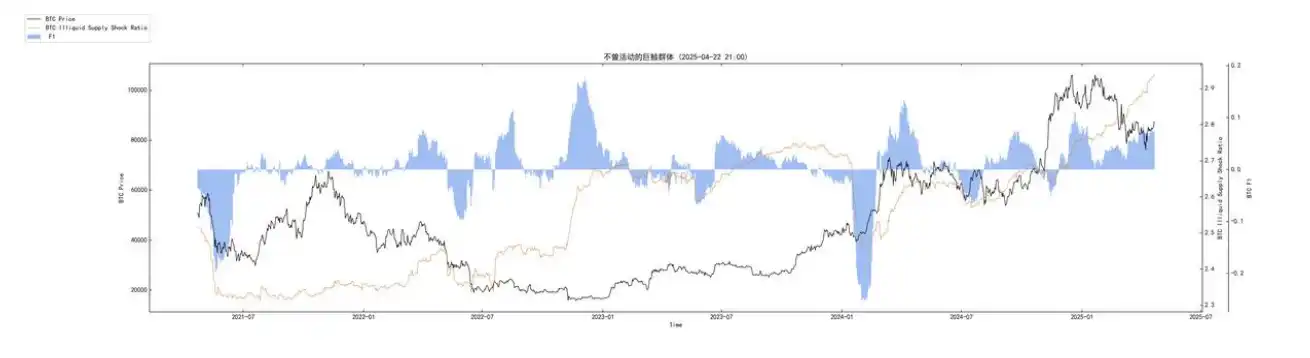
This is the most robust and structurally significant bullish signal. It is independent of short-term price fluctuations and sentiment, reflecting a deep-seated, sustained trend of supply lockup in the market. This continuous tightening of the supply side is a core medium- to long-term bullish factor, continuously raising the supply threshold that needs to be overcome for future price increases. It acts as a "slow variable," continuously providing support to the market, increasing the difficulty of deep retracements, and laying the foundation for future supply squeeze rallies. This can partly hedge against the pressure from short-term holders (STH) and the uncertainty brought by whale behavior changes.
Future Outlook:
The current market is at a critical juncture where the pressure from short-term holders (STH) ($92.4k anchoring effect) is facing off against strong underlying accumulation (whale outflows + rapid increase in ISSR + pulse-like ETF inflows).
Geopolitical risks, uncertainty surrounding a significant interest rate cut, Trump's remarks, and other macroeconomic factors have added tremendous uncertainty and volatility to this confrontation.
• Evolution of the Core Standoff:
What was previously a comprehensive tug-of-war between bulls and bears now resembles more of a "STH escape desire" vs "whale/long-term holders/new ETF capital absorption determination."
• Response Pathway:
a. Short-term Focus ($92.4k Battle): The reduced outflows from whales may make the short-term breach of $92.4k more dependent on the sustainability of ETF inflows and the endurance of ISSR accumulation. If ETF inflows are not sustained and whales do not re-enter the market, relying solely on the slow variable of ISSR (non-liquid whales) may make it difficult to quickly break through $92.4k, leading to a potential tug-of-war in this area that exhausts STH endurance.
b. If $92.4k Resistance Persists: It may trigger deeper despair selling by STH, in which case, it will be necessary to observe whether whales will increase outflows again (buying the dip), and whether ISSR (non-liquid whales) can continue to rapidly increase to absorb this supply. If whales do not buy the dip or the growth rate of non-liquid whales slows down, the market may experience a deeper correction.
c. If $92.4k is Successfully Breached: It will significantly improve market sentiment, possibly triggering a positive feedback loop: relief of STH pressure -> off-chain capital entering the market due to the breakout confirmation -> potentially stimulating continued ETF inflows -> further price increase strengthening the logic of ISSR "hoarding" -> whales possibly continuing to accumulate or take profits in the trend.
d. Macro "Unique Factor": Any clear signal about Federal Reserve policy (early rate cut/delayed rate cut/hawkish pivot) could instantly disrupt the existing balance and become a key catalyst in determining short-term direction.
Mid-term Exploration
• Network Sentiment Positivity
• Various Price Structure Analysis Models
• ETH Transaction Platform Circulation Ratio
• Derivative Unilateral State
• Long-term, Short-term Holding Supply
(Network Sentiment Positivity Chart Below)
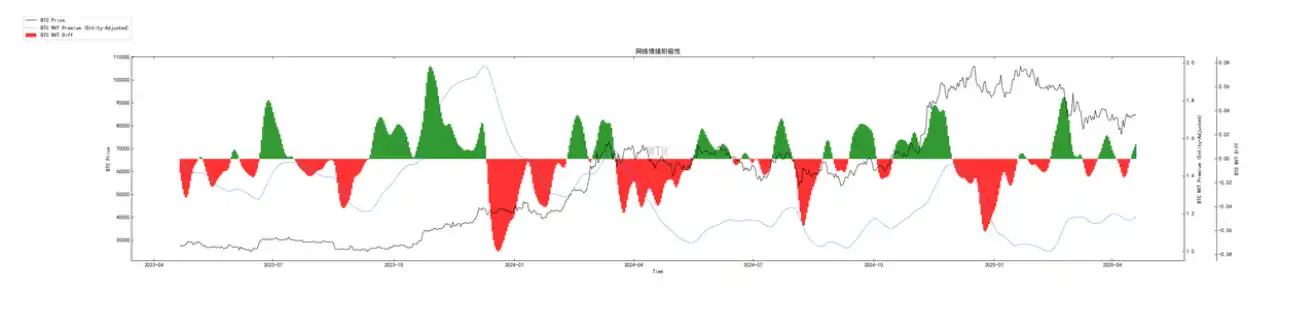
Network sentiment is showing signs of recovery, indicating that on-chain sentiment is slowly improving. Based on recent conditions, if this recovery continues, a promising right-side structure may emerge.
(Various Price Structure Analysis Models Chart Below)
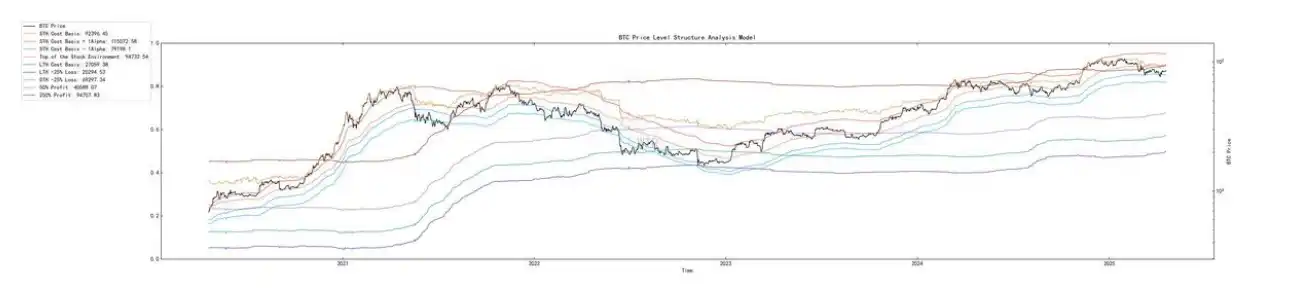
The current price level's supply cap is around 95,000, and as the market approaches this level, it may face significant profit-taking pressure. Additionally, the short-term cost line is currently around 920,000, which may represent a closer upper limit than the supply cap.
(ETH Transaction Platform Circulation Ratio Chart Below)
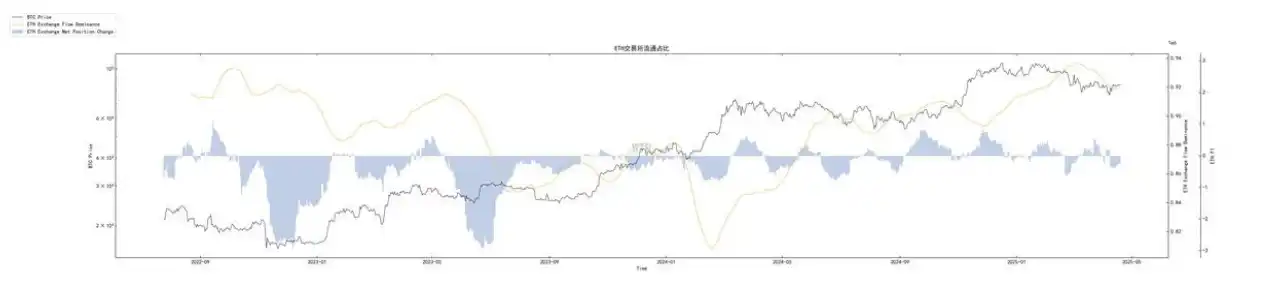
The BTC circulation ratio within the current trading platform is higher. This usually indicates that market participants are focusing on BTC, with relatively good circulation efficiency increasing transaction smoothness. Similarly, from a different perspective, in the trend of continued BTC accumulation, market liquidity focused on BTC also reflects a certain risk-averse tendency.
(Derivative Unilateral State Chart Below)
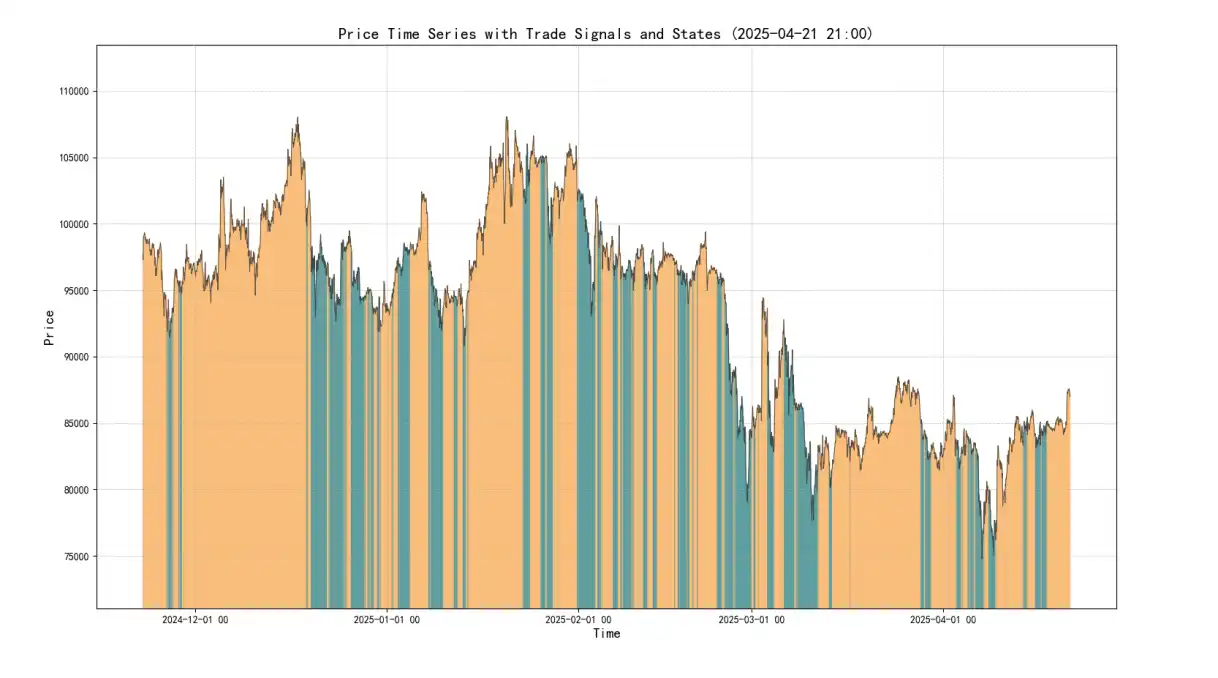
This data is produced by WTR based on BTC's liquidation status.
Blue represents a strong bearish phase, while orange represents a strong bullish phase. The current zone is within the strong bullish range.
(Long-term, Short-term Holding Supply Chart Below)
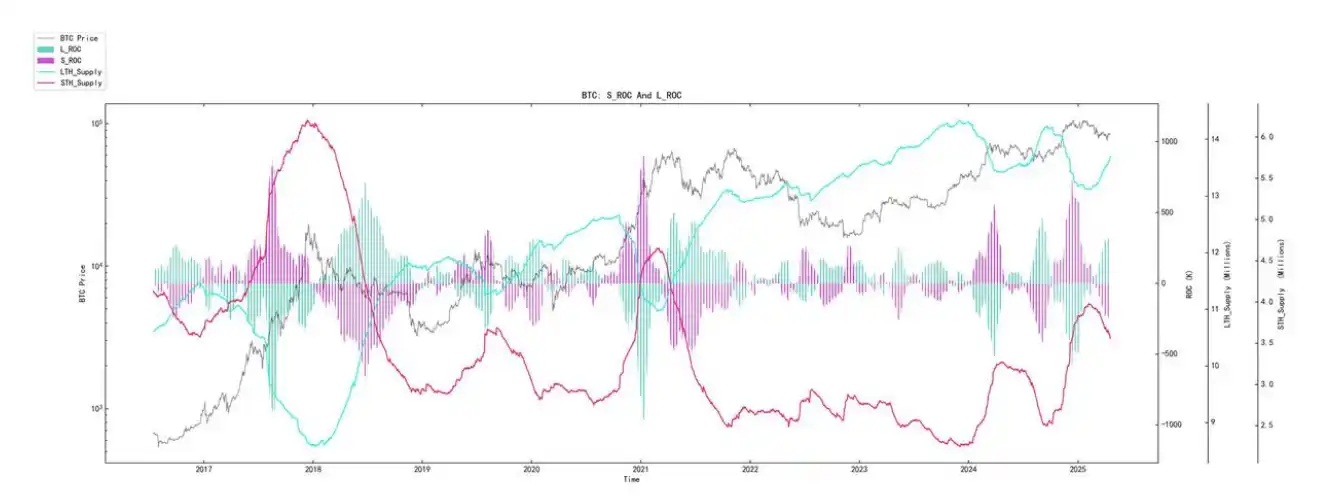
From a market perspective, the trading volume of short-term chips remains low, indicating a continued influx of long-term chips. The current speculative atmosphere may be gradually dissipating, with a rising number of chips held over longer periods.
Short-Term Observations
• Derivative Risk Index
• Option Intent-to-Trade Ratio
• Derivative Trading Volume
• Option Implied Volatility
• Profit-Loss Transfer Amount
• New and Active Addresses
• Net Long Positions on the Brown Sugar Orange Trading Platform
• Net Long Positions on the Auntie Trading Platform
• Heavy Selling Pressure
• Global Buying Power Status
• Net Long Positions on Stablecoin Trading Platforms
• Off-chain Trading Platform Data
Derivative Rating: The Risk Index is in the red zone, indicating an increase in derivative risk.
(See Derivative Risk Index chart below)
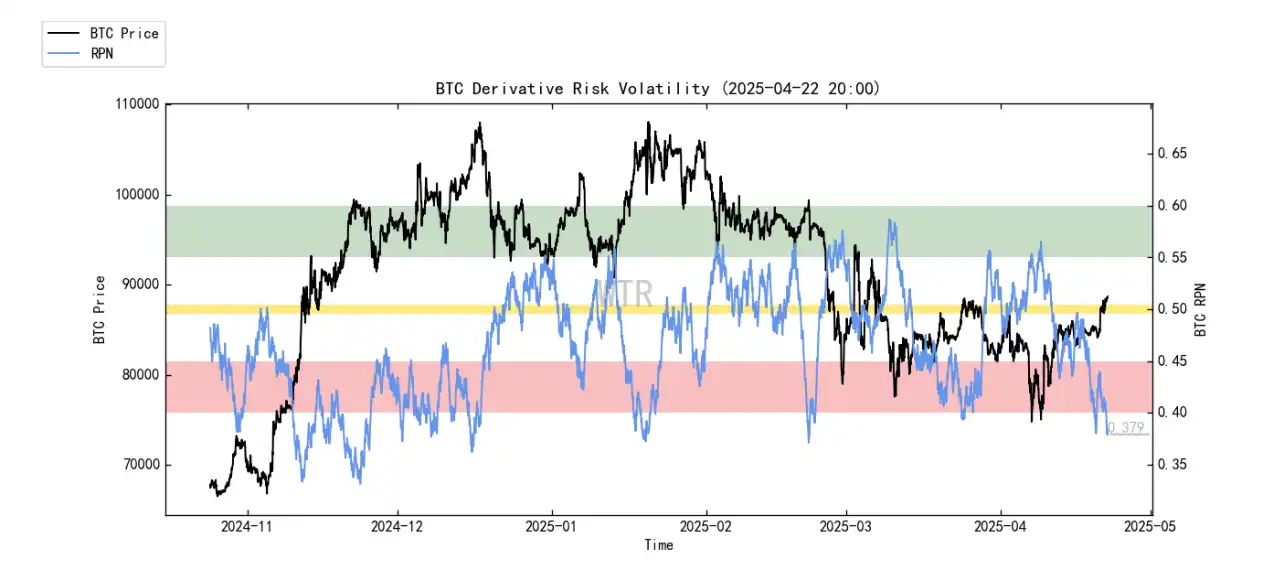
BTC price has slightly rebounded, yet the market has not fully cleared the short squeeze risk as the Risk Index remains in the red zone. Given the current market environment, there may be continued short squeezing this week, albeit at a lower magnitude.
(See Option Intent-to-Trade Ratio chart below)
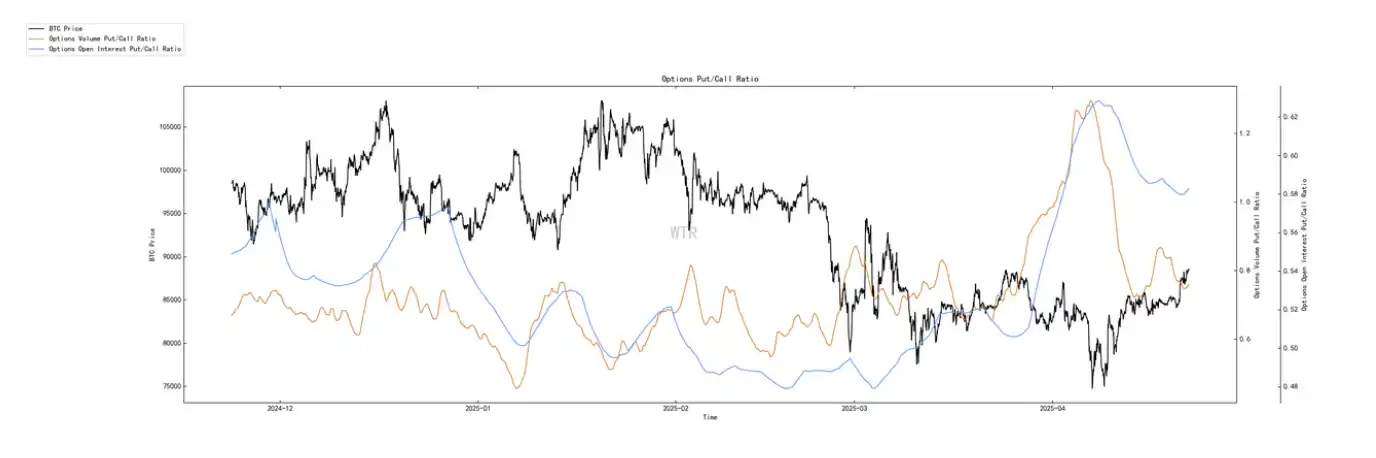
The ratio and volume of put options have both declined, with the current put option ratio at a moderately high level.
(See Derivative Trading Volume chart below)
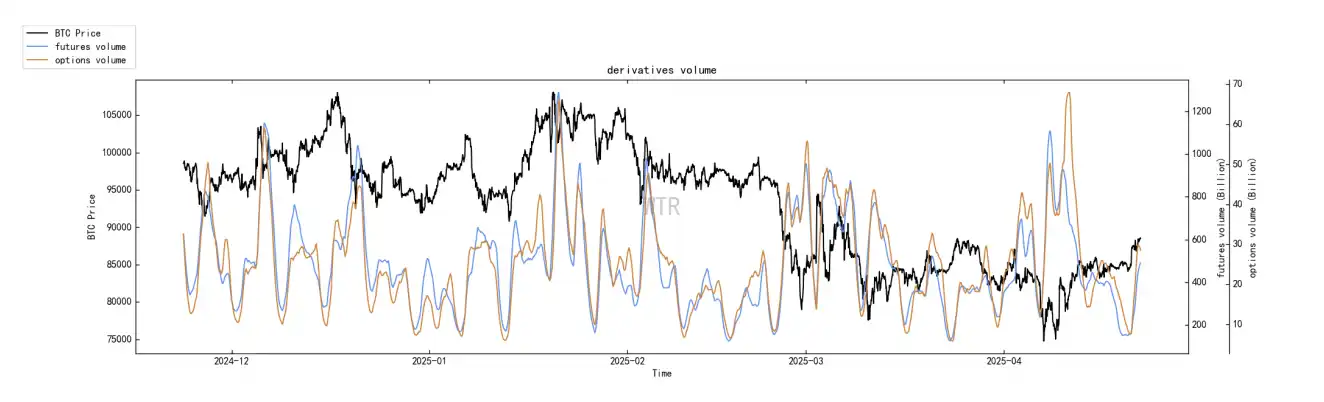
The derivative trading volume is at a moderate-low level.
(See Option Implied Volatility chart below)
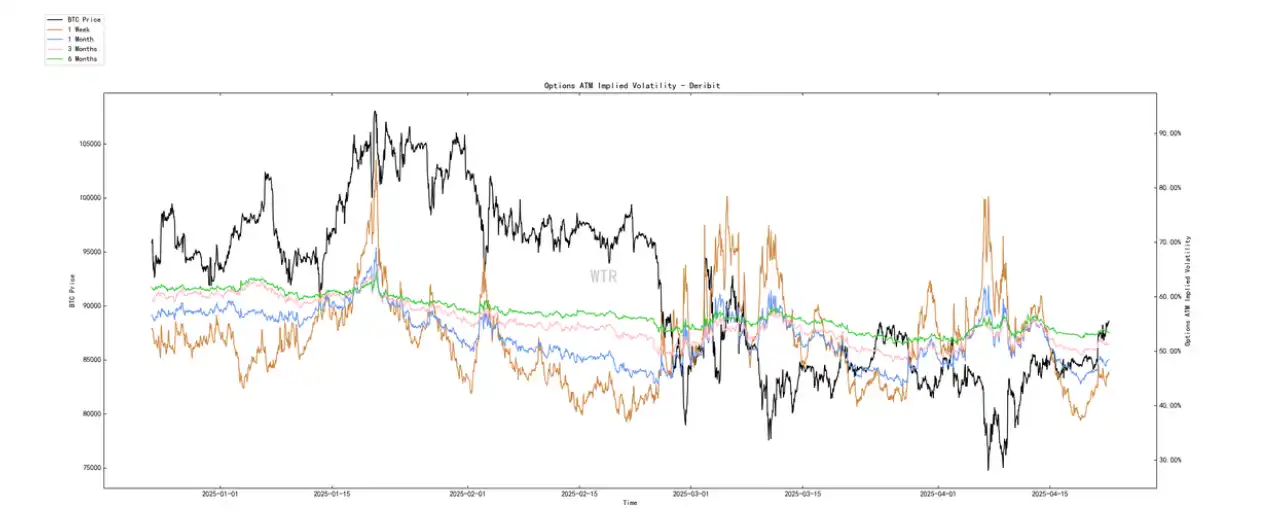
The short-term implied volatility of options has not seen significant changes. Sentiment Rating: Neutral
(See Profit-Loss Transfer Amount chart below)
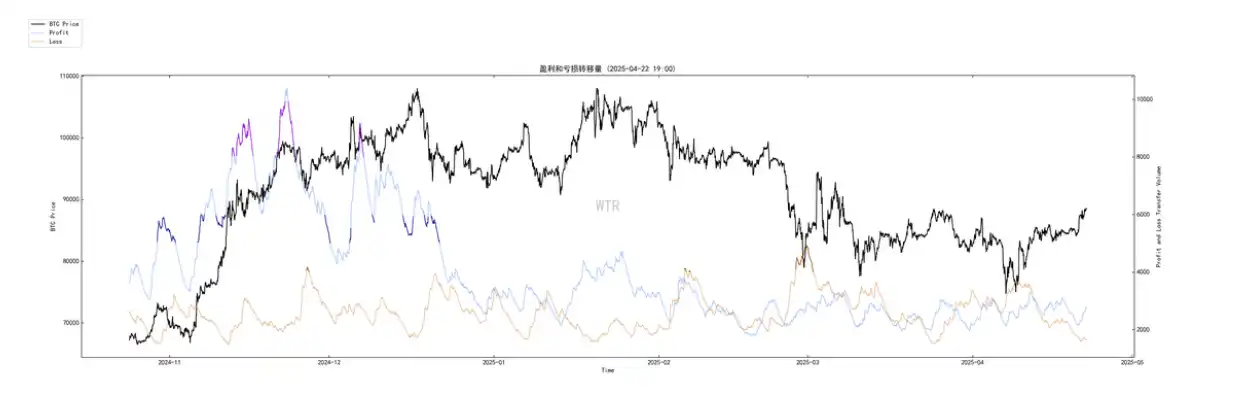
Market sentiment (blue line) and fear sentiment (orange line) are still at low levels, suggesting that any potential upside in the near term may be limited.
(New Addresses and Active Addresses in the chart below)
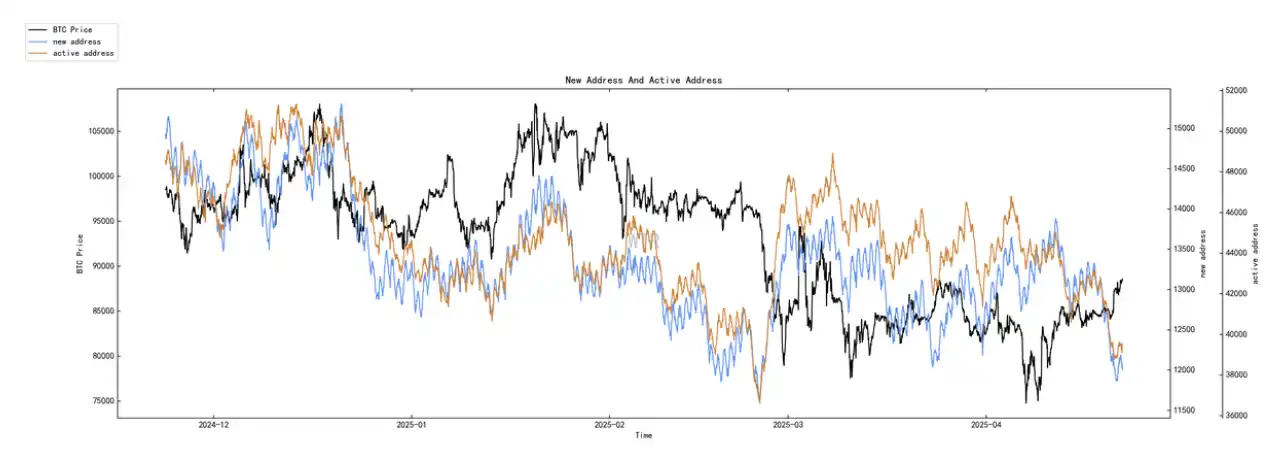
New active addresses are at low levels.
Spot Market and Selling Pressure Structure Ratings: Overall, BTC continues to see significant outflows, while ETH has only seen minor outflows.
(Boomerang Exchange Net Headwind in the chart below)
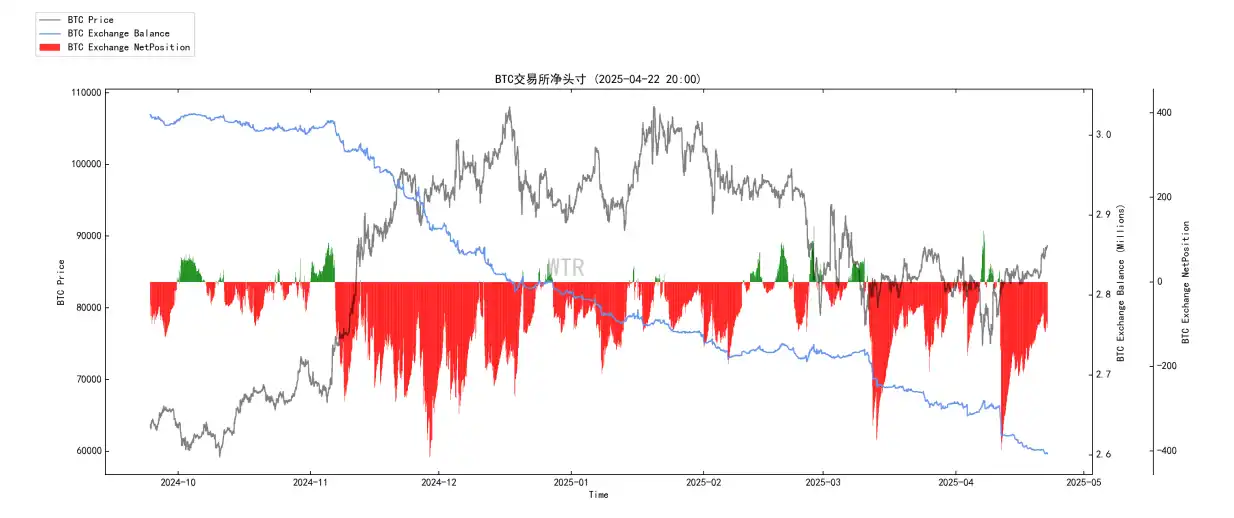
Currently, BTC is seeing significant outflows.
(E-Ternity Exchange Net Headwind in the chart below)
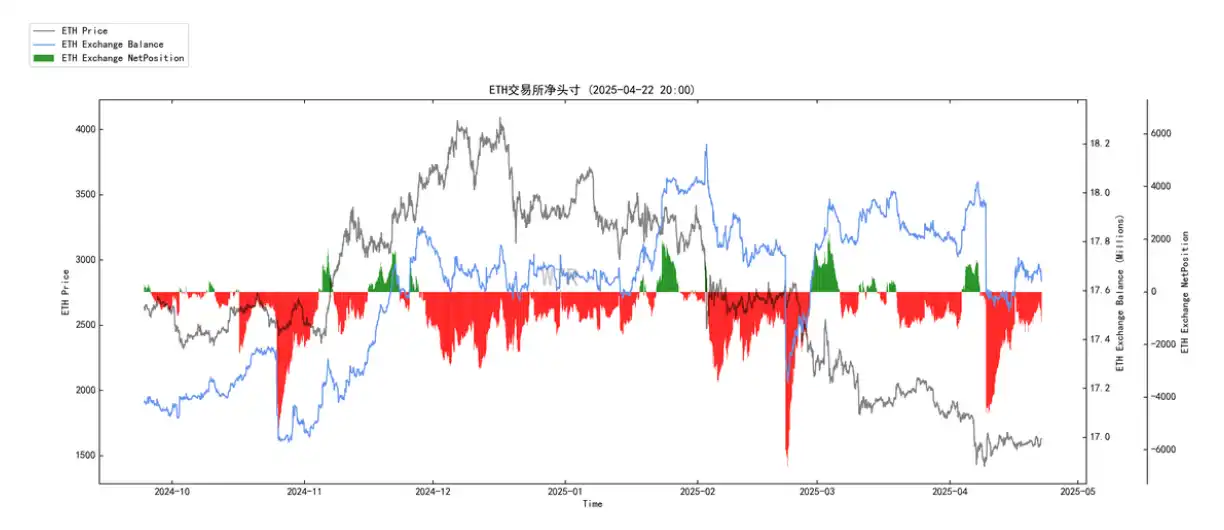
On the surface, it appears that there is a continuous outflow of ETH on the exchange platform, but upon closer observation of the blue line, the balance of ETH net flows on the exchange platform is nearly the same as during the market top in December. In the short term, ETH on-chain selling pressure is expected to persist.
(High-Weighted Selling Pressure in the chart below)
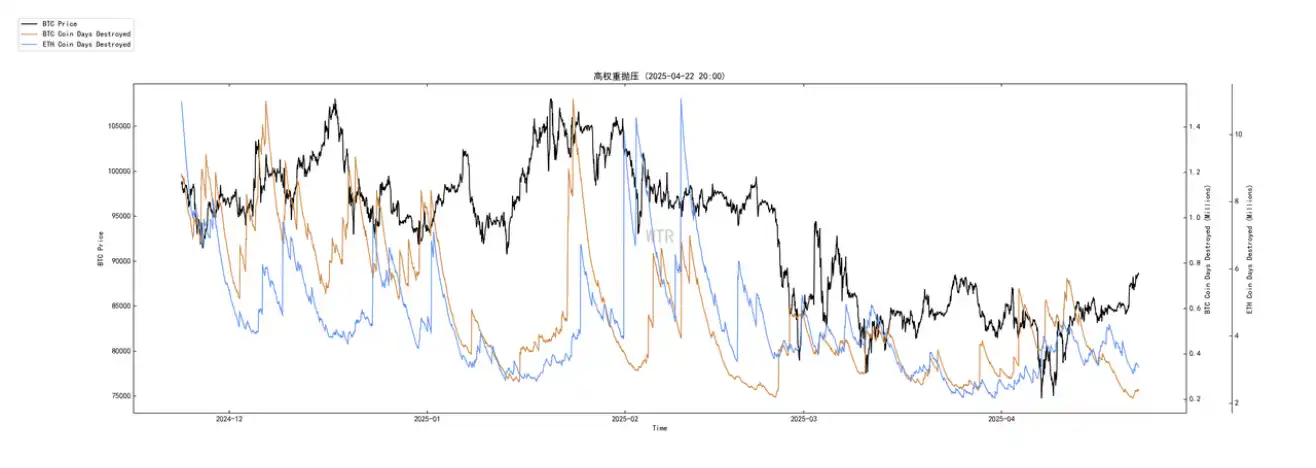
No significant high-weighted selling pressure observed.
Buyer Power Rating: Global buyer power is in a weakening state, while stablecoin buyer power remains steady.
(Global Buyer Power Status in the chart below)
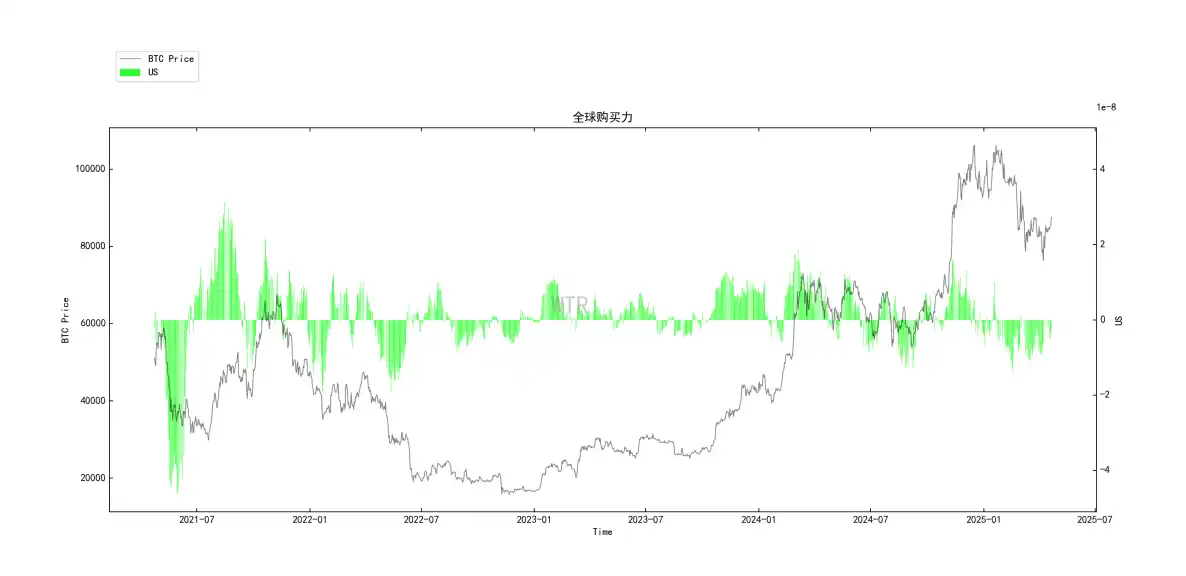
Global buyer power saw a slight recovery last week but has once again entered a weakening state this week.
(USDT Exchange Net Headwind in the chart below)
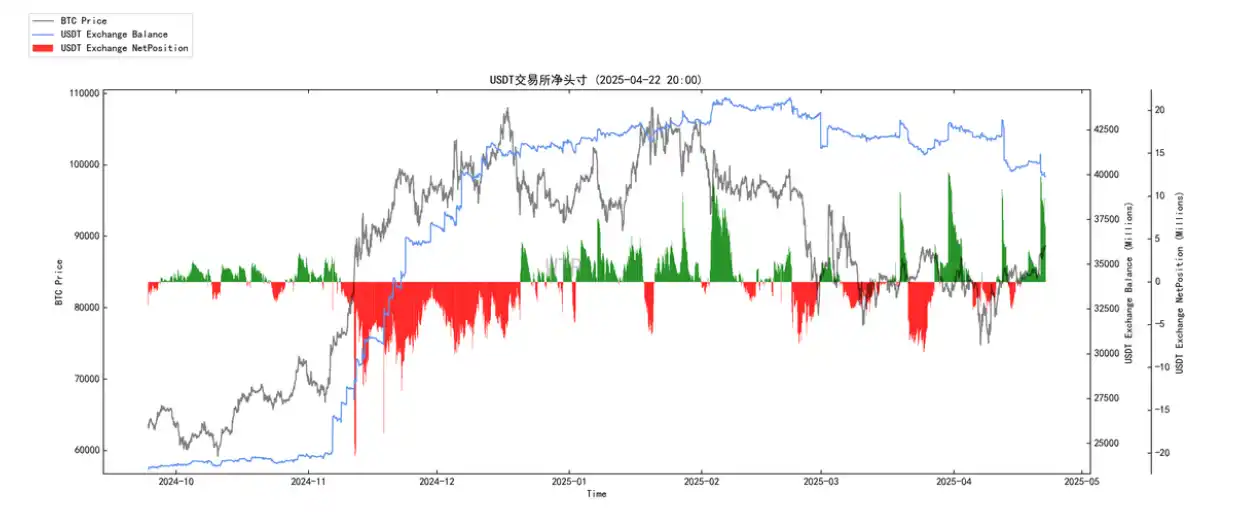
Stablecoin buyer power is overall stable and consistent with last week.
Off-Chain Transaction Data Rating: Willingness to buy at 80000; Willingness to sell at 92000.
(Chart of Coinbase On-chain Data)
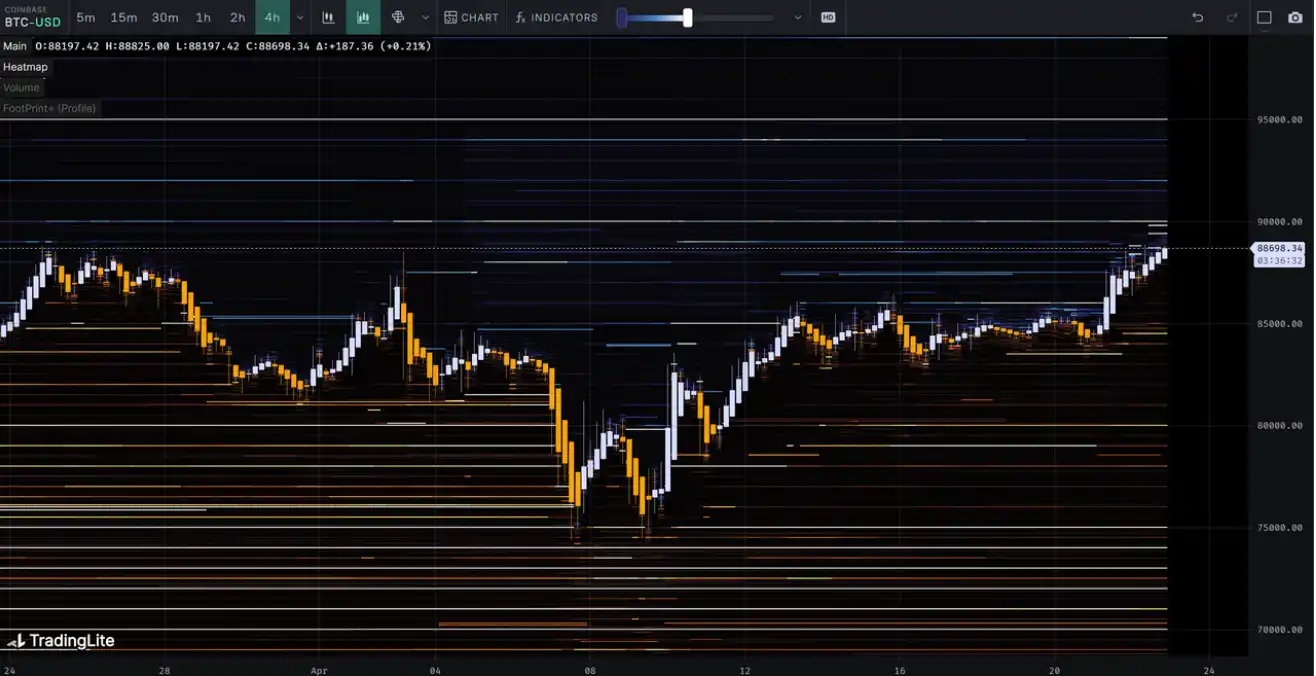
There is buying interest around the 70000-80000 price range;
There is selling interest around the 90000, 95000 price range.
(Chart of Binance On-chain Data)
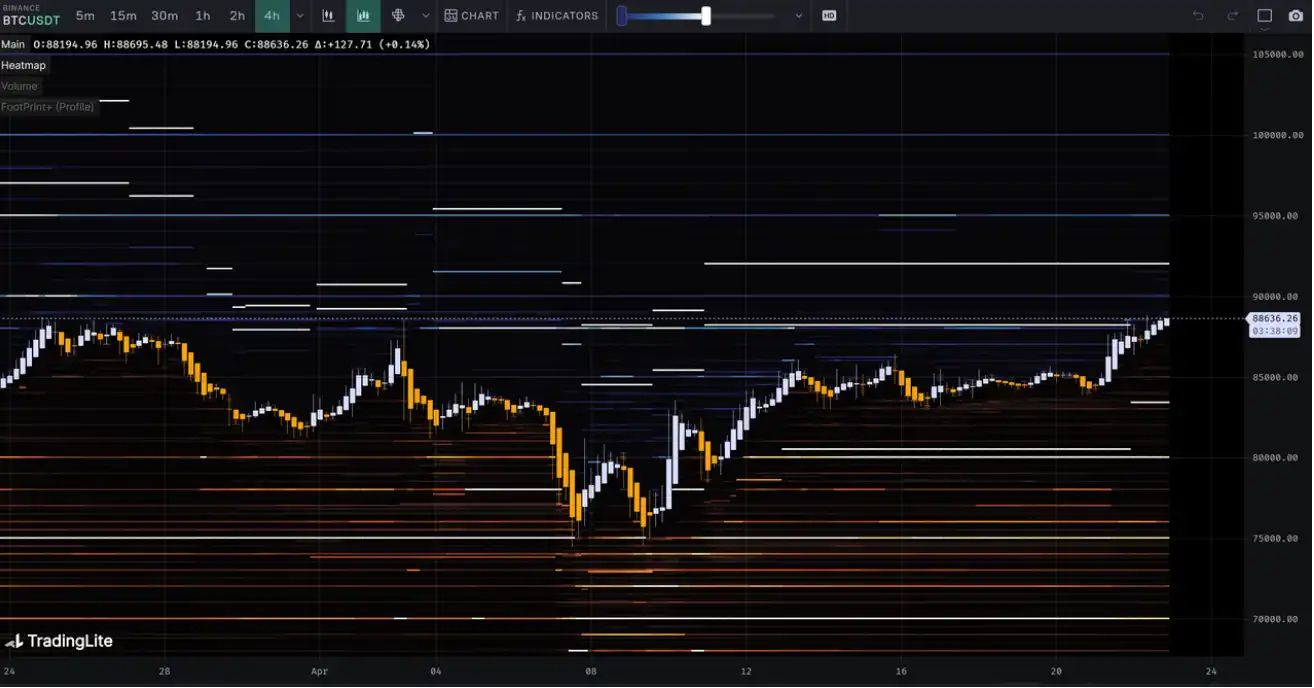
There is buying interest around the 70000-80000 price range;
There is selling interest around the 92000 price range.
(Chart of Bitfinex On-chain Data)
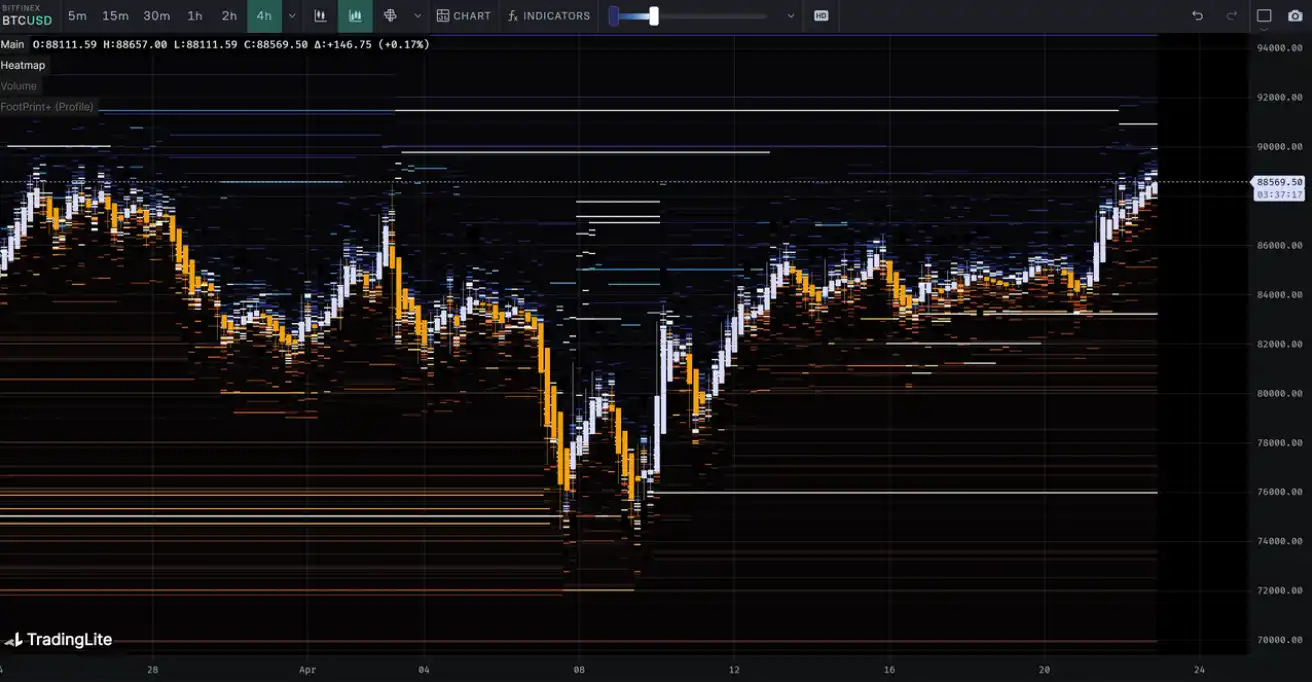
There is buying interest around the 70000, 83000 price range;
There is selling interest around the 92000 price range.
Weekly Summary:
News Summary:
The current market is shrouded in significant macroeconomic uncertainty, as evidenced by the considerable pressure on the U.S. stock market, the soaring price of gold, and the strong safe-haven sentiment dominating traditional capital markets. The spotlight is almost entirely on the Federal Reserve, where political pressure (especially from Trump's continued criticism of Powell) and the market's high expectations of a rate cut are intertwined, making the future monetary policy path a crucial variable affecting the overall situation.
Against this backdrop, the cryptocurrency sector, particularly Bitcoin, presents a complex and differentiated picture: on the one hand, it shows a certain degree of resilience in the face of macroeconomic turbulence, with U.S. spot ETF fund flows recently shifting from significant net outflows to slight net inflows. This is a key marginal improvement signal, indicating a temporary relief from selling pressure through traditional channels and allowing the market to catch its breath at a critical juncture. On the other hand, this stabilization is not driven by strong new demand but contrasts with the "resolute behavior of key participants"—institutions like MicroStrategy and on-chain "whale" addresses continue to steadily and significantly accumulate chips, showing strong long-term conviction, while small holders exhibit an outflow trend.
Simultaneously, the marginal improvement in the U.S. regulatory environment also provides potential long-term support for the market. Therefore, the current core contradiction lies in the "external macro pressure and internal structural forces (ETF stabilization, key player accumulation, improving regulations) tug of war," which may lead to continued market volatility in the short term, extreme sensitivity to macro signals (especially the Fed's actions), and a wait for clearer catalysts to break the deadlock.
On-chain Long-term Insight:
1. The current price is running below the short-term holders' average cost (around $92.4k), putting recent entrants at a paper loss and potentially forming a sell wall around $92.4k due to anchoring effect.
2. A recent major signal is that whales have been net transferring a significant amount of Bitcoin out of exchanges, indicating a strong strategic accumulation intent and positive price outlook, significantly reducing short-term sizable sell-side supply.
3. After experiencing weakness, ETFs have recently seen a very significant single-day net inflow, indicating a strong pulse-like resurgence in demand from regulated channels, injecting important buying pressure into the market.
4. The illiquid whale ratio continues to sharply rise, indicating that BTC is being increasingly locked up for the long term and being taken out of circulation at a rapid pace, portraying a highly robust fundamental of ongoing fast supply tightening in the market.
• Market Sentiment:
The core feature of the current market state is the surface price pressure (below the short-term holders' cost line) juxtaposed with extremely strong underlying on-chain accumulation (whale net outflows, illiquid whale demand lockup, ETF demand surge), creating a stark contrast and intense confrontation. This indicates that the market is undergoing a deep retracement or "shakeout" dominated by strong buying pressure, where recent "weak hands" are under pressure, while the optimistic "strong hands" are actively absorbing and locking up the supply, leading to an extremely tight supply-demand fundamental. Therefore, despite the short-term battle around the key cost level (around $92.4k) potentially causing volatility, the overwhelmingly positive on-chain signals suggest that the market is likely to absorb pressure, confirm a bottom, and based on strengthened fundamentals, accumulate momentum for the next bullish phase.
On-chain Mid-term Probe:
• Network sentiment slowly recovering, possibly indicating a structural opportunity on the right side.
• Supply cap around 95,000, nearing this level brings significant profit-taking pressure; short-term cost at 92,000 forms a resistance level.
• BTC dominance in exchange circulation, smooth turnover and a visible risk-off tendency.
• WTR liquidation status indicates that it is currently in a bullish phase.
• Short-term chip speculative atmosphere decreasing, long-term holdings increasing.
• Market Sentiment:
Recovery, Accumulation
The market is seeking stability, emotions calming down gradually, BTC dominance in liquidity, long-term holdings increasing.
On-chain Short-term Observation:
1. The risk coefficient is in the red zone, increasing derivative risk.
2. New active addresses are relatively low.
3. Market sentiment rating: Neutral.
1. The net headroom of exchanges shows continuous large outflows of BTC and only small outflows of ETH.
2. Global buying power is in a weakening state, while stablecoin buying power remains steady.
3. Off-chain transaction data indicates buying interest at 80,000; selling interest at 92,000.
4. There is an 80% probability that the short-term floor will not drop below 70,000-75,000; with a 70% probability that the short-term peak will not exceed 90,000-95,000.
• Market Outlook:
The market will continue to be led by BTC, while market sentiment remains neutral. Expectations for this week indicate that, without external stimuli, the market's rebound space will still be limited by the short-term holder's breakeven line (92K) pressure.
Risk Warning: The above is all market discussion and exploration, and does not provide directional views on investment; please treat it with caution and be aware of and prevent market black swan risks.
This article is a contribution and does not represent the views of BlockBeats.
You may also like

Token Cannot Compound, Where Is the Real Investment Opportunity?

February 6th Market Key Intelligence, How Much Did You Miss?

China's Central Bank and Eight Other Departments' Latest Regulatory Focus: Key Attention to RWA Tokenized Asset Risk
Foreword: Today, the People's Bank of China's website published the "Notice of the People's Bank of China, National Development and Reform Commission, Ministry of Industry and Information Technology, Ministry of Public Security, State Administration for Market Regulation, China Banking and Insurance Regulatory Commission, China Securities Regulatory Commission, State Administration of Foreign Exchange on Further Preventing and Dealing with Risks Related to Virtual Currency and Others (Yinfa [2026] No. 42)", the latest regulatory requirements from the eight departments including the central bank, which are basically consistent with the regulatory requirements of recent years. The main focus of the regulation is on speculative activities such as virtual currency trading, exchanges, ICOs, overseas platform services, and this time, regulatory oversight of RWA has been added, explicitly prohibiting RWA tokenization, stablecoins (especially those pegged to the RMB). The following is the full text:
To the people's governments of all provinces, autonomous regions, and municipalities directly under the Central Government, the Xinjiang Production and Construction Corps:
Recently, there have been speculative activities related to virtual currency and Real-World Assets (RWA) tokenization, disrupting the economic and financial order and jeopardizing the property security of the people. In order to further prevent and address the risks related to virtual currency and Real-World Assets tokenization, effectively safeguard national security and social stability, in accordance with the "Law of the People's Republic of China on the People's Bank of China," "Law of the People's Republic of China on Commercial Banks," "Securities Law of the People's Republic of China," "Law of the People's Republic of China on Securities Investment Funds," "Law of the People's Republic of China on Futures and Derivatives," "Cybersecurity Law of the People's Republic of China," "Regulations of the People's Republic of China on the Administration of Renminbi," "Regulations on Prevention and Disposal of Illegal Fundraising," "Regulations of the People's Republic of China on Foreign Exchange Administration," "Telecommunications Regulations of the People's Republic of China," and other provisions, after reaching consensus with the Cyberspace Administration of China, the Supreme People's Court, and the Supreme People's Procuratorate, and with the approval of the State Council, the relevant matters are notified as follows:
(I) Virtual currency does not possess the legal status equivalent to fiat currency. Virtual currencies such as Bitcoin, Ether, Tether, etc., have the main characteristics of being issued by non-monetary authorities, using encryption technology and distributed ledger or similar technology, existing in digital form, etc. They do not have legal tender status, should not and cannot be circulated and used as currency in the market.
The business activities related to virtual currency are classified as illegal financial activities. The exchange of fiat currency and virtual currency within the territory, exchange of virtual currencies, acting as a central counterparty in buying and selling virtual currencies, providing information intermediary and pricing services for virtual currency transactions, token issuance financing, and trading of virtual currency-related financial products, etc., fall under illegal financial activities, such as suspected illegal issuance of token vouchers, unauthorized public issuance of securities, illegal operation of securities and futures business, illegal fundraising, etc., are strictly prohibited across the board and resolutely banned in accordance with the law. Overseas entities and individuals are not allowed to provide virtual currency-related services to domestic entities in any form.
A stablecoin pegged to a fiat currency indirectly fulfills some functions of the fiat currency in circulation. Without the consent of relevant authorities in accordance with the law and regulations, any domestic or foreign entity or individual is not allowed to issue a RMB-pegged stablecoin overseas.
(II)Tokenization of Real-World Assets refers to the use of encryption technology and distributed ledger or similar technologies to transform ownership rights, income rights, etc., of assets into tokens (tokens) or other interests or bond certificates with token (token) characteristics, and carry out issuance and trading activities.
Engaging in the tokenization of real-world assets domestically, as well as providing related intermediary, information technology services, etc., which are suspected of illegal issuance of token vouchers, unauthorized public offering of securities, illegal operation of securities and futures business, illegal fundraising, and other illegal financial activities, shall be prohibited; except for relevant business activities carried out with the approval of the competent authorities in accordance with the law and regulations and relying on specific financial infrastructures. Overseas entities and individuals are not allowed to illegally provide services related to the tokenization of real-world assets to domestic entities in any form.
(III) Inter-agency Coordination. The People's Bank of China, together with the National Development and Reform Commission, the Ministry of Industry and Information Technology, the Ministry of Public Security, the State Administration for Market Regulation, the China Banking and Insurance Regulatory Commission, the China Securities Regulatory Commission, the State Administration of Foreign Exchange, and other departments, will improve the work mechanism, strengthen coordination with the Cyberspace Administration of China, the Supreme People's Court, and the Supreme People's Procuratorate, coordinate efforts, and overall guide regions to carry out risk prevention and disposal of virtual currency-related illegal financial activities.
The China Securities Regulatory Commission, together with the National Development and Reform Commission, the Ministry of Industry and Information Technology, the Ministry of Public Security, the People's Bank of China, the State Administration for Market Regulation, the China Banking and Insurance Regulatory Commission, the State Administration of Foreign Exchange, and other departments, will improve the work mechanism, strengthen coordination with the Cyberspace Administration of China, the Supreme People's Court, and the Supreme People's Procuratorate, coordinate efforts, and overall guide regions to carry out risk prevention and disposal of illegal financial activities related to the tokenization of real-world assets.
(IV) Strengthening Local Implementation. The people's governments at the provincial level are overall responsible for the prevention and disposal of risks related to virtual currencies and the tokenization of real-world assets in their respective administrative regions. The specific leading department is the local financial regulatory department, with participation from branches and dispatched institutions of the State Council's financial regulatory department, telecommunications regulators, public security, market supervision, and other departments, in coordination with cyberspace departments, courts, and procuratorates, to improve the normalization of the work mechanism, effectively connect with the relevant work mechanisms of central departments, form a cooperative and coordinated working pattern between central and local governments, effectively prevent and properly handle risks related to virtual currencies and the tokenization of real-world assets, and maintain economic and financial order and social stability.
(5) Enhanced Risk Monitoring. The People's Bank of China, China Securities Regulatory Commission, National Development and Reform Commission, Ministry of Industry and Information Technology, Ministry of Public Security, State Administration of Foreign Exchange, Cyberspace Administration of China, and other departments continue to improve monitoring techniques and system support, enhance cross-departmental data analysis and sharing, establish sound information sharing and cross-validation mechanisms, promptly grasp the risk situation of activities related to virtual currency and real-world asset tokenization. Local governments at all levels give full play to the role of local monitoring and early warning mechanisms. Local financial regulatory authorities, together with branches and agencies of the State Council's financial regulatory authorities, as well as departments of cyberspace and public security, ensure effective connection between online monitoring, offline investigation, and fund tracking, efficiently and accurately identify activities related to virtual currency and real-world asset tokenization, promptly share risk information, improve early warning information dissemination, verification, and rapid response mechanisms.
(6) Strengthened Oversight of Financial Institutions, Intermediaries, and Technology Service Providers. Financial institutions (including non-bank payment institutions) are prohibited from providing account opening, fund transfer, and clearing services for virtual currency-related business activities, issuing and selling financial products related to virtual currency, including virtual currency and related financial products in the scope of collateral, conducting insurance business related to virtual currency, or including virtual currency in the scope of insurance liability. Financial institutions (including non-bank payment institutions) are prohibited from providing custody, clearing, and settlement services for unauthorized real-world asset tokenization-related business and related financial products. Relevant intermediary institutions and information technology service providers are prohibited from providing intermediary, technical, or other services for unauthorized real-world asset tokenization-related businesses and related financial products.
(7) Enhanced Management of Internet Information Content and Access. Internet enterprises are prohibited from providing online business venues, commercial displays, marketing, advertising, or paid traffic diversion services for virtual currency and real-world asset tokenization-related business activities. Upon discovering clues of illegal activities, they should promptly report to relevant departments and provide technical support and assistance for related investigations and inquiries. Based on the clues transferred by the financial regulatory authorities, the cyberspace administration, telecommunications authorities, and public security departments should promptly close and deal with websites, mobile applications (including mini-programs), and public accounts engaged in virtual currency and real-world asset tokenization-related business activities in accordance with the law.
(8) Strengthened Entity Registration and Advertisement Management. Market supervision departments strengthen entity registration and management, and enterprise and individual business registrations must not contain terms such as "virtual currency," "virtual asset," "cryptocurrency," "crypto asset," "stablecoin," "real-world asset tokenization," or "RWA" in their names or business scopes. Market supervision departments, together with financial regulatory authorities, legally enhance the supervision of advertisements related to virtual currency and real-world asset tokenization, promptly investigating and handling relevant illegal advertisements.
(IX) Continued Rectification of Virtual Currency Mining Activities. The National Development and Reform Commission, together with relevant departments, strictly controls virtual currency mining activities, continuously promotes the rectification of virtual currency mining activities. The people's governments of various provinces take overall responsibility for the rectification of "mining" within their respective administrative regions. In accordance with the requirements of the National Development and Reform Commission and other departments in the "Notice on the Rectification of Virtual Currency Mining Activities" (NDRC Energy-saving Building [2021] No. 1283) and the provisions of the "Guidance Catalog for Industrial Structure Adjustment (2024 Edition)," a comprehensive review, investigation, and closure of existing virtual currency mining projects are conducted, new mining projects are strictly prohibited, and mining machine production enterprises are strictly prohibited from providing mining machine sales and other services within the country.
(X) Severe Crackdown on Related Illegal Financial Activities. Upon discovering clues to illegal financial activities related to virtual currency and the tokenization of real-world assets, local financial regulatory authorities, branches of the State Council's financial regulatory authorities, and other relevant departments promptly investigate, determine, and properly handle the issues in accordance with the law, and seriously hold the relevant entities and individuals legally responsible. Those suspected of crimes are transferred to the judicial authorities for processing according to the law.
(XI) Severe Crackdown on Related Illegal and Criminal Activities. The Ministry of Public Security, the People's Bank of China, the State Administration for Market Regulation, the China Banking and Insurance Regulatory Commission, the China Securities Regulatory Commission, as well as judicial and procuratorial organs, in accordance with their respective responsibilities, rigorously crack down on illegal and criminal activities related to virtual currency, the tokenization of real-world assets, such as fraud, money laundering, illegal business operations, pyramid schemes, illegal fundraising, and other illegal and criminal activities carried out under the guise of virtual currency, the tokenization of real-world assets, etc.
(XII) Strengthen Industry Self-discipline. Relevant industry associations should enhance membership management and policy advocacy, based on their own responsibilities, advocate and urge member units to resist illegal financial activities related to virtual currency and the tokenization of real-world assets. Member units that violate regulatory policies and industry self-discipline rules are to be disciplined in accordance with relevant self-regulatory management regulations. By leveraging various industry infrastructure, conduct risk monitoring related to virtual currency, the tokenization of real-world assets, and promptly transfer issue clues to relevant departments.
(XIII) Without the approval of relevant departments in accordance with the law and regulations, domestic entities and foreign entities controlled by them may not issue virtual currency overseas.
(XIV) Domestic entities engaging directly or indirectly in overseas external debt-based tokenization of real-world assets, or conducting asset securitization activities abroad based on domestic ownership rights, income rights, etc. (hereinafter referred to as domestic equity), should be strictly regulated in accordance with the principles of "same business, same risk, same rules." The National Development and Reform Commission, the China Securities Regulatory Commission, the State Administration of Foreign Exchange, and other relevant departments regulate it according to their respective responsibilities. For other forms of overseas real-world asset tokenization activities based on domestic equity by domestic entities, the China Securities Regulatory Commission, together with relevant departments, supervise according to their division of responsibilities. Without the consent and filing of relevant departments, no unit or individual may engage in the above-mentioned business.
(15) Overseas subsidiaries and branches of domestic financial institutions providing Real World Asset Tokenization-related services overseas shall do so legally and prudently. They shall have professional personnel and systems in place to effectively mitigate business risks, strictly implement customer onboarding, suitability management, anti-money laundering requirements, and incorporate them into the domestic financial institutions' compliance and risk management system. Intermediaries and information technology service providers offering Real World Asset Tokenization services abroad based on domestic equity or conducting Real World Asset Tokenization business in the form of overseas debt for domestic entities directly or indirectly venturing abroad must strictly comply with relevant laws and regulations. They should establish and improve relevant compliance and internal control systems in accordance with relevant normative requirements, strengthen business and risk control, and report the business developments to the relevant regulatory authorities for approval or filing.
(16) Strengthen organizational leadership and overall coordination. All departments and regions should attach great importance to the prevention of risks related to virtual currencies and Real World Asset Tokenization, strengthen organizational leadership, clarify work responsibilities, form a long-term effective working mechanism with centralized coordination, local implementation, and shared responsibilities, maintain high pressure, dynamically monitor risks, effectively prevent and mitigate risks in an orderly and efficient manner, legally protect the property security of the people, and make every effort to maintain economic and financial order and social stability.
(17) Widely carry out publicity and education. All departments, regions, and industry associations should make full use of various media and other communication channels to disseminate information through legal and policy interpretation, analysis of typical cases, and education on investment risks, etc. They should promote the illegality and harm of virtual currencies and Real World Asset Tokenization-related businesses and their manifestations, fully alert to potential risks and hidden dangers, and enhance public awareness and identification capabilities for risk prevention.
(18) Engaging in illegal financial activities related to virtual currencies and Real World Asset Tokenization in violation of this notice, as well as providing services for virtual currencies and Real World Asset Tokenization-related businesses, shall be punished in accordance with relevant regulations. If it constitutes a crime, criminal liability shall be pursued according to the law. For domestic entities and individuals who knowingly or should have known that overseas entities illegally provided virtual currency or Real World Asset Tokenization-related services to domestic entities and still assisted them, relevant responsibilities shall be pursued according to the law. If it constitutes a crime, criminal liability shall be pursued according to the law.
(19) If any unit or individual invests in virtual currencies, Real World Asset Tokens, and related financial products against public order and good customs, the relevant civil legal actions shall be invalid, and any resulting losses shall be borne by them. If there are suspicions of disrupting financial order and jeopardizing financial security, the relevant departments shall deal with them according to the law.
This notice shall enter into force upon the date of its issuance. The People's Bank of China and ten other departments' "Notice on Further Preventing and Dealing with the Risks of Virtual Currency Trading Speculation" (Yinfa [2021] No. 237) is hereby repealed.

Former Partner's Perspective on Multicoin: Kyle's Exit, But the Game He Left Behind Just Getting Started

Why Bitcoin Is Falling Now: The Real Reasons Behind BTC's Crash & WEEX's Smart Profit Playbook
Bitcoin's ongoing crash explained: Discover the 5 hidden triggers behind BTC's plunge & how WEEX's Auto Earn and Trade to Earn strategies help traders profit from crypto market volatility.

Wall Street's Hottest Trades See Exodus

Vitalik Discusses Ethereum Scaling Path, Circle Announces Partnership with Polymarket, What's the Overseas Crypto Community Talking About Today?

Believing in the Capital Markets - The Essence and Core Value of Cryptocurrency

Polymarket's 'Weatherman': Predict Temperature, Win Million-Dollar Payout

$15K+ Profits: The 4 AI Trading Secrets WEEX Hackathon Prelim Winners Used to Dominate Volatile Crypto Markets
How WEEX Hackathon's top AI trading strategies made $15K+ in crypto markets: 4 proven rules for ETH/BTC trading, market structure analysis, and risk management in volatile conditions.

A nearly 20% one-day plunge, how long has it been since you last saw a $60,000 Bitcoin?

Raoul Pal: I've seen every single panic, and they are never the end.

Key Market Information Discrepancy on February 6th - A Must-Read! | Alpha Morning Report

2026 Crypto Industry's First Snowfall
The Harsh Reality Behind the $26 Billion Crypto Liquidation: Liquidity Is Killing the Market
Why Is Gold, US Stocks, Bitcoin All Falling?

Key Market Intelligence for February 5th, how much did you miss out on?

Wintermute: By 2026, crypto had gradually become the settlement layer of the Internet economy
Token Cannot Compound, Where Is the Real Investment Opportunity?
February 6th Market Key Intelligence, How Much Did You Miss?
China's Central Bank and Eight Other Departments' Latest Regulatory Focus: Key Attention to RWA Tokenized Asset Risk
Foreword: Today, the People's Bank of China's website published the "Notice of the People's Bank of China, National Development and Reform Commission, Ministry of Industry and Information Technology, Ministry of Public Security, State Administration for Market Regulation, China Banking and Insurance Regulatory Commission, China Securities Regulatory Commission, State Administration of Foreign Exchange on Further Preventing and Dealing with Risks Related to Virtual Currency and Others (Yinfa [2026] No. 42)", the latest regulatory requirements from the eight departments including the central bank, which are basically consistent with the regulatory requirements of recent years. The main focus of the regulation is on speculative activities such as virtual currency trading, exchanges, ICOs, overseas platform services, and this time, regulatory oversight of RWA has been added, explicitly prohibiting RWA tokenization, stablecoins (especially those pegged to the RMB). The following is the full text:
To the people's governments of all provinces, autonomous regions, and municipalities directly under the Central Government, the Xinjiang Production and Construction Corps:
Recently, there have been speculative activities related to virtual currency and Real-World Assets (RWA) tokenization, disrupting the economic and financial order and jeopardizing the property security of the people. In order to further prevent and address the risks related to virtual currency and Real-World Assets tokenization, effectively safeguard national security and social stability, in accordance with the "Law of the People's Republic of China on the People's Bank of China," "Law of the People's Republic of China on Commercial Banks," "Securities Law of the People's Republic of China," "Law of the People's Republic of China on Securities Investment Funds," "Law of the People's Republic of China on Futures and Derivatives," "Cybersecurity Law of the People's Republic of China," "Regulations of the People's Republic of China on the Administration of Renminbi," "Regulations on Prevention and Disposal of Illegal Fundraising," "Regulations of the People's Republic of China on Foreign Exchange Administration," "Telecommunications Regulations of the People's Republic of China," and other provisions, after reaching consensus with the Cyberspace Administration of China, the Supreme People's Court, and the Supreme People's Procuratorate, and with the approval of the State Council, the relevant matters are notified as follows:
(I) Virtual currency does not possess the legal status equivalent to fiat currency. Virtual currencies such as Bitcoin, Ether, Tether, etc., have the main characteristics of being issued by non-monetary authorities, using encryption technology and distributed ledger or similar technology, existing in digital form, etc. They do not have legal tender status, should not and cannot be circulated and used as currency in the market.
The business activities related to virtual currency are classified as illegal financial activities. The exchange of fiat currency and virtual currency within the territory, exchange of virtual currencies, acting as a central counterparty in buying and selling virtual currencies, providing information intermediary and pricing services for virtual currency transactions, token issuance financing, and trading of virtual currency-related financial products, etc., fall under illegal financial activities, such as suspected illegal issuance of token vouchers, unauthorized public issuance of securities, illegal operation of securities and futures business, illegal fundraising, etc., are strictly prohibited across the board and resolutely banned in accordance with the law. Overseas entities and individuals are not allowed to provide virtual currency-related services to domestic entities in any form.
A stablecoin pegged to a fiat currency indirectly fulfills some functions of the fiat currency in circulation. Without the consent of relevant authorities in accordance with the law and regulations, any domestic or foreign entity or individual is not allowed to issue a RMB-pegged stablecoin overseas.
(II)Tokenization of Real-World Assets refers to the use of encryption technology and distributed ledger or similar technologies to transform ownership rights, income rights, etc., of assets into tokens (tokens) or other interests or bond certificates with token (token) characteristics, and carry out issuance and trading activities.
Engaging in the tokenization of real-world assets domestically, as well as providing related intermediary, information technology services, etc., which are suspected of illegal issuance of token vouchers, unauthorized public offering of securities, illegal operation of securities and futures business, illegal fundraising, and other illegal financial activities, shall be prohibited; except for relevant business activities carried out with the approval of the competent authorities in accordance with the law and regulations and relying on specific financial infrastructures. Overseas entities and individuals are not allowed to illegally provide services related to the tokenization of real-world assets to domestic entities in any form.
(III) Inter-agency Coordination. The People's Bank of China, together with the National Development and Reform Commission, the Ministry of Industry and Information Technology, the Ministry of Public Security, the State Administration for Market Regulation, the China Banking and Insurance Regulatory Commission, the China Securities Regulatory Commission, the State Administration of Foreign Exchange, and other departments, will improve the work mechanism, strengthen coordination with the Cyberspace Administration of China, the Supreme People's Court, and the Supreme People's Procuratorate, coordinate efforts, and overall guide regions to carry out risk prevention and disposal of virtual currency-related illegal financial activities.
The China Securities Regulatory Commission, together with the National Development and Reform Commission, the Ministry of Industry and Information Technology, the Ministry of Public Security, the People's Bank of China, the State Administration for Market Regulation, the China Banking and Insurance Regulatory Commission, the State Administration of Foreign Exchange, and other departments, will improve the work mechanism, strengthen coordination with the Cyberspace Administration of China, the Supreme People's Court, and the Supreme People's Procuratorate, coordinate efforts, and overall guide regions to carry out risk prevention and disposal of illegal financial activities related to the tokenization of real-world assets.
(IV) Strengthening Local Implementation. The people's governments at the provincial level are overall responsible for the prevention and disposal of risks related to virtual currencies and the tokenization of real-world assets in their respective administrative regions. The specific leading department is the local financial regulatory department, with participation from branches and dispatched institutions of the State Council's financial regulatory department, telecommunications regulators, public security, market supervision, and other departments, in coordination with cyberspace departments, courts, and procuratorates, to improve the normalization of the work mechanism, effectively connect with the relevant work mechanisms of central departments, form a cooperative and coordinated working pattern between central and local governments, effectively prevent and properly handle risks related to virtual currencies and the tokenization of real-world assets, and maintain economic and financial order and social stability.
(5) Enhanced Risk Monitoring. The People's Bank of China, China Securities Regulatory Commission, National Development and Reform Commission, Ministry of Industry and Information Technology, Ministry of Public Security, State Administration of Foreign Exchange, Cyberspace Administration of China, and other departments continue to improve monitoring techniques and system support, enhance cross-departmental data analysis and sharing, establish sound information sharing and cross-validation mechanisms, promptly grasp the risk situation of activities related to virtual currency and real-world asset tokenization. Local governments at all levels give full play to the role of local monitoring and early warning mechanisms. Local financial regulatory authorities, together with branches and agencies of the State Council's financial regulatory authorities, as well as departments of cyberspace and public security, ensure effective connection between online monitoring, offline investigation, and fund tracking, efficiently and accurately identify activities related to virtual currency and real-world asset tokenization, promptly share risk information, improve early warning information dissemination, verification, and rapid response mechanisms.
(6) Strengthened Oversight of Financial Institutions, Intermediaries, and Technology Service Providers. Financial institutions (including non-bank payment institutions) are prohibited from providing account opening, fund transfer, and clearing services for virtual currency-related business activities, issuing and selling financial products related to virtual currency, including virtual currency and related financial products in the scope of collateral, conducting insurance business related to virtual currency, or including virtual currency in the scope of insurance liability. Financial institutions (including non-bank payment institutions) are prohibited from providing custody, clearing, and settlement services for unauthorized real-world asset tokenization-related business and related financial products. Relevant intermediary institutions and information technology service providers are prohibited from providing intermediary, technical, or other services for unauthorized real-world asset tokenization-related businesses and related financial products.
(7) Enhanced Management of Internet Information Content and Access. Internet enterprises are prohibited from providing online business venues, commercial displays, marketing, advertising, or paid traffic diversion services for virtual currency and real-world asset tokenization-related business activities. Upon discovering clues of illegal activities, they should promptly report to relevant departments and provide technical support and assistance for related investigations and inquiries. Based on the clues transferred by the financial regulatory authorities, the cyberspace administration, telecommunications authorities, and public security departments should promptly close and deal with websites, mobile applications (including mini-programs), and public accounts engaged in virtual currency and real-world asset tokenization-related business activities in accordance with the law.
(8) Strengthened Entity Registration and Advertisement Management. Market supervision departments strengthen entity registration and management, and enterprise and individual business registrations must not contain terms such as "virtual currency," "virtual asset," "cryptocurrency," "crypto asset," "stablecoin," "real-world asset tokenization," or "RWA" in their names or business scopes. Market supervision departments, together with financial regulatory authorities, legally enhance the supervision of advertisements related to virtual currency and real-world asset tokenization, promptly investigating and handling relevant illegal advertisements.
(IX) Continued Rectification of Virtual Currency Mining Activities. The National Development and Reform Commission, together with relevant departments, strictly controls virtual currency mining activities, continuously promotes the rectification of virtual currency mining activities. The people's governments of various provinces take overall responsibility for the rectification of "mining" within their respective administrative regions. In accordance with the requirements of the National Development and Reform Commission and other departments in the "Notice on the Rectification of Virtual Currency Mining Activities" (NDRC Energy-saving Building [2021] No. 1283) and the provisions of the "Guidance Catalog for Industrial Structure Adjustment (2024 Edition)," a comprehensive review, investigation, and closure of existing virtual currency mining projects are conducted, new mining projects are strictly prohibited, and mining machine production enterprises are strictly prohibited from providing mining machine sales and other services within the country.
(X) Severe Crackdown on Related Illegal Financial Activities. Upon discovering clues to illegal financial activities related to virtual currency and the tokenization of real-world assets, local financial regulatory authorities, branches of the State Council's financial regulatory authorities, and other relevant departments promptly investigate, determine, and properly handle the issues in accordance with the law, and seriously hold the relevant entities and individuals legally responsible. Those suspected of crimes are transferred to the judicial authorities for processing according to the law.
(XI) Severe Crackdown on Related Illegal and Criminal Activities. The Ministry of Public Security, the People's Bank of China, the State Administration for Market Regulation, the China Banking and Insurance Regulatory Commission, the China Securities Regulatory Commission, as well as judicial and procuratorial organs, in accordance with their respective responsibilities, rigorously crack down on illegal and criminal activities related to virtual currency, the tokenization of real-world assets, such as fraud, money laundering, illegal business operations, pyramid schemes, illegal fundraising, and other illegal and criminal activities carried out under the guise of virtual currency, the tokenization of real-world assets, etc.
(XII) Strengthen Industry Self-discipline. Relevant industry associations should enhance membership management and policy advocacy, based on their own responsibilities, advocate and urge member units to resist illegal financial activities related to virtual currency and the tokenization of real-world assets. Member units that violate regulatory policies and industry self-discipline rules are to be disciplined in accordance with relevant self-regulatory management regulations. By leveraging various industry infrastructure, conduct risk monitoring related to virtual currency, the tokenization of real-world assets, and promptly transfer issue clues to relevant departments.
(XIII) Without the approval of relevant departments in accordance with the law and regulations, domestic entities and foreign entities controlled by them may not issue virtual currency overseas.
(XIV) Domestic entities engaging directly or indirectly in overseas external debt-based tokenization of real-world assets, or conducting asset securitization activities abroad based on domestic ownership rights, income rights, etc. (hereinafter referred to as domestic equity), should be strictly regulated in accordance with the principles of "same business, same risk, same rules." The National Development and Reform Commission, the China Securities Regulatory Commission, the State Administration of Foreign Exchange, and other relevant departments regulate it according to their respective responsibilities. For other forms of overseas real-world asset tokenization activities based on domestic equity by domestic entities, the China Securities Regulatory Commission, together with relevant departments, supervise according to their division of responsibilities. Without the consent and filing of relevant departments, no unit or individual may engage in the above-mentioned business.
(15) Overseas subsidiaries and branches of domestic financial institutions providing Real World Asset Tokenization-related services overseas shall do so legally and prudently. They shall have professional personnel and systems in place to effectively mitigate business risks, strictly implement customer onboarding, suitability management, anti-money laundering requirements, and incorporate them into the domestic financial institutions' compliance and risk management system. Intermediaries and information technology service providers offering Real World Asset Tokenization services abroad based on domestic equity or conducting Real World Asset Tokenization business in the form of overseas debt for domestic entities directly or indirectly venturing abroad must strictly comply with relevant laws and regulations. They should establish and improve relevant compliance and internal control systems in accordance with relevant normative requirements, strengthen business and risk control, and report the business developments to the relevant regulatory authorities for approval or filing.
(16) Strengthen organizational leadership and overall coordination. All departments and regions should attach great importance to the prevention of risks related to virtual currencies and Real World Asset Tokenization, strengthen organizational leadership, clarify work responsibilities, form a long-term effective working mechanism with centralized coordination, local implementation, and shared responsibilities, maintain high pressure, dynamically monitor risks, effectively prevent and mitigate risks in an orderly and efficient manner, legally protect the property security of the people, and make every effort to maintain economic and financial order and social stability.
(17) Widely carry out publicity and education. All departments, regions, and industry associations should make full use of various media and other communication channels to disseminate information through legal and policy interpretation, analysis of typical cases, and education on investment risks, etc. They should promote the illegality and harm of virtual currencies and Real World Asset Tokenization-related businesses and their manifestations, fully alert to potential risks and hidden dangers, and enhance public awareness and identification capabilities for risk prevention.
(18) Engaging in illegal financial activities related to virtual currencies and Real World Asset Tokenization in violation of this notice, as well as providing services for virtual currencies and Real World Asset Tokenization-related businesses, shall be punished in accordance with relevant regulations. If it constitutes a crime, criminal liability shall be pursued according to the law. For domestic entities and individuals who knowingly or should have known that overseas entities illegally provided virtual currency or Real World Asset Tokenization-related services to domestic entities and still assisted them, relevant responsibilities shall be pursued according to the law. If it constitutes a crime, criminal liability shall be pursued according to the law.
(19) If any unit or individual invests in virtual currencies, Real World Asset Tokens, and related financial products against public order and good customs, the relevant civil legal actions shall be invalid, and any resulting losses shall be borne by them. If there are suspicions of disrupting financial order and jeopardizing financial security, the relevant departments shall deal with them according to the law.
This notice shall enter into force upon the date of its issuance. The People's Bank of China and ten other departments' "Notice on Further Preventing and Dealing with the Risks of Virtual Currency Trading Speculation" (Yinfa [2021] No. 237) is hereby repealed.
Former Partner's Perspective on Multicoin: Kyle's Exit, But the Game He Left Behind Just Getting Started
Why Bitcoin Is Falling Now: The Real Reasons Behind BTC's Crash & WEEX's Smart Profit Playbook
Bitcoin's ongoing crash explained: Discover the 5 hidden triggers behind BTC's plunge & how WEEX's Auto Earn and Trade to Earn strategies help traders profit from crypto market volatility.


 App
App