From 27th to 4th: The AI Trading "Survivor Strategy" Behind a WEEX Hackathon Comeback

 Prefer us on Google


In Season 1 of the WEEX AI Trading Hackathon , finalist ClubW_9Kid delivered one of the most impressive comebacks of the competition. After dropping to 27th place in the first half of the finals due to a strategic logic flaw, he rebuilt his framework,climbed back into the Top 10, and ultimately secured 4th place.
In this interview, he shares what the competition taught him about AI discipline, risk management, and why survival — not perfection — is the true edge in algorithmic trading.

AI Discipline vs Human Emotion: Why AI Trading Executes Without Ego
When asked what left the strongest impression during the hackathon, the finalist pointed to the contrast between human emotion and machine execution. His AI trader followed position distribution rules without hesitation, regardless of how volatile the market became — something he believes is nearly impossible for a human to replicate consistently. What stood out most to him was AI’s ability to process massive amounts of data instantly and execute decisions exactly as instructed, without fear or ego interfering.
A key enabler behind this disciplined execution was the Deerbit.ai platform he used throughout the competition. Rather than requiring heavy coding, Deerbit.ai allowed him to translate complex trading ideas into structured logic through a far more intuitive workflow. By freeing him from repetitive debugging and technical friction, the platform fundamentally reshaped his development process — shifting his focus from code mechanics to the robustness, hierarchy, and fault tolerance of the strategy itself.
This efficiency dramatically accelerated iteration. With a streamlined “idea-to-execution” loop powered by Deerbit.ai, he was able to test, refine, and rebuild his framework at remarkable speed — iterating through over 100 versions within a limited competition window. In this process, AI acted not only as an execution engine, but also as a feedback mechanism, exposing logical weaknesses and enabling rapid optimization — ultimately fueling his comeback from 27th place to a Top 5 finish.
Strategy Logic Conflict: The AI Trading Failure That Sent Him to 27th
The defining moment of his competition came during the first half of the finals, when he uploaded an updated strategy without fully testing it. The issue was not market conditions, but internal logic conflict. Two variables were triggered simultaneously, yet there was no defined hierarchy to determine which rule should take priority. Without structured decision layers, the AI either hesitated or executed excessively, leading to unstable performance. As a result, his ranking fell sharply to 27th out of 37 participants.
Reflecting on this setback, he concluded that the weakness was not AI itself, but overly complicated design. When logic becomes too complex without clear priority structure, execution collapses. He observed similar patterns among other participants, including extremely high trade frequencies that would generate significant transaction costs in real-world environments.
In the second half of the finals, he simplified everything. He introduced explicit rule prioritization and streamlined the decision-making process into a more structured framework. Instead of adding complexity, he reduced it. The results were immediate — his ranking climbed from 27th to 16th, then into the Top 10, and eventually stabilized in the Top 5. The lesson was clear: the most powerful AI is not the one with the most complex code, but the one built on unbreakable logic.
The "Survivor Strategy": Why Risk Control Matters More Than Perfect AI Trading
When asked about the secret behind his performance, he ranked the factors in a straightforward way: luck first, risk control second, and strategy third. He acknowledged that certain Black Swan events happened to align with his positions, while other highly skilled participants were simply less fortunate. However, he also described another kind of luck — a shift in mindset.
He admitted that he began the competition with a gambler’s mentality, increasing leverage in pursuit of dramatic recovery. Over time, he consciously transitioned into a trader’s mindset focused on steady growth, disciplined risk management, and compounding rather than desperation. This psychological shift ultimately shaped what he calls the “Survivor Strategy.” Its foundation is fault tolerance and capital preservation, emphasizing the importance of staying operational during extreme volatility instead of chasing explosive gains.
For him, the essence of AI trading is not about building a perfect or hyper-complex algorithm. It is about constructing a resilient logical framework that can withstand uncertainty. In his words, in this market, the boldest thing you can do is simply survive.
Lessons for the Next Generation of AI Trading Competitions
Looking toward future editions of the hackathon, he suggested introducing a “Strategic Circuit Breaker” feature that would allow participants to pause AI execution or update strategy logic if a framework is clearly malfunctioning. During the first half of the finals, he had to watch his account decline due to logical conflict without being able to intervene under the rules. In real-world trading, professionals recalibrate systems when flaws appear, and he believes allowing controlled intervention would make the competition more aligned with actual risk management practices.
He also recommended clearer final benefit incentives to encourage more serious participation, stronger social media integration, and real-time ranking change notifications to enhance engagement. At the same time, he praised the dashboard experience and the overall marketing and visual design of Season 1.
For newcomers, his advice is simple. Treat competition as a process of learning and evolution. Do not chase perfection in an uncertain market. Respect volatility, respect risk, and remember that code is only a tool —The mindset is the true edge.
Season 2: The Next Stage of the WEEX AI Trading Hackathon
WEEX AI Hackathon Season 2 arrives this May as a comprehensive upgrade, expanding participation, increasing rewards, and deepening global engagement. Building on Season 1’s foundation, the new season will push AI trading further into live-market validation—where models are tested under real volatility, risk management is rewarded, and measurable performance replaces hype. By creating a structured competitive environment, WEEX continues positioning itself not just as a trading platform, but as an ecosystem builder driving the evolution of disciplined, explainable, and innovation-driven AI crypto trading. New users can register on WEEX to explore AI trading tools and participate in upcoming competitions.
About WEEX
Founded in 2018, WEEX has developed into a global crypto exchange with over 6.2 million users across more than 150 countries. The platform emphasizes security, liquidity, and usability, providing over 1,200 spot trading pairs and offering up to 400x leverage in crypto futures trading. In addition to the traditional spot and derivatives markets, WEEX is expanding rapidly in the AI era — delivering real-time AI news, empowering users with AI trading tools, and exploring innovative trade-to-earn models that make intelligent trading more accessible to everyone. Its 1,000 BTC Protection Fund further strengthens asset safety and transparency, while features such as copy trading and advanced trading tools allow users to follow professional traders and experience a more efficient, intelligent trading journey.
Follow WEEX on social media
X: @WEEX_Official
Instagram: @WEEX Exchange
Tiktok: @weex_global
Youtube: @WEEX_Official
Discord: WEEX Community
Telegram: WeexGlobal Group
This content is provided for general informational purposes only and doesn't constitute financial, investment, legal, or tax advice. Any events, rewards, online promotions, or related information mentioned herein should not be considered a recommendation, solicitation, or invitation to purchase, sell, trade, or otherwise deal in any crypto assets. Crypto assets are highly volatile and may result in loss. The availability of WEEX services, products, and related events may vary by region. You are responsible for ensuring that your participation is in accordance with applicable local laws and regulations.
You may also like

AI Crypto Trading in 2026: How AI Agents Use Stablecoins for Capital Management and Settlement
Learn how AI agents use stablecoins for crypto trading in 2026 — managing capital, settling transactions, and operating across exchanges and DeFi protocols.
AI Trading's Ultimate Test: Empower Your AI Strategy with Tencent Cloud to Win $1.88M & a Bentley
AI traders! Win $1.88M & a Bentley by crushing WEEX's live-market challenge. Tencent Cloud powers your AI Trading bot - can it survive the Feb 9 finals?
How a Risk-Controlled AI Crypto Trading Bot Protects Capital in Real Markets
Ritmex demonstrates how disciplined risk control and structured signals can make an AI crypto trading bot more stable and reliable on WEEX, highlighting the importance of combining execution discipline with scalable AI trading systems.

How a Structured AI Crypto Trading Bot Won at the WEEX Hackathon
Crypto_Trade shows how structured inputs and controlled adaptability can build a more stable and reliable AI crypto trading bot within the WEEX AI Trading Hackathon, highlighting a practical path toward scalable AI trading systems.

How a Fully Automated AI Trading Bot Won at WEEX Hackathon (From 0 to AI Agent)
Nick’s journey on WEEX shows that successful AI Trading isn’t just about strategy ideas—but about structured AI agents, disciplined execution, and continuous adaptation in real market conditions.
Best AI Crypto Trading Bot? Inside the AI Trading System That Ranked Top 3 on WEEX
Discover the best AI crypto trading bot on WEEX. Learn how AI trading works, how to trade automatically, and why this system stands out among top AI trading apps.
OpenClaw and AI Bots: From AI Trading to BTC Liquidations in the Crypto Gold Rush
AI crypto trading bots like OpenClaw and AI trading apps are reshaping digital markets. From BTC liquidations to crypto bubble charts, automated trading is expanding alongside free crypto airdrops, affiliate programs, LALIGA partnerships, and tokenized gold markets.
From Human Strategy to AI Trading Bot: How Shadow Trading AI Won 2nd Place in the WEEX Hackathon
Ivan’s Shadow Trading AI secured second place in the WEEX AI Trading Hackathon, demonstrating how AI trading systems built on real market expertise can perform under live market conditions.
Who Will Control AI? Why Decentralized AI May Be the Only Alternative to Government and Big Tech
AI has become critical infrastructure, and governments and corporations are competing to control it. Centralized development and regulation are entrenching existing power structures. The Web3 community is building a decentralized alternative — distributed compute, token incentives, and community governance — before that window closes.
WEEX AI Hackathon: How Did This AI Trading Winner Succeed?
A self-taught AI trading enthusiast achieved top-10 results at the WEEX AI Hackathon. Learn about the mindset, AI tools, and lessons behind this impressive performance.
Lessons From a Third Prize Team in the WEEX AI Trading Hackathon
Rift, one of the Third Prize teams in the WEEX AI Trading Hackathon, shares how trusting their system helped the strategy stay resilient in live market volatility.
Champion Crowned at WEEX AI Hackathon: Revealing Strategy That Won $600K
A trader with only 6 months of AI trading experience won $600,000 at the WEEX AI Hackathon. Discover the strategy, tools, and lessons behind this breakthrough victory.

4 AI Trading Strategy Lessons from WEEX Hackathon Finalist
Finalist Bambi shares how AI tools helped turn real trading experience into an automated strategy, why survival-first risk control shaped the system’s design, and how the approach will evolve ahead of WEEX AI Trading Hackathon Season 2.
What Is OpenClaw? How The AI Agent Could Automate Crypto Trading Through APIs
OpenClaw is a rapidly growing AI agent on GitHub that can automate tasks and even execute crypto trades through exchange APIs. Learn how OpenClaw works, how it connects to exchanges, and the risks traders should understand before using AI trading agents.
WEEX AI Hackathon Champions Crowned, Revealing Future of AI Trading
The first-ever WEEX AI Hackathon has concluded, with 10 winners emerging from over 200 global teams. Beyond its $1.8 million prize pool, the event marked a milestone—proving that the future of AI trading belongs to accessible, AI-powered innovation.

Lessons From a Top 10 AI Trading Strategy in the WEEX AI Hackathon
A Top 10 finalist in the WEEX AI Hackathon shares how a market-neutral AI trading system competed against high-leverage strategies in live crypto markets.
What Is Vibe Coding? How AI Is Changing Web3 & Crypto Development
What is vibe coding? Learn how AI coding tools are lowering the barrier to Web3 development and enabling anyone to build crypto applications.
What Is OpenClaw? How AI Agents Could Change Crypto Exchange Trading
OpenClaw is a rapidly growing open-source AI agent that can autonomously execute tasks and interact with software, including connecting to crypto exchanges through APIs to analyze markets and automate trading strategies. While this creates new opportunities for smarter trading, it also introduces security and operational risks. Through this article, WEEX aims to help users better understand the potential and risks of AI trading agents so they can explore new technologies while trading more safely and responsibly.
AI Trading in Live Markets: 4 Lessons From a WEEX Hackathon Top 10 Finalist
AI trading meets real markets. Explore 4 lessons from a WEEX Hackathon Top 10 finalist on surviving volatility, trusting AI models, and building smarter crypto trading systems.

How 30+ Global Sponsors Powered WEEX AI Trading Hackathon Into a $1.88M Carnival
Discover how 30+ global sponsors including AWS helped power the $1.88M WEEX AI Trading Hackathon, turning AI strategies into live crypto market competition.
From CTA to AI: The Evolution of Adaptive Quant Strategies in Crypto Markets
Explore how an LLM-powered AI market-neutral trading strategy achieved a 2.75 Sharpe ratio with controlled drawdown. Inside crypto_trade’s adaptive hedging system at the WEEX AI Trading Hackathon.

WEEX AI Hackathon: $8B Traded, Real AI Strategies Proven
How profitable is AI trading in real crypto markets? WEEX's $1.88M global AI hackathon reveals $8B volume, 227% ROI, API strategy data, and why only 8 of 37 traders made profit.
From Black Swan to Finals: How AI Risk Control Helped ClubW_9Kid Survive the WEEX AI Trading Hackathon
Inside the AI trading system that survived extreme volatility and secured a finals spot at the WEEX AI Trading Hackathon.
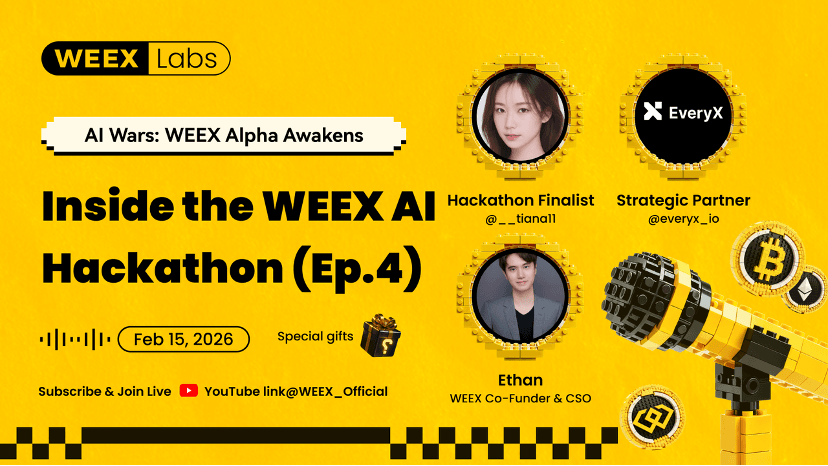
WEEX AI Trading Hackathon: 3 Key Insights on the Future of AI Trading & Prediction Markets
Dive into the key takeaways from the WEEX AI Trading Hackathon AMA. Get 3 critical insights from platform builders, prediction market experts, and winning traders on the future of AI trading, how to trade social sentiment, and why human-AI collaboration is the ultimate edge.

Beyond the Battle: PS5 Prizes, 1,000 USDT Giveaways & Key WEEX AI Trading Insights from Istanbul
Get key insights from the frontline of AI trading: Analysis of a live showdown in Istanbul reveals when human intuition beats AI, and where algorithms dominate. Learn the future of collaborative trading.
How Smart Money Tracker Survived Live AI Trading at WEEX AI Hackathon
Discover how WEEX AI Trading Hackathon tested strategies with real capital—no simulations. See how Smart Money Tracker survived flash crashes and leveraged 18x in live markets.
80% Win Rate to 40% Drawdown: An AI Trader's Brutal Recalibration at WEEX AI Wars
Dive into the technical blueprint of an AI trading system built on LLaMA reasoning and multi-agent execution. See how Quantum Quaser uses confidence thresholds & volatility filters at WEEX AI Wars, and learn the key to unlocking 95% win rate trades.
AI Trading Strategy Explained: How a Beginner Tiana Reached the WEEX AI Trading Hackathon Finals
Can AI trading really outperform human emotion? In this exclusive WEEX Hackathon finalist interview, discover how behavioral signal strategies, SOL trend setups, and disciplined AI execution secured a spot in the finals.

AI Trading vs Human Crypto Traders: $10,000 Live Trading Battle Results in Munich, Germany (WEEX Hackathon 2026)
Discover how AI trading outperformed human traders in WEEX's live Munich showdown. Learn 3 key strategies from the battle and why AI is changing crypto trading.
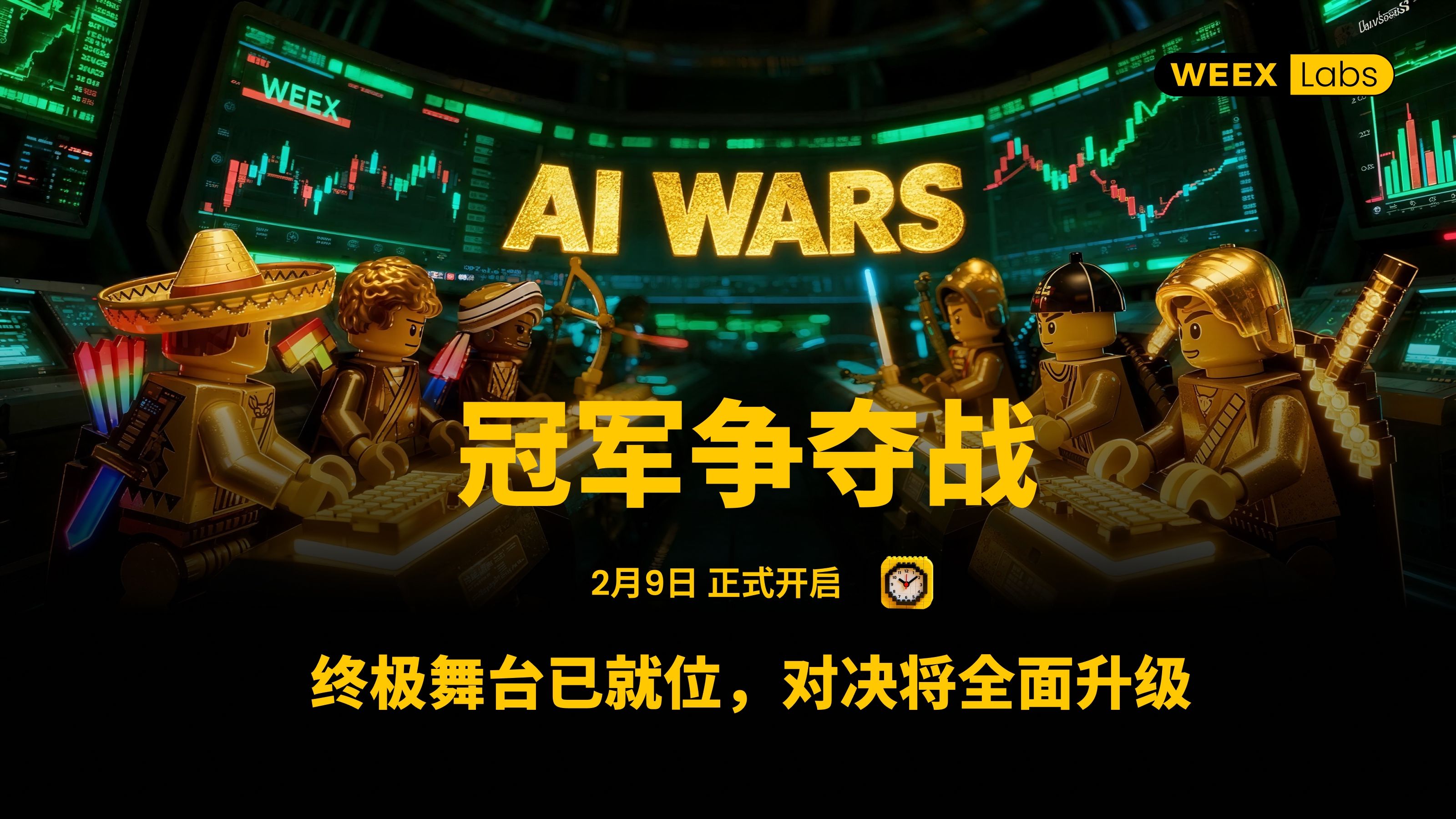
WEEX AI Trading Hackathon Rules & Guidelines
This article explains the rules, requirements, and prize structure for the WEEX AI Trading Hackathon Finals, where finalists compete using AI-driven trading strategies under real market conditions.
AI Crypto Trading in 2026: How AI Agents Use Stablecoins for Capital Management and Settlement
Learn how AI agents use stablecoins for crypto trading in 2026 — managing capital, settling transactions, and operating across exchanges and DeFi protocols.
AI Trading's Ultimate Test: Empower Your AI Strategy with Tencent Cloud to Win $1.88M & a Bentley
AI traders! Win $1.88M & a Bentley by crushing WEEX's live-market challenge. Tencent Cloud powers your AI Trading bot - can it survive the Feb 9 finals?
How a Risk-Controlled AI Crypto Trading Bot Protects Capital in Real Markets
Ritmex demonstrates how disciplined risk control and structured signals can make an AI crypto trading bot more stable and reliable on WEEX, highlighting the importance of combining execution discipline with scalable AI trading systems.
How a Structured AI Crypto Trading Bot Won at the WEEX Hackathon
Crypto_Trade shows how structured inputs and controlled adaptability can build a more stable and reliable AI crypto trading bot within the WEEX AI Trading Hackathon, highlighting a practical path toward scalable AI trading systems.
How a Fully Automated AI Trading Bot Won at WEEX Hackathon (From 0 to AI Agent)
Nick’s journey on WEEX shows that successful AI Trading isn’t just about strategy ideas—but about structured AI agents, disciplined execution, and continuous adaptation in real market conditions.
Best AI Crypto Trading Bot? Inside the AI Trading System That Ranked Top 3 on WEEX
Discover the best AI crypto trading bot on WEEX. Learn how AI trading works, how to trade automatically, and why this system stands out among top AI trading apps.