
- Buy Crypto
- Markets
 Futures
- Spot
- Copy Trade
- Earn
- More
Spain CFD Trading Base Drops to 35,000 in Fourth Straight Annual Decline
By: finance magnates|2025/05/08 17:30:05
0
Share
Spain'sleverage trading market has collapsed to a fraction of its 2021 peak, with thenumber of active FX/CFD traders falling another 10% to just 35,000 in the 12months through February, according to a new report from Investment Trends. Spanish Leverage TradingMarket Down Nearly 100% from 2021 Peak The visiblecontraction from pandemic hish continues amid record-low new trader sign-ups,partly attributed to digital marketing restrictions and increasinglychallenging acquisition conditions, the research firm said in its 2025 SpainLeverage Trading Report released this week. "Withfewer Spanish traders entering the market, the imperative has shifted-retainingthe existing client base is now the strongest growth lever," said LorenzoVignati, Associate Research Director at Investment Trends ."Retention is no longer a defensive play; it's a primary businessstrategy." You mayalso like this : YouWant to Combat CFD Client Churn and Boost Deposits by 40%? Check Out This Tool The report,based on a survey of 622 traders conducted between January and February,reveals a significant shift in how investors approach the market. Whilemost traditionally begin with shares or ETFs , a growing number of tradersare entering directly through cryptocurrency and leveraged products, bypassingconventional investment pathways. “Brokers Must Break Awayfrom Legacy Onboarding Assumptions” Spanishtraders now recognize an average of 6.8 trading platforms but typically useonly 1.7 providers. Key factors in platform selection include peerrecommendations, low commissions (48%), and ease of use (47%). "Brokersmust break away from legacy onboarding assumptions," Vignati noted."Today's first-time Spanish trader could be entering straight into cryptoor CFDs-and they expect fast, intuitive support from the first click." Theresearch also found that approximately one-third of traders recallrecent innovations from their providers , most commonly improved chartingtools, copy trading enhancements, and user interface updates. These tradersconsistently report higher satisfaction levels and are more likely to recommendtheir platform to others. "Innovationhas become the clearest pathway to advocacy in Spain's leverage tradingmarket," Vignati added. "It's not just about making improvements-it'sabout making them visible." The reportsuggests that in an environment where new user acquisition has becomeincreasingly difficult and the market has contracted to nearly a half of itssize at the 2021 peak, trading platforms must focus on retention strategies andensuring that existing clients notice and value platform improvements. Germany, France, andSingapore Face the Same Challenge Previousreports from Investment Trends indicate that the issue extends beyond theSpanish market, appearing in other mature and well-developed tradingenvironments. In France,the number of FX/CFD traders hasdropped below 30,000 —its lowest level in four years. In Singapore, interestin contracts for difference hasfallen to its lowest point since 2019 , with retail traders showing agrowing preference for proprietary trading instead. In Germany,although there has been a slight rebound compared to 2024, CFD trading remainswell below pre-pandemic levels. Thenumber of active traders has declined from 84,000 to 63,000. Aninteresting exception is Poland, wherethe CFD trading population has grown by 40%. Over the past five years, themarket has tripled in size, making it one of the largest in Europe—second onlyto the UK. Spain'sleverage trading market has collapsed to a fraction of its 2021 peak, with thenumber of active FX/CFD traders falling another 10% to just 35,000 in the 12months through February, according to a new report from Investment Trends. Spanish Leverage TradingMarket Down Nearly 100% from 2021 Peak The visiblecontraction from pandemic hish continues amid record-low new trader sign-ups,partly attributed to digital marketing restrictions and increasinglychallenging acquisition conditions, the research firm said in its 2025 SpainLeverage Trading Report released this week. "Withfewer Spanish traders entering the market, the imperative has shifted-retainingthe existing client base is now the strongest growth lever," said LorenzoVignati, Associate Research Director at Investment Trends ."Retention is no longer a defensive play; it's a primary businessstrategy." You mayalso like this : YouWant to Combat CFD Client Churn and Boost Deposits by 40%? Check Out This Tool The report,based on a survey of 622 traders conducted between January and February,reveals a significant shift in how investors approach the market. Whilemost traditionally begin with shares or ETFs , a growing number of tradersare entering directly through cryptocurrency and leveraged products, bypassingconventional investment pathways. “Brokers Must Break Awayfrom Legacy Onboarding Assumptions” Spanishtraders now recognize an average of 6.8 trading platforms but typically useonly 1.7 providers. Key factors in platform selection include peerrecommendations, low commissions (48%), and ease of use (47%). "Brokersmust break away from legacy onboarding assumptions," Vignati noted."Today's first-time Spanish trader could be entering straight into cryptoor CFDs-and they expect fast, intuitive support from the first click." Theresearch also found that approximately one-third of traders recallrecent innovations from their providers , most commonly improved chartingtools, copy trading enhancements, and user interface updates. These tradersconsistently report higher satisfaction levels and are more likely to recommendtheir platform to others. "Innovationhas become the clearest pathway to advocacy in Spain's leverage tradingmarket," Vignati added. "It's not just about making improvements-it'sabout making them visible." The reportsuggests that in an environment where new user acquisition has becomeincreasingly difficult and the market has contracted to nearly a half of itssize at the 2021 peak, trading platforms must focus on retention strategies andensuring that existing clients notice and value platform improvements. Germany, France, andSingapore Face the Same Challenge Previousreports from Investment Trends indicate that the issue extends beyond theSpanish market, appearing in other mature and well-developed tradingenvironments. In France,the number of FX/CFD traders hasdropped below 30,000 —its lowest level in four years. In Singapore, interestin contracts for difference hasfallen to its lowest point since 2019 , with retail traders showing agrowing preference for proprietary trading instead. In Germany,although there has been a slight rebound compared to 2024, CFD trading remainswell below pre-pandemic levels. Thenumber of active traders has declined from 84,000 to 63,000. Aninteresting exception is Poland, wherethe CFD trading population has grown by 40%. Over the past five years, themarket has tripled in size, making it one of the largest in Europe—second onlyto the UK.
You may also like

Particle Founder: The entrepreneurial insights I have gained the most from in the past year
Stop lean startup, stop lightning entrepreneurship, and think carefully about what your product aspirations are.

Huang Renxun's latest podcast transcript: The future of Nvidia, the development of embodied intelligence and agents, the explosion of inference demand, and the public relations crisis of artificial intelligence
The competition in the future is not just about whose model is larger or whose computing power is stronger, but also about who understands the industry better, who can embed AI more deeply into real processes, and who can organize these capabilities into a runnable and scalable system.

OKX Ventures Research Report: AI Agent Economic Infrastructure Research Report (Part 1)
The existing infrastructure is hostile to the Agent economy. Agents can think and act independently at the "capability level," but at the "economic level," they are still locked into infrastructure designed for humans.

The migration of settlement rights: B18 and the institutional starting point of on-chain banks
In the traditional system, banks decide the settlement; in the on-chain system, code begins to take over this responsibility.

From Tencent and Circle: Looking at the Simple and Difficult Questions of Investment
The AI narrative continues to ferment, but the recent performance of related stocks varies, with some in the midst of summer and others as if in winter.

The second half of stablecoins no longer belongs to the crypto circle
What Coinbase doesn't want, Mastercard is eager to buy.

Cursor "Shell" Kimi Controversy Reversed: From Copyright Infringement Allegations to Authorized Collaboration, China's Open Source Model Once Again Becomes a Global AI Foundation
Cursor was accused of being based on Kimi K2.5, which sparked controversy, and was later confirmed to be compliant through Fireworks AI due diligence.

The Real Reason Tokens Don't Sell: 90% of Crypto Projects Overlook Investor Relations
Provide an Investor Relations Best Practices Guide for Crypto Projects.

Is the income of pump.fun real, earning a million dollars a day despite the market downturn?
If it can really earn this much, what is the reason for the low price of $PUMP?

The real reason why tokens are not selling: 90% of crypto projects neglect investor relations
Investor Relations Practice Guide for Cryptocurrency Projects.

Who is the true winner of the "Tokenization" narrative?
Virtually everyone benefits, but the reason for the benefit, the timing, and the underlying logic are completely different.

Moss: The Era of AI-Traded by Anyone | Project Introduction
AI Trading Agent is rapidly growing its infrastructure.

Chip Smuggling Case Exposes Regulatory Loophole | Rewire News Evening Update
AI chips have become a strategic asset more sensitive than missiles

How a Structured AI Crypto Trading Bot Won at the WEEX Hackathon
Ritmex demonstrates how disciplined risk control and structured signals can make an AI crypto trading bot more stable and reliable on WEEX, highlighting the importance of combining execution discipline with scalable AI trading systems.

Old Indicator Fails, Three Major New Signals Emerge: BTC True Bottom May Still Be Below $60K
When the grocery shopping auntie on the subway, or Tony the hairdresser, start asking you about BTC, crypto, and cryptocurrency investments, selling immediately will be the only best option.

Meeting OpenClaw Founder at a Hackathon: What Else Can Lobsters Do?
Imperial College London MetaGame: AI Agent × Web3 Landing Three Major Directions.
Huang Renxun's Latest Podcast Transcript: NVIDIA's Future, Embodied Intelligence and Agent Development, Soaring Demand for Inferencing, and AI's PR Crisis
The future of competition is not only about whose model is bigger, whose computing power is stronger, but also about who understands the industry better, who can more deeply integrate AI into real processes, and who can organize these capabilities into a set of executable, scalable systems
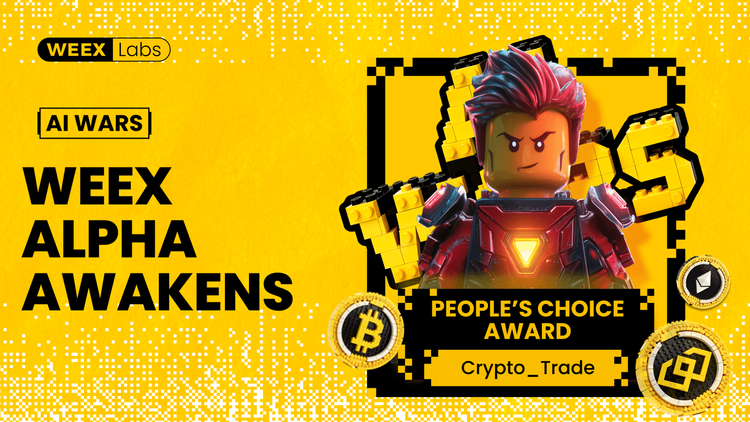
How a Structured AI Crypto Trading Bot Won at the WEEX Hackathon
Crypto_Trade shows how structured inputs and controlled adaptability can build a more stable and reliable AI crypto trading bot within the WEEX AI Trading Hackathon, highlighting a practical path toward scalable AI trading systems.
Particle Founder: The entrepreneurial insights I have gained the most from in the past year
Stop lean startup, stop lightning entrepreneurship, and think carefully about what your product aspirations are.
Huang Renxun's latest podcast transcript: The future of Nvidia, the development of embodied intelligence and agents, the explosion of inference demand, and the public relations crisis of artificial intelligence
The competition in the future is not just about whose model is larger or whose computing power is stronger, but also about who understands the industry better, who can embed AI more deeply into real processes, and who can organize these capabilities into a runnable and scalable system.
OKX Ventures Research Report: AI Agent Economic Infrastructure Research Report (Part 1)
The existing infrastructure is hostile to the Agent economy. Agents can think and act independently at the "capability level," but at the "economic level," they are still locked into infrastructure designed for humans.
The migration of settlement rights: B18 and the institutional starting point of on-chain banks
In the traditional system, banks decide the settlement; in the on-chain system, code begins to take over this responsibility.
From Tencent and Circle: Looking at the Simple and Difficult Questions of Investment
The AI narrative continues to ferment, but the recent performance of related stocks varies, with some in the midst of summer and others as if in winter.
The second half of stablecoins no longer belongs to the crypto circle
What Coinbase doesn't want, Mastercard is eager to buy.


 App
App