
- Buy Crypto
- Markets
 Futures
- Spot
- Copy Trade
- Earn
- More
Never sell your Bitcoin
By: bitcoin ethereum news|2025/05/07 10:15:02
0
Share
Bitcoin maxis say, “Never sell your Bitcoin.” They repeat it when the market crashes to urge people not to dump their BTC in a loss out of panic and fear. They repeat it when the price is going up because they believe that no matter how high the cost is in relation to previous levels, it is still negligible in comparison to the future levels. So if they never sell, why do they care about its price (oh, they do)? The message behind HODL The term “hodl” is one of the staples of hardcore bitcoiners. It is a misspelled word “hold.” The history behind the term captures the spirit of the “Never sell your Bitcoin” attitude pretty well. The “hodl” term dates back to a 2013 thread on the Bitcointalk forum. The original post was written by a tipsy hobby investor using a GameKyuubi moniker. His message titled “I AM HODLING” was a rant perfectly lousily worded amidst the Bitcoin price downfall (and the OP’s untimely tiff with a girlfriend). In the message, GameKyuubi calls himself a bad trader and reveals he will hold Bitcoin instead of trying to time the market as good traders do. “You only sell in a bear market if you are a good day trader or an illusioned noob. The people in between hold. In a zero-sum game such as this, traders can only take your money if you sell.” GameKyuubi’s post struck a nerve, and folks on the forum responded to it with multiple urges to HODL, a meme (and a term used until the present day) was born. 5/ That’s when GameKyuubi wrote his famous thread. I AM HODLING “BTC crashing WHY AM I HOLDING? I’LL TELL YOU WHY. It’s because I’m a bad trader and I KNOW I’M A BAD TRADER.” He poured his soul out to the forums pic.twitter.com/XPcsLEHRdH — The Bitcoin Historian (@pete_rizzo_) March 1, 2025 If we think about GameKyuubi’s message, we’ll see that he wasn’t against taking profits at all. He just didn’t know when to sell his bitcoins in exchange for fiat money, so he decided not to do that to avoid being “a bad trader.” Many interpret the “Never sell Bitcoin” principle not literally. In one of the discussions on the topic on Reddit, many bitcoiners admitted that they just don’t exchange their bitcoins for dollars. Instead, they continue to buy more Bitcoin and hold it until they need a substantial amount of money. They may sell their BTC if they buy a car or make other costly purchases. Some spend their sats to pay their rent but leave the rest of the profits in Bitcoin and don’t plan to sell it. So, they think that it’s better to hold money in Bitcoin rather than in fiat money. Bitcoin is a savings currency for them, as they believe in Bitcoin’s long-term price appreciation. It’s understood that for these people, Bitcoin’s price is an important metric, even if they haven’t sold it for years. “Never sell Bitcoin to whales” Whales are the holders of large crypto bags worth millions. In the 2020s, the Bitcoin price trajectory became heavily influenced by whale transactions. The chart indicating the correlation between Bitcoin price and the number of transactions made by the wallets holding over 10,000 BTC looks almost like mountains reflected in the lake–whenever the amount of whales’ transactions goes up, the price goes down, and vice versa. These curves may seem inverted in relation to each other. If we take a closer look at the segment where GameKuubi writes, “In a zero-sum game [...], traders can only take your money if you sell,” we may see the reflection of another popular motto: “Never sell your Bitcoin to whales.” Whales will buy your bitcoins at any price at any time. However, the chances you will be able to re-purchase what you sold are small as Bitcoin’s price keeps on moving up, and whales are not avid sellers. A man who claims he will never sell Bitcoin Michael Saylor of Strategy is probably the most radical follower of the “Never sell your Bitcoin” creed. His company follows the “Bitcoin standard” and sells its shares and takes on debt while buying more and more Bitcoin. Strategy (formerly MicroStrategy) has been buying Bitcoin since 2020. It already holds over 500,000 BTC (over 2.5% of the total supply), and Saylor claims he will never sell Bitcoin. Once, he said that destroying the keys from the wallets with substantial amounts of Bitcoin was not a bad idea. Saylor urges corporations and the U.S. government to use his blueprint and start accumulating Bitcoin. According to him, those who control the biggest share of the total 21,000,000 units of Bitcoin will have the most influence in the future. This vision suggests that the price of Bitcoin is not as important as having as much bitcoin as possible (“we are still early,” “Bitcoin is still undervalued”). It is reflected in the randomly looking dates of Strategy’s purchases of huge amounts of Bitcoin, often on the “wrong” days when the price is high (for this, Saylor was even jokingly called “one of the worst crypto traders in modern history”). However, the price of Bitcoin is still important for the company as it affects the value of Strategy’s shares (MSTR) and the further planning of the Bitcoin-based strategy. According to Saylor, if the BTC price drops to $1, he will just buy all the bitcoins. Having one of the biggest stacks of bitcoins and having no intention to sell it draws broad philosophical questions like what it means to be rich. However, let’s leave it at this. Source: https://crypto.news/never-sell-your-bitcoin-bitcoins-price/
You may also like
WEEX Trade to Earn: Turn Futures Trading into Instant WXT Rewards
Join WEEX Trade to Earn and earn instant WXT rebates on every futures trade. Boost rewards with referrals and tasks. Trade more, earn more on WEEX exchange.

Trading Everything, Never Closing: RWA Perpetual Contracts (Part 1)
RWA perpetual contracts are trying to disrupt the traditional financial markets of costly zero-day options (0DTE) and opaque contracts for difference (CFD) with transparent on-chain "linear leverage."

Morning News | Nscale completes $2 billion Series C funding; 20 millionth Bitcoin has been mined; Polymarket will launch S&P 500 binary options products
Overview of Important Market Events on March 9

Dialogue between Vitalik and Suji: Why have decentralized social products failed?
Analyzing the dilemma of decentralized social networks should start from "solving social problems" rather than "overlaying crypto finance," exploring new opportunities for the integration of AI and prediction markets.

Trading Never Sleeps: On-Chain, Crude Oil, and Leverage
The prices in this window are determined by emotions, amplified by leverage, driven by the narrative of war—rather than by the supply and demand of crude oil.

On-chain Yield Panorama: The Evolution from Interest-bearing Stablecoins to Crypto Credit Products
In a bear market, investors tend to prefer more stable returns and lower underlying risks, which has driven the growth of interest-bearing stablecoins.

RootData announced the integration with OpenClaw, and these gameplay features have gone viral
In the era of AI Agents, the value of data lies not in "ownership," but in "connection."

Key Market Intelligence on March 9th, how much did you miss out on?
1. On-chain Funds: $221M flowed into Hyperliquid last week; $186.7M flowed out of Arbitrum
2. Largest Price Swings: $DENT, $UAI
3. Top News: Middle East Conflict Sparks Stagflation Trading, Global Stock Markets Shed Around $6 Trillion

a16z: After AI Superpowers, Where to Next for Humanity?
Cryptocurrency will become the cornerstone of trust in this new era.

Why Does Oil Go Up When Bitcoin Goes Down?
The Impact of Middle Eastern Oil on Bitcoin Price

Decoding 112,000 Polymarket Addresses: The Top 1% Making Money Are Doing These Five Things
Those loss-making addresses are not stupid, just lacking discipline — too many markets involved, overexposure, excessive FOMO, and hardly any post-mortem.
AAVE founder issues a warning: DeFi must never become the exit liquidity for Wall Street private credit
In order for RWA to succeed in DeFi and for DeFi to achieve meaningful scale expansion through real-world assets, the entire industry needs to thoughtfully and cautiously build opportunities that connect TradFi (traditional finance) and on-chain markets.
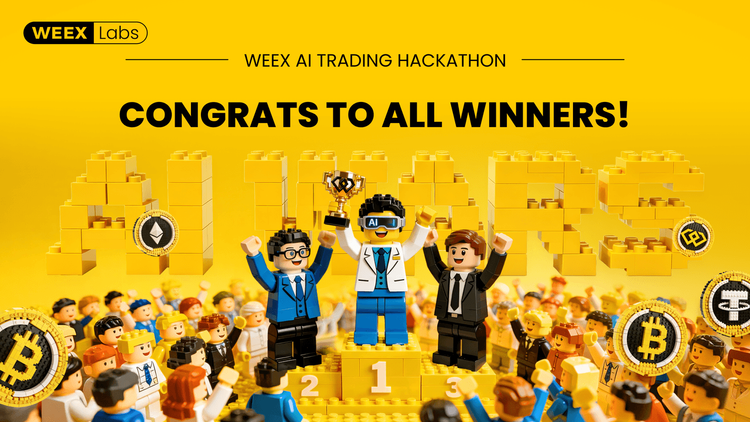
How To Create A Frequency So Strong It Makes Reality Obey You
The first-ever WEEX AI Hackathon has concluded, with 10 winners emerging from over 200 global teams. Beyond its $1.8 million prize pool, the event marked a milestone—proving that the future of AI trading belongs to accessible, AI-powered innovation.

The cryptocurrency industry has waited for five and a half years, and what they got is half a ticket
The hand that opens this door is not the rule, but the direction of the wind.

The trend of Ethena reveals what information about the cryptocurrency market
Through Ethena's data insights: the collective hedging and self-protection of VCs and project parties is leading the crypto market into an extreme risk-averse moment of "complete balance between bulls and bears" for the first time in history.

I've been in the crypto industry for five and a half years, and all I got was half a ticket.
The hand that opens this door is not a rule, but a wind.

Crude Oil Surges 25%, Hyperliquid Unfolds On-Chain Showdown
Hyperliquid users now need to keep an eye on the latest developments in the Iran Hormuz Strait, while a DeFi OG is using on-chain derivatives to hedge against war risk.
$20 Billion Valuation, Is Kalshi Engaging in an Arms Race with Polymarket?
US-Iran Conflict + World Cup + Eve of Elections, Predicts Market Key Data Points to Reach New All-Time Highs in 2026.
WEEX Trade to Earn: Turn Futures Trading into Instant WXT Rewards
Join WEEX Trade to Earn and earn instant WXT rebates on every futures trade. Boost rewards with referrals and tasks. Trade more, earn more on WEEX exchange.
Trading Everything, Never Closing: RWA Perpetual Contracts (Part 1)
RWA perpetual contracts are trying to disrupt the traditional financial markets of costly zero-day options (0DTE) and opaque contracts for difference (CFD) with transparent on-chain "linear leverage."
Morning News | Nscale completes $2 billion Series C funding; 20 millionth Bitcoin has been mined; Polymarket will launch S&P 500 binary options products
Overview of Important Market Events on March 9
Dialogue between Vitalik and Suji: Why have decentralized social products failed?
Analyzing the dilemma of decentralized social networks should start from "solving social problems" rather than "overlaying crypto finance," exploring new opportunities for the integration of AI and prediction markets.
Trading Never Sleeps: On-Chain, Crude Oil, and Leverage
The prices in this window are determined by emotions, amplified by leverage, driven by the narrative of war—rather than by the supply and demand of crude oil.
On-chain Yield Panorama: The Evolution from Interest-bearing Stablecoins to Crypto Credit Products
In a bear market, investors tend to prefer more stable returns and lower underlying risks, which has driven the growth of interest-bearing stablecoins.


 App
App