
- Buy Crypto
- Markets
 Futures
- Spot
- Copy Trade
 Earn
Earn- More
Interview with Gate.io CBO Kevin: Founded 12 Years Ago, Weathering Bull and Bear Markets, We Have Achieved Trillions in Trading Volume

As the Bitcoin spot ETF drives global capital influx and the Memecoin craze ignites the on-chain "trillion-dollar casino," the crypto market in 2024 is witnessing an unprecedented frenzy and diversity. In this wave of accelerated restructuring, the veteran exchange platform Gate.io happens to celebrate its 12th anniversary.
This "crypto living fossil," spanning three bull-bear cycles and witnessing industry ups and downs, has steadily moved forward amidst the noise and cycles, delivering a contrarian report card: the total trading volume in 2024 reached $3.8 trillion for the full year, global users surpassed the 22 million mark, and the number of users of its Web3 wallet increased by 33 times in a year, demonstrating its explosive growth in on-chain ecosystem layout.
At this critical juncture, BlockBeats had an exclusive interview with Gate.io's Chief Business Officer (CBO) Kevin Lee. This senior Hong Kong banker, who combines a traditional financial background with a vision of the crypto industry, has been leading Gate.HK's compliance process in Hong Kong since 2023 and has further taken on the group's business strategic responsibilities this year. Transitioning from JPMorgan's trading floor to the regulatory forefront of crypto assets, Kevin Lee witnessed the breakthrough of Hong Kong's first licensed exchange platform and orchestrated a lightning-fast 329% user growth battle for Gate.io in the Middle East market.
In this in-depth conversation, Kevin disclosed several key strategies for the first time: including the details of acquiring a licensed exchange platform in Japan, the progress of business layout in Europe under "Gate.MT," and the "three-key" strategy supporting the $270 billion on-chain asset growth of the Web3 wallet. At the same time, he also shared how Gate.io, through the Hong Kong "Token of Love" music festival involving thousands of people, is driving brand rejuvenation and localization; and how, amid the surge of the Bitcoin ETF and the rise of Pump.fun, Gate.io is building a "anti-fragile" self-evolution path.
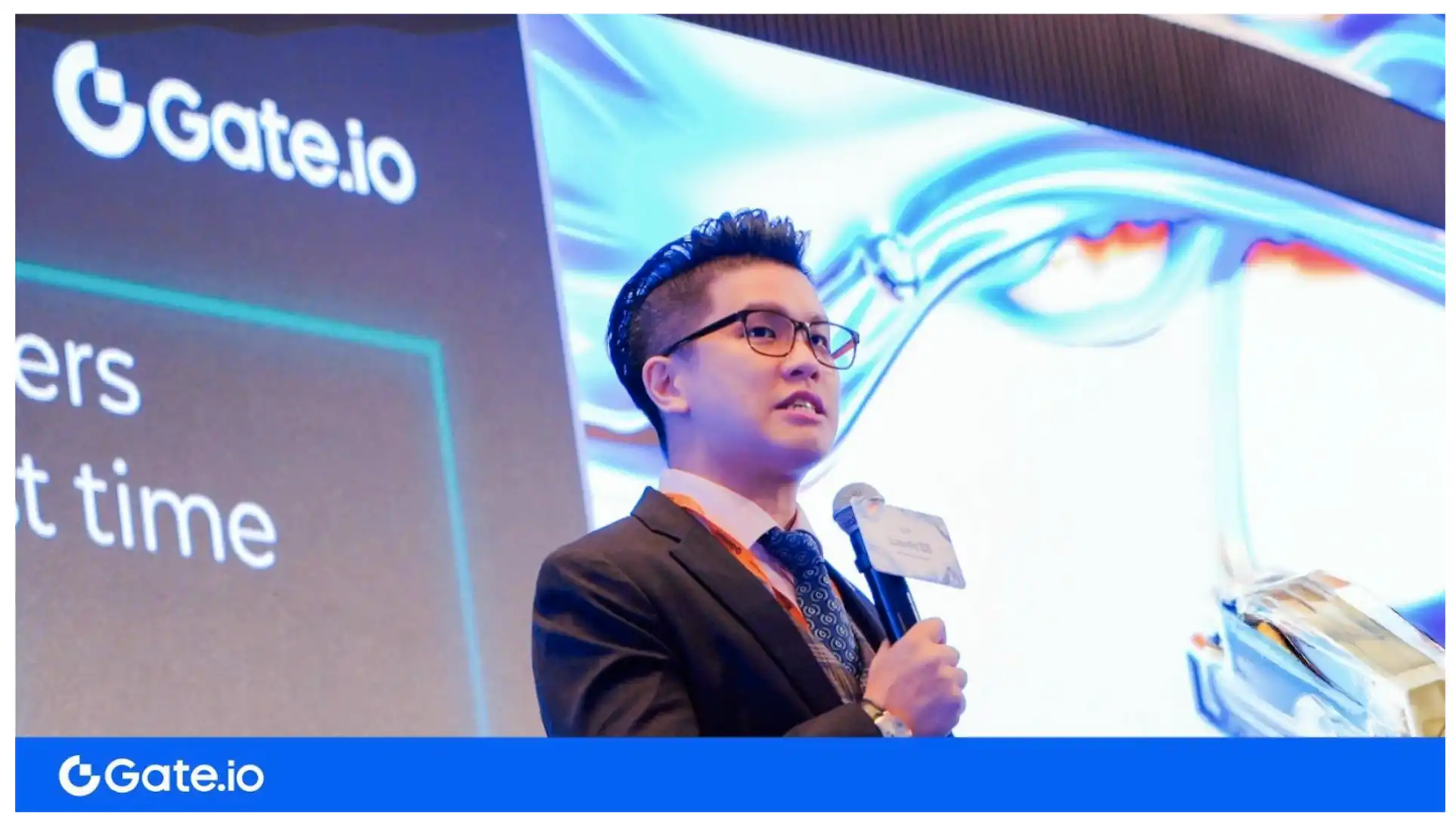
From Banking to Crypto, Kevin's Evolution
BlockBeats: Hello Kevin, thank you for accepting BlockBeats' interview. From Gate.HK CEO to also serving as Gate.io CBO, what significant changes have occurred in your role? On the occasion of Gate.io's 12th anniversary, how do you review the platform's development over the past year? Standing at this milestone, what are your feelings?
Kevin Lee: As the CEO of Gate.HK, my work mainly involved engaging with institutional clients and regulatory bodies in Hong Kong. Now, as the CBO in addition, I spend more time interacting with the community, including prominent KOLs and regular users, both online and offline. The biggest difference is that I am now engaging with a different group of people and can directly hear the users' voices.
Users often tell me, "Gate.io was the first exchange account I opened in the crypto world." This kind of statement really touches me; I am moved because many people indeed encountered cryptocurrency for the first time through our platform. Surviving in the crypto world for 12 years is not easy. I myself have been with the Gate group for over two years, and looking back, the transformation has been immense. For example, comparing the events held last year to this year, both in terms of scale and format, there has been significant progress. This rapid growth is truly remarkable.
12 years may sound like a long time, but having spent time in traditional banking, I understand that 12 years is not considered long in the financial industry. However, in the crypto world, monumental changes can occur in just 12 months. Although we are celebrating our 12th anniversary now, I feel like this is just the beginning. When we look back next year, we may discover many more breakthroughs. Having witnessed the substantial growth of the platform over the past two years, I have great expectations for the future of Gate.io. There will be many different aspects in one or two years.
BlockBeats: You previously worked in traditional finance and the internet industry. What prompted you to transition to the crypto industry? What was the process like to join the Gate group? How do you view your career path choices?
Kevin Lee: I first bought Bitcoin around 2012 or 2013 when the price was approximately 140 RMB, which was a historical high at that time. I didn't really understand it when I bought it; I just followed the crowd and purchased some. Soon after my purchase, the price quickly dropped to 90 RMB, and I thought, "Oh, this thing is useless, I don't see potential in it," so I just left the account and moved on.
Unexpectedly, in 2017, Bitcoin surged to $20,000, and I suddenly remembered that I still had Bitcoin in that account. This kind of storyline has happened many times in the industry: people forget their passwords, change phones, lose 2FA, and end up losing the Bitcoin they bought a long time ago. But I consider myself quite lucky as I tried various methods to recover my account, and the Bitcoin I bought in 2012 was still there.
During that time, many new coins had entered the market, so the discussions were not just about Bitcoin but also included Ethereum and other new coins. My interest in the crypto industry grew. Later, when the Hong Kong Monetary Authority introduced a crypto regulatory framework, it became a key turning point for me. Having worked in traditional banking for many years, I knew that once regulatory policies are in place, there is no turning back. Despite the price volatility and fluctuations in the crypto world, the trend towards compliance is irreversible, which made me believe that the industry will exist in the long term.
Joining the Gate Group, the decision to establish an independent operation exchange platform, Gate.HK, in Hong Kong was also based on this judgment. At that time, the Gate Group wanted to apply for a regulatory license in Hong Kong, which aligned perfectly with my philosophy—the market experiences cyclical fluctuations, but regulatory compliance is the foundation. Despite significant changes in the Hong Kong policy environment and industry, we still insisted on rooting ourselves here for localized operations. Looking back at this career path, transitioning from traditional finance to the crypto world essentially revolves around the pursuit of "rule establishment."
Behind the 33x Growth, Gate.io's Product Blitz
BlockBeats: Every CEX is competing for on-chain liquidity and has heavily invested in their Web3 wallet. Gate.io has also taken many actions on the Web3 Wallet in the past year, with on-chain assets growing by 27 billion and user numbers skyrocketing by 33x. Behind this data growth, what is the core competitiveness of Gate's Web3 wallet?
Kevin Lee: I think three things are particularly key. First, Gate.io's Web3 Wallet already covers nearly 200 public chains, and most tokens in the market can be traded in the wallet without the need to switch between platforms. Second, we have an AI tool called "Memebox." During this meme cycle, everyone is playing with memes, and there are now too many meme coins in the market. This tool can use AI algorithms to help users identify projects with potential. Third, we have deeply integrated centralized exchange functionality with decentralized features. Users can complete the entire process from deposit to on-chain interaction within our Gate.io platform, an end-to-end experience that is challenging for other purely decentralized wallets to achieve.
BlockBeats: In this current cycle, memecoins have become a hot topic. The Solana ecosystem has seen the emergence of platforms like Pump.fun and gmgn, many users are completing speculative loops on-chain, no longer relying on CEX. How does Gate.io view the liquidity impact of Pump.fun-type platforms on centralized exchanges? How did Gate.io react to the trading demand and traffic shift brought by memecoins? What explorations and innovations have been made at the product level?
Kevin Lee: There is definitely an impact, but compared to other trading platforms, we have quite a few advantages in this area. We have an innovation zone that can list a Memecoin on the same day it surges on a DEX. Our listing speed is fast, so when users discover a potential coin, they know they can come to Gate.io to capture the gains from this surge.
Next, we have built a closed-loop system that can encompass the functionalities of both centralized exchanges and decentralized exchanges. Even though these Memecoin players, as you mentioned, trade coins on DEXs like Pump.fun and gmgn, someday when they want to enter the mainstream coin market or cash out their earnings, they will ultimately have to use a CEX.
Gate.io can offer these users more choices, such as the Yield Farming Pool or engaging in contract hedging. Because users cannot just keep rolling their earnings from Memecoins forever, they will eventually need to lock in some of their profits. Therefore, they can invest in different products to diversify risks, making Gate.io a very good option for them.
BlockBeats: The market is ever-changing, and CEXs adjust their listing strategies accordingly. We see that Gate.io has also undergone significant changes in various asset selection criteria like Launchpool and HODLer. Can you share with us the trend of Gate.io's changes in this aspect this year?
Kevin Lee: One aspect is the innovation zone we mentioned earlier. At Gate.io, we have established a layered system where the innovation zone focuses on speed. For example, Memecoins can be listed on the day DEXs start gaining popularity. On the other hand, Launchpool focuses on selecting projects with long-term potential, such as those in AI and DeFi, offering users more stable investment options.
Secondly, Gate.io now opens futures trading simultaneously with spot trading for new listings. There is significant demand from our users in this area, so most of our new listings feature both spot and futures trading. If users purchase spot assets and later wish to hedge or leverage, they do not need to operate across different platforms. This way, our users have more choices and can meet different investment needs with spot, futures, or the innovation zone.
Compliance Breakthrough Battle, Globalized Entity
BlockBeats: Since 2024, multiple markets including the United States and Hong Kong have approved Bitcoin spot ETFs, and traditional asset management giants like BlackRock and Fidelity are gradually becoming the "pricing anchors" of crypto assets. Many industry voices believe that the rise of ETFs will weaken the pricing power and liquidity hub status of CEXs. Do you believe that the pricing power of trading platforms is beginning to shift? How significant is this impact and competition for trading platforms? How is Gate.io responding to the entry of asset management institutions?
Kevin Lee: First and foremost, it is important to clarify that an ETF issuer needs to purchase spot assets for hedging, which actually increases the trading demand on compliant platforms. The difference is that the traffic will be more concentrated on licensed platforms. For Gate.io, the key is whether we are operating within a compliant framework — when institutional investors enter the market, their first choice will definitely be a regulated trading platform, which is the inevitable direction of industry differentiation.
Another commonly overlooked fact is that even traditional financial institutions that focus on ETFs tend to prefer direct allocation of underlying assets rather than the ETF itself. Just as in the traditional financial sector, institutions prefer to buy a basket of stocks rather than an index ETF because ETF management fees are high and lack flexibility. Currently, the main buying power for crypto ETFs still comes from retail investors, and it will take time for institutions to allocate on a large scale.
Therefore, in the short term, the impact of ETFs on centralized trading platforms is limited, and the long-term core of competition is still compliance capability. Gate.io continues to invest in compliance development in locations like Hong Kong to become a trusted trading gateway for institutional funds when they enter on a large scale.
BlockBeats: Regulatory issues are always an unavoidable topic, from trading platforms to web3 wallets. What compliance successes has Gate.io achieved? What efforts will be made in the next stage? What are the key breakthrough markets in the future?
Kevin Lee: At this stage, I can disclose several key actions: we have acquired a licensed trading platform, "Coin Master," through an affiliated entity in Japan and are in the process of rebranding it as "Gate Japan"; in the European market, the compliance infrastructure has been established through "Gate.MT," and the unified operation under the "Gate.io" brand will follow. These deployments are all aimed at providing fully compliant services to local users.
The Middle East and Hong Kong are also key regions. Gate.io will enter various local markets with different entities and will continue to communicate with local regulatory bodies. Interestingly, although the details of regulatory frameworks vary in different regions, the core directions are gradually converging — anti-money laundering, user protection, reserve audits are basic principles that have become a global consensus. This consistency actually reduces the difficulty of our compliance efforts, as different regional teams only need to adapt locally within a unified framework.
We will continue to adhere to a strategy of "localized compliance": each key market will have independent operating entities and localized teams, but the underlying risk control standards and fund security solutions will be globally unified.
BlockBeats: CEXs worldwide are expanding into and establishing a foothold in the Middle East, such as Dubai and the UAE. Gate.io has seen a 329% growth in Middle Eastern users, while there is also significant growth potential in Southeast Asian markets like Hong Kong, Singapore, and European markets. For Gate.io, who will be the next growth engine? What are the core development directions and market layouts for Gate.io in the next 1-3 years? What is the core challenge of local operations and localization in different regions during the globalization process?
Kevin Lee: As we just mentioned, there are many potential markets in Southeast Asia, the Middle East, Europe, and other regions. However, I believe that in the next 1-3 years, we should not focus solely on one region because the global adoption rate of cryptocurrency is only around 5%, which is not very high.
Therefore, in addition to deepening our presence in current markets, we will also explore new regions. This is also our advantage. Gate.io can quickly adapt to regulatory changes, and any shift in regulatory direction will accelerate our growth after entry.
Gate.io's 12th Anniversary and Cycle Revelation
BlockBeats: Gate.io's annual report shows that by 2024, the total trading volume will reach $38 trillion, with the user base surpassing 20 million, a growth of over 400 times compared to the early days of the platform in 2013. As a venerable figure in the industry who experienced its founding in 2013, what were the platform's greatest survival challenges during the three bull-bear cycles? What key decisions allowed the platform to overcome cycle barriers? What are the most representative turning points or breakthroughs Gate.io has experienced in its 12 years of existence?
Kevin Lee: Actually, the cycle is a great mirror that reflects the strength of a trading platform. During the previous bear markets, Gate.io also performed very well because our philosophy was, "Even if we can't grow the fastest or be ranked first during a bull market, what's more important is to survive during a bear market; otherwise, all achievements are meaningless." So we have always managed our costs very well.
However, in this current bull market, we have made some slight adjustments to our strategy. Cost-cutting alone is not enough, as the market competition is fierce. If we don't spend money, we might be left behind during a bull market. But we must spend money wisely. Therefore, we will focus our resources on user and community development, as well as online and offline activities.
For example, our "Token of Love" music festival held during the Consensus in Hong Kong was very representative. Over three days, it attracted over 20,000 participants, likely setting a record for the largest event hosted by a trading platform. This event was very special because there was no discussion of projects, listings, or trades. It was purely about using music to connect the community. Looking back, this brand upgrade that broke away from industry norms truly transformed Gate.io from a "trading platform" into a cultural symbol. We will also explore the possibility of hosting such a great event again in the future.
BlockBeats: Gate.io's 12th-anniversary brand upgrade involved changes in the brand name, visuals, and more. Can you introduce us to this brand upgrade? What new image and core concepts are you hoping to convey to the outside world?
Kevin Lee: On the occasion of our twelfth anniversary, the brand visual identity will be refreshed, and Gate.io has officially adopted the new Chinese name "大门" (meaning "Gate"). The upgrade of the brand's Chinese name symbolizes openness, fairness, and innovation, representing the convergence of trust and technology. It carries forward Gate.io's original aspiration to connect the global crypto world and signifies the brand's outlook for the future—to advance the industry through technology and open a broader gate to crypto for users worldwide.
I'd like to mention two more points: Branding is not a change that can be achieved in just a day or two. Gate.io's brand has undergone significant changes in the past year or two, becoming more professional. This transformation has been gradual, not just because we are celebrating our 12th anniversary with a campaign, but because branding is an ongoing effort that requires attention every day.
Another important point is that, as mentioned earlier, our products will engage more with the community. It's not just about changing the logo; the brand transformation will also be reflected in community interactions. In the past, the belief may have been that if the product is good, users will naturally come. However, the reality in today's market is different. A brand needs to be established, stand out, interact with the community—not for the sake of promoting a product, but more importantly, to listen to their feedback. Understanding what users want from Gate.io and delivering on those expectations is crucial in brand-building.
BlockBeats: The crypto industry seems to have a strong correlation with audiences of football and racing. Behind Gate.io's sponsorship of the F1 Red Bull Racing Team and Inter Milan's sports marketing strategy, how does this align with Gate.io's corporate culture, globalization, and core values?
Kevin Lee: Firstly, F1 and football are among the few truly globally encompassing sports IPs—just like crypto assets that transcend borders. The Red Bull Racing Team covers 195 countries at each race, and Inter Milan's fan base spans across South America, Europe, and Asia. This coverage density is a perfect match for our user distribution map. Gate.io now has more opportunities to engage with a global audience, providing a new talking point. Many user friends whom I wasn't very familiar with before have come up to me and said, "Your football events are really well-organized over here." I didn't know they were into football, but these events have given us a common subject to discuss, fostering a deeper connection.
Secondly, these activities are breaking gender stereotypes. Previously, racing, football, and the crypto sphere were considered "male-dominated," but now all three fields have seen a significant increase in female participants. Everyone can engage and enjoy these events together, providing a great experience. Users naturally associate Gate.io with the F1 Red Bull Racing Team and Inter Milan, and this kind of synergy helps establish an emotional connection more effectively than traditional advertising.
BlockBeats: Looking back on the 12-year development journey of Gate.io, how do you view the evolution of the crypto industry in the next decade? From your perspective, which Web3 tracks truly have a future business ecosystem? Meme, DeFi, RWA, AI+Web3, and so on, which tracks do you see more promising for development? What role will Gate.io play in this future?
Kevin Lee: Ten years is a very long time. My simple answer would be AI. Now everyone is still discussing the integration of "AI+Web3," and maybe a decade later, these technologies have become the default configuration, just like Google or Baidu which we use every day as very ordinary things, without emphasizing "Internet + payment" as we do today.
Another very interesting answer is that in 10 years, there will definitely be things that we can't imagine right now. Working in traditional banking, if you ask me what will happen in 10 years, I would say it would be the same things, not much innovation.
But the crypto industry is different. Just like in 2017, no one could predict the NFT explosion; in the future, new tracks will definitely emerge. I even think that these hot concepts now (Meme, DeFi, RWA) may not be mainstream in ten years—truly disruptive things often emerge beyond our field of vision, beyond our imagination.
As for the role of Gate.io, our biggest advantage is "flexibility." Our transformation and new products are all very fast. Whether it's AI, RWA, or unknown new tracks, as long as there is an industry demand, our Gate.io technical team and product iteration speed can quickly catch up. Such responsiveness is hard for others to achieve, so we are also very much looking forward to what the development will be like in the next 10 years.
You may also like

Token Cannot Compound, Where Is the Real Investment Opportunity?

February 6th Market Key Intelligence, How Much Did You Miss?

China's Central Bank and Eight Other Departments' Latest Regulatory Focus: Key Attention to RWA Tokenized Asset Risk
Foreword: Today, the People's Bank of China's website published the "Notice of the People's Bank of China, National Development and Reform Commission, Ministry of Industry and Information Technology, Ministry of Public Security, State Administration for Market Regulation, China Banking and Insurance Regulatory Commission, China Securities Regulatory Commission, State Administration of Foreign Exchange on Further Preventing and Dealing with Risks Related to Virtual Currency and Others (Yinfa [2026] No. 42)", the latest regulatory requirements from the eight departments including the central bank, which are basically consistent with the regulatory requirements of recent years. The main focus of the regulation is on speculative activities such as virtual currency trading, exchanges, ICOs, overseas platform services, and this time, regulatory oversight of RWA has been added, explicitly prohibiting RWA tokenization, stablecoins (especially those pegged to the RMB). The following is the full text:
To the people's governments of all provinces, autonomous regions, and municipalities directly under the Central Government, the Xinjiang Production and Construction Corps:
Recently, there have been speculative activities related to virtual currency and Real-World Assets (RWA) tokenization, disrupting the economic and financial order and jeopardizing the property security of the people. In order to further prevent and address the risks related to virtual currency and Real-World Assets tokenization, effectively safeguard national security and social stability, in accordance with the "Law of the People's Republic of China on the People's Bank of China," "Law of the People's Republic of China on Commercial Banks," "Securities Law of the People's Republic of China," "Law of the People's Republic of China on Securities Investment Funds," "Law of the People's Republic of China on Futures and Derivatives," "Cybersecurity Law of the People's Republic of China," "Regulations of the People's Republic of China on the Administration of Renminbi," "Regulations on Prevention and Disposal of Illegal Fundraising," "Regulations of the People's Republic of China on Foreign Exchange Administration," "Telecommunications Regulations of the People's Republic of China," and other provisions, after reaching consensus with the Cyberspace Administration of China, the Supreme People's Court, and the Supreme People's Procuratorate, and with the approval of the State Council, the relevant matters are notified as follows:
(I) Virtual currency does not possess the legal status equivalent to fiat currency. Virtual currencies such as Bitcoin, Ether, Tether, etc., have the main characteristics of being issued by non-monetary authorities, using encryption technology and distributed ledger or similar technology, existing in digital form, etc. They do not have legal tender status, should not and cannot be circulated and used as currency in the market.
The business activities related to virtual currency are classified as illegal financial activities. The exchange of fiat currency and virtual currency within the territory, exchange of virtual currencies, acting as a central counterparty in buying and selling virtual currencies, providing information intermediary and pricing services for virtual currency transactions, token issuance financing, and trading of virtual currency-related financial products, etc., fall under illegal financial activities, such as suspected illegal issuance of token vouchers, unauthorized public issuance of securities, illegal operation of securities and futures business, illegal fundraising, etc., are strictly prohibited across the board and resolutely banned in accordance with the law. Overseas entities and individuals are not allowed to provide virtual currency-related services to domestic entities in any form.
A stablecoin pegged to a fiat currency indirectly fulfills some functions of the fiat currency in circulation. Without the consent of relevant authorities in accordance with the law and regulations, any domestic or foreign entity or individual is not allowed to issue a RMB-pegged stablecoin overseas.
(II)Tokenization of Real-World Assets refers to the use of encryption technology and distributed ledger or similar technologies to transform ownership rights, income rights, etc., of assets into tokens (tokens) or other interests or bond certificates with token (token) characteristics, and carry out issuance and trading activities.
Engaging in the tokenization of real-world assets domestically, as well as providing related intermediary, information technology services, etc., which are suspected of illegal issuance of token vouchers, unauthorized public offering of securities, illegal operation of securities and futures business, illegal fundraising, and other illegal financial activities, shall be prohibited; except for relevant business activities carried out with the approval of the competent authorities in accordance with the law and regulations and relying on specific financial infrastructures. Overseas entities and individuals are not allowed to illegally provide services related to the tokenization of real-world assets to domestic entities in any form.
(III) Inter-agency Coordination. The People's Bank of China, together with the National Development and Reform Commission, the Ministry of Industry and Information Technology, the Ministry of Public Security, the State Administration for Market Regulation, the China Banking and Insurance Regulatory Commission, the China Securities Regulatory Commission, the State Administration of Foreign Exchange, and other departments, will improve the work mechanism, strengthen coordination with the Cyberspace Administration of China, the Supreme People's Court, and the Supreme People's Procuratorate, coordinate efforts, and overall guide regions to carry out risk prevention and disposal of virtual currency-related illegal financial activities.
The China Securities Regulatory Commission, together with the National Development and Reform Commission, the Ministry of Industry and Information Technology, the Ministry of Public Security, the People's Bank of China, the State Administration for Market Regulation, the China Banking and Insurance Regulatory Commission, the State Administration of Foreign Exchange, and other departments, will improve the work mechanism, strengthen coordination with the Cyberspace Administration of China, the Supreme People's Court, and the Supreme People's Procuratorate, coordinate efforts, and overall guide regions to carry out risk prevention and disposal of illegal financial activities related to the tokenization of real-world assets.
(IV) Strengthening Local Implementation. The people's governments at the provincial level are overall responsible for the prevention and disposal of risks related to virtual currencies and the tokenization of real-world assets in their respective administrative regions. The specific leading department is the local financial regulatory department, with participation from branches and dispatched institutions of the State Council's financial regulatory department, telecommunications regulators, public security, market supervision, and other departments, in coordination with cyberspace departments, courts, and procuratorates, to improve the normalization of the work mechanism, effectively connect with the relevant work mechanisms of central departments, form a cooperative and coordinated working pattern between central and local governments, effectively prevent and properly handle risks related to virtual currencies and the tokenization of real-world assets, and maintain economic and financial order and social stability.
(5) Enhanced Risk Monitoring. The People's Bank of China, China Securities Regulatory Commission, National Development and Reform Commission, Ministry of Industry and Information Technology, Ministry of Public Security, State Administration of Foreign Exchange, Cyberspace Administration of China, and other departments continue to improve monitoring techniques and system support, enhance cross-departmental data analysis and sharing, establish sound information sharing and cross-validation mechanisms, promptly grasp the risk situation of activities related to virtual currency and real-world asset tokenization. Local governments at all levels give full play to the role of local monitoring and early warning mechanisms. Local financial regulatory authorities, together with branches and agencies of the State Council's financial regulatory authorities, as well as departments of cyberspace and public security, ensure effective connection between online monitoring, offline investigation, and fund tracking, efficiently and accurately identify activities related to virtual currency and real-world asset tokenization, promptly share risk information, improve early warning information dissemination, verification, and rapid response mechanisms.
(6) Strengthened Oversight of Financial Institutions, Intermediaries, and Technology Service Providers. Financial institutions (including non-bank payment institutions) are prohibited from providing account opening, fund transfer, and clearing services for virtual currency-related business activities, issuing and selling financial products related to virtual currency, including virtual currency and related financial products in the scope of collateral, conducting insurance business related to virtual currency, or including virtual currency in the scope of insurance liability. Financial institutions (including non-bank payment institutions) are prohibited from providing custody, clearing, and settlement services for unauthorized real-world asset tokenization-related business and related financial products. Relevant intermediary institutions and information technology service providers are prohibited from providing intermediary, technical, or other services for unauthorized real-world asset tokenization-related businesses and related financial products.
(7) Enhanced Management of Internet Information Content and Access. Internet enterprises are prohibited from providing online business venues, commercial displays, marketing, advertising, or paid traffic diversion services for virtual currency and real-world asset tokenization-related business activities. Upon discovering clues of illegal activities, they should promptly report to relevant departments and provide technical support and assistance for related investigations and inquiries. Based on the clues transferred by the financial regulatory authorities, the cyberspace administration, telecommunications authorities, and public security departments should promptly close and deal with websites, mobile applications (including mini-programs), and public accounts engaged in virtual currency and real-world asset tokenization-related business activities in accordance with the law.
(8) Strengthened Entity Registration and Advertisement Management. Market supervision departments strengthen entity registration and management, and enterprise and individual business registrations must not contain terms such as "virtual currency," "virtual asset," "cryptocurrency," "crypto asset," "stablecoin," "real-world asset tokenization," or "RWA" in their names or business scopes. Market supervision departments, together with financial regulatory authorities, legally enhance the supervision of advertisements related to virtual currency and real-world asset tokenization, promptly investigating and handling relevant illegal advertisements.
(IX) Continued Rectification of Virtual Currency Mining Activities. The National Development and Reform Commission, together with relevant departments, strictly controls virtual currency mining activities, continuously promotes the rectification of virtual currency mining activities. The people's governments of various provinces take overall responsibility for the rectification of "mining" within their respective administrative regions. In accordance with the requirements of the National Development and Reform Commission and other departments in the "Notice on the Rectification of Virtual Currency Mining Activities" (NDRC Energy-saving Building [2021] No. 1283) and the provisions of the "Guidance Catalog for Industrial Structure Adjustment (2024 Edition)," a comprehensive review, investigation, and closure of existing virtual currency mining projects are conducted, new mining projects are strictly prohibited, and mining machine production enterprises are strictly prohibited from providing mining machine sales and other services within the country.
(X) Severe Crackdown on Related Illegal Financial Activities. Upon discovering clues to illegal financial activities related to virtual currency and the tokenization of real-world assets, local financial regulatory authorities, branches of the State Council's financial regulatory authorities, and other relevant departments promptly investigate, determine, and properly handle the issues in accordance with the law, and seriously hold the relevant entities and individuals legally responsible. Those suspected of crimes are transferred to the judicial authorities for processing according to the law.
(XI) Severe Crackdown on Related Illegal and Criminal Activities. The Ministry of Public Security, the People's Bank of China, the State Administration for Market Regulation, the China Banking and Insurance Regulatory Commission, the China Securities Regulatory Commission, as well as judicial and procuratorial organs, in accordance with their respective responsibilities, rigorously crack down on illegal and criminal activities related to virtual currency, the tokenization of real-world assets, such as fraud, money laundering, illegal business operations, pyramid schemes, illegal fundraising, and other illegal and criminal activities carried out under the guise of virtual currency, the tokenization of real-world assets, etc.
(XII) Strengthen Industry Self-discipline. Relevant industry associations should enhance membership management and policy advocacy, based on their own responsibilities, advocate and urge member units to resist illegal financial activities related to virtual currency and the tokenization of real-world assets. Member units that violate regulatory policies and industry self-discipline rules are to be disciplined in accordance with relevant self-regulatory management regulations. By leveraging various industry infrastructure, conduct risk monitoring related to virtual currency, the tokenization of real-world assets, and promptly transfer issue clues to relevant departments.
(XIII) Without the approval of relevant departments in accordance with the law and regulations, domestic entities and foreign entities controlled by them may not issue virtual currency overseas.
(XIV) Domestic entities engaging directly or indirectly in overseas external debt-based tokenization of real-world assets, or conducting asset securitization activities abroad based on domestic ownership rights, income rights, etc. (hereinafter referred to as domestic equity), should be strictly regulated in accordance with the principles of "same business, same risk, same rules." The National Development and Reform Commission, the China Securities Regulatory Commission, the State Administration of Foreign Exchange, and other relevant departments regulate it according to their respective responsibilities. For other forms of overseas real-world asset tokenization activities based on domestic equity by domestic entities, the China Securities Regulatory Commission, together with relevant departments, supervise according to their division of responsibilities. Without the consent and filing of relevant departments, no unit or individual may engage in the above-mentioned business.
(15) Overseas subsidiaries and branches of domestic financial institutions providing Real World Asset Tokenization-related services overseas shall do so legally and prudently. They shall have professional personnel and systems in place to effectively mitigate business risks, strictly implement customer onboarding, suitability management, anti-money laundering requirements, and incorporate them into the domestic financial institutions' compliance and risk management system. Intermediaries and information technology service providers offering Real World Asset Tokenization services abroad based on domestic equity or conducting Real World Asset Tokenization business in the form of overseas debt for domestic entities directly or indirectly venturing abroad must strictly comply with relevant laws and regulations. They should establish and improve relevant compliance and internal control systems in accordance with relevant normative requirements, strengthen business and risk control, and report the business developments to the relevant regulatory authorities for approval or filing.
(16) Strengthen organizational leadership and overall coordination. All departments and regions should attach great importance to the prevention of risks related to virtual currencies and Real World Asset Tokenization, strengthen organizational leadership, clarify work responsibilities, form a long-term effective working mechanism with centralized coordination, local implementation, and shared responsibilities, maintain high pressure, dynamically monitor risks, effectively prevent and mitigate risks in an orderly and efficient manner, legally protect the property security of the people, and make every effort to maintain economic and financial order and social stability.
(17) Widely carry out publicity and education. All departments, regions, and industry associations should make full use of various media and other communication channels to disseminate information through legal and policy interpretation, analysis of typical cases, and education on investment risks, etc. They should promote the illegality and harm of virtual currencies and Real World Asset Tokenization-related businesses and their manifestations, fully alert to potential risks and hidden dangers, and enhance public awareness and identification capabilities for risk prevention.
(18) Engaging in illegal financial activities related to virtual currencies and Real World Asset Tokenization in violation of this notice, as well as providing services for virtual currencies and Real World Asset Tokenization-related businesses, shall be punished in accordance with relevant regulations. If it constitutes a crime, criminal liability shall be pursued according to the law. For domestic entities and individuals who knowingly or should have known that overseas entities illegally provided virtual currency or Real World Asset Tokenization-related services to domestic entities and still assisted them, relevant responsibilities shall be pursued according to the law. If it constitutes a crime, criminal liability shall be pursued according to the law.
(19) If any unit or individual invests in virtual currencies, Real World Asset Tokens, and related financial products against public order and good customs, the relevant civil legal actions shall be invalid, and any resulting losses shall be borne by them. If there are suspicions of disrupting financial order and jeopardizing financial security, the relevant departments shall deal with them according to the law.
This notice shall enter into force upon the date of its issuance. The People's Bank of China and ten other departments' "Notice on Further Preventing and Dealing with the Risks of Virtual Currency Trading Speculation" (Yinfa [2021] No. 237) is hereby repealed.

Former Partner's Perspective on Multicoin: Kyle's Exit, But the Game He Left Behind Just Getting Started
Why Bitcoin Is Falling Now: The Real Reasons Behind BTC's Crash & WEEX's Smart Profit Playbook
Bitcoin's ongoing crash explained: Discover the 5 hidden triggers behind BTC's plunge & how WEEX's Auto Earn and Trade to Earn strategies help traders profit from crypto market volatility.

Wall Street's Hottest Trades See Exodus

Vitalik Discusses Ethereum Scaling Path, Circle Announces Partnership with Polymarket, What's the Overseas Crypto Community Talking About Today?

Believing in the Capital Markets - The Essence and Core Value of Cryptocurrency

Polymarket's 'Weatherman': Predict Temperature, Win Million-Dollar Payout

$15K+ Profits: The 4 AI Trading Secrets WEEX Hackathon Prelim Winners Used to Dominate Volatile Crypto Markets
How WEEX Hackathon's top AI trading strategies made $15K+ in crypto markets: 4 proven rules for ETH/BTC trading, market structure analysis, and risk management in volatile conditions.

A nearly 20% one-day plunge, how long has it been since you last saw a $60,000 Bitcoin?

Raoul Pal: I've seen every single panic, and they are never the end.

Key Market Information Discrepancy on February 6th - A Must-Read! | Alpha Morning Report

2026 Crypto Industry's First Snowfall
The Harsh Reality Behind the $26 Billion Crypto Liquidation: Liquidity Is Killing the Market
Why Is Gold, US Stocks, Bitcoin All Falling?

Key Market Intelligence for February 5th, how much did you miss out on?

Wintermute: By 2026, crypto had gradually become the settlement layer of the Internet economy
Token Cannot Compound, Where Is the Real Investment Opportunity?
February 6th Market Key Intelligence, How Much Did You Miss?
China's Central Bank and Eight Other Departments' Latest Regulatory Focus: Key Attention to RWA Tokenized Asset Risk
Foreword: Today, the People's Bank of China's website published the "Notice of the People's Bank of China, National Development and Reform Commission, Ministry of Industry and Information Technology, Ministry of Public Security, State Administration for Market Regulation, China Banking and Insurance Regulatory Commission, China Securities Regulatory Commission, State Administration of Foreign Exchange on Further Preventing and Dealing with Risks Related to Virtual Currency and Others (Yinfa [2026] No. 42)", the latest regulatory requirements from the eight departments including the central bank, which are basically consistent with the regulatory requirements of recent years. The main focus of the regulation is on speculative activities such as virtual currency trading, exchanges, ICOs, overseas platform services, and this time, regulatory oversight of RWA has been added, explicitly prohibiting RWA tokenization, stablecoins (especially those pegged to the RMB). The following is the full text:
To the people's governments of all provinces, autonomous regions, and municipalities directly under the Central Government, the Xinjiang Production and Construction Corps:
Recently, there have been speculative activities related to virtual currency and Real-World Assets (RWA) tokenization, disrupting the economic and financial order and jeopardizing the property security of the people. In order to further prevent and address the risks related to virtual currency and Real-World Assets tokenization, effectively safeguard national security and social stability, in accordance with the "Law of the People's Republic of China on the People's Bank of China," "Law of the People's Republic of China on Commercial Banks," "Securities Law of the People's Republic of China," "Law of the People's Republic of China on Securities Investment Funds," "Law of the People's Republic of China on Futures and Derivatives," "Cybersecurity Law of the People's Republic of China," "Regulations of the People's Republic of China on the Administration of Renminbi," "Regulations on Prevention and Disposal of Illegal Fundraising," "Regulations of the People's Republic of China on Foreign Exchange Administration," "Telecommunications Regulations of the People's Republic of China," and other provisions, after reaching consensus with the Cyberspace Administration of China, the Supreme People's Court, and the Supreme People's Procuratorate, and with the approval of the State Council, the relevant matters are notified as follows:
(I) Virtual currency does not possess the legal status equivalent to fiat currency. Virtual currencies such as Bitcoin, Ether, Tether, etc., have the main characteristics of being issued by non-monetary authorities, using encryption technology and distributed ledger or similar technology, existing in digital form, etc. They do not have legal tender status, should not and cannot be circulated and used as currency in the market.
The business activities related to virtual currency are classified as illegal financial activities. The exchange of fiat currency and virtual currency within the territory, exchange of virtual currencies, acting as a central counterparty in buying and selling virtual currencies, providing information intermediary and pricing services for virtual currency transactions, token issuance financing, and trading of virtual currency-related financial products, etc., fall under illegal financial activities, such as suspected illegal issuance of token vouchers, unauthorized public issuance of securities, illegal operation of securities and futures business, illegal fundraising, etc., are strictly prohibited across the board and resolutely banned in accordance with the law. Overseas entities and individuals are not allowed to provide virtual currency-related services to domestic entities in any form.
A stablecoin pegged to a fiat currency indirectly fulfills some functions of the fiat currency in circulation. Without the consent of relevant authorities in accordance with the law and regulations, any domestic or foreign entity or individual is not allowed to issue a RMB-pegged stablecoin overseas.
(II)Tokenization of Real-World Assets refers to the use of encryption technology and distributed ledger or similar technologies to transform ownership rights, income rights, etc., of assets into tokens (tokens) or other interests or bond certificates with token (token) characteristics, and carry out issuance and trading activities.
Engaging in the tokenization of real-world assets domestically, as well as providing related intermediary, information technology services, etc., which are suspected of illegal issuance of token vouchers, unauthorized public offering of securities, illegal operation of securities and futures business, illegal fundraising, and other illegal financial activities, shall be prohibited; except for relevant business activities carried out with the approval of the competent authorities in accordance with the law and regulations and relying on specific financial infrastructures. Overseas entities and individuals are not allowed to illegally provide services related to the tokenization of real-world assets to domestic entities in any form.
(III) Inter-agency Coordination. The People's Bank of China, together with the National Development and Reform Commission, the Ministry of Industry and Information Technology, the Ministry of Public Security, the State Administration for Market Regulation, the China Banking and Insurance Regulatory Commission, the China Securities Regulatory Commission, the State Administration of Foreign Exchange, and other departments, will improve the work mechanism, strengthen coordination with the Cyberspace Administration of China, the Supreme People's Court, and the Supreme People's Procuratorate, coordinate efforts, and overall guide regions to carry out risk prevention and disposal of virtual currency-related illegal financial activities.
The China Securities Regulatory Commission, together with the National Development and Reform Commission, the Ministry of Industry and Information Technology, the Ministry of Public Security, the People's Bank of China, the State Administration for Market Regulation, the China Banking and Insurance Regulatory Commission, the State Administration of Foreign Exchange, and other departments, will improve the work mechanism, strengthen coordination with the Cyberspace Administration of China, the Supreme People's Court, and the Supreme People's Procuratorate, coordinate efforts, and overall guide regions to carry out risk prevention and disposal of illegal financial activities related to the tokenization of real-world assets.
(IV) Strengthening Local Implementation. The people's governments at the provincial level are overall responsible for the prevention and disposal of risks related to virtual currencies and the tokenization of real-world assets in their respective administrative regions. The specific leading department is the local financial regulatory department, with participation from branches and dispatched institutions of the State Council's financial regulatory department, telecommunications regulators, public security, market supervision, and other departments, in coordination with cyberspace departments, courts, and procuratorates, to improve the normalization of the work mechanism, effectively connect with the relevant work mechanisms of central departments, form a cooperative and coordinated working pattern between central and local governments, effectively prevent and properly handle risks related to virtual currencies and the tokenization of real-world assets, and maintain economic and financial order and social stability.
(5) Enhanced Risk Monitoring. The People's Bank of China, China Securities Regulatory Commission, National Development and Reform Commission, Ministry of Industry and Information Technology, Ministry of Public Security, State Administration of Foreign Exchange, Cyberspace Administration of China, and other departments continue to improve monitoring techniques and system support, enhance cross-departmental data analysis and sharing, establish sound information sharing and cross-validation mechanisms, promptly grasp the risk situation of activities related to virtual currency and real-world asset tokenization. Local governments at all levels give full play to the role of local monitoring and early warning mechanisms. Local financial regulatory authorities, together with branches and agencies of the State Council's financial regulatory authorities, as well as departments of cyberspace and public security, ensure effective connection between online monitoring, offline investigation, and fund tracking, efficiently and accurately identify activities related to virtual currency and real-world asset tokenization, promptly share risk information, improve early warning information dissemination, verification, and rapid response mechanisms.
(6) Strengthened Oversight of Financial Institutions, Intermediaries, and Technology Service Providers. Financial institutions (including non-bank payment institutions) are prohibited from providing account opening, fund transfer, and clearing services for virtual currency-related business activities, issuing and selling financial products related to virtual currency, including virtual currency and related financial products in the scope of collateral, conducting insurance business related to virtual currency, or including virtual currency in the scope of insurance liability. Financial institutions (including non-bank payment institutions) are prohibited from providing custody, clearing, and settlement services for unauthorized real-world asset tokenization-related business and related financial products. Relevant intermediary institutions and information technology service providers are prohibited from providing intermediary, technical, or other services for unauthorized real-world asset tokenization-related businesses and related financial products.
(7) Enhanced Management of Internet Information Content and Access. Internet enterprises are prohibited from providing online business venues, commercial displays, marketing, advertising, or paid traffic diversion services for virtual currency and real-world asset tokenization-related business activities. Upon discovering clues of illegal activities, they should promptly report to relevant departments and provide technical support and assistance for related investigations and inquiries. Based on the clues transferred by the financial regulatory authorities, the cyberspace administration, telecommunications authorities, and public security departments should promptly close and deal with websites, mobile applications (including mini-programs), and public accounts engaged in virtual currency and real-world asset tokenization-related business activities in accordance with the law.
(8) Strengthened Entity Registration and Advertisement Management. Market supervision departments strengthen entity registration and management, and enterprise and individual business registrations must not contain terms such as "virtual currency," "virtual asset," "cryptocurrency," "crypto asset," "stablecoin," "real-world asset tokenization," or "RWA" in their names or business scopes. Market supervision departments, together with financial regulatory authorities, legally enhance the supervision of advertisements related to virtual currency and real-world asset tokenization, promptly investigating and handling relevant illegal advertisements.
(IX) Continued Rectification of Virtual Currency Mining Activities. The National Development and Reform Commission, together with relevant departments, strictly controls virtual currency mining activities, continuously promotes the rectification of virtual currency mining activities. The people's governments of various provinces take overall responsibility for the rectification of "mining" within their respective administrative regions. In accordance with the requirements of the National Development and Reform Commission and other departments in the "Notice on the Rectification of Virtual Currency Mining Activities" (NDRC Energy-saving Building [2021] No. 1283) and the provisions of the "Guidance Catalog for Industrial Structure Adjustment (2024 Edition)," a comprehensive review, investigation, and closure of existing virtual currency mining projects are conducted, new mining projects are strictly prohibited, and mining machine production enterprises are strictly prohibited from providing mining machine sales and other services within the country.
(X) Severe Crackdown on Related Illegal Financial Activities. Upon discovering clues to illegal financial activities related to virtual currency and the tokenization of real-world assets, local financial regulatory authorities, branches of the State Council's financial regulatory authorities, and other relevant departments promptly investigate, determine, and properly handle the issues in accordance with the law, and seriously hold the relevant entities and individuals legally responsible. Those suspected of crimes are transferred to the judicial authorities for processing according to the law.
(XI) Severe Crackdown on Related Illegal and Criminal Activities. The Ministry of Public Security, the People's Bank of China, the State Administration for Market Regulation, the China Banking and Insurance Regulatory Commission, the China Securities Regulatory Commission, as well as judicial and procuratorial organs, in accordance with their respective responsibilities, rigorously crack down on illegal and criminal activities related to virtual currency, the tokenization of real-world assets, such as fraud, money laundering, illegal business operations, pyramid schemes, illegal fundraising, and other illegal and criminal activities carried out under the guise of virtual currency, the tokenization of real-world assets, etc.
(XII) Strengthen Industry Self-discipline. Relevant industry associations should enhance membership management and policy advocacy, based on their own responsibilities, advocate and urge member units to resist illegal financial activities related to virtual currency and the tokenization of real-world assets. Member units that violate regulatory policies and industry self-discipline rules are to be disciplined in accordance with relevant self-regulatory management regulations. By leveraging various industry infrastructure, conduct risk monitoring related to virtual currency, the tokenization of real-world assets, and promptly transfer issue clues to relevant departments.
(XIII) Without the approval of relevant departments in accordance with the law and regulations, domestic entities and foreign entities controlled by them may not issue virtual currency overseas.
(XIV) Domestic entities engaging directly or indirectly in overseas external debt-based tokenization of real-world assets, or conducting asset securitization activities abroad based on domestic ownership rights, income rights, etc. (hereinafter referred to as domestic equity), should be strictly regulated in accordance with the principles of "same business, same risk, same rules." The National Development and Reform Commission, the China Securities Regulatory Commission, the State Administration of Foreign Exchange, and other relevant departments regulate it according to their respective responsibilities. For other forms of overseas real-world asset tokenization activities based on domestic equity by domestic entities, the China Securities Regulatory Commission, together with relevant departments, supervise according to their division of responsibilities. Without the consent and filing of relevant departments, no unit or individual may engage in the above-mentioned business.
(15) Overseas subsidiaries and branches of domestic financial institutions providing Real World Asset Tokenization-related services overseas shall do so legally and prudently. They shall have professional personnel and systems in place to effectively mitigate business risks, strictly implement customer onboarding, suitability management, anti-money laundering requirements, and incorporate them into the domestic financial institutions' compliance and risk management system. Intermediaries and information technology service providers offering Real World Asset Tokenization services abroad based on domestic equity or conducting Real World Asset Tokenization business in the form of overseas debt for domestic entities directly or indirectly venturing abroad must strictly comply with relevant laws and regulations. They should establish and improve relevant compliance and internal control systems in accordance with relevant normative requirements, strengthen business and risk control, and report the business developments to the relevant regulatory authorities for approval or filing.
(16) Strengthen organizational leadership and overall coordination. All departments and regions should attach great importance to the prevention of risks related to virtual currencies and Real World Asset Tokenization, strengthen organizational leadership, clarify work responsibilities, form a long-term effective working mechanism with centralized coordination, local implementation, and shared responsibilities, maintain high pressure, dynamically monitor risks, effectively prevent and mitigate risks in an orderly and efficient manner, legally protect the property security of the people, and make every effort to maintain economic and financial order and social stability.
(17) Widely carry out publicity and education. All departments, regions, and industry associations should make full use of various media and other communication channels to disseminate information through legal and policy interpretation, analysis of typical cases, and education on investment risks, etc. They should promote the illegality and harm of virtual currencies and Real World Asset Tokenization-related businesses and their manifestations, fully alert to potential risks and hidden dangers, and enhance public awareness and identification capabilities for risk prevention.
(18) Engaging in illegal financial activities related to virtual currencies and Real World Asset Tokenization in violation of this notice, as well as providing services for virtual currencies and Real World Asset Tokenization-related businesses, shall be punished in accordance with relevant regulations. If it constitutes a crime, criminal liability shall be pursued according to the law. For domestic entities and individuals who knowingly or should have known that overseas entities illegally provided virtual currency or Real World Asset Tokenization-related services to domestic entities and still assisted them, relevant responsibilities shall be pursued according to the law. If it constitutes a crime, criminal liability shall be pursued according to the law.
(19) If any unit or individual invests in virtual currencies, Real World Asset Tokens, and related financial products against public order and good customs, the relevant civil legal actions shall be invalid, and any resulting losses shall be borne by them. If there are suspicions of disrupting financial order and jeopardizing financial security, the relevant departments shall deal with them according to the law.
This notice shall enter into force upon the date of its issuance. The People's Bank of China and ten other departments' "Notice on Further Preventing and Dealing with the Risks of Virtual Currency Trading Speculation" (Yinfa [2021] No. 237) is hereby repealed.
Former Partner's Perspective on Multicoin: Kyle's Exit, But the Game He Left Behind Just Getting Started
Why Bitcoin Is Falling Now: The Real Reasons Behind BTC's Crash & WEEX's Smart Profit Playbook
Bitcoin's ongoing crash explained: Discover the 5 hidden triggers behind BTC's plunge & how WEEX's Auto Earn and Trade to Earn strategies help traders profit from crypto market volatility.


 App
App