
- Buy Crypto
- Markets
 Futures
- Spot
- Copy Trade
- Earn
- More
Coinbase Signals It Does Not Support Senate Crypto Bill, or Impact Legislative Process

BlockBeats News, January 15th, Coinbase CEO Brian Armstrong stated that, ahead of the Senate Banking Committee's upcoming markup and vote on comprehensive cryptocurrency legislation, Coinbase will not support the current version of the bill. Armstrong wrote on the X platform that, despite appreciating the bipartisan effort by senators, the draft is "worse than the current regulatory regime," preferring "no bill over a bad bill."
The bill aims to clarify the regulatory boundaries of the U.S. Commodity Futures Trading Commission (CFTC) and the Securities and Exchange Commission (SEC) in digital asset oversight, define when digital assets are securities or commodities, and introduce new disclosure requirements. The Senate Banking Committee is scheduled to hold a hearing and vote on the bill Thursday morning.
Armstrong pointed out significant issues in the bill regarding DeFi, stablecoin yields, among others, with some provisions potentially granting the government "unfettered access to individuals' financial records," eroding user privacy. He also criticized the bill for weakening CFTC's authority by subordinating it to the SEC, hindering industry innovation.
Sources mentioned that Coinbase's public opposition holds "symbolic significance" and could impact the bill's fate. The stablecoin yield matter has become a contentious point, with banking groups concerned that related mechanisms could siphon deposits and impact community banks, while the crypto industry accuses banks of attempting to stifle competition.
Nevertheless, some industry entities still support advancing the legislation. Digital Chamber of Commerce CEO Cody Carbone stated the intention to continue pushing for the bill to become law by 2026; Ripple CEO Brad Garlinghouse also expressed optimism about resolving differences through amendments.
You may also like

Particle Founder: The entrepreneurial insights I have gained the most from in the past year

Huang Renxun's latest podcast transcript: The future of Nvidia, the development of embodied intelligence and agents, the explosion of inference demand, and the public relations crisis of artificial intelligence

OKX Ventures Research Report: AI Agent Economic Infrastructure Research Report (Part 1)

The migration of settlement rights: B18 and the institutional starting point of on-chain banks

From Tencent and Circle: Looking at the Simple and Difficult Questions of Investment

The second half of stablecoins no longer belongs to the crypto circle

Cursor "Shell" Kimi Controversy Reversed: From Copyright Infringement Allegations to Authorized Collaboration, China's Open Source Model Once Again Becomes a Global AI Foundation

The Real Reason Tokens Don't Sell: 90% of Crypto Projects Overlook Investor Relations

Is the income of pump.fun real, earning a million dollars a day despite the market downturn?

The real reason why tokens are not selling: 90% of crypto projects neglect investor relations

Who is the true winner of the "Tokenization" narrative?

Moss: The Era of AI-Traded by Anyone | Project Introduction

Chip Smuggling Case Exposes Regulatory Loophole | Rewire News Evening Update

How a Structured AI Crypto Trading Bot Won at the WEEX Hackathon
Ritmex demonstrates how disciplined risk control and structured signals can make an AI crypto trading bot more stable and reliable on WEEX, highlighting the importance of combining execution discipline with scalable AI trading systems.

Old Indicator Fails, Three Major New Signals Emerge: BTC True Bottom May Still Be Below $60K

Meeting OpenClaw Founder at a Hackathon: What Else Can Lobsters Do?
Huang Renxun's Latest Podcast Transcript: NVIDIA's Future, Embodied Intelligence and Agent Development, Soaring Demand for Inferencing, and AI's PR Crisis
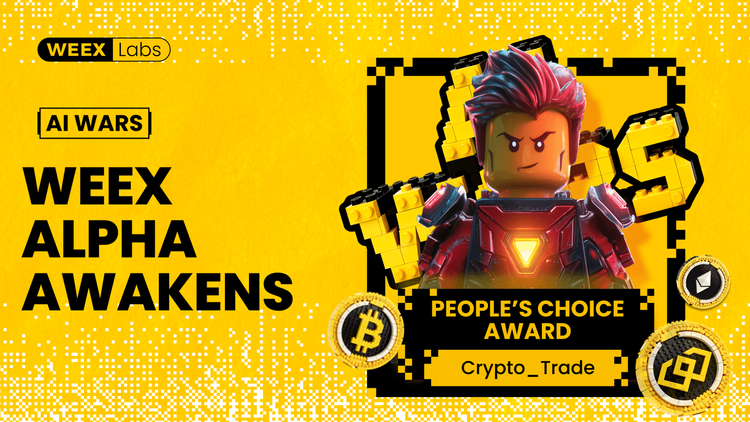
How a Structured AI Crypto Trading Bot Won at the WEEX Hackathon
Crypto_Trade shows how structured inputs and controlled adaptability can build a more stable and reliable AI crypto trading bot within the WEEX AI Trading Hackathon, highlighting a practical path toward scalable AI trading systems.


 App
App