
Anthropic CEO Dines with Trump: What's at Stake in AI

 Prefer us on Google


The most talked-about dinner in Silicon Valley this weekend did not take place in Palo Alto or San Francisco. It happened at the White House. Dario Amodei, co-founder and CEO of Anthropic, sat down with President Donald Trump for their first one-on-one meeting. The context is anything but trivial: both represent opposing sides of a debate that will define how artificial intelligence will be regulated in the world's largest economy.
For those following the evolution of the tech industry, this meeting serves as a thermometer. The relationship between the Trump administration and Anthropic has been marked by concrete friction, and the fact that a dinner was made possible signals something important: neither side can afford to ignore the other.
Why Amodei and Trump Are on Opposite Sides
Anthropic positions itself as the AI company most concerned with safety among American big techs. Dario Amodei recently published a plan to slow the pace of artificial intelligence development, or at least proceed with more caution. The proposal involves rigorous testing before releasing more powerful models and a risk classification system.
Trump, on the other hand, has adopted a radically opposite stance. The president has labeled concerns about AI safety as a "Democrat hoax," without providing evidence to support the claim. More than that, he suggested that the technology should be rebranded as "superintelligence," in an attempt to frame the issue as one of enthusiasm rather than caution.
This divergence is more than rhetoric. It reflects a real schism within the American tech ecosystem: on one side, companies advocating for regulatory brakes and safety testing; on the other, a government faction that sees any regulation as an obstacle to U.S. competitiveness against China.
The Pentagon Has Already Treated Anthropic as a Risk
The tension between Anthropic and the Trump administration did not start with this dinner. Earlier this year, the Pentagon classified the company as a "risk to the supply chain." The reason? Anthropic's own attempt to impose usage restrictions on its AI models, including limits for military and surveillance applications.
The designation is not symbolic. Companies classified as risks face barriers in government contracts and lose access to a significant portion of the U.S. federal market, which moves hundreds of billions of dollars a year in technology. Anthropic is contesting the classification in court.
At the same time, not all of the Trump administration is hostile to the company. Other members of the government maintain friendlier relations with Anthropic, which helps explain why the dinner at the White House became possible. As we discussed in our coverage of the clash between big techs and governments, AI policy in the U.S. is not monolithic: there are internal disputes that create negotiation windows.
What's at Stake for the AI Market
The meeting between Amodei and Trump is not just a matter of political diplomacy. It could set the tone for AI regulation in the United States for the coming years, directly affecting investors, startups, and the entire global tech ecosystem.
Currently, the U.S. does not have comprehensive federal legislation on artificial intelligence. What exists is a patchwork: executive orders, sector guidelines, and case-by-case decisions. Europe has taken the lead with the AI Act, and the pressure for Americans to define clear rules is growing as models become more powerful.
For companies like Anthropic, which compete directly with OpenAI, Google DeepMind, and Meta AI, regulation can be both a threat and a competitive advantage. If the rules favor mandatory safety testing, Anthropic gains ground, as it has built its brand around this differentiator. If the government opts for a total laissez-faire model, less cautious companies may advance more quickly.
Investors in the sector are also paying attention. Anthropic has raised over $7 billion in funding over the past two years, with a valuation exceeding $60 billion. Any sign that the relationship with the government has improved or worsened has a direct impact on the company's perceived risk.
-- Price
The Irony of Amodei's Weekend
In a detail that illustrates how AI has become a cultural topic and not just a technical one, Dario Amodei was satirized in the season premiere of Saturday Night Live this same weekend. Going from a national joke to a presidential dinner in less than 24 hours is the kind of trajectory that only happens when a technology truly hits the mainstream.
This is a point we often highlight when analyzing the impact of artificial intelligence on markets: AI has ceased to be the exclusive domain of engineers and has become a matter of economic policy, national security, and pop culture, all at once.
So What? What This Means for Investors
The dinner between Amodei and Trump is a political event, but with real consequences for those exposed to the technology sector. If the dialogue evolves into a more constructive government position regarding AI safety, the regulatory landscape becomes more predictable, something that markets value.
On the other hand, if the Pentagon's designation remains and the government continues to treat caution as a weakness, the market may price in more risk for companies with a profile similar to Anthropic's. In both scenarios, investors need to monitor political developments as closely as product launches.
AI regulation in the U.S. is being written now, in real time, at dinners like this. And the outcome will affect everything from the stock prices of big techs to the speed at which new AI tools reach the Brazilian market.
This content is informational and educational and does not constitute investment advice. Past performance is not indicative of future results.
This content is provided for general informational purposes only and doesn't constitute financial, investment, legal, or tax advice. Any events, rewards, online promotions, or related information mentioned herein should not be considered a recommendation, solicitation, or invitation to purchase, sell, trade, or otherwise deal in any crypto assets. Crypto assets are highly volatile and may result in loss. The availability of WEEX services, products, and related events may vary by region. You are responsible for ensuring that your participation is in accordance with applicable local laws and regulations.
You may also like

Fed’s Jefferson signals patience as October rate hike odds fall to 23%

New York and Wyoming Sign Agreement to Coordinate Cryptocurrency Company Regulation

The Quantum Issue: Quantum Isn't Coming For Your Bitcoin

PA Daily | Fed's Kashkari Expects One More Rate Hike This Year; OpenAI Plans to Raise $30 Billion, Valuation Reaches $1.4 Trillion

Why Did Google Stock Reverse After Gemini 4 Argon: What's Actually Going On
PTT Stock: A Pipeline Shutdown Hit the Same Day Profit Jumped 23%

OpenAI and Anthropic Targeted by the FTC: Investigation Launched into AI Safety

Crypto: Aave V4 Surpasses One Billion Dollars, Driven by Multisig
Bitcoin Cash: The History of Its Emergence, BCH Technology, Risks and Opportunities for Investors

Bitcoin Futures Open Interest Exceeds 50 Billion, Signals Market Upturn
September PCE and Its Impact on Interest Rates in the U.S.

Unlocking and Supply Changes of Popular Tokens in Q4 2026
WEEX Exclusive:30-Year Yield Hits a High Since 2002| WEEX TradFi Daily(September 30, 2026)
30-Year Yield Hits a High Since 2002| WEEX TradFi Daily(September 30, 2026)
Markets on September 30 are focused on long-end yields, inflation data and memory earnings. Major equity indexes closed lower on September 29. The 30-year Treasury yield topped 5.61% intraday, its highest level since June 2002, and closed near 5.59%, keeping pressure on long-duration growth valuations. OpenAI is reportedly discussing a funding round of at least $30 billion at a target valuation of about $1.4 trillion; OPENAI futures spiked and then faded pre-market, trading near $1,628 at the source snapshot. Brent fell to about $96, WTI was near $89, and Bitcoin was around $83,500. ADP data are due at 08:15 ET and August PCE at 08:30 ET; Micron’s after-hours report will test the memory cycle and AI demand.

The Battlefield of Crypto Security Has Changed: From Vulnerability Economy to Permission Economy

U.S. Frontier AI Labs Sign White House Superintelligence Agreement

Oura postpones $2.2 billion IPO, exposing market fragility

Trump to Sign Executive Order Renaming Artificial Intelligence to Superintelligence

Why Would a Public Chain Stop? Understanding Blockchain Consensus from Cosmos's 25-Hour Downtime
TOKEN2049 Singapore Returns October 7-8 With Record Sponsorship: What's New at This Year's Largest Crypto Event
Now Accepting Bitcoin: Coljac Café Bitcoin Hub With 40+ Nearby Missouri Merchants

Is the Compound Foundation 'Self-Theft'?

MU Price Prediction October 2026: Can Micron Reach $1,200?
Canadian Crypto King Aiden Pleterski on Trial for Allegedly Defrauding Investors of $30 Million - Fintech World

The Need for an Execution Harness in Agentic Finance

Arbitrum Foundation Launches $7.8 Million Security Program
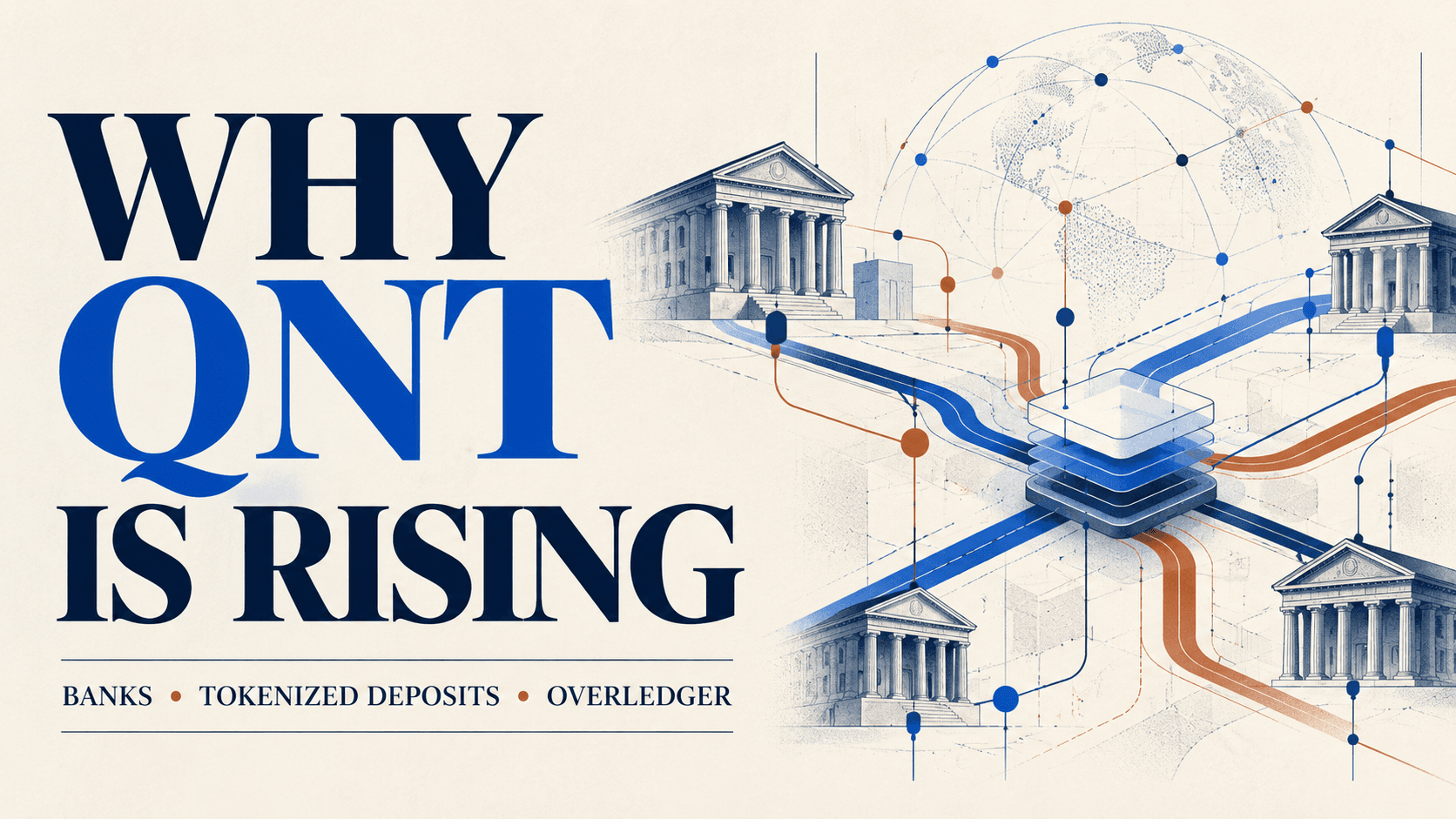
Why Is Quant (QNT) Price Rising? The Clearing House Tokenized Deposit Deal Explained
Why is Quant (QNT) rising? Explore The Clearing House tokenized deposit deal, QNT utility, price risks and how to trade QNT on WEEX.

TSMC 2nm Demand Surges: Can New AI Chip Orders Drive the Next Growth Cycle?
2026 Latest Scam Prevention Guide: How Many Types of Scams in the Crypto World Do You Know?
![[Full Text] Financial Supervisory Service Official: "Fragmented Mainnets Pose Systemic Risks... Need for Integrated Design"](/public-static/24_18140364e2.png?format=avif)
[Full Text] Financial Supervisory Service Official: "Fragmented Mainnets Pose Systemic Risks... Need for Integrated Design"
Fed’s Jefferson signals patience as October rate hike odds fall to 23%
New York and Wyoming Sign Agreement to Coordinate Cryptocurrency Company Regulation
The Quantum Issue: Quantum Isn't Coming For Your Bitcoin
PA Daily | Fed's Kashkari Expects One More Rate Hike This Year; OpenAI Plans to Raise $30 Billion, Valuation Reaches $1.4 Trillion
Why Did Google Stock Reverse After Gemini 4 Argon: What's Actually Going On
PTT Stock: A Pipeline Shutdown Hit the Same Day Profit Jumped 23%





