
What Is a Crypto Broker API? How Platforms Embed Trading Without Building an Exchange

 Prefer us on Google
A crypto broker API is one of the most commercially significant technical developments in cryptocurrency that most platform operators have never heard of by name despite depending on its economics every time they consider whether to offer trading to their users.
The underlying problem is specific. Platforms that want to offer trading face a build versus buy decision whose build option costs far more than it initially appears. A crypto broker API is the buy option that makes embedded trading commercially viable without the engineering and legal investment that building exchange connectivity independently requires.
What makes a crypto broker API worth understanding in detail rather than simply knowing it exists is the specific difference it creates in the platform economics of every product category that benefits from embedded trading. Signal communities, algorithmic tools, financial education platforms, and portfolio applications each face the same problem. The crypto broker API solves it the same way for each of them, through a single integration point that handles liquidity access, order execution, settlement, and commission tracking without the platform managing any of it independently.
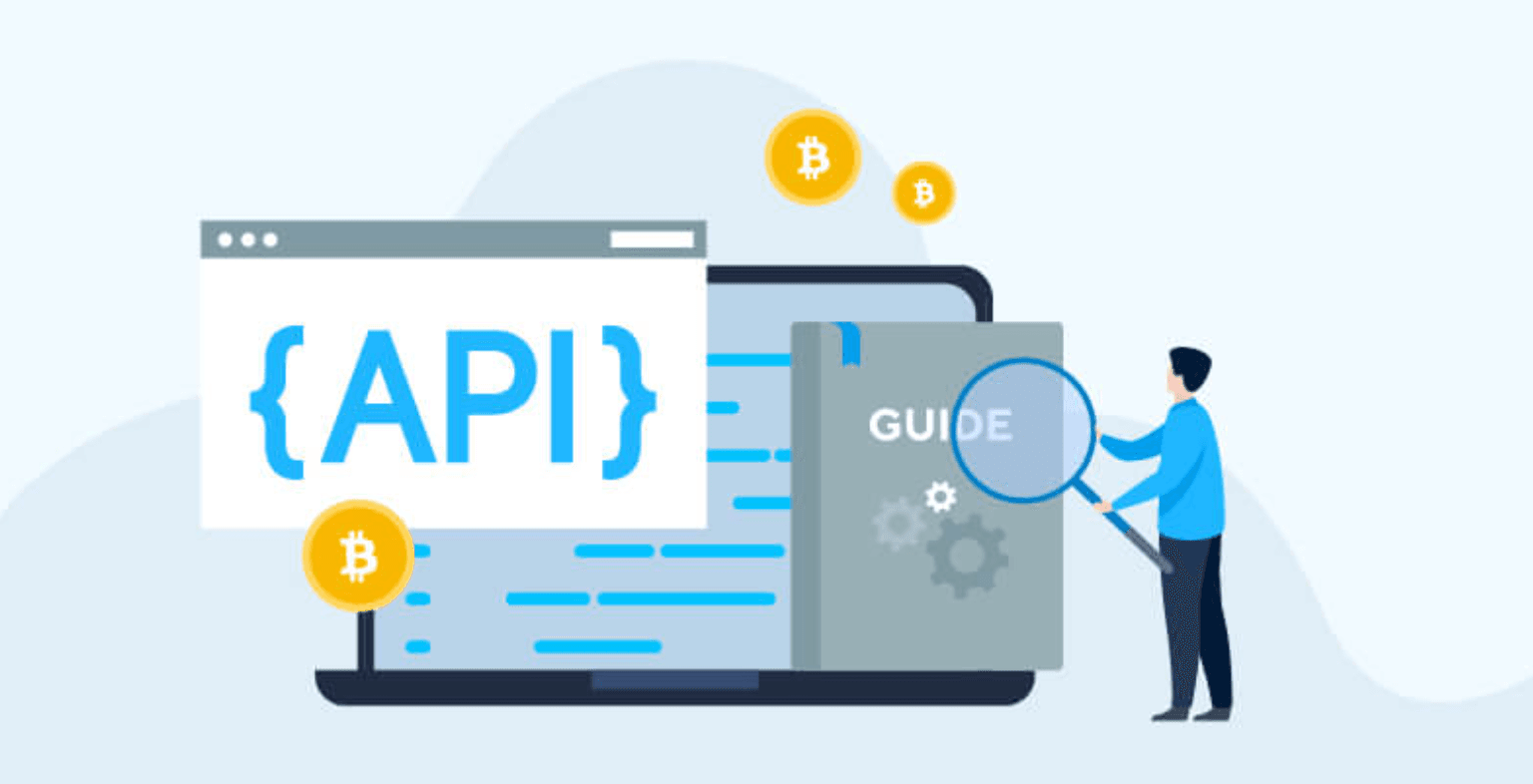
The Problem That Crypto Broker APIs Solve
Before examining what a crypto broker API is, establishing the specific problem it solves prevents the most common misunderstanding about why the product exists at all.
A trading signal community, an AI portfolio management tool, a financial education platform, or any other product that has built an audience with genuine interest in cryptocurrency trading faces a specific commercial challenge. The audience wants to act on what the platform provides, whether signals, analysis, or recommendations, by executing trades. The platform wants to capture value from that trading activity rather than simply pointing users to external exchanges where the value creation leaves the platform's ecosystem entirely.
Building direct exchange connectivity solves this problem in theory but fails in practice for most platforms because the engineering requirements are substantially larger than they appear before the project begins. Direct exchange API integration requires managing multiple exchange relationships with different authentication systems, rate limits, and order formats. Maintaining those integrations as exchanges update their APIs consumes ongoing engineering resources. Regulatory compliance review is required before the platform can legally route user orders to external exchanges in many jurisdictions. And the customer acquisition economics of building trading infrastructure from scratch require scale that most platforms have not yet achieved when the decision is made.
A crypto broker API solves this problem by providing a single integration point that handles all of the exchange connectivity, regulatory framework, order routing, execution, and settlement on the platform's behalf. The platform integrates once with the broker API and then offers its users trading execution through that integration without managing any of the underlying complexity independently.
How a Crypto Broker API Works Mechanically
Understanding the mechanical process of a crypto broker API integration helps platform operators evaluate whether a specific API program provides the technical quality they require before committing to the integration.
The integration process begins with the platform establishing an authenticated connection to the broker's API infrastructure through credentials provided during the onboarding process. The authentication layer ensures that only authorized platforms can route orders through the broker's liquidity connections and that each platform's order flow is tracked separately for commission calculation and risk management purposes.
When a user on the platform initiates a trade, the platform's interface captures the order parameters including the trading pair, the order size, the order type, and the price conditions if applicable. The platform's backend system transmits those parameters to the broker API through the authenticated connection rather than routing directly to an exchange order book.
The broker API receives the order and routes it to the appropriate execution venue based on the current liquidity available for the specified trading pair. For liquid pairs the execution venue is typically the broker's primary exchange partner whose order book provides the tightest spreads and deepest liquidity at the moment of the order. For less liquid pairs the broker API may aggregate liquidity from multiple sources to achieve execution at the best available price.
The execution result, including the filled price, the filled quantity, and the execution timestamp, is returned to the platform through the API response. The platform's interface displays the confirmation to the user. The settlement process updates the user's account balance in real time to reflect the completed transaction. And the commission tracking system records the platform's revenue share from the transaction fee generated by the trade.
The Technical Components That Distinguish Professional APIs From Basic Ones
Not all crypto broker APIs provide equivalent technical capability, and the differences between professional and basic implementations matter significantly for platform operators who depend on the API as the foundation of their trading product.
Real-time order status tracking is the first distinguishing component. A professional API provides WebSocket connections that push order status updates to the platform in real time rather than requiring the platform to poll the API repeatedly for status changes. Real-time tracking allows the platform's interface to display accurate order confirmation and portfolio updates without the delay that polling-based implementations create.
Risk management parameter controls are the second distinguishing component. A professional API allows platform operators to configure trading limits, leverage parameters, and client-level restrictions through the API rather than requiring manual coordination with the broker's operations team for every configuration change. A platform that can programmatically set its own risk parameters has the operational flexibility to manage its client base independently rather than creating a support bottleneck for every parameter adjustment.
Commission tracking and settlement reporting are the third distinguishing component. A professional API provides real time commission accrual data through dashboard access or API endpoints that allow platform operators to monitor their revenue stream without waiting for periodic statements. Settlement in multiple cryptocurrency options rather than a single prescribed asset gives platform operators treasury flexibility that matches their operational requirements.
Sandbox testing environments are the fourth distinguishing component. A professional API provides a testing environment that replicates production behavior without executing real trades or generating real commission events. A sandbox environment allows platform operators to validate their integration, test edge cases, and verify error handling before exposing the integration to live users whose real capital depends on the implementation's reliability.

-- Price
The Build Versus Buy Economics That Make Broker APIs Commercially Attractive
One of the most practically useful analyses for any platform operator evaluating a crypto broker API is the honest build-versus-buy economic comparison that most API providers do not perform explicitly because the comparison is so favorable to the buy option.
Building direct exchange connectivity independently requires the following minimum investment before the first user trade can be executed. Engineering resources to develop and test integrations with at least two to three major exchanges to provide redundant liquidity access. Legal and compliance review to ensure the platform's trading facilitation activity complies with applicable regulations in its target markets. Ongoing engineering resources to maintain the integrations as exchanges update their APIs, which happens with sufficient frequency to require dedicated maintenance capacity. Customer support infrastructure to handle user inquiries about execution quality, order status, and account discrepancies that arise from trading activity.
The total cost of building this infrastructure from scratch at the minimum viable quality level typically reaches hundreds of thousands of dollars in engineering and legal costs before any revenue is generated, and requires ongoing investment to maintain rather than being a one time expenditure.
A crypto broker API integration through a professional program replaces this capital requirement with a technology integration cost that is a fraction of the build option and a commission sharing arrangement that means the platform's revenue begins on the first trade rather than after the infrastructure investment has been recovered.
The specific economic advantage of the API model is most pronounced for platforms in the early growth stage whose user base has not yet reached the volume where building independent exchange infrastructure would be economically defensible. A platform with ten thousand active users generates sufficient trading volume through a broker API to produce meaningful commission revenue without any infrastructure investment. The same platform building independent exchange connectivity would require years of user growth before the revenue justified the infrastructure cost.
Who Benefits Most From a Crypto Broker API
Rather than a general statement that crypto broker APIs benefit many platform types, mapping the specific platform categories whose economics are most improved by API adoption versus independent building produces more useful guidance.
Signal communities whose primary product is trading signal generation benefit because the API allows their users to act on signals through the platform rather than copying signals manually to external exchanges. A signal community that provides one click execution through an embedded broker API retains users within its ecosystem and generates commission revenue from the trading activity its signals produce. The same community relying on external exchange referrals generates one time affiliate commissions and then loses visibility into user trading activity entirely.
Algorithmic trading platforms whose primary product is strategy automation benefit because the API provides the execution layer that connects strategy output to live market orders without requiring the platform to manage exchange relationships independently. An algorithmic trading platform that integrates a broker API can focus its engineering resources on strategy development rather than on exchange connectivity maintenance.
Financial education platforms whose primary product is content and analysis benefit because the API allows users to act on educational content within the same environment where they consume it. A financial education platform that integrates paper trading through a broker API with a path to live trading provides a user experience that retains users through the learning to trading transition rather than losing them to external exchanges at the moment of conversion.
Portfolio management applications whose primary product is tracking and optimization benefit because the API allows users to act on optimization recommendations without leaving the portfolio management interface. A portfolio management app that integrates execution through a broker API becomes a complete investment management tool rather than an analytics only product whose value ends at the recommendation stage.
What to Look for When Evaluating a Crypto Broker API Program
Platform operators evaluating specific crypto broker API programs should apply the same honest evaluation framework to API programs that applies to any business critical technology selection rather than accepting marketing claims about integration simplicity or commission rates without independent verification.
Documentation quality is the first evaluation criterion because the documentation quality predicts the support quality the platform will receive during integration and beyond. An API program with comprehensive, accurate, and up to date documentation demonstrates that the provider invests in the partner success that makes the relationship commercially viable for both parties. An API program with sparse or outdated documentation signals that partner success is not a priority despite what the marketing materials claim.
Onboarding timeline is the second criterion because the onboarding timeline determines how quickly the platform can begin generating revenue from the integration. A program that commits to a one working day approval process demonstrates operational readiness that reflects genuine investment in partner onboarding infrastructure. A program without specific onboarding timeline commitments creates the uncertainty about go live dates that complicates platform launch planning.
Commission structure transparency is the third criterion because the commission structure determines the long-term economics of the relationship. A program that provides real time commission tracking through verifiable dashboards demonstrates alignment between the stated commission rate and the actual revenue the platform receives. A program that provides only periodic commission statements creates information asymmetry that prevents the platform from independently verifying whether the stated economics are being honored.
WEEX's broker program provides the API infrastructure that allows platforms and communities to embed institutional grade trading execution through a single integration. The program covers real time commission tracking, flexible settlement in major cryptocurrencies, customized risk controls, and a dedicated onboarding channel. Partners can review the technical documentation and program details through WEEX's official broker program page.
Conclusion
A crypto broker API is the technical solution that makes embedded trading commercially viable for platforms whose primary product is not a trading exchange but whose users want trading capability within their existing environment. The API handles exchange connectivity, order routing, execution, settlement, and commission tracking on the platform's behalf through a single integration that replaces the hundreds of thousands of dollars in engineering and legal costs that building independent exchange connectivity requires.
The build-versus-buy economics are most favorable for platforms in the early growth stage whose user base has not yet reached the volume where independent infrastructure investment is defensible, which describes the majority of the platform categories that benefit most from the API model including signal communities, algorithmic trading platforms, financial education products, and portfolio management applications.
Evaluating API programs on documentation quality, onboarding timeline, and commission structure transparency provides the most reliable signal about whether a specific program delivers the technical quality and commercial alignment that the platform's business depends on rather than relying on marketing claims whose accuracy only becomes apparent after the integration is complete.
FAQ
1. What is a crypto broker API?
A crypto broker API is a technical integration layer that allows platforms and applications to offer trading execution to their users through a single connection to institutional grade liquidity without building exchange infrastructure independently. The API handles order routing, execution, settlement, and commission tracking on the platform's behalf, replacing the engineering and legal investment that direct exchange connectivity requires with a commission sharing arrangement that begins generating revenue on the first trade.
2. How does a crypto broker API work mechanically?
The platform establishes an authenticated connection to the broker's API infrastructure during onboarding. When a user initiates a trade, the platform transmits order parameters to the broker API through the authenticated connection. The API routes the order to the appropriate execution venue, returns the execution result to the platform, updates the user's account balance, and records the platform's commission share from the transaction fee. The entire process occurs in real time with the platform's interface displaying order confirmation and portfolio updates as they occur.
3. What is the build versus buy economic comparison for a crypto broker API?
Building direct exchange connectivity independently requires minimum investment of hundreds of thousands of dollars in engineering and legal costs before the first user trade is executed, plus ongoing maintenance investment as exchanges update their APIs. A crypto broker API integration replaces this capital requirement with a technology integration cost that is a fraction of the build option and a commission sharing arrangement that generates revenue beginning on the first trade rather than after the infrastructure investment is recovered.
4. What distinguishes professional crypto broker APIs from basic ones?
Four components separate professional from basic implementations. Real time order status tracking through WebSocket connections rather than polling based delays. Risk management parameter controls that allow platform operators to configure trading limits and leverage through the API rather than through manual coordination. Real time commission tracking and flexible settlement currency options. And sandbox testing environments that replicate production behavior without executing real trades, allowing complete integration validation before live user exposure.
5. Which platform types benefit most from a crypto broker API?
Signal communities benefit because the API allows one click execution on signals within the platform rather than requiring manual copying to external exchanges. Algorithmic trading platforms benefit because the API provides the execution layer without requiring exchange connectivity maintenance that diverts engineering resources from strategy development. Financial education platforms benefit because the API enables the learning to trading transition within the same environment. Portfolio management applications benefit because the API converts analytics only products into complete investment management tools whose value extends through the recommendation to execution journey.
This content is provided for general informational purposes only and doesn't constitute financial, investment, legal, or tax advice. Any events, rewards, online promotions, or related information mentioned herein should not be considered a recommendation, solicitation, or invitation to purchase, sell, trade, or otherwise deal in any crypto assets. Crypto assets are highly volatile and may result in loss. The availability of WEEX services, products, and related events may vary by region. You are responsible for ensuring that your participation is in accordance with applicable local laws and regulations.
You may also like

Is 2FA Enough to Keep Your Crypto Safe?

What Is Based (BASED)? The Hyperliquid Super App Token Explained

XST Is Not a Stock: What XSolut Actually Is and How to Buy It Correctly

Deutz Stock (DEZ): The 24 August 2026 Extraordinary General Meeting, the FFG Share Issue and What the Resolution Says
ETHFI vs MANTA vs ZK: Which Upcoming Token Unlock Has the Largest Supply Impact?

Fasttoken's $91 Million Unlock Arrives August 18: Who Receives the FTN Tokens?

Manta Network (MANTA) Token Unlock: Supply Details, Allocation Breakdown and Price Risks

Why Is the Pakistan Stock Market Rising Today? KSE-100 Extends Its Yearly Gains

ETHFI Price Today: Why Ether.fi Is in Focus Ahead of Its Token Unlock

BBVA Stock Price Prediction 2026-2027: Can Spain's Second Bank Keep Climbing
Santander Reveals a $4.3 Million Bitcoin Investment: What Europe's Biggest Bank Buying IBIT Actually Signals
SNDK Stock and the $93.9 Billion NBM Agreements: What SanDisk's New Business Model Actually Changes
Where to Buy XST Coin: Which Exchanges and DEXs List XSolut in 2026
Is Santander Stock a Buy After Its Strongest First Half Ever? What Record EUR 3.8 Billion Profit Actually Implies
Santander Stock and the Webster Acquisition: What the Federal Reserve Approval Actually Changes
What Is IREN? How the AI Data Center Company Behind Microsoft's $9.7 Billion Contract Actually Works
IonQ Stock Q2 2026: What 287% Revenue Growth and a $1.87 Billion Net Loss Actually Tell Investors
What Is Crypto Institutional Trading? How Professional Traders and Fund Managers Access Markets Differently

How to Monetize a Crypto Trading Community in 2026: What the Broker API Model Actually Changes
Zhipu, Z.ai and GLM: One Company, and Which Name Is Actually on the Ticker
SPCX Stock Price Target Raised to $450 by Arete Research: What the Upgrade After the Cursor Deal Actually Means
What Is Prom (PROM)? The Polygon CDK Chain, the Token and Where It Trades
What Is WEEX Telegram Mini App? Features, Benefits, and How to Get Started
Opendoor Stock Falls 10% After Missing Q2 Estimates: What the EPS Surprise Actually Means
Marvell Stock Jumps 13% on AI Memory Infrastructure Upgrades: What the New Portfolio Actually Changes
Form 1099-DA Explained: A 2026 Filing Season Guide for Crypto Traders
Why Your Coinbase or Kraken 1099-DA Might Be Wrong (And What to Do)
Cost Basis Gap in Form 1099-DA: How to Avoid an IRS CP2000 Notice
From UFC to F1: How Crypto Exchanges Are Buying Sports Sponsorships
What Is WEEX Broker? How the Program Works and Who It Is For
Is 2FA Enough to Keep Your Crypto Safe?
What Is Based (BASED)? The Hyperliquid Super App Token Explained
XST Is Not a Stock: What XSolut Actually Is and How to Buy It Correctly
Deutz Stock (DEZ): The 24 August 2026 Extraordinary General Meeting, the FFG Share Issue and What the Resolution Says
ETHFI vs MANTA vs ZK: Which Upcoming Token Unlock Has the Largest Supply Impact?
Fasttoken's $91 Million Unlock Arrives August 18: Who Receives the FTN Tokens?


